
Three sensory-friendly swaps that reduce startle moments, 2 a.m. bickering, and make the room easier to share.
Swap silence for a steady background sound
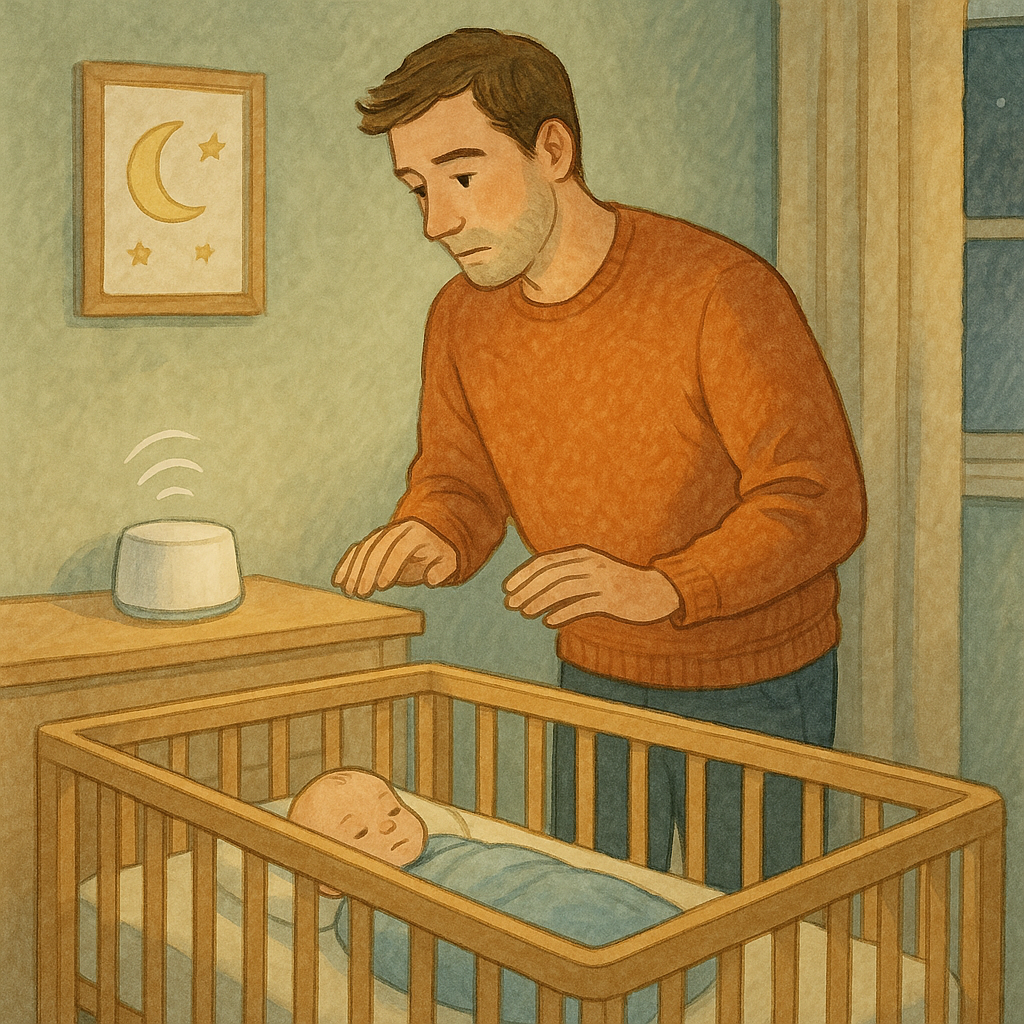
Many parents treat the nursery as a place where every sound must be controlled. It feels loving, but this constant pressure can leave parents tense and exhausted. Building a calmer nursery can reduce the constant friction that builds when two exhausted people are trying to function on broken sleep. If you've got a baby who startles easily, a steady background sound takes that edge off because the spikes in sound don't feel as sharp.
Two practical tips can make this easier. First, pick a dedicated machine, not a phone app. A phone is too easy to silence by accident, and notifications are the opposite of what you want in that room. The classic choice is the Dohm (the fan-in-a-box sound), but any machine that can run all night without looping glitches works. Second, place it across the room rather than right next to the sleeping area. The point is to fill the room evenly. If you use a monitor, set the monitor's volume low enough that it doesn't add its own static layer on top of the noise.
The benefit for parents is that it allows everyday movement without making every small noise feel like a problem. You can open the dresser, set down a water bottle, and even talk in a regular voice for 20 seconds. When the environment stops demanding perfect silence, you stop policing each other.
Swap cluttered textures for simple, practical materials
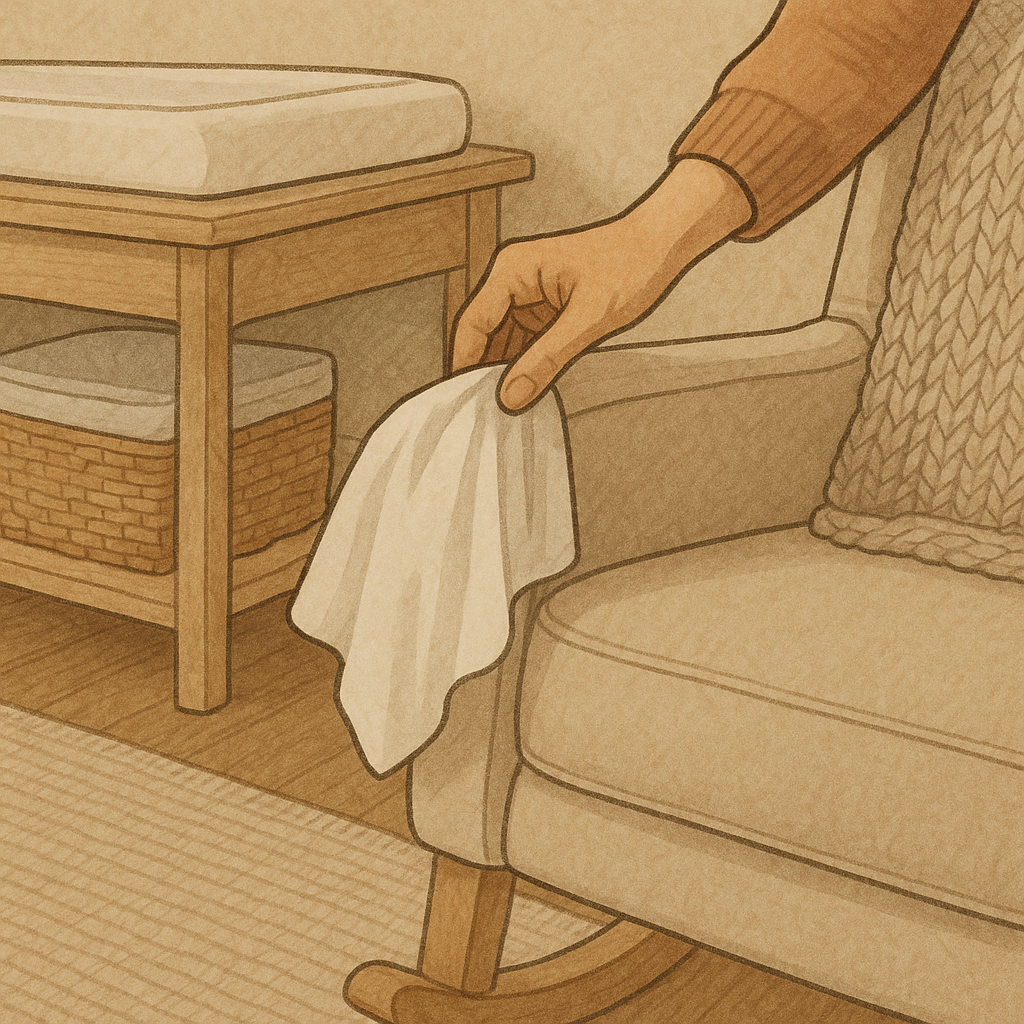
Everyone talks about managing toys, but for a sensory-sensitive setup, I care more about the stuff your hands and feet hit all day long. When the room has too many competing textures, the whole space feels fidgety. You don't notice it as "too stimulating" in the moment. You just feel slightly on edge, and then you snap when your partner leaves one more burp cloth on the glider arm.
A few simple changes can improve the feel of the room without buying a lot of new gear. A simple approach is to pick three textures and repeat them: one soft underfoot, one smooth for wipe-down, and one knit for comfort. For us, this meant a low-pile rug that doesn't grab lint (we went with a flatwoven style because shag plus spit-up is a personal nightmare), a wipeable changing surface that isn't cold plastic against your forearm, and a single knitted throw that is in the same spot every day.
The key is consistency. Too many competing materials can make the room feel visually and physically busy. At 3 a.m., even small annoyances can feel bigger. A scratchy rug, an awkward basket, or an uncomfortable surface can add unnecessary frustration when parents are already exhausted.
Also, choose materials that are easy to clean and maintain, such as a machine-washable rug, a basket that doesn't snag Velcro, or a blanket that doesn't shed. When the room is easier to maintain, parents spend less time arguing over small frustrations.
Swap overly dark spaces for focused task lighting
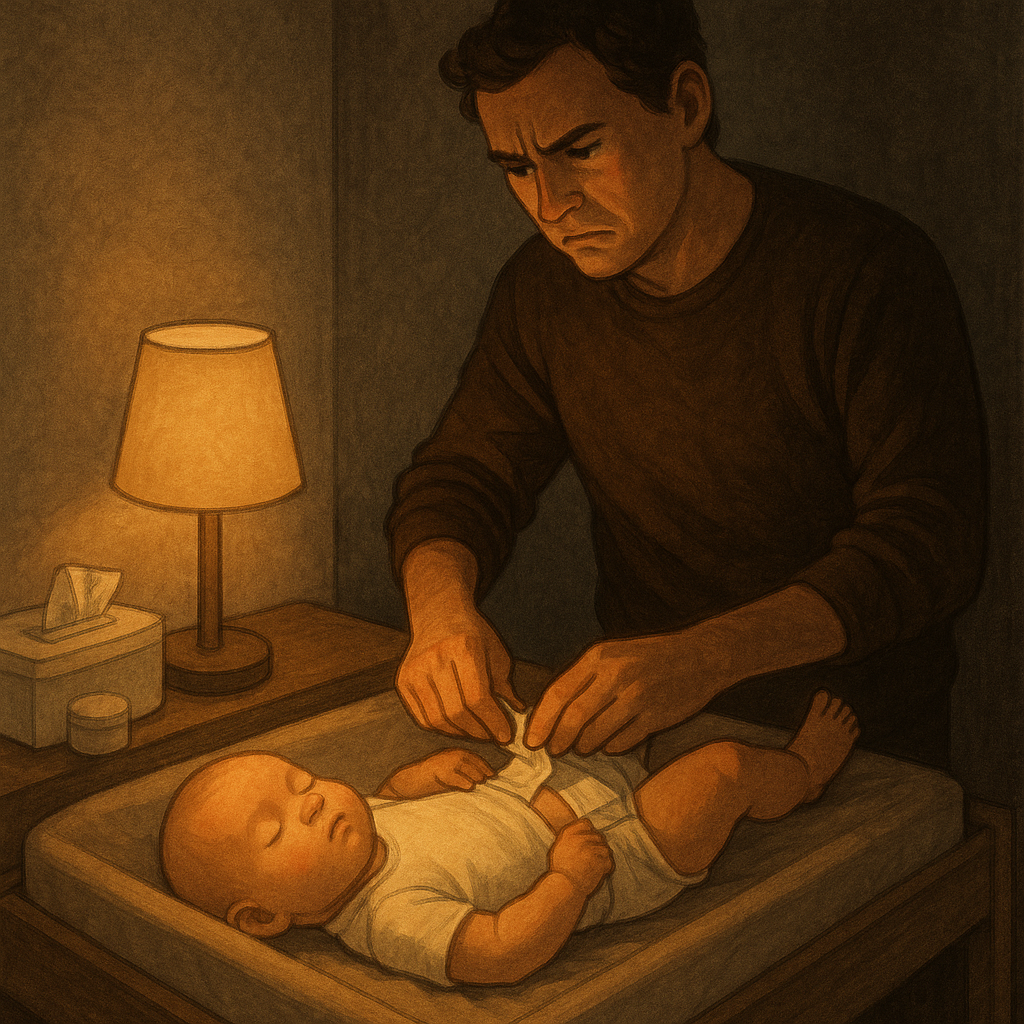
I love a moody nursery as much as anyone, but the darkest spot in the room is where mistakes multiply. If you're trying to keep things gentle for a baby who's sensitive to light and sudden changes, you can accidentally make it harder on yourselves by going too dim in the wrong places. A dimly lit changing area can turn simple tasks into frustrating ones: a missed wipe, a stuck diaper tab, or a messy outfit change can quickly add stress during an already tiring night.
The goal is to make one task zone reliably visible. Pick a single surface for the practical stuff (diapering, swaddling, grabbing a pacifier) and give it its own low-glare light that stays the same every night. A small lamp with a warm LED bulb works, but placement matters: you want the light aimed at your hands, not at the baby's face or into your own eyes from a reflective picture frame.
A simple test is to sit in the chair and do a mock diaper change. If you cannot clearly see the diaper indicator line, the edge of the wipes, and the tabs, the lighting is probably too dark. Also, if the baby is staring into the lamp from the sleep space, it's in the wrong place. This quick check can prevent the nightly frustration of having to ask someone to turn on another light.
There's one more sensory detail people skip: flickering bulbs. Some LEDs have a subtle flicker that you won't notice until you're exhausted, and can make the space feel less comfortable during nighttime routines. If a bulb flickers visibly or feels uncomfortable to look at, replace it. The goal is to have a calm, repeatable environment where both of you can move with confidence.