Why Nostalgia Makes Us Physically Feel Better and How to Use It on Bad Days
It’s easy to dismiss nostalgia as just a way of living in the past, but it’s actually more of a survival tool for the present. When the world feels a little too loud or unpredictable, our brains have this built-in habit of reaching for something familiar to steady the ship.
It’s why we re-watch the same sitcoms or listen to the same albums from 10 years ago when we’re stressed. That “warm and fuzzy” feeling is a chemical response designed to help your nervous system find its footing.
Your Brain on a Trip Down Memory Lane

Image via Canva/Rido
When you stumble onto a memory that feels “good,” your brain treats it like a literal reward. If you’ve ever wondered why you’re suddenly obsessed with a song you didn’t even like back in high school, it’s because your brain’s reward centers (the hippocampus and parts of the midbrain) are lighting up.
Your brain associates those sounds and smells with a time when you felt safe or understood. Even if that time wasn’t actually perfect, the brain filters out the noise and holds onto the feeling of stability.
It’s a Natural Painkiller

Image via Getty Images/ChristiLaLiberte
This is the part that sounds like science fiction but is actually backed by research: nostalgia can literally make you hurt less. Studies have shown that when people tap into meaningful memories, their tolerance for physical pain goes up.
It works on emotional pain, too. If you’re feeling lonely or like you don’t quite fit in, nostalgia acts as a bridge. It reminds you that you have a history, that you’ve been loved, and that you belong somewhere. It’s one of the few coping mechanisms that is completely free and available 24/7.
Why Everyone Is Obsessed With the 90s and 2000s
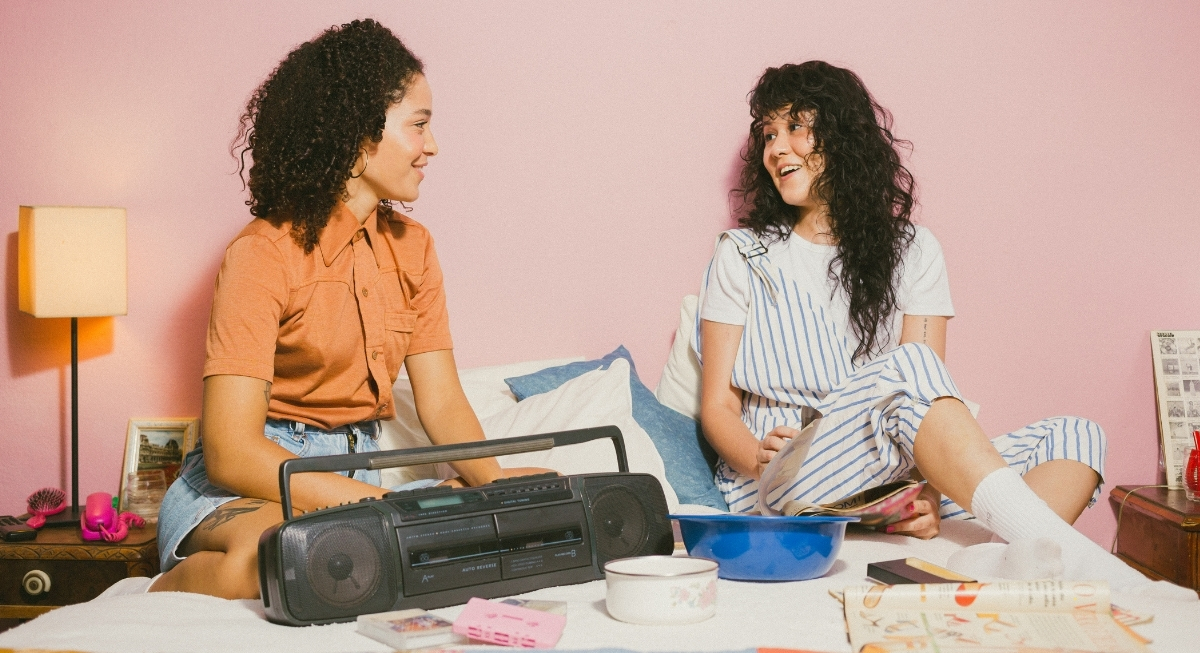
Image via Canva/Eliza Alves
If it feels like every other TikTok or TV show is a throwback right now, you aren’t imagining it. Gen Z and Millennials are leaning into nostalgia harder than almost any group before them.
It makes sense given the timing. Between a global pandemic, a shaky job market, and the constant, exhausting noise of social media, the past looks like a sanctuary. Even for people who were toddlers in the 90s, that era represents a “simpler” time. We aren’t necessarily missing the technology of 1998; we’re missing the headspace.
How To Actually Use Nostalgia On A Bad Day
When you’re having a bad day, you can trigger a “nervous system reset” by being intentional with your senses. Music is the fastest shortcut; keeping a small playlist of songs from a time you felt steady can lift your mood.
You can do the same with scent. Keeping a specific candle or tea that reminds you of a safe place provides an immediate sensory anchor when things feel chaotic.