
Three tiny pattern tweaks (pace, pitch, and phrasing) that match how newborn brains lock onto a familiar voice.
The pace trick: slow your words, not your volume
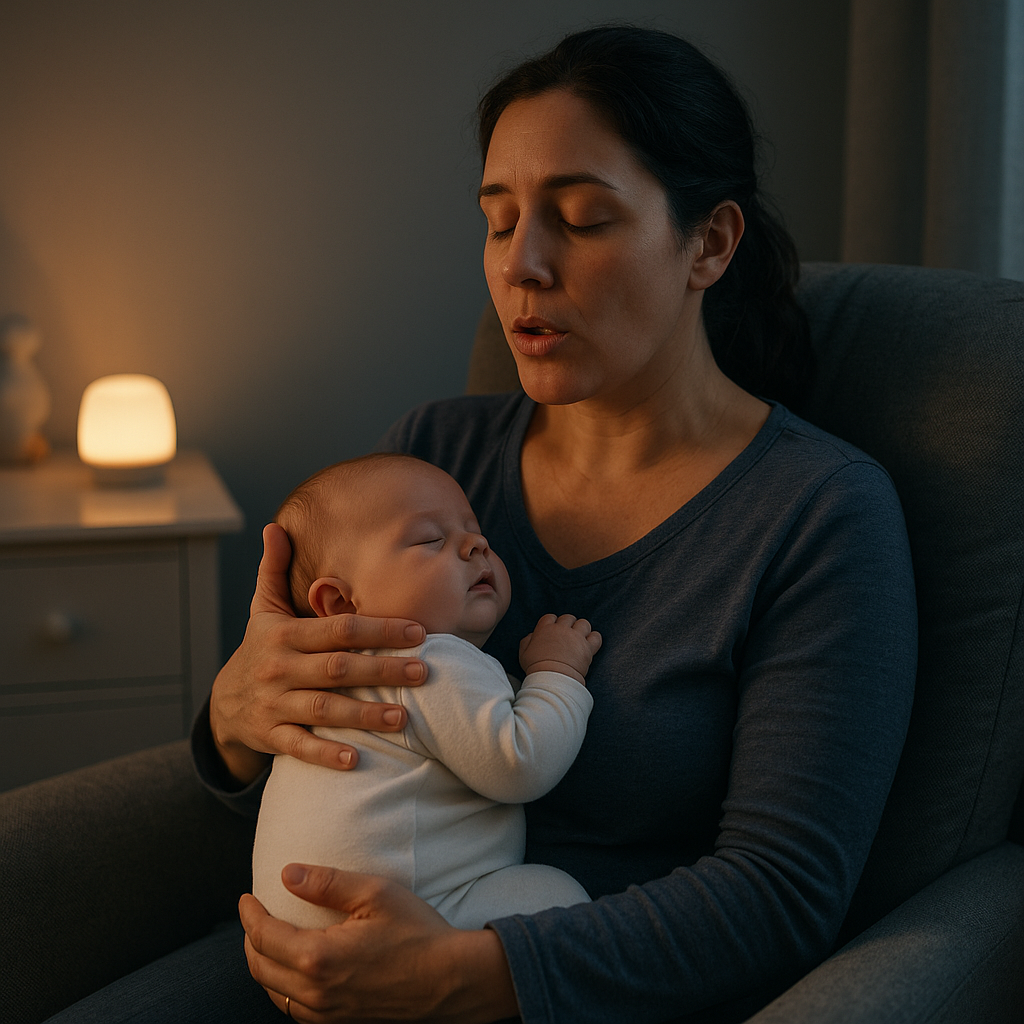
I used to think the soothing part was volume, like my baby needed a louder shush or a more committed hum. What changed everything for me was realizing the brain seems to grab onto timing. If I sped up my sentences (even softly), I got more squirming. If I slowed down the same words, I got that tiny exhale, the shoulders dropping a notch, and sometimes the eyes went heavy like someone turned down a dimmer.
Here is the move I still use at 2:00 a.m. when the room is lit by the Hatch and I can barely see the diaper tabs. Pick one short line you can repeat without thinking. I like: "I hear you. I'm here. Breathe with me." Then say it with a steady beat, almost like you are tapping a metronome in your head. I aim for about one phrase on each slow breath out. Not whispering, not sing-song, not louder. Just slower.
What surprised me is how quickly the baby started to anticipate the pattern. I could feel it in my own arms: the initial stiff little arch, then the body softening right around the same point in the line, like their system learned where the predictable part was. If you want to make it even more consistent, add a gentle bounce or sway that matches the phrase breaks. When I got the timing right, I didn't need to keep adding new words. New words are interesting. Repetition is calming.
If you're splitting care with a partner or a grandparent, ask them to copy the pace, not the exact sentence. When we matched rhythm, the baby responded to both of us more similarly, even though our voices couldn't be more different.
A two-note melody your baby can find in the dark
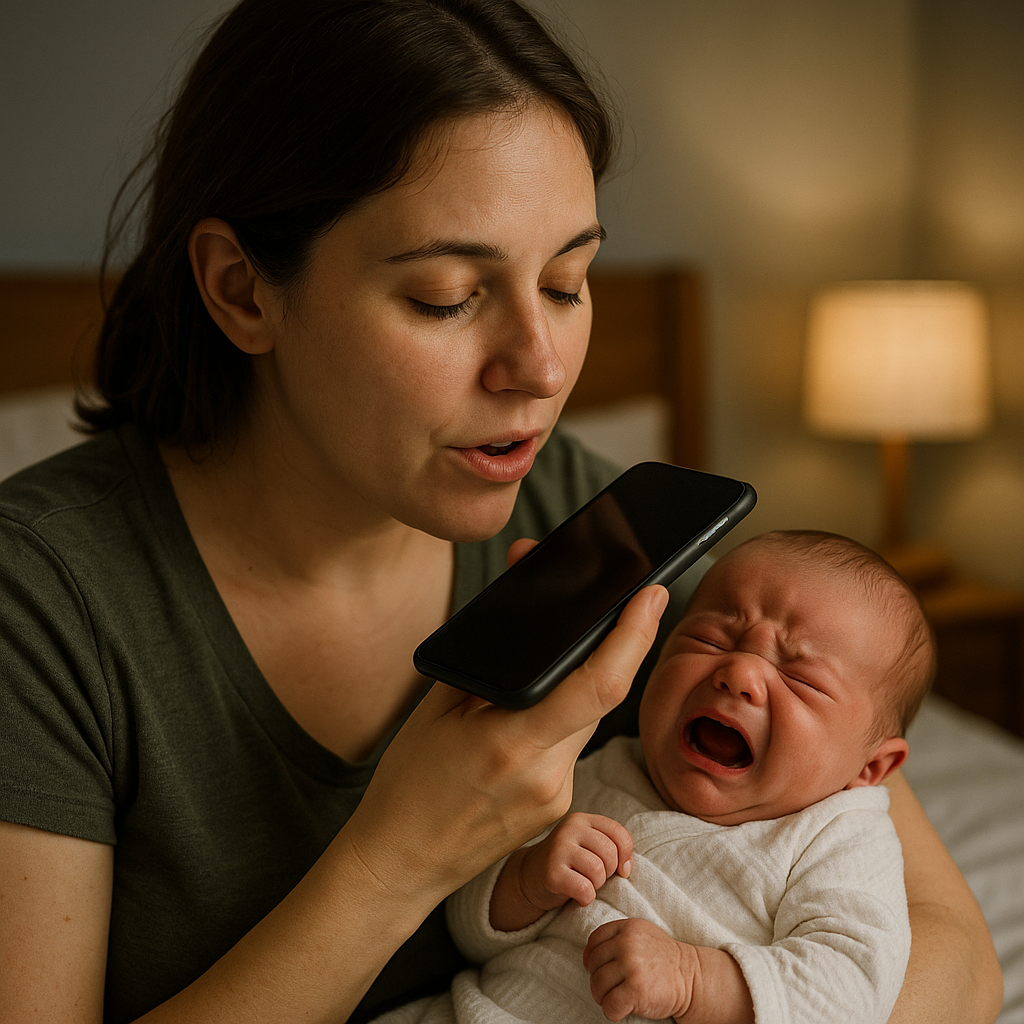
Some nights I could do everything right, clean diaper, warm bottle, fresh swaddle, and still get that offended little cry that says, nice try. Then I'd say one sentence and the crying would drop in half. It wasn't magic. It was pitch. Not high-pitched baby talk, either. More like a tiny, repeatable up-and-down that my baby learned to recognize as mine.
The way I figured it out was embarrassingly basic: I recorded a 20-second voice memo on my phone while I was calm (midday, not 3:00 a.m.). I said the same short line three times. Then at night, I played it back quietly and copied the way I naturally ended the phrase. My voice tends to fall at the end, almost like a period you can hear. When I was stressed, I accidentally ended on an upward question shape, and my baby stayed alert. Once I noticed that, I could control it.
Try building a two-note pattern you can repeat without thinking. Mine is a slightly higher note on the first clause and a lower note on the second. Like: "I'm here" (higher), "I've got you" (lower). Keep the notes close together. You're not trying to perform. You're giving their brain something simple to latch onto.
This works especially well during a feed. I used to talk a lot while nursing or bottle-feeding, partly to stay awake. When I switched to the same two lines with the same pitch drop, the whole scene got quieter. Less gulping-air drama, less frantic hand flailing at my shirt, more steady sucking. Even with the white noise running, that little contour cut through.
And if your baby calms for someone else's voice faster than yours, don't take it personally. Have them show you their pattern. Copy the shape, not the tone. Newborns are picky, but they are also consistent once you see what they're listening for.
The bedtime script that teaches your voice what's coming next
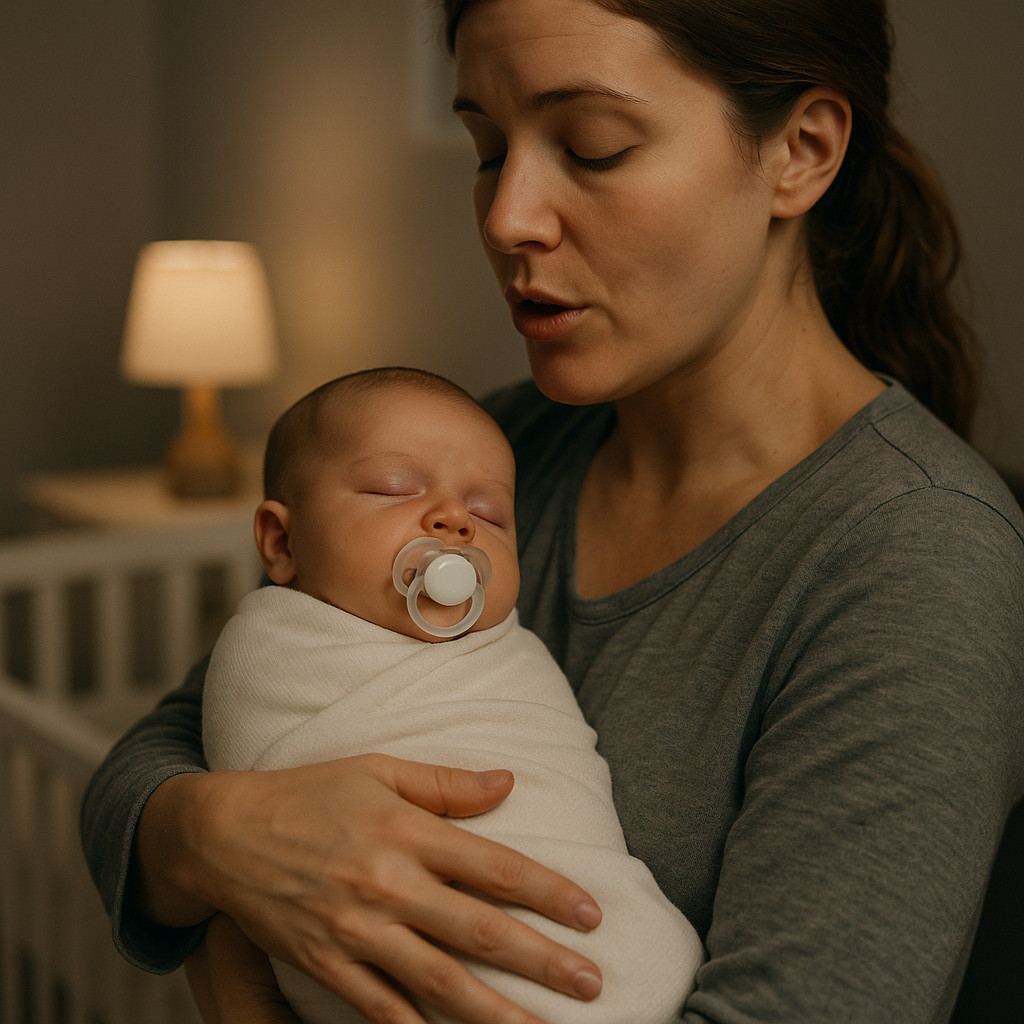
I used to narrate bedtime like I was hosting a very boring cooking show: now we wipe, now we diaper, now we zip, now we rock. It felt helpful. For my baby, it was just more noise. What landed better was a short script that stayed the same and only showed up at the same moment, right when the lights were already dim and the swaddle was on.
The reason I like a script is that it bundles your voice with a sequence. The brain doesn't need the words. It needs the order. I kept mine to three lines, always in the same spot (I say it with the baby on my shoulder, right after I turn on the white noise machine). Here is an example you can steal:
- Milk is done.
- Your body gets heavy.
- I'll stay close.
That's it. No extra commentary. No asking if they're sleepy (they cannot answer, and the question shape can perk them up). I say it the same way every night, and I pause in the same places. The pauses are doing a lot of work. The first week it felt silly, like reading lines to an audience of one who hated my show. By the second week, I started seeing the early tells right on cue: the jaw loosening, the fingers unclenching from that tight little newborn fist, the eyelids fluttering like they were deciding whether to quit.
One practical detail: if you use a pacifier (we used Philips Avent), put it in after the first line, not before. Otherwise you end up repeating yourself louder, and the whole pattern gets sloppy. Same idea with a swaddle. Zip it, then speak. You want the voice to be the signal that the next part is coming, not something that competes with Velcro sounds and fussing.
If bedtime is chaos in your house, don't wait for a perfect routine. Pick one moment you can control and anchor your voice there. Even on rough nights, my baby seemed to recognize the script and soften faster, like their system knew the track was ending soon.