
Three work-life fixes that use flexible calendar blocks, shared status signals, and protected work time so baby isn't running your meetings.
Stop treating naps like calendar events
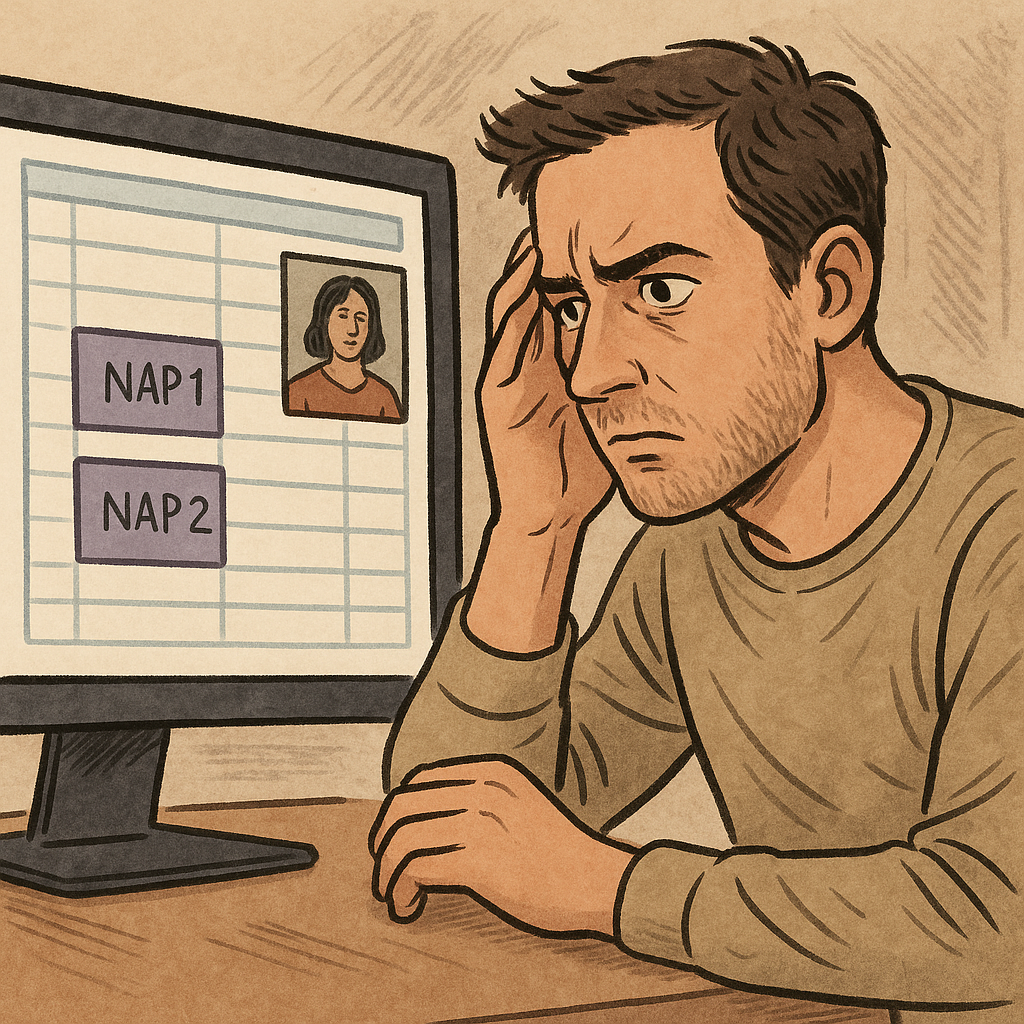
I used to block my work calendar the way sleep accounts on Instagram tell you to: “Nap 1,” “Nap 2,” neat little rectangles like I had any authority here. Then I started noticing the real damage wasn’t the tired baby. It was the constant micro-panic I carried into every meeting because I was guarding a time slot, not watching a kid. When the nap ran short, I’d try to “save it” by extending the wind-down. When it ran long, I’d hover near the monitor like the nap police because I didn’t know whether to risk starting something important. Either way, I wasn’t working well, and I wasn’t present at home either. Just tense.
What finally helped was making my calendar honest. I keep one recurring block labeled “Quiet window (moves)” and set it as a range, not a promise: two hours when I avoid anything that can’t handle a surprise wake-up. Inside that, I stack work that’s interruption-proof: invoice follow-ups, outlining, editing with track changes on, pulling receipts for reimbursement, the kinds of tasks where a pause button exists. If I have a client call or a meeting that needs my full brain, it goes outside the quiet window, or it comes with a backup plan (camera off, notes prepped, and my partner on deck if they’re home).
The contrarian part is this: the moment you stop “protecting the nap,” your workday gets calmer, and the nap usually gets easier. Babies feel that rushed energy. When I quit treating sleep like a deadline, I stopped speed-walking through the pre-nap routine, and the whole house got quieter in a way that didn’t require anyone to whisper. My work still gets done. It just gets done in the order reality allows.
The Slack status that keeps you from resentful texting
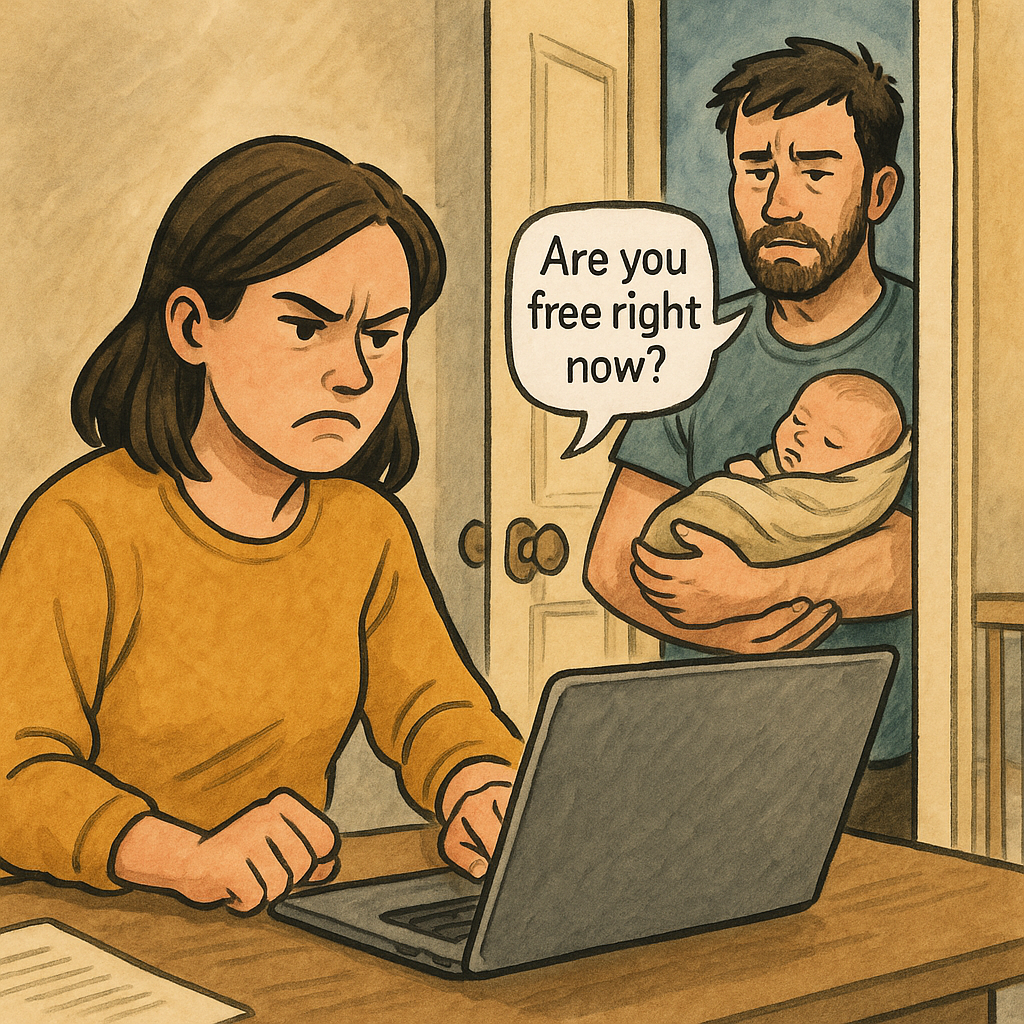
There’s a specific kind of couple fight that only exists when one of you is trying to work, and baby’s sleep is wobbling. It’s not even about sleep. It’s about being yanked out of your inbox to answer, “Are you free right now?” and knowing that if you say no, you’re the villain, and if you say yes, your workday goes off the rails. I’ve sent some truly petty texts from behind a half-open nursery door.
What fixed it for us was stealing a tactic from remote work: status language that means something. We created three statuses that we both use and treat like traffic lights, not negotiations.
- Green: I can take baby within 5 minutes. Think folding laundry, low-stakes emails, and a quick lunch.
- Yellow: I can take baby in 20 to 30 minutes. I’m in the middle of a call, in a focus sprint, or trying to get one task over the finish line.
- Red: I can’t take baby unless it’s urgent. This is a hard meeting, a deadline, or something I can’t reschedule without consequences.
We put it where it lives: my Slack status if I’m on the clock, a shared Google Calendar note if I’m not. No “can you just” texts while someone’s in red. No martyrdom while someone’s green. And when the nap flips (because it will), we update the status, not each other’s character.
It also changed how we talk about romance, which sounds dramatic but is mostly practical. If I’m yellow all afternoon because I’m scrambling to make up for a short nap, I’m not going to be charming at 9 p.m. I’m going to be fried. Seeing a day go yellow early is our cue to trim work expectations: move the deep work to tomorrow morning, skip the nonessential errands, and order takeout without a committee meeting. It’s not glamorous, but it prevents that end-of-day blame spiral where baby “ruined” your time together. The baby didn’t. The lack of a shared signal did.
Build one "drop-everything" block into your week
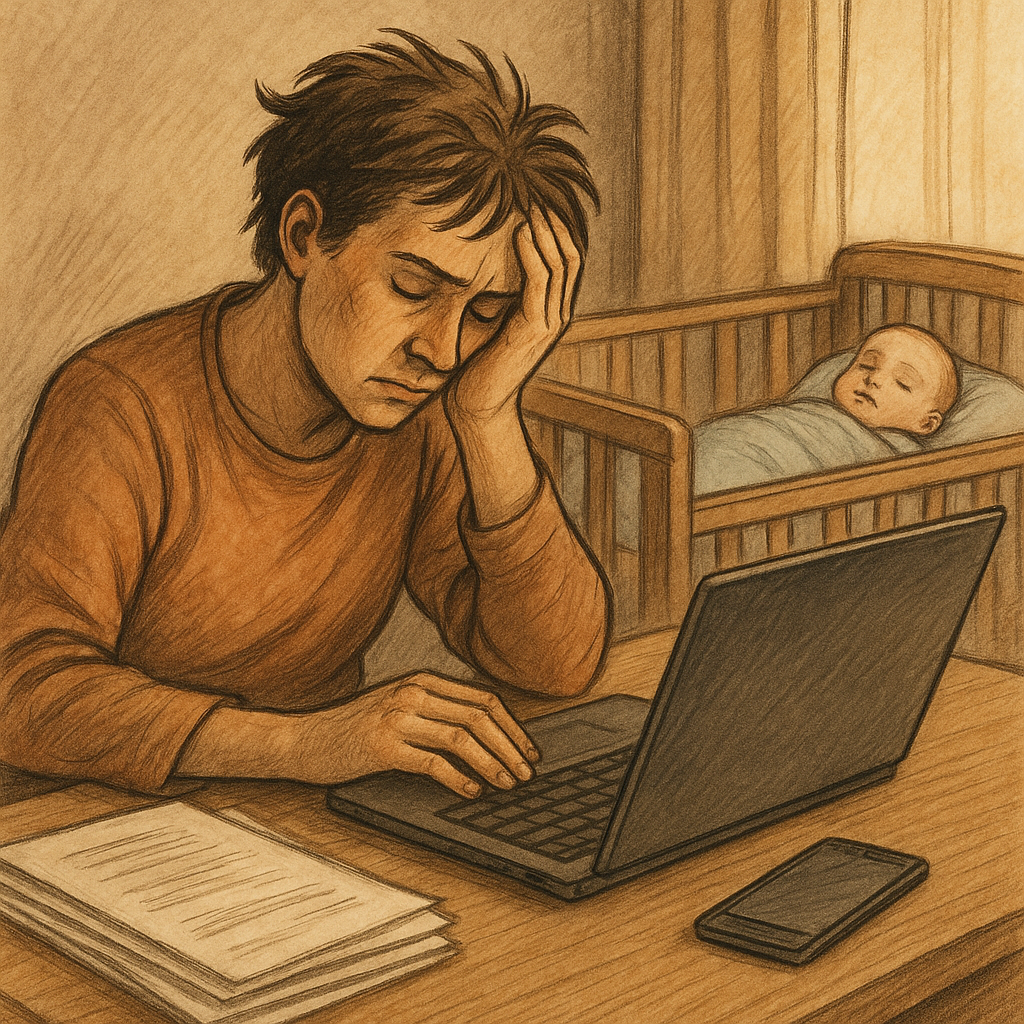
If you’re trying to do serious work during nap windows, you learn a grim little pattern: the tasks that require uninterrupted concentration are the ones that get pushed again and again by unpredictable sleep. You start working nights to “catch up,” which means you’re half-present with your partner, then you’re tired the next day, and then you need a nap to recover. It’s a loop that makes the whole house feel like a production schedule.
The thing that broke that loop for me wasn’t a better schedule. It was a weekly block that assumed naps would sometimes fail. I call it the drop-everything block. It’s 60 to 90 minutes, same day every week, ideally when another adult can reliably cover (a partner working from home, a sitter, a grandparent visit, or even a trade with a friend). That block is where I put the work that keeps getting shattered: drafting a proposal, reconciling QuickBooks, prepping next week’s meetings, writing performance reviews, whatever has a high restart cost.
Two rules make it work. First, I don’t spend that hour on chores that expand to fill time. If I start “just cleaning the kitchen,” it’ll eat the whole block, and I’ll still be behind at work. Second, I keep a running list on my phone called “Nap-broken tasks,” and I only add items I had to abandon midstream. It’s usually painfully specific: “finish the slide deck notes,” “reply to legal with the correct attachment,” “book the flights before prices jump,” not “do admin.” When the block arrives, I don’t decide what to do. I pull the top item and go.
This is also where the relationship piece sneaks in. When the backlog lives in your head, it follows you into the evening. When it’s assigned to a protected time slot, you spend less of dinner calculating how many hours you’ll need to work after baby goes down. I still have weeks where everything goes sideways. But I’m not trying to win every weekday with naps anymore. I’m giving myself one planned reset, and it makes the rest of the week feel less fragile.