
Three self-feeding routines I use: a two-spoon start, a yogurt swipe plate, and a water cup that forgives the first 100 misses.
Start with two spoons, not one
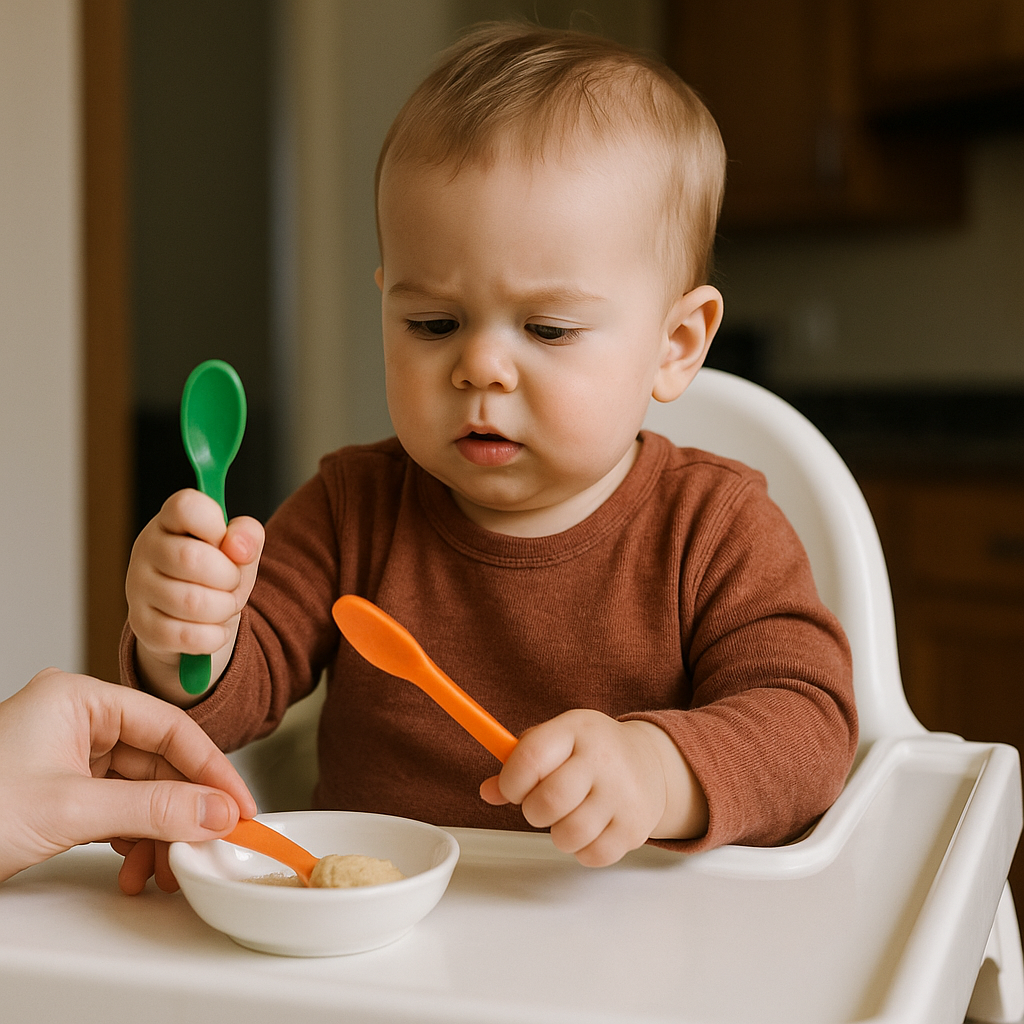
I started doing this on a night I was too tired to run the usual back-and-forth: I load the spoon, he grabs it, I pry it out, he gets mad, nobody eats. The fix was dumb-simple. Two small baby spoons go on the tray before the food even shows up. One is the working spoon I load. The other is the decoy spoon he can clutch, gum, bang, or fling without derailing the meal. The moment he has something in his hand, the grabbing stops being frantic. It turns into, "oh, I already have a tool."
Here is the part that matters: you have to commit to not fighting for control of the decoy spoon. If it hits the floor, it hits the floor. If it gets licked clean and proudly waved around like a tiny flag, fine. I keep a spare spoon within reach because the floor spoon becomes an immediate demand, and I am not doing the mid-meal rinse-and-return routine. IKEA KALAS spoons are light enough for early hands and they do not have sharp edges, but any short-handled toddler spoon works. Metal is heavier and sometimes ends up as a percussion instrument on the tray, so I save metal for later.
How I load the working spoon also changed once I watched what he could manage. Thick foods stick. Think oatmeal, mashed sweet potato, hummus, ricotta, or a scoop of Greek yogurt. Watery purees slide off and create that heartbreaking moment where they finally get the spoon to their mouth and it is empty. I load only the front half of the spoon bowl and wipe the underside on the rim of the bowl so there is not a drip dangling. Then I set it down on the tray, handle toward him. I do not aim it at his mouth. He gets to decide when to pick it up, and that tiny choice is usually the difference between self-feeding and a wrestling match.
It looks slow at first. It is. But by about minute six, the rhythm shows up: grab working spoon, mouth, drop, grab decoy spoon, grin, swap. Some nights that is the whole dinner and I call it a win because there is food going in and the mood stays calm. When I forget and bring one spoon, I feel it immediately. Hands everywhere. Frustration. The two-spoon start is the quiet way I keep the momentum on his side.
Use the plate as a teaching surface: the yogurt swipe
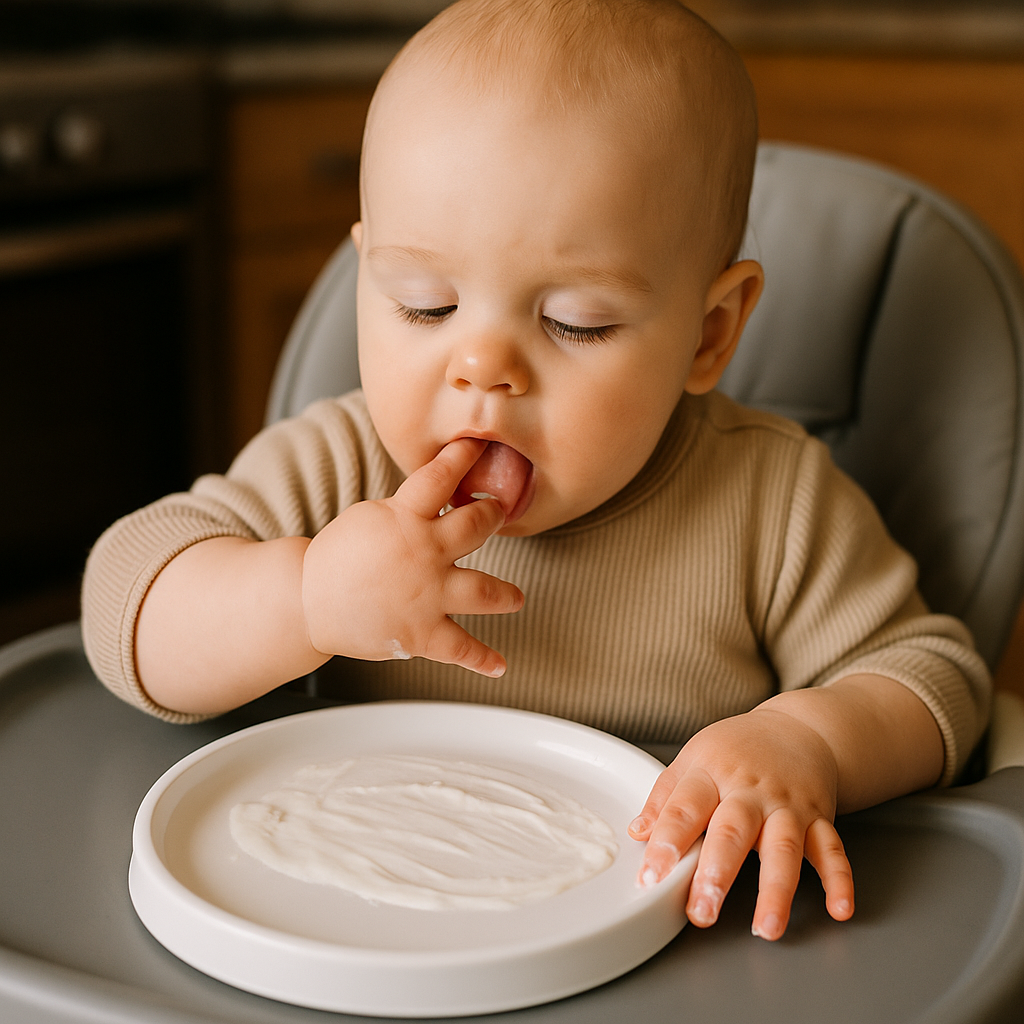
There is a very specific moment in early self-feeding when a bowl becomes the enemy. They can see the food, they can reach the rim, and they can also flip it like they are testing gravity for science. I stopped offering a bowl for messy foods and started using the plate itself as the "container." It is basically finger painting, except dinner.
I take an OXO Tot Stick & Stay plate (or any suction plate that actually suctions) and smear a tablespoon or two of thick yogurt, mashed avocado, or nut butter thinned with a little yogurt into a wide, thin patch right on the plate. Thin is the key. A mound invites scooping and dumping. A smear invites dragging a finger through it and then bringing that finger to the mouth, which is a skill that shows up before spoon accuracy. If I am serving oatmeal, I cool it and spread it out so it is not a hot blob. If I am doing hummus, I smear it and press a few soft peas or tiny shreds of chicken into it so there is something to pinch.
What this does, practically, is teach three moves without me coaching: swipe, lift, and find the mouth. It also gives them a clean reset spot. Once the smear gets licked down to nothing, I can add another small patch in a new section of the plate and the meal feels like it is continuing, not restarting. When I used to refill a bowl, he would get frustrated because the food looked the same but his hands were already slippery and tired. With the plate smear, I can pace the mess.
Two little handling notes I learned the hard way. First, wipe the baby's hands once mid-meal, not constantly. If I chase every smear, he gets irritated and we lose the groove. A single warm washcloth pass about halfway through is enough to keep the fingers from turning into greased eels. Second, put the plate on a tray you can remove and rinse, because suction plates sometimes lose grip when the tray gets a film of yogurt. I do a quick wipe of the tray before the plate goes down so the suction has a fighting chance.
This is also where I sneak in early independence around "done." When the smear patch is gone, I pause and wait. If he signs or gestures for more, I add more. If he starts tossing food, I assume he is finished or overwhelmed and I move to cleanup. It is not a test. It is just letting the plate show me what he is ready to do today.
The straw cup drill that makes water feel doable
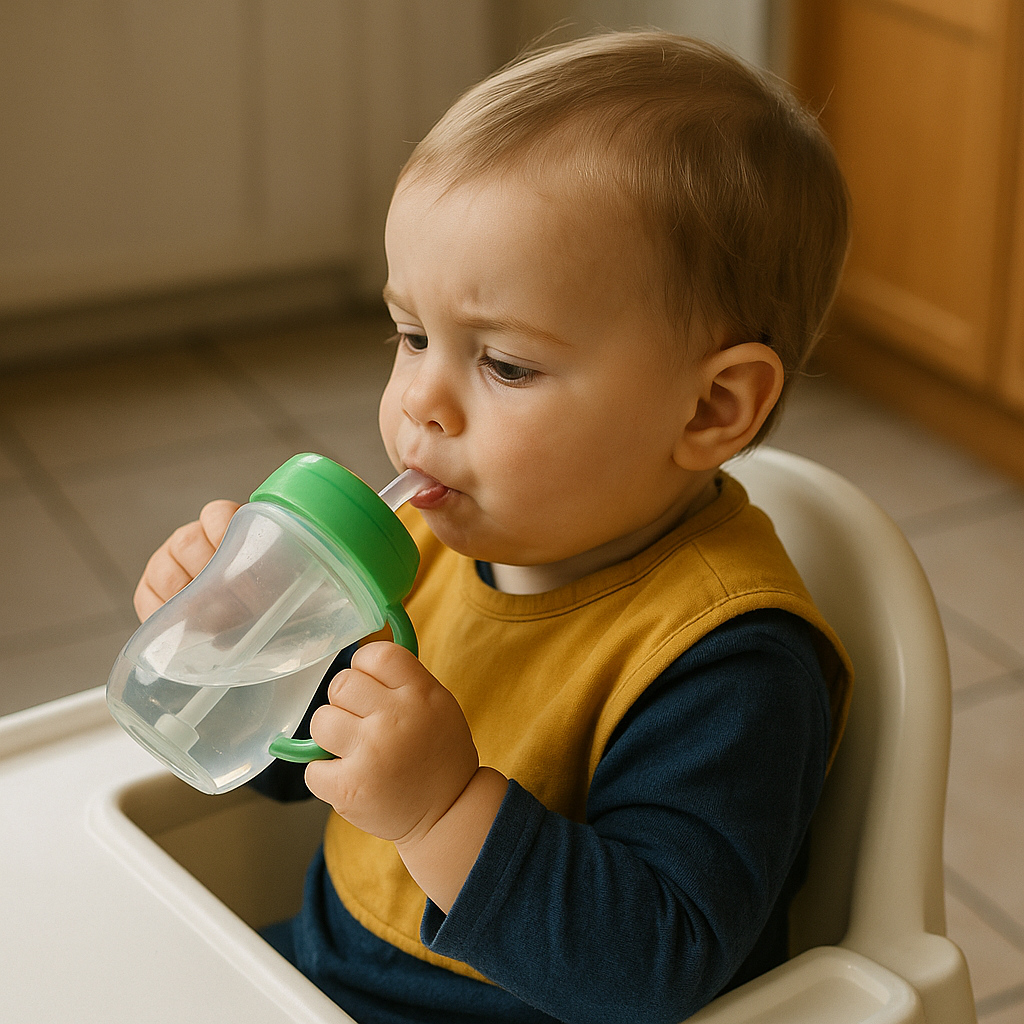
Food gets all the attention, but water is where I see independence show up day-to-day. If they can't reliably get a sip without you tipping a cup, every meal still has a built-in adult job. I am not precious about cup styles, but I am picky about one thing: the straw has to be forgiving when they tilt it, because early drinkers tip the cup like they're pouring gasoline into a tiny engine.
A weighted-straw cup (I have used the Munchkin one) is the closest thing I've found to letting them succeed while they are still figuring out angle, suction, and "wait, where did the water go." The weight keeps the straw's bottom in the liquid even when the cup is tipped, so they do not have to nail the geometry. I fill it only one-third at first. Less water means less chaos when it inevitably gets shaken like a maraca.
My routine is boring on purpose. Twice a day, outside of meals, I put the cup on the floor or on a low step while I sit next to them. No distractions, no cheering. I tap the straw with my fingertip, then I take one sip from my own cup so they see the motion, then I set their cup back down. The first few days, they mouth the straw, chew it, and dribble. That counts as practice. If they get one real swallow, I stop. I do not keep offering it until they're annoyed. Short sessions keep it from turning into a battle.
Once they can pull water, I make one small change at meals: the cup starts on the tray, but I do not hand it to them. They have to notice it and pick it up. It sounds tiny, but that reach-and-grab is part of the independence you're after. The other small change is placement. If the cup is too close to the plate, it gets knocked while they're swiping food. I put it in the far right corner of the tray (left, if your baby favors that side). Same spot every time. They learn where water lives.
I also stopped caring about a little mess on the bib. Early sips are loud and a little leaky, and the sucking sound is weirdly satisfying once you start listening for it. When it clicks, it clicks fast. One day you realize you haven't tilted a cup for them in a week, and you didn't even notice it happening.