
A tri-fold board, a cheap lamp, and a rolling cart let one room hold homework, LEGO, and privacy without constant shuffling.
The tri-fold board becomes a movable wall (not a craft project)
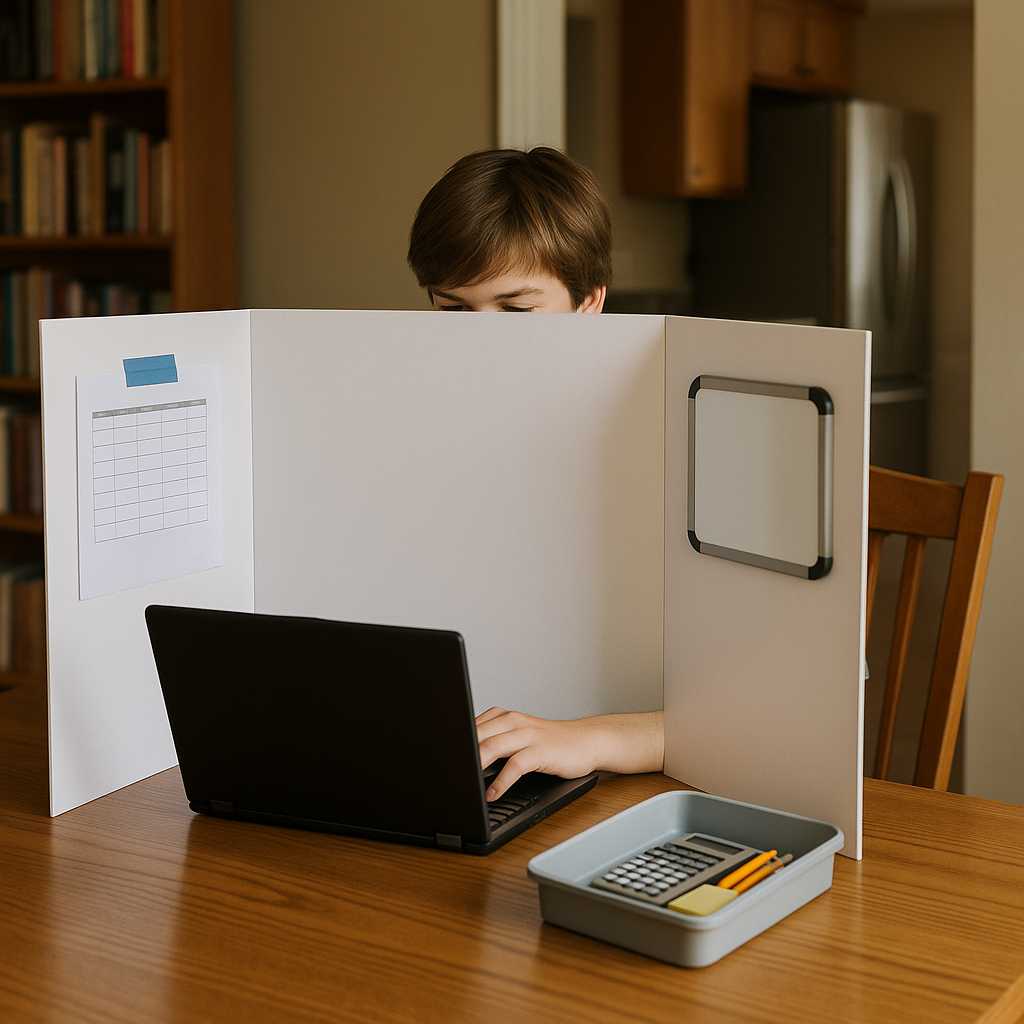
I didn't think a $5-ish tri-fold presentation board would survive my house. I bought it for one science display years ago, then it accidentally became the single most useful "no, you can't see what I'm doing" tool we own. When kids hit that age where they want to spread out, angle their Chromebook away from siblings, and not have somebody hovering over their shoulder, the shared table turns into a daily negotiation. The board is my low-drama way to change the geometry of the room without buying new furniture.
Here's how it works in real life: the board lives behind a bookshelf or slid next to the fridge, so it's not a Thing we have to discuss. When homework starts, I open it into a shallow U-shape and set it on the table so it blocks the side-view and the across-the-table view. If you fold it flat like a billboard, it still invites peeking. The U-shape creates a corner that feels like a little desk, and kids settle faster because their eyes aren't catching everyone else's movement. On the outside panels, I tape a paper schedule with painter's tape so it comes off clean, plus a small whiteboard (the thin kind with a magnet strip) that can move to whoever needs it.
The detail that keeps it from becoming clutter is a rule: nothing gets stored inside the "cave." It's only a visual boundary. Pencils, calculator, charger, and sticky notes all live in a shallow bin that comes to the table with them. If your kid wants to keep something private, this gives them a way to do it without turning privacy into a power struggle. And when dinner happens, the board folds up and disappears. No rearranging the entire room, no permanent dividers, no weird tension about who owns which chair.
Make the surface switch fast: one cart per kid, not one mega-drawer
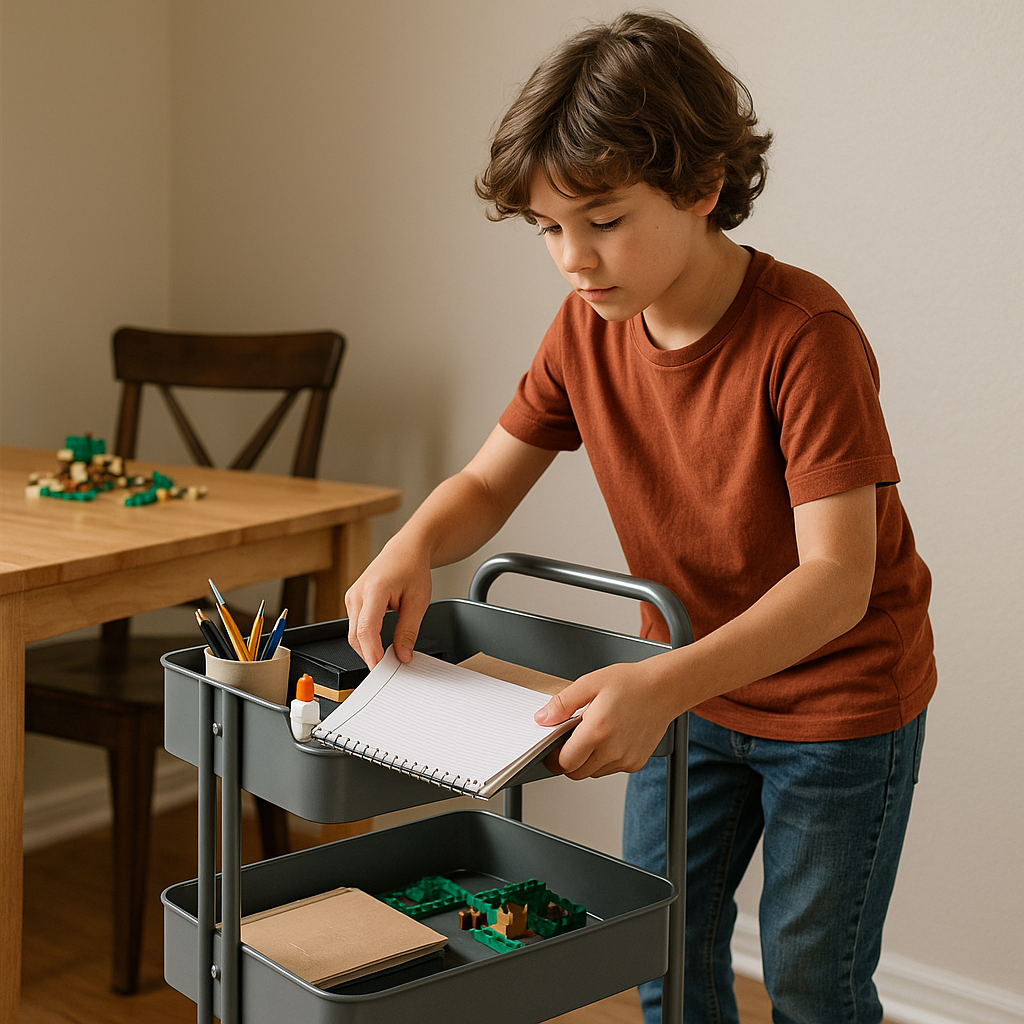
Once kids need more independence, the problem isn't just privacy. It's momentum. They leave a math worksheet half-finished, a LEGO build mid-step, a sketchbook open to a page they don't want a toddler to "improve," and suddenly the table is permanently occupied. If you tell them to clear it, they feel like you're erasing their work. If you let it sit, everyone else loses the space. The fix for us was giving each kid their own mobile landing zone so projects can pause without getting flattened.
I'm talking about a small three-tier rolling cart (the kind people use for craft supplies), labeled by kid. Ours are the plain metal ones you can find at any big home store, and yes, the wheels matter. The top tier is for what they're actively using this week: pencils, a glue stick, a small ruler, earbuds, the specific novel for school. Middle tier is in progress only, which is where the open notebook goes, a folder that can't be bent, or a model kit tray. Bottom tier is the boring stuff: extra lined paper, the charger that always vanishes, a pencil sharpener that doesn't eat pencils. No sentimental storage, no mystery piles.
What changes the dynamic is the handoff. When the table needs to become a puzzle table or dinner table, they don't have to clean their work. They roll it. I make them leave their chair pushed in, pick up crumbs, and put the cart in a parking spot (ours is the wall by the pantry). That's it. If they want the tri-fold board from the other slide, it rides on the side of the cart like a little shield. And when a sibling is in their face, it's not me mediating. It's the setup doing the boundary work: your stuff is on your cart, not on my half of the table.
The unexpected perk is that kids start noticing what supplies they burn through. When the erasers are gone, it's not a household mystery. It's on their cart. That tiny bit of ownership is the kind of independence they're asking for, even when they don't have the words. It also keeps the table from becoming a permanent school supply aisle, which is the fastest way to make everyone hate the space.
Lighting is the quiet way to signal: this corner is yours now
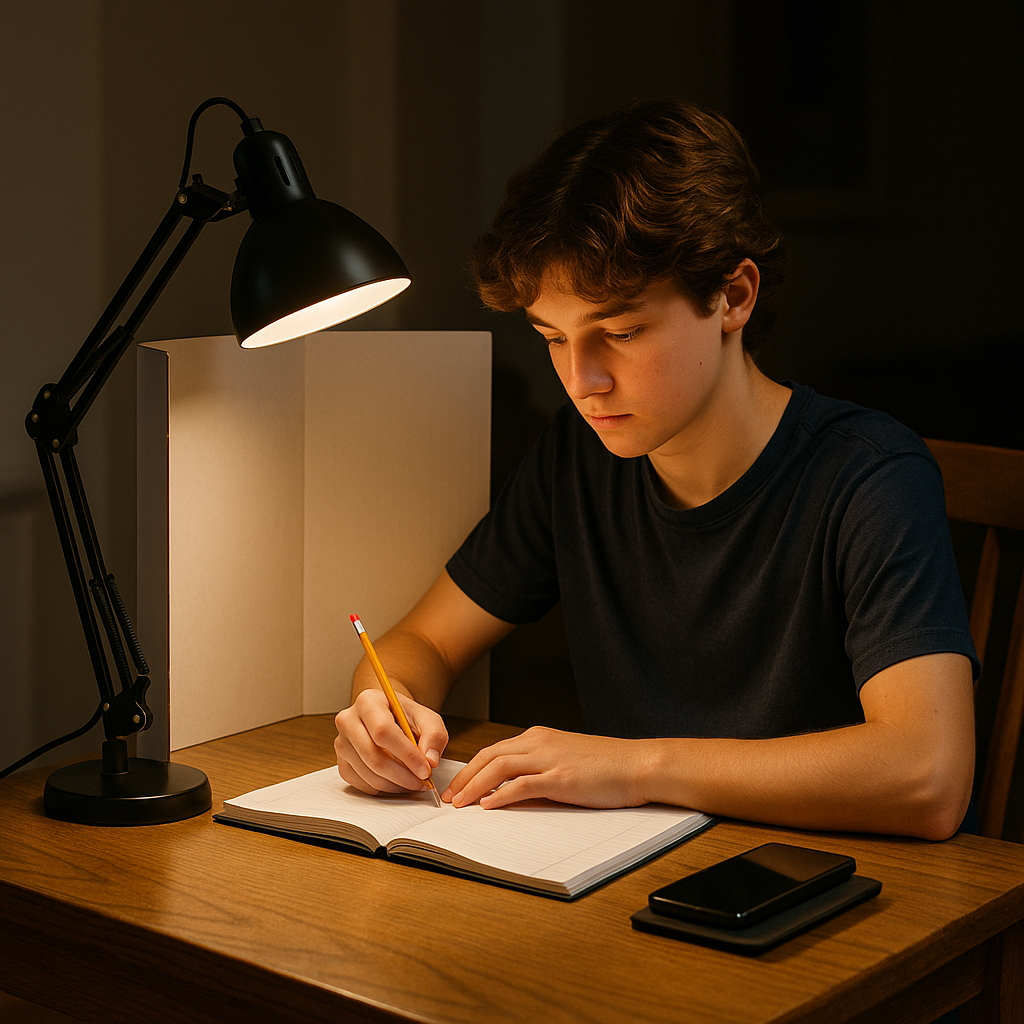
If you only change one thing in a multi-use play-and-study area, change the light. Not the overhead. The light that belongs to that kid's work zone. It's a tiny environmental cue that says, without you saying anything, this is study time, this is my spot, and no, I'm not available for commentary on my handwriting. I learned this because my older kid would try to work at the dining table, and every time the overhead lights were on it felt like the whole room was open for business. Everybody wandered through. Everybody looked over shoulders. Nobody meant harm, but it got under their skin fast.
We added a simple clamp lamp that lives in a bin with the homework stuff, plus a warm LED bulb (around 2700K to 3000K). When homework starts, the lamp clips onto the table edge on their side, aimed down at the paper or keyboard. The overhead stays off if we can manage it. The difference is immediate. The lit circle reads as their territory in a way tape on the table never did, and it also helps younger siblings understand the boundary without a lecture. It's the same reason kids build forts. Light makes a perimeter.
Two specifics that matter: first, pick a lamp with a shade or a deep reflector so the beam doesn't blast the rest of the room. Glare is the enemy when you're trying to share space politely. Second, give them one physical do not touch spot right next to it, like a small tray for their phone during homework. That tray solves the constant micro-fights about whether a sibling moved it, and it stops the phone from migrating into the middle of the table where everyone can see notifications.
As they get older, they start controlling the vibe themselves: lamp on, tri-fold board up, earbuds in. You didn't buy privacy. You gave them a way to create it inside the same four walls, and that's usually what they're really asking for.