
Keep one lanyard near the swaddle station and one near the pump supplies, and you stop doing the same 2 a.m. work twice.
The Two-Lanyard Handoff
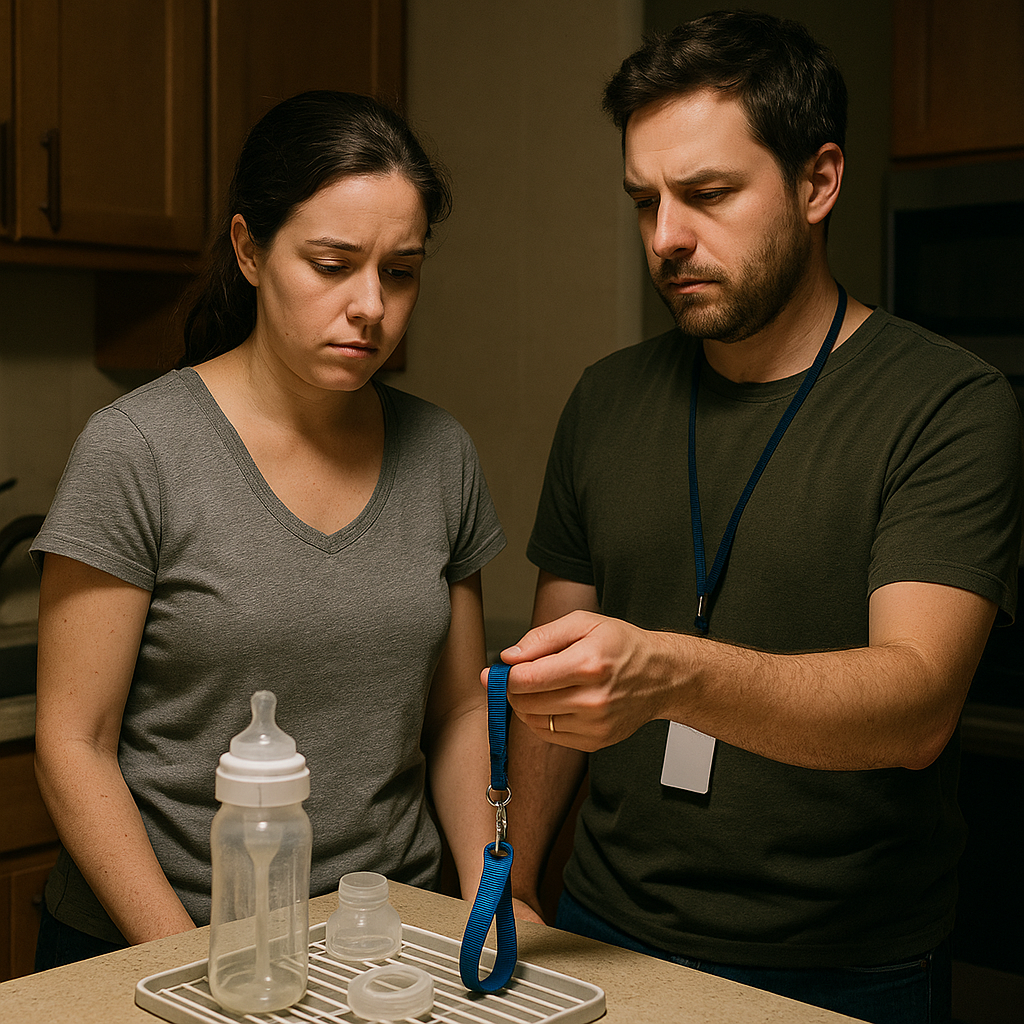
We kept having the same dumb fight at 2:13 a.m. One of us would swear they "just did" the diaper, the other would swear the bottle parts were already rinsed, and then we were both standing in the kitchen staring at a Dr. Brown's vent like it was a moral test. What fixed it for us wasn't a longer talk. It was making the handoff visible.
Grab two lanyards with clips (the kind that hold keys) and label them with painter's tape: FEED and CHANGE. Keep one lanyard with the adult feeding supplies and the other with the diaper supplies, both well out of the baby's reach. Whoever is on duty wears the lanyard for the task they own in that moment. When you tag out, you physically hand over the lanyard, not a vague status update.
It sounds almost too simple until you do it on three hours of sleep. The lanyard gives each parent a clear job and makes the next handoff easier when everyone is exhausted. If the FEED lanyard is on me, I clean pump parts that contact milk after use, following the manufacturer's instructions, let them air-dry completely, and restock the clean bottles. Because we're in the newborn stage, we also sanitize the appropriate pump parts at least once a day. If the CHANGE lanyard is on you, you restock diapers to the top layer of the caddy and toss the dirty onesie straight into the hamper, not the chair. When we skip this, the chair becomes a museum of milk-spit clothes by day three. The best part is that the system scales. During cluster-feeding evenings, we swap lanyards more often. On calmer nights, we might only swap once. Either way, there is a clear, nonverbal answer to "who owns what" right now.
A Whiteboard for Milk Math (so nobody asks at 3 a.m.)
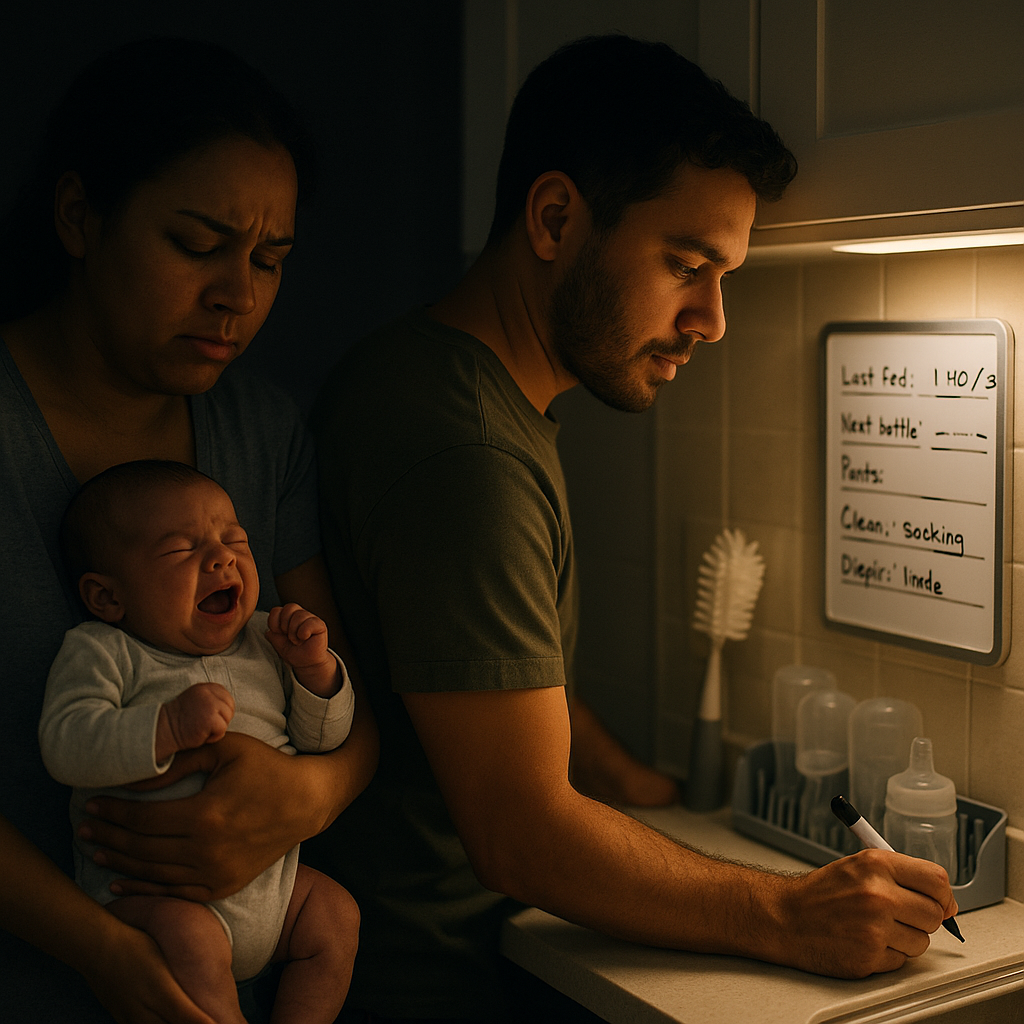
A rough newborn moment arrives when the baby wakes hungry, and neither parent can remember when the last feed happened. You can scroll an app, sure. But if one person is holding a squirmy baby and the other is trying to keep the room dark, checking the app turns into "why are you making me do one more thing."
We put a small dry-erase board (the cheap locker-size one) right where the bottles get made. Not on the fridge. Not in some command center. If it's not in the exact spot your hands already go, it becomes wall decor by week two. Ours sits behind the bottle brush, and next to the drying rack, so you physically see it while you're rinsing a nipple or snapping together a Spectra flange.
On the board, we keep four lines, nothing fancy:
- Last fed: time + amount, if you're tracking bottles
- Next bottle: pumped / formula / combo
- Parts: clean / soaking / needs wash
- Diapers: pee / poop + time
The point isn't data for its own sake. It's to prevent the most common handoff friction: one person asking questions that the other person thinks they already answered. If the board says the parts are soaking, nobody starts tearing apart the kitchen to look for a missing duckbill valve. If it says the last diaper was poop at 12:55, the oncoming person has useful context without relying on memory alone. And if your baby is doing that thing where they take 1 oz, scream, take another 1 oz, and fall asleep mid-burp, you can jot it in fragments without your partner later trying to reconstruct the night like a crime scene.
We also added one small rule: whoever makes the bottle updates the board before they sit down to feed. Not after. After is when you get stuck under a contact-napping baby, and the marker is across the room. Keeping it immediate is what makes it useful for co-parenting, not just record-keeping. You'll still have nights that feel chaotic. You just won't have the extra chaos of wondering whether your partner forgot or you forgot.
Pre-Load the Swaddle Station Before the Night Shift
One newborn-care task that quietly eats into personal time is the constant resetting: hunting for a clean zipper sleeper, realizing the wipes are down to two, discovering the diaper cream wandered off to a different room, then doing it all again an hour later. When we were both touched out and short-fused, we stopped trying to be heroic and started doing one intentional preload.
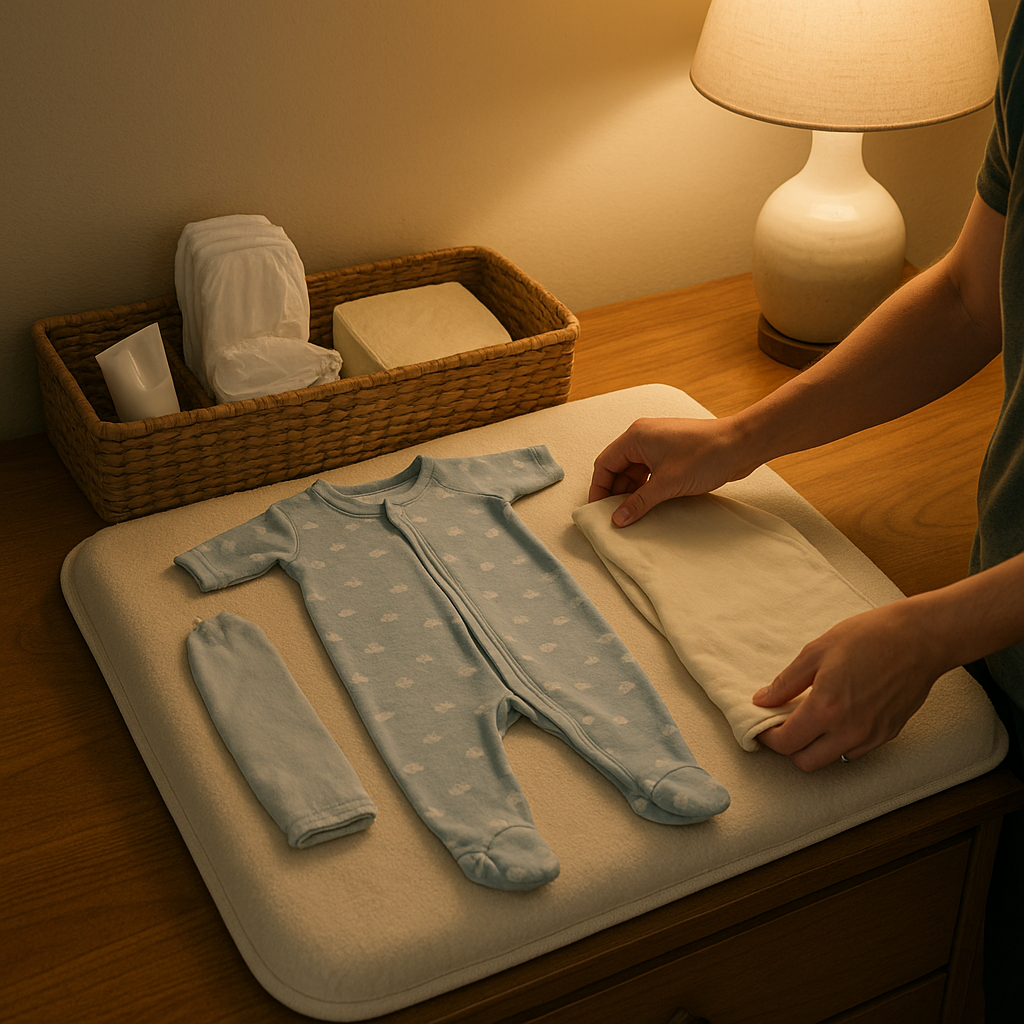
At 7 p.m. (pick your own time, but keep it consistent), we set up what we call the swaddle station. It's a changing pad, a basket, and a lamp with a warm bulb. The basket gets loaded like you're about to check into a hotel with no front desk:
- Two diapers (not a whole stack, just the next two)
- A fistful of wipes pulled out and ready
- Diaper cream with the cap already loosened
- One burp cloth
- One fresh sleeper or onesie, fully unzipped and laid open
- One appropriate swaddle or sleep sack ready to use according to its instructions; stop swaddling once the baby shows signs of trying to roll, and never use a weighted swaddle
Then we do the part that felt silly until it saved us: we stage the clothes in the order they'll touch the baby. Sleeper open on the pad, swaddle beside it, and a spare diaper right where your hand naturally lands. When you're half-awake, tiny friction becomes loud friction. Zippers catch. Snaps feel like a practical joke. And if you've ever tried to pull a sleeper over a newborn's flailing arms in low light, you know how fast it turns into both parents hovering and muttering.
This setup makes the handoff smoother by reducing negotiation. The oncoming partner isn't asking, Where's the other swaddle? or "Do we have clean sleepers?" They're just walking into a station that's ready for the next round. If you breastfeed and the non-nursing partner wants to be useful without getting in the way, pre-loading the station is a concrete job that matters. And if you're pumping, it buys you something that looks suspiciously like personal time: ten uninterrupted minutes where nobody needs you to solve a problem, because the next problem is already staged on the pad.