
One shallow drawer, two labeled baskets, and a no-fold rule that makes 2 a.m. resets take under five minutes.
The two-basket drawer that makes nursery resets easier
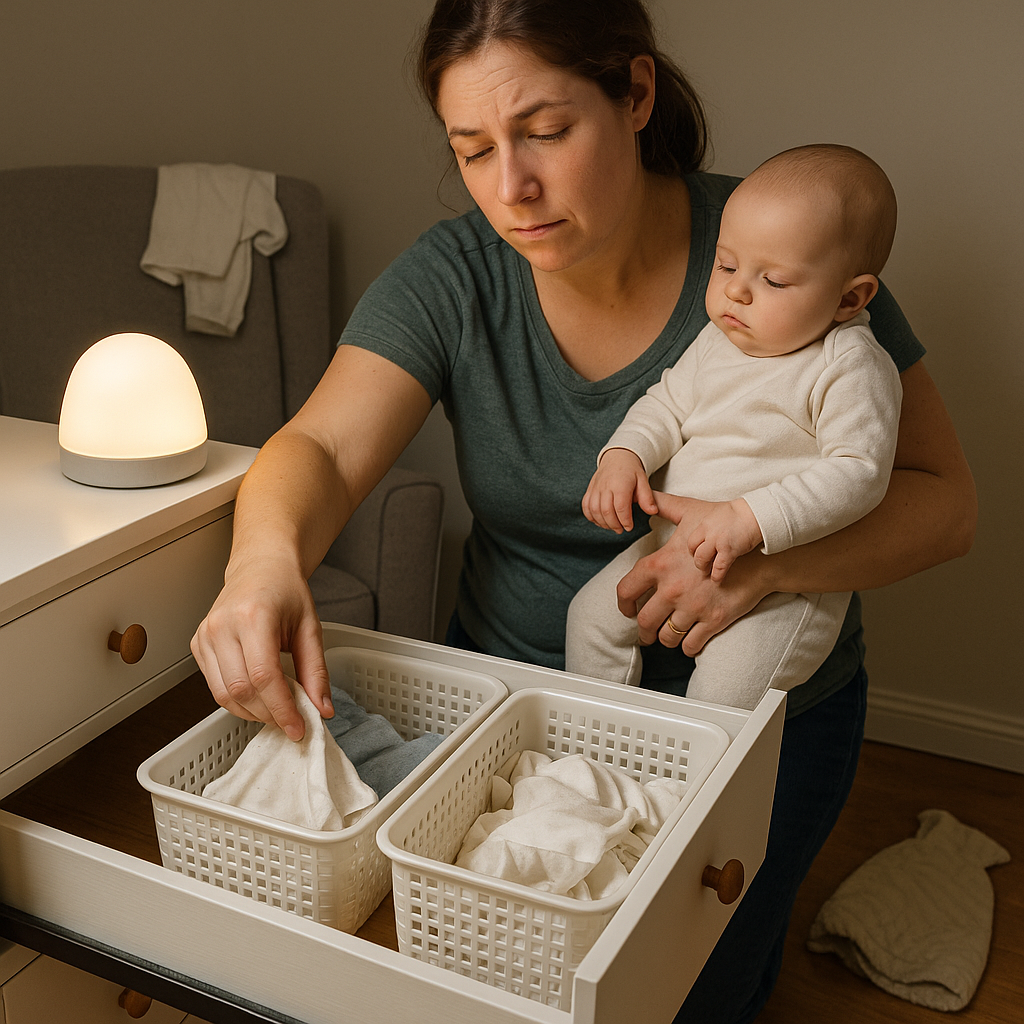
I used to swear I was going to keep the nursery "simple" and then I would still end up with the classic chair-drape situation: clean onesies on one side, a half-finished stack of burp cloths on the other, and one rogue sleep sack left on the floor. What finally made it feel manageable wasn't another organizer insert. It was picking one shallow drawer (the top drawer of a dresser is perfect) and turning it into a two-basket system you can operate during a middle-of-the-night wake-up.
Here's the setup: drop two small open bins into that drawer. One bin is "wear again," and the other is laundry. If you want labels, keep them literal. A piece of painter's tape and a Sharpie are enough. The rule is boring on purpose: if it passed the sniff test and doesn't have milk spit or diaper blowout evidence, it goes in wear again. If there's any question, it goes to the laundry.
The reason this works is that it eliminates the need to make small decisions when I'm tired. You slide a drawer, toss the item in the right bin, and you're done. In the morning, when there's daylight and coffee, you can sort everything properly later.
One diapering surface, one reach zone, nothing on top
I learned the hard way that the nursery gets overwhelming fast when you have two diaper stations that are both kind of stocked. You end up buying duplicates, then extras spill into every drawer, and suddenly you're stepping over a box of size 1s you forgot you owned. My calmer version is one changing surface and one reach zone, and everything else is allowed to be boring storage.
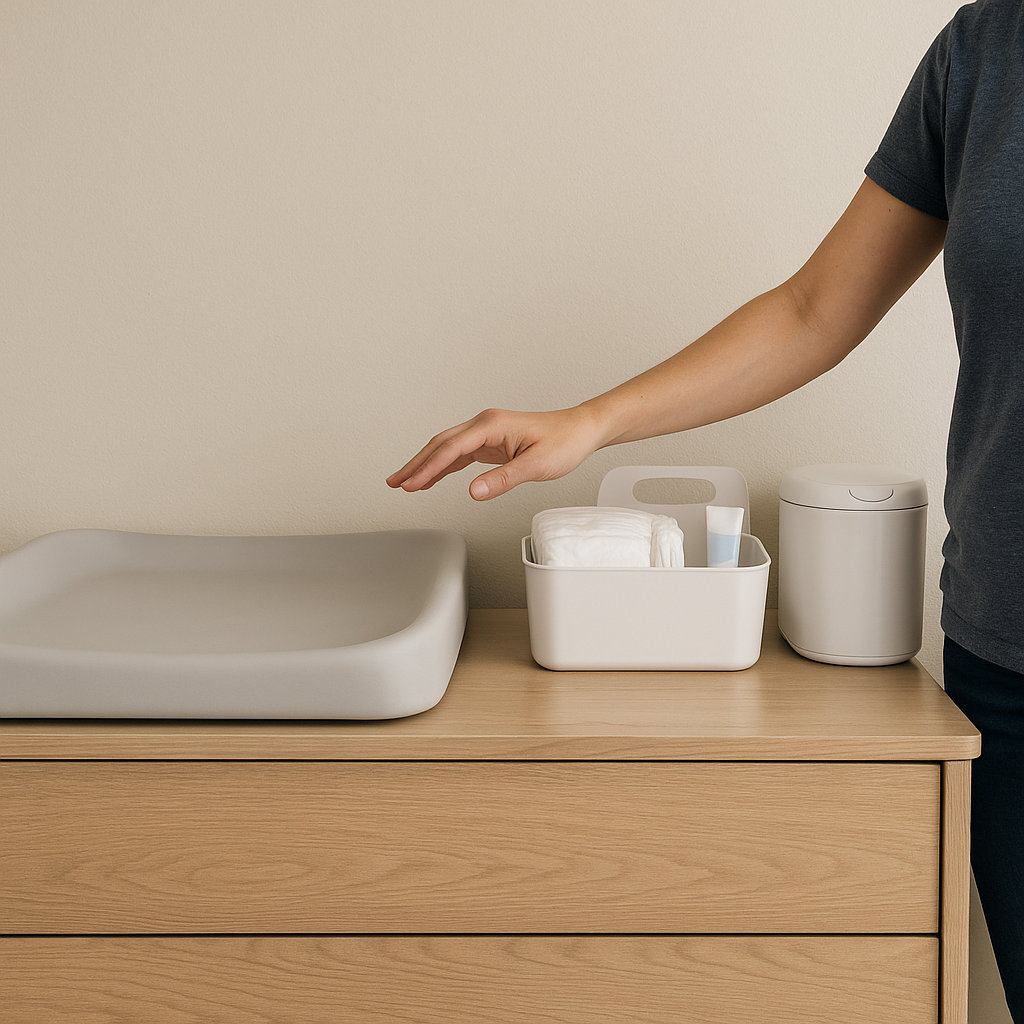
Stand at your changing pad and do a literal arm sweep without moving your feet. Everything you need mid-change should be inside that sweep: wipes, diapers, diaper cream, a spare onesie, and a small diaper-disposal bag or container. That's it. If something you need is outside that reach zone, it is more likely to get left out until later.
On my dresser, I keep a wipes container and a small open caddy with a day or two of diapers, plus diaper cream and a Frida Baby NoseFrida with extra filters tucked behind it. The trash is a Ubbi diaper pail next to the dresser, so I can drop things in one-handed. A wipeable changing pad also makes the surface easier to clean after messy changes.
The part that makes this minimalist is the nothing on top rule. The top stays clear so you can wipe it down in ten seconds, and you always have a landing zone for a clean swaddle or a towel during a surprise mess. Keeping the supplies contained makes the rest of the room easier to manage.
The one-crib rule: keep the sleep space clear
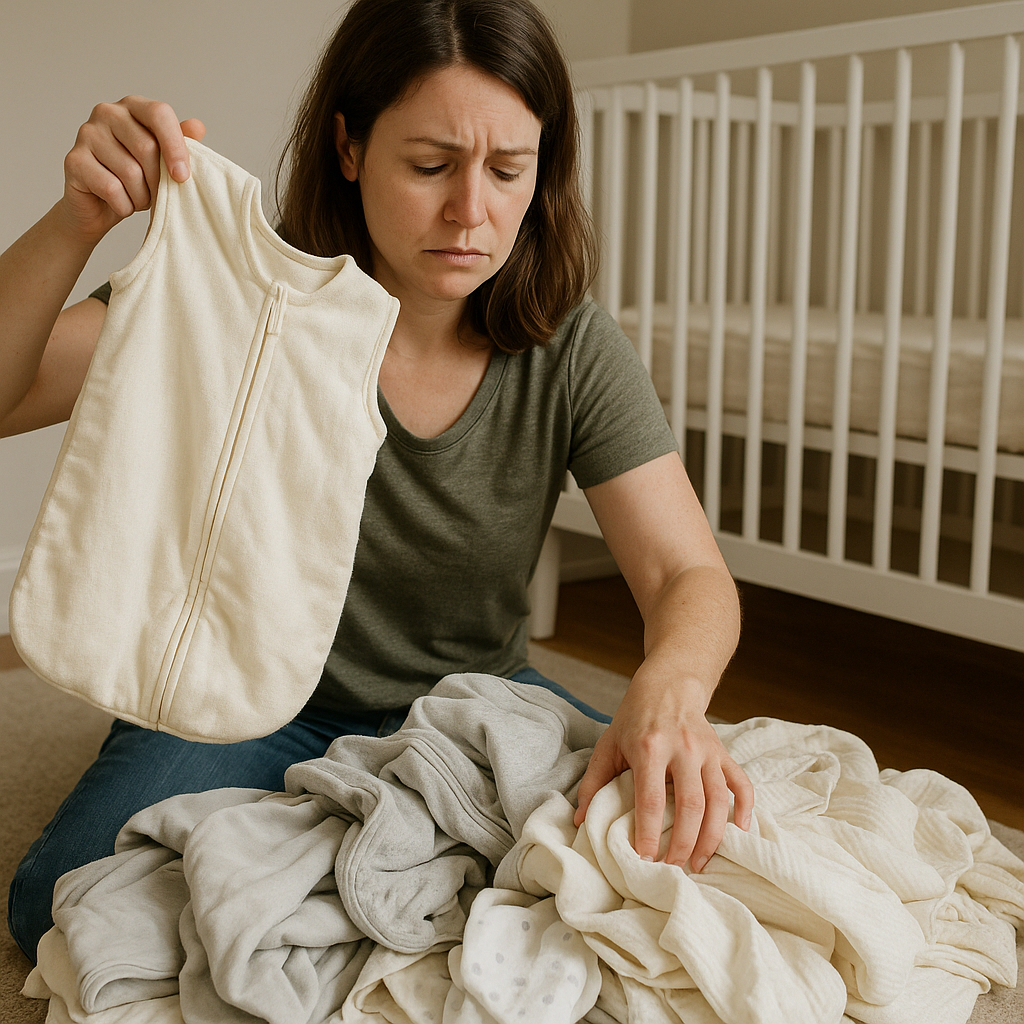
Sleep gear can pile up quickly: swaddles, sleep sacks, receiving blankets, and backups. Then bedtime turns into rummaging, which is exactly when you do not need rummaging.
I follow a one-crib rule: the crib or bassinet stays clear except for the baby and a fitted sheet on a firm, flat sleep surface. If you need a place to stash things, use a drawer or a lidded bin. That is also a safety issue. Safe sleep guidance is straightforward: keep loose items out of the sleep area, including the stuff you swear you'll remove later.
For the minimalist version that still feels practical, choose sleepwear that fits your baby's current stage and keep a backup on hand. In our house, it was: a Halo SleepSack Swaddle for the early weeks, then a Woolino sleep sack once we were out of swaddling. Keeping one backup available means you have a clean option while the other is being washed.
What I keep within reach is also limited: one fitted sheet on the mattress and a spare fitted sheet stored in the dresser drawer. If there's a blowout at midnight, I strip the fitted sheet and replace it with the spare. Because the crib stays clear, there are no stray muslin cloths or other items to remove before bedtime. For me, the benefit of keeping the crib and dresser simple is having fewer things to deal with at bedtime.