
Three small environment tweaks (music, lighting, and a 'parking lot' notepad) that keep dinner from turning into a nightly mood swing.
The two-song dinner start
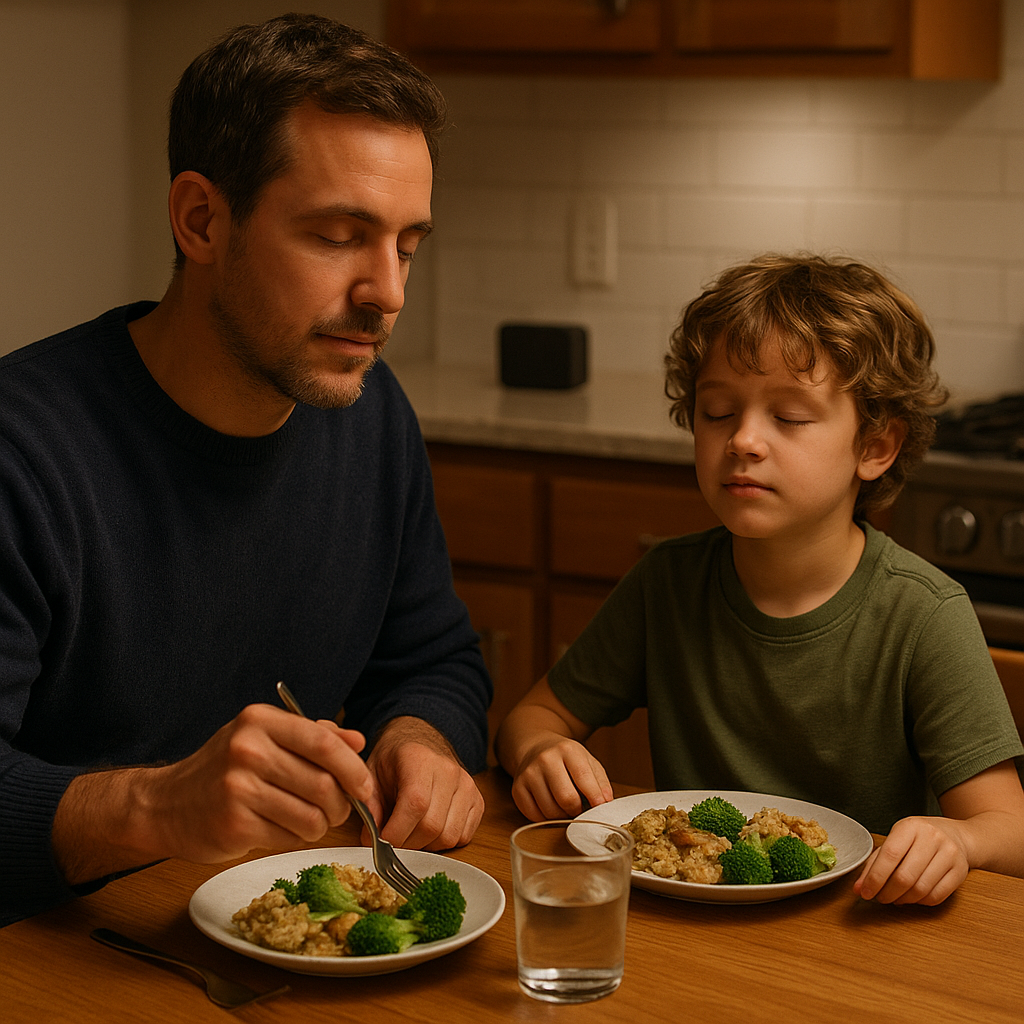
I used to treat dinner noise like weather: it happened, I endured it, and then I wondered why my kid was bouncing off the chair before the plates even hit the table. The fix that stuck was stupidly specific. I start dinner with two songs, and I keep it the same two for a week. Not kids' music, not anything with a punchy intro, and nothing so sleepy that it feels like I'm trying to sedate the room. Think mellow pop, lo-fi, acoustic, even a movie score if it doesn't get dramatic. I cue it on a small speaker (mine is a JBL Go that lives on the counter) and keep the volume low enough that you can hear forks.
Here's why it works in a way I can feel: the first sixty seconds of sitting down is where everybody's nervous system is still carrying whatever came right before. School noise, traffic, sibling static, my own work brain. Two familiar songs create a tiny ritual without a speech. My kid knows what's next, my body stops rushing, and the table gets a rhythm that isn't arguing. If you want to make this concrete, set a rule for yourself: no problem-solving until the second song starts. You don't announce it. You just do it. It's wild how often the first grumpy comment never shows up when you give everyone a predictable ramp.
What I pay attention to: shoulders. If my kid's shoulders are up near their ears, I know we're not ready for big questions like "How was your day?" yet. The music buys a little time for chewing and settling. Also, keep the playlist short on purpose. If you build an hour-long thing, you will start tinkering with it like it's a hobby, and then dinner turns into DJ critique night. Two songs. Same opener. Let the atmosphere do the work while you pass the water.
Light the table, not the whole kitchen
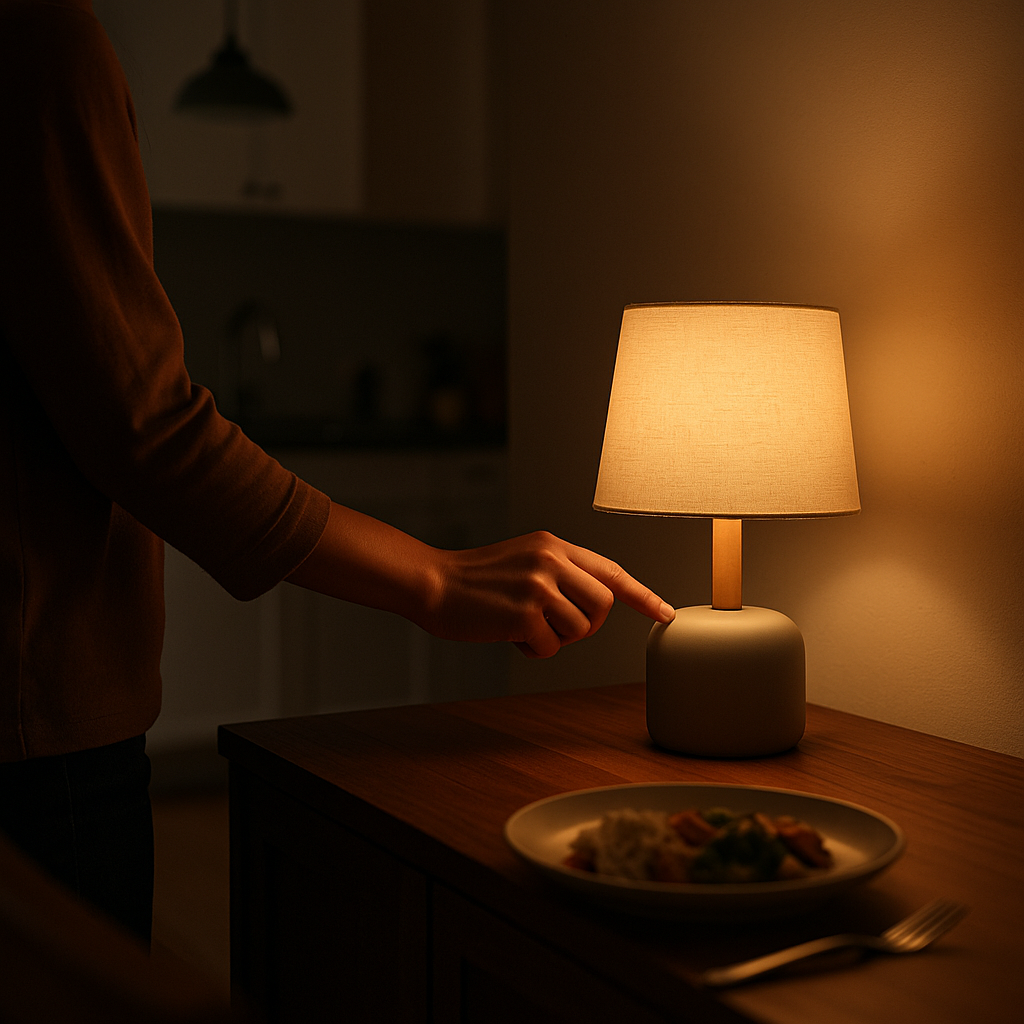
If your dinner table is under a bright ceiling fixture, try this once: turn the overhead off and light only the eating zone. I'm not talking about candles with little kids around. I mean a battery lantern, a dimmable table lamp, or even the warmest bulb you can put in the fixture that hangs over the table. I keep a small warm LED lamp on a sideboard, and it flips on with one tap. The rest of the kitchen can stay functional, but the table gets to be its own calmer pocket.
This sounds like decor advice until you watch what it does to mood in real time. Bright, cool light makes my kid squint and fidget, and it makes me talk faster. Soft light slows everybody down without anyone having to "try." The vibe shifts from hurry-up fuel stop to a place where chewing happens. When my kid is tired or wired, the overhead light seems to amplify the jitter. With a warmer, smaller pool of light, they stop scanning the room and start looking at what's on the plate. That alone cuts down on the table arguing that starts as restlessness.
Practical setup that doesn't become a project:
- Pick one light source that lives near the table. A rechargeable lantern is great because it doesn't require moving cords around. Look for one that has a warm setting and a dimmer.
- Aim for faces, not ceilings. A lamp that throws light sideways at table height feels cozy. A light blasting down from above feels like a spotlight.
- Keep the rest of the room boring. I don't set mood lighting everywhere. The contrast is the point. You want the table to feel like the only place you have to be.
I noticed a weird side benefit: when the table is lit and the background is darker, my kid stops getting up for random reasons. The pantry is less visually tempting. The toy corner isn't calling their name. It's not magic, but it makes it easier for them to stay in their seat long enough for their mood to even out.
The 'parking lot' notepad for dinner talk (and one rule)
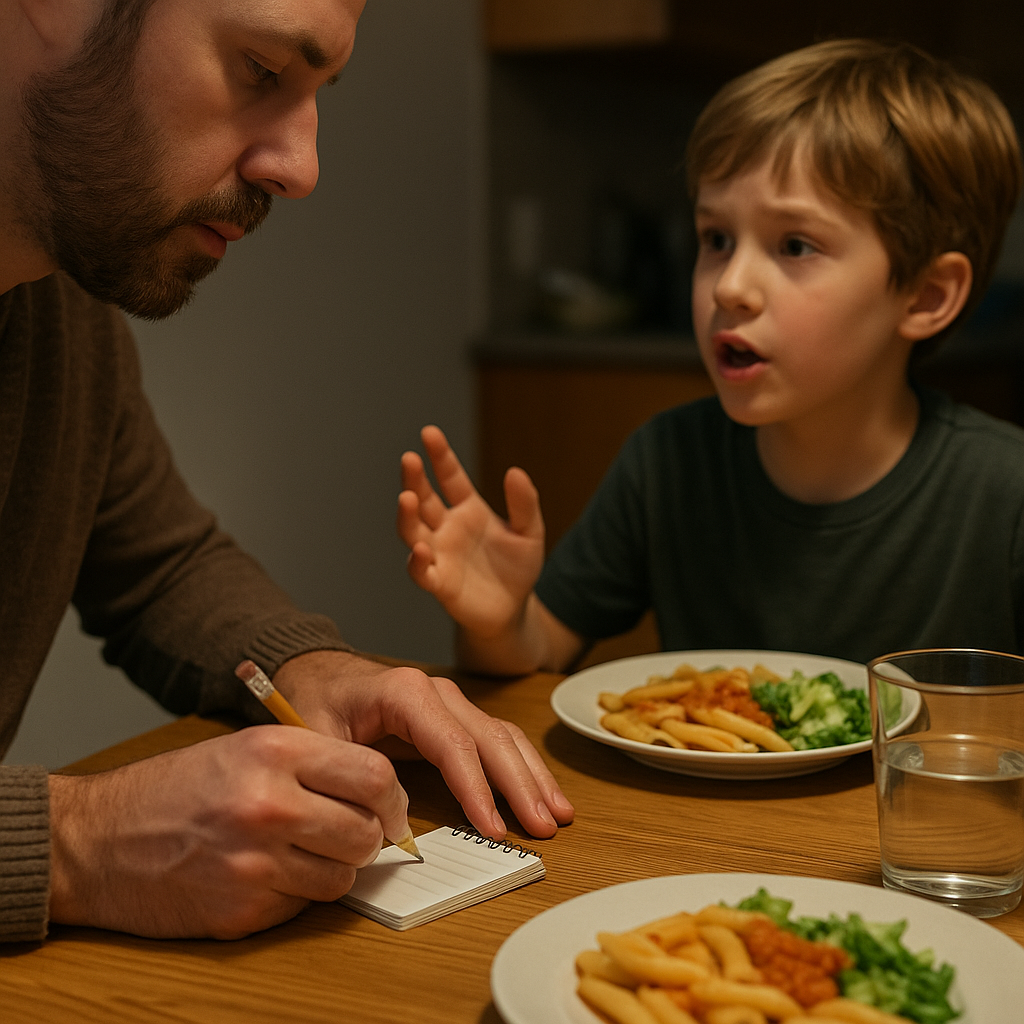
Dinner mood goes sideways in my house when conversation turns into logistics. Someone remembers a permission slip, I bring up tomorrow's appointment, my kid asks a question that spirals, and suddenly we're not eating, we're managing. I started keeping a small notepad on the table with a short pencil. Not a big family notebook. Just something that can hold five lines. I call it the parking lot because it gives our brains a place to put things that feel urgent without dragging everyone into them mid-bite.
The one rule is simple: if it can be written down, it doesn't get discussed until plates are cleared. That includes my kid's rapid-fire questions that are really anxiety dressed up as curiosity. If it's a true safety issue, obviously you handle it. But most of the stuff that spikes mood at the table is not that. It's just momentum.
How it looks in practice: my kid starts to tell a long story about a recess conflict, and I can feel the tone getting brittle. I don't shut it down. I say, "Write 'recess' on the pad so I don't forget. We'll talk when we're done eating." They usually like being the writer. If they can't write yet, they dictate and I do it. Same with me. If I remember the dentist form, I write dentist form and keep chewing. The pad sits there like a little pressure valve.
The notepad also handles the tiny power struggles that wreck appetite and focus. "Can I have a snack after this?" Write it down. "Can we watch something later?" Write it down. When those questions get answered immediately, they multiply. When they get parked, the kid's nervous system settles because the thought isn't lost, it's captured.
I like this tool because it changes the table atmosphere without making dinner into a therapy session. You're not analyzing feelings. You're protecting the space where eating happens, so mood has a chance to level out on its own while everyone gets some food in them.