
A three-tab sticky-note dial lets you flex bedtime, mornings, and weekends without having to renegotiate everything out loud.
The sticky-note dial on the fridge
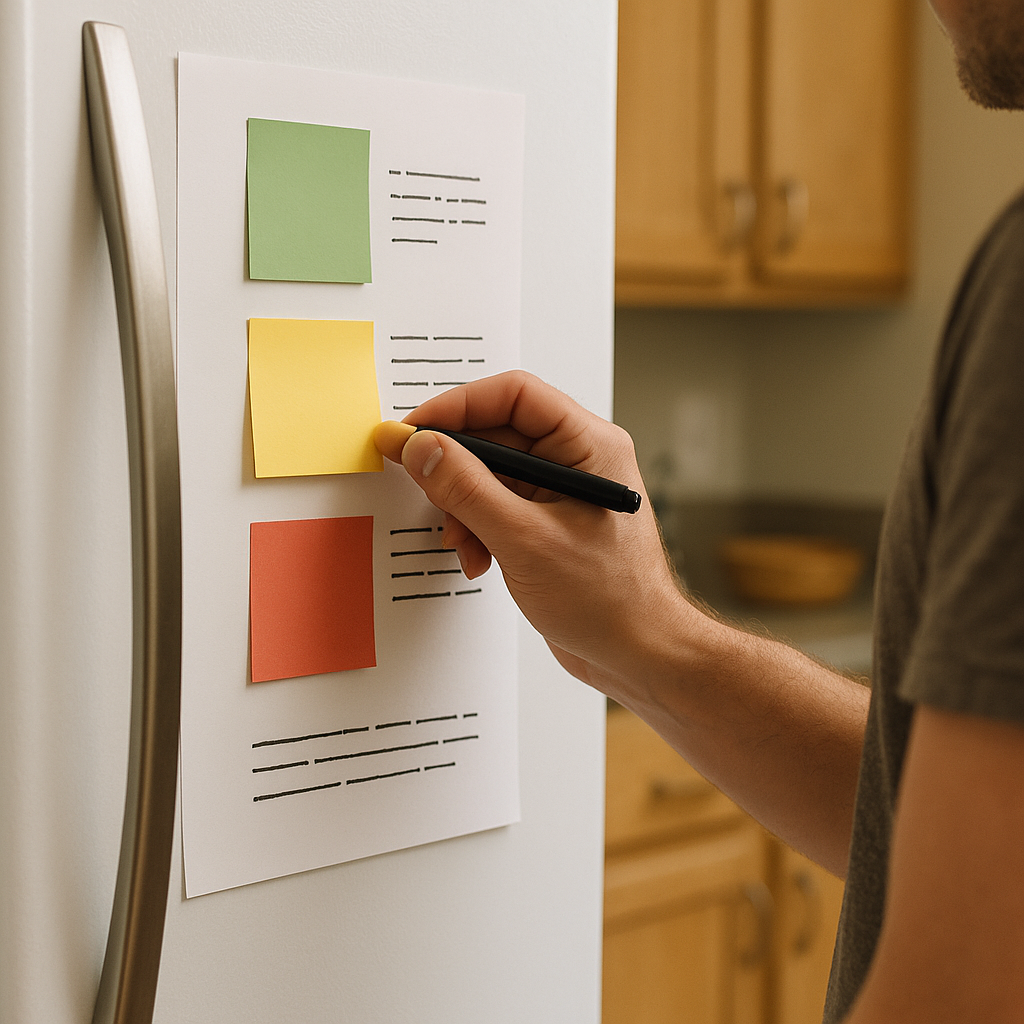
We kept having the same argument, just in different outfits. One of us wanted a clean, repeatable schedule. The other wanted to respond to the kid we had that day (the one melting down at 6:15, not the imaginary one who always eats and bathes on time). What finally helped was making a physical dial instead of trying to settle it in the middle of a tired moment.
Grab three sticky notes in three colors and a Sharpie. Label them: GREEN = smooth day, YELLOW = wobbly day, RED = survival day. Then pick three pressure points you argue about the most: bedtime start, morning pace, and screen rules are common ones. On the fridge, write the three pressure points down the left side on printer paper. Now, for each line, write what changes on green/yellow/red. Not a novel. A sentence. Example: Bedtime start: green 7:30, yellow 7:45 with one story, red 8:00 with lights low and no bath. Morning pace: green breakfast at the table, yellow breakfast in the car, red smoothie pouch, and shoes on first. Screen rules: green: none; yellow: 10 minutes at a planned time; red: one familiar episode earlier in the evening when everyone needs a reset.
The relationship part is that the dial is pre-approved. Nobody is asking permission at 7:42 p.m. You're just moving a sticky note. And because it lives on the fridge, you can do it at 4:30 when you notice your kid is running hot, not when you're both cornered in the hallway. We started treating the color shift like weather. If it looks stormy, you adjust. No commentary needed. The funny surprise: once the dial exists, we argue less about whether the kid is "fine" and more about what helps them land.
The 3-minute renegotiation: ask before you advise

There was a stretch when our kids' needs shifted every two weeks. Teething. A new daycare room. Dropping a nap and suddenly hating the bath. Each change came with a bonus feature: the old routine still looked good on paper, so whoever wanted to keep it felt like the reasonable one. That's how you end up fighting about logistics when you're really fighting about feeling alone in it.
We stole a move from our own workplace calendars and made it ridiculously short: three minutes, standing up, no phones. The only rule is you ask before you advise. It goes like this:
- Question 1: "Are you looking for ideas or backup?" (If they say backup, you stop talking and start doing.)
- Question 2: "What changed since last week?" Keep it specific: bedtime resistance, appetite, separation panic at drop-off, the 5 a.m. wake-up, whatever is new.
- Question 3: "What needs the most attention tonight?" Maybe dinner needs to stay simple, bedtime needs to stay on track, or everyone needs a calmer evening.
Then you make one micro-adjustment for the next 24 hours only. Not a permanent policy. That time limit matters because it takes the moral weight off being wrong. If you decide, "Okay, tonight we protect sleep," then you might skip the bath, move pajamas earlier, and let teeth get brushed in the kitchen sink if the bathroom has become the battleground. If you decide, "We protect calm," then you might start bedtime 15 minutes earlier and trade the second book for a back rub. You're not surrendering standards. You're adjusting the plan to match what your kid needs right now.
In our house, this kept us from the classic couple loop where one person becomes the enforcer and the other becomes the rescuer. When you do the three questions first, you can hear each other think. And when your child's needs shift again, you already have a low-drama way to adapt without turning every night into a courtroom.
Weekend drift: the two-anchor plan

Weekends are where our best intentions go to die. Someone wants to keep the structure because Monday is coming. Someone else wants to relax because, hello, it's Saturday. Meanwhile, your kid might be in a phase where they can handle an outing, but only if lunch is on time, or they can do a long morning at home, but only if they get outside before the walls start to feel like a cage. The need isn't more routine or less routine. It's the right amount of predictability for the kid you have right now, plus enough freedom that the adults don't feel trapped.
The fix for us was a two-anchor plan. We choose only two non-negotiables for the day, and we say them out loud before we start stacking errands. Ours are usually:
- One food anchor. Lunch happens between 11:30 and 1:00, even if it's picnic food in the trunk. This is mostly about preventing the specific kind of hunger crash that turns a normal kid into a tiny rage poet.
- One rest anchor. Not necessarily a nap. Sometimes it's 30 minutes of quiet time with books, sometimes it's a stroller walk, sometimes it's simply being home with the lights low. The point is a predictable downshift.
Everything else is flexible by design. If your kid is in a clingy phase, the rest anchor might come earlier, and the outing might get shorter. If they're in a "I need to move my body" phase, you make the outing the thing, and the rest anchor becomes a calm reset right when you get home. The relationship win is that you stop negotiating every single block of time. If we both agree on the two anchors, we can be generous about the rest: yes to the playground, yes to the hardware store tag-along, yes to bailing on the second stop when the vibes go bad.
For us, this also keeps scorekeeping to a minimum. When plans shift (and they will), nobody has to defend themselves with a long speech. You just check: did we hit lunch and the downshift? If so, you can leave the rest messy without feeling like the day failed. And if not, you know why everyone is edgy and can fix it fast, together, without turning it into a personality critique.