The Sears Wish Book: How a 600-Page Catalog Was Every Kid’s Christmas Bible
Before online shopping, holiday wishlists centered on a printed catalog that arrived by mail each year. Sears released its Wish Book months before December, often in late summer, and it quickly became a regular part of household routines.
Children spent time going through its pages, marking items, comparing options, and revisiting selections over weeks. The process helped shape expectations for the holiday season and influenced how families planned purchases.
A Catalog That Turned Into A Holiday Blueprint
The Sears Christmas catalog first appeared in 1933, just 78 pages long, as an extension of the company’s growing mail-order business. By 1968, it had a new identity: the Sears Wish Book. Over the next few decades, it expanded fast, reaching more than 600 pages and eventually peaking at 834 pages in 1992.
That growth tracked with how Americans shopped. Sears had already built a reputation through its main catalog, often called the “Big Book,” which ran for decades and sold everything from tools to entire houses. The Wish Book focused on the holidays, but it carried the same idea. Bring the store into the home, and make it easy to buy anything without leaving.
Printing scaled to match demand. At its height, millions of copies were produced every year, with companies like RR Donnelley handling massive print runs out of Chicago. The catalog that reached households across the country just as people started thinking about Christmas.
It Changed The Way People Shopped

Image via iStockphoto/Kerkez
Orders could be placed by mail, by phone, through catalog sales offices, or with help from staff inside Sears stores. The flexibility was especially useful for families living far from major retail centers.
Sears also leaned into affordability. The company promoted low prices and backed purchases with a “Satisfaction Guaranteed or Your Money Back” promise. Later, payment plans and store credit options made it easier to spread out costs.
The Christmas Lists Ritual
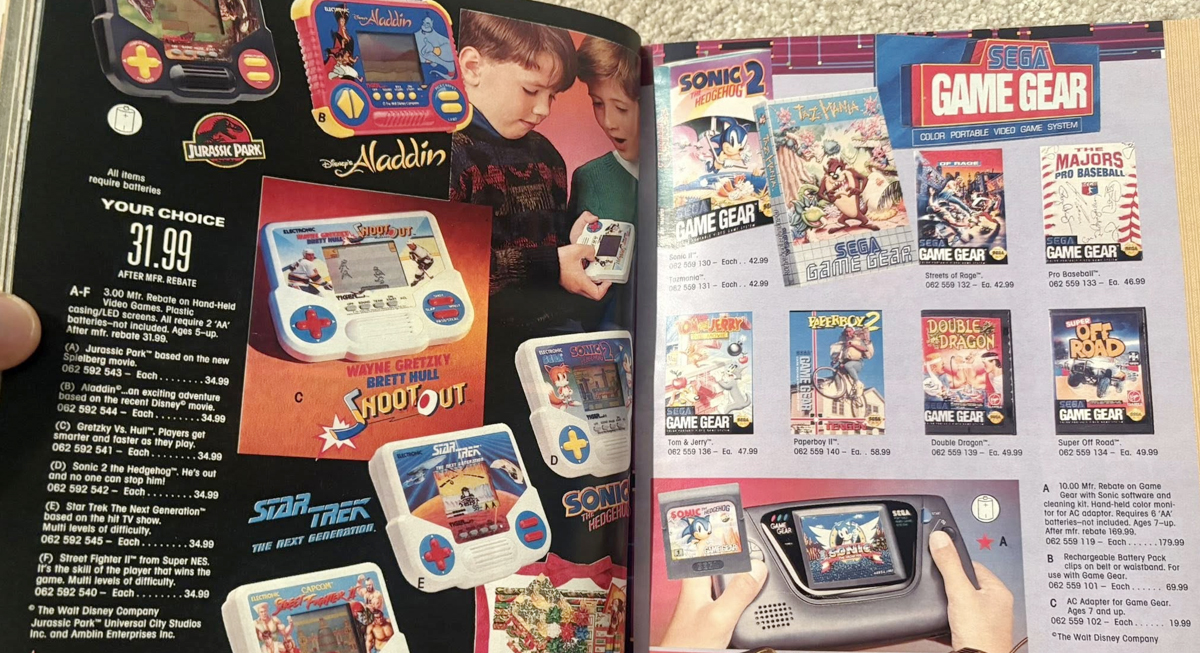
Image via Facebook/CPJ Collectibles
The real change happened in how kids interacted with it. Children flipped straight to the toy section, which could stretch to 100 pages or more, and started circling. This created a clear, visual wishlist. It also turned into a shared activity. Siblings competed for pages, parents reviewed selections, and extended family used it as a guide for gift ideas.
Electronics were front and center. Items like the Speak & Spell introduced kids to early digital learning, while cassette recorders let them capture songs off the radio. Handheld electronic sports games, built around simple moving dots, passed as portable gaming.
The Sears Video Arcade, a version of the Atari system, brought home gaming into living rooms. Its cartridges promised variety, even if the graphics were basic by today’s standards.
Toys filled the rest of the catalog. Big Wheels, remote-controlled cars, glow-in-the-dark race tracks, and Star Wars figures tied to The Empire Strikes Back dominated wishlists. Battery-powered ride-on vehicles and early stationary bikes hinted at what future gadgets might look like.
Then came the curveballs. The same catalog that sold dollhouses and play kitchens also listed rifles and gun cabinets.
When The Pages Started To Shrink
The system held strong for decades, but changes in retail began to chip away at its role. The main Sears catalog ended in 1993, and the Wish Book followed suit. Page counts dropped, shrinking to around 150 pages in later years.
Attempts to revive it came in different forms. A miniature “Little Big Wish Book” appeared in the mid-2000s. A larger version returned in 2007 with about 100 pages. By 2010, the catalog moved to smartphones.
Sears brought the Wish Book back again in 2017 as a 120-page edition available online and in print, but the experience had already evolved. The slow process of flipping pages and circling choices gave way to faster digital lists.