
A 10-minute floor map, a shared safety rule, and one quick reset can keep small-space movement play from creating friction between parents.
Tape the boundary together, then name the one rule
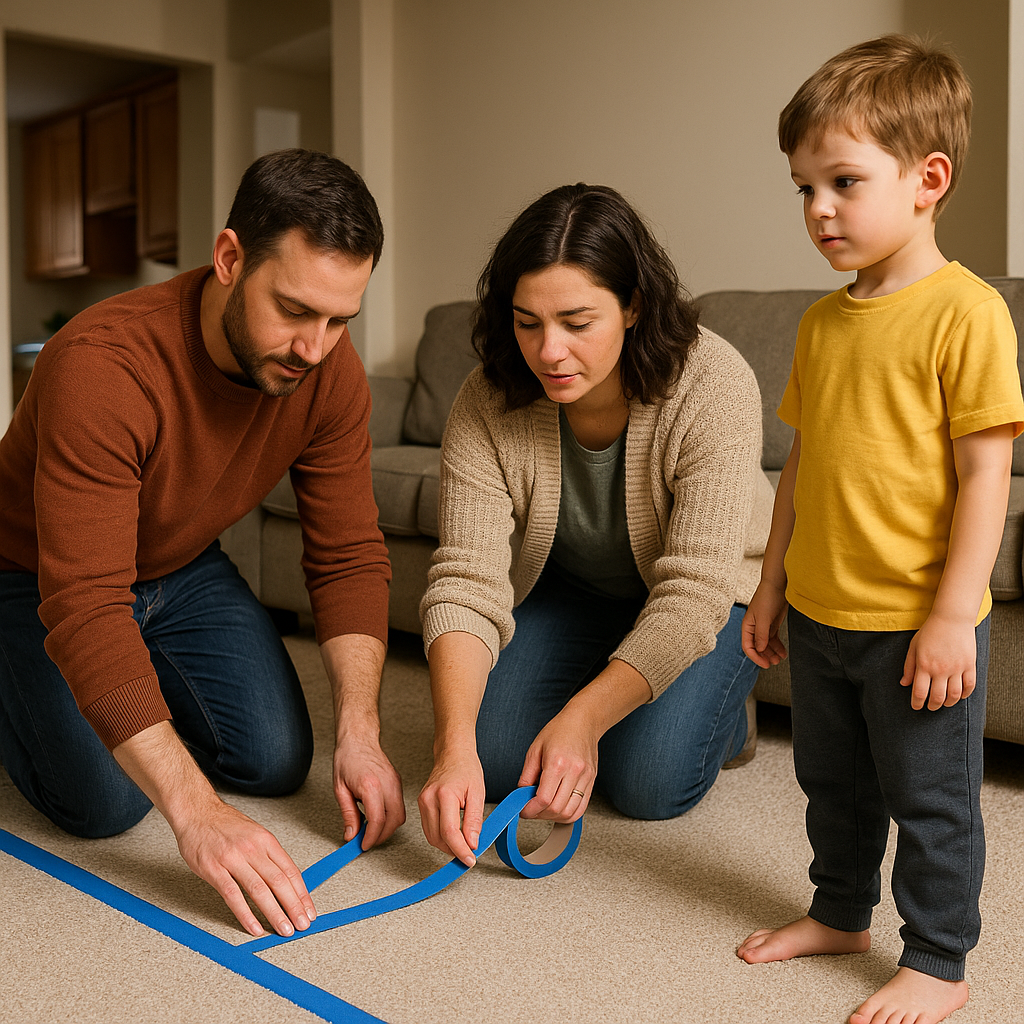
Disagreements can start when adults have different ideas about how much movement is safe in a small living room. Agreeing on the boundaries before play begins can make expectations clearer. If one of you hears every thump as disrespect and the other hears every correction as overreacting, you can rack up a weird amount of resentment in ten minutes. Painter's tape can create a temporary visual boundary, but choose a tape suitable for the flooring and test it on an inconspicuous area first. Parents can lay down the boundary together, with the child watching: a simple rectangle or L-shape that leaves clear walking routes through the room. The goal is not to create an obstacle course. It is to make the play area obvious.
Once the area itself has been checked for hazards, a simple rule, such as "feet stay inside the tape," can help a young child understand where active play belongs. If feet go out, play can pause before the child returns to the start spot. The tape works like a simple traffic line for a young child who is still developing spatial awareness. When both adults agree on the boundary beforehand, the rule can feel more consistent and less like one parent is policing the other.
Two small details can make the setup easier. A taped "parking box" can hold a water bottle and towel, while a short timer can give the activity a clear ending. Keep the phone on a shelf rather than on the floor, where it may become part of the play. When the timer goes, one adult peels one strip of tape while the other does a quick couch cushion check. Cleanup becomes part of the design, not a separate negotiation.
The soft-corner swap that protects bodies and feelings
There's a specific kind of couple tension that shows up right after a near-miss. Your kid slides, a knee skims a table leg, and suddenly you're both talking too fast. One of you wants to end it immediately. The other wants to keep it fun and thinks the worry is contagious. A better approach is to address risky edges before play begins, rather than debating safety after a near-miss.
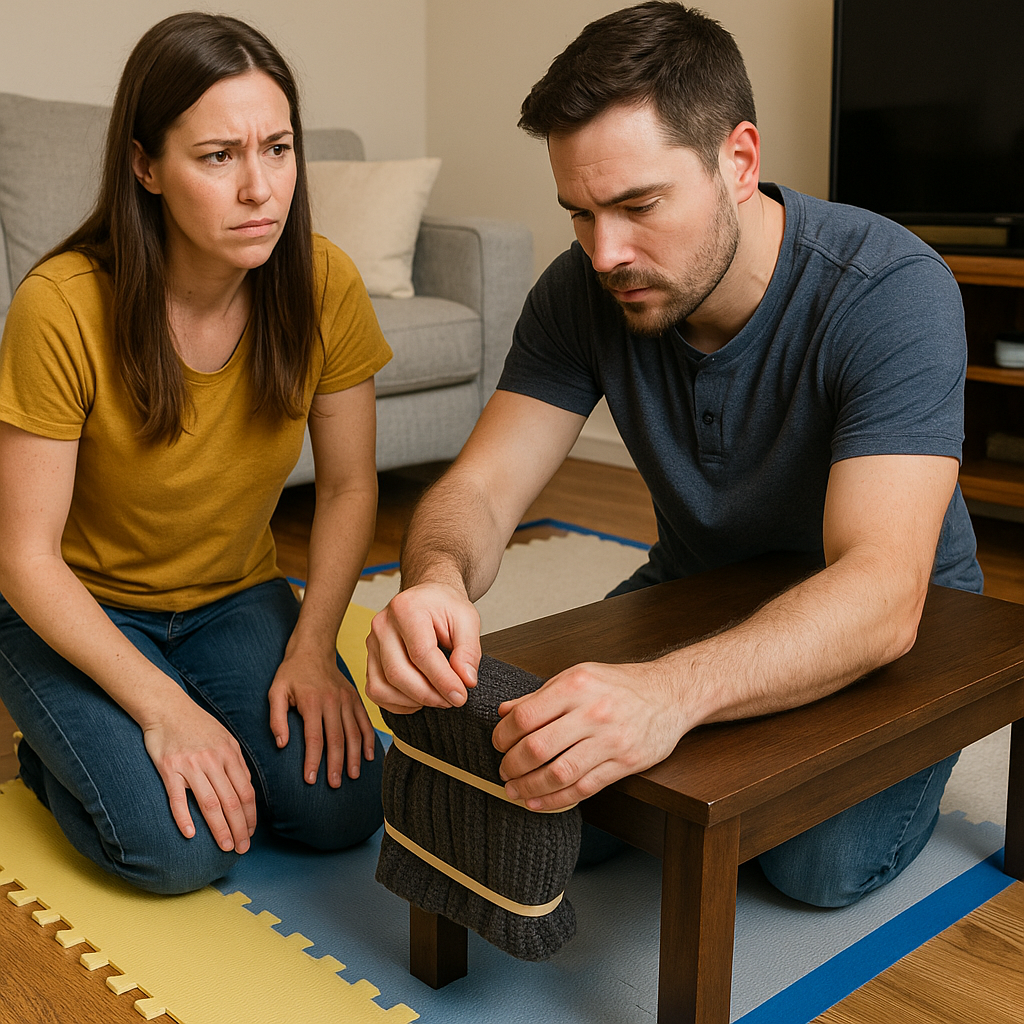
Start by identifying the corners closest to the active play area and deciding which ones need extra protection. That means if we have to keep the coffee table in the room, it gets pushed outside the taped boundary, with the sharp side facing away. If the furniture cannot be moved, use securely attached corner or edge bumpers designed for childproofing and follow the manufacturer's installation instructions. On the floor, a securely placed foam play mat or foldable exercise mat can provide a defined surface, and we keep it aligned with the tape so the kid doesn't trip on an edge. You can feel the difference when a foot lands half on, half off one of those tiles. An uneven mat edge can create a tripping hazard.
Deciding on those protected areas together can also prevent disagreements once play gets underway. It's not "you always let them get wild" versus "you always kill the fun." It's "which corners are we willing to soften today?" The answer changes based on your energy level and the room setup. Some nights we soften the couch arm and the TV stand side. Other nights we soften nothing and pick a different kind of movement that stays low (bear crawls, crab walks, or rolling like a log). That flexibility keeps either partner from feeling like they lost a vote.
Keeping the tape, corner guards, traffic cards, and a hand towel together in one designated spot can also make setup and cleanup easier. If the gear is scattered, the person who cares more about safety becomes the default scavenger, and that imbalance builds faster than you'd think.
Let the kid co-draw the traffic cards (yes, with pictures)
If you've ever snapped "stop" and immediately regretted your tone, you already know why this works. In a small apartment or a tight living room, the adult who notices risk first becomes the constant interrupter. That role gets old fast, and it can bleed into the way you talk to each other later. Three simple index-card cues can create a shared system, especially if the child helps draw them.
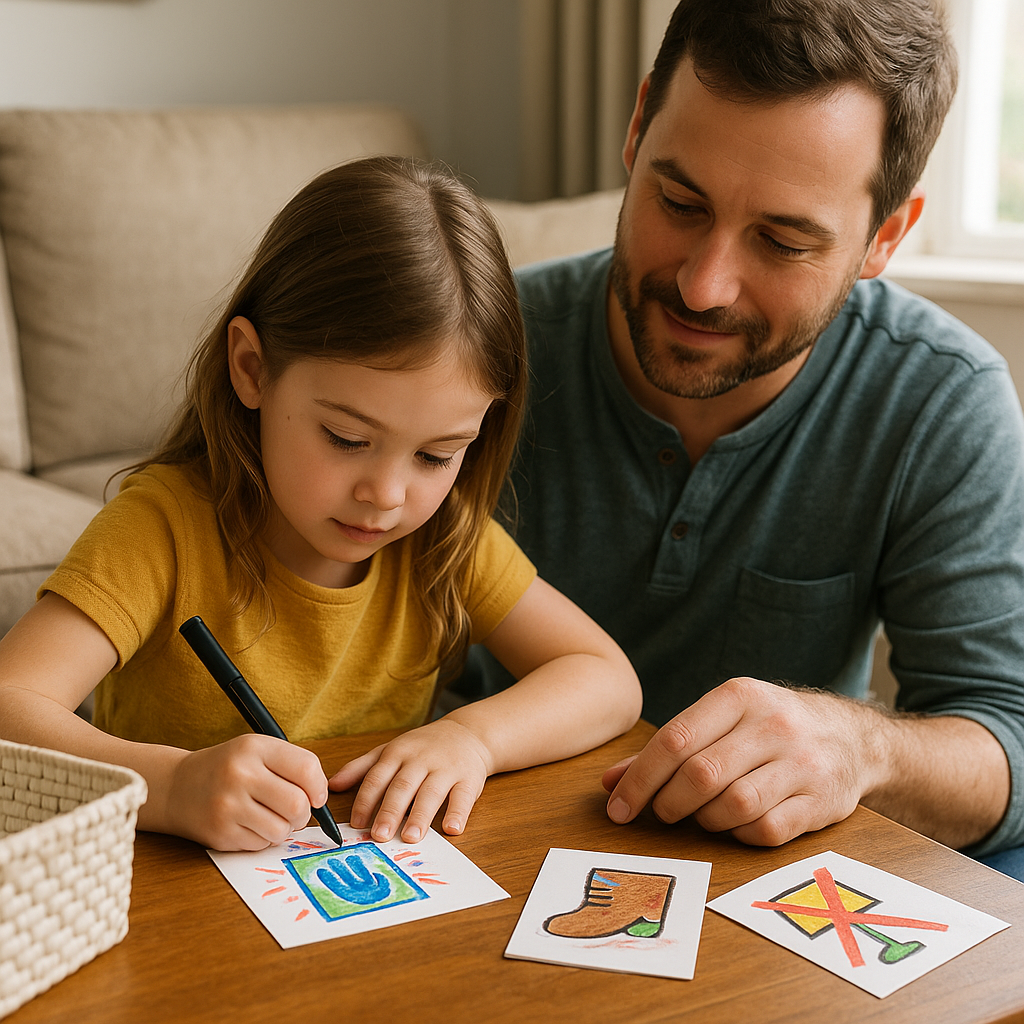
Grab three index cards and a marker (a plain Sharpie is fine). On the first card, draw a foot inside a box. On the second, draw two hands held up like a pause sign. On the third, draw a big X over a lamp or a TV. Let your kid color them in, add stickers, whatever. The point is that your child recognizes the symbols as theirs, not as a random adult command that changes depending on who's annoyed.
Keep the cards in the same basket as the tape so the setup stays consistent. Before we start, one adult holds up each card and asks the kid to show it back with their body. Foot-in-box means they step into the taped zone. Hands up means freeze. X-lamp means they turn their body away from that side of the room. It's goofy for about thirty seconds, and then it becomes a shared language. When things get fast, we don't yell. We flash the hands-up card. The kid freezes more often than you'd expect because it's concrete and familiar.
The cards can help adults use the same cues without turning a safety reminder into a disagreement. Either parent can show the pause card when play needs to slow down. When we end, we ask the kid to put the cards back in the basket. That tiny closing task keeps the cleanup from landing on whichever adult is already simmering.