
Three ways I set up a multi-use homework station using a folding screen, a rolling cart, and a lamp with a timer plug.
The folding screen that turns the table into two rooms
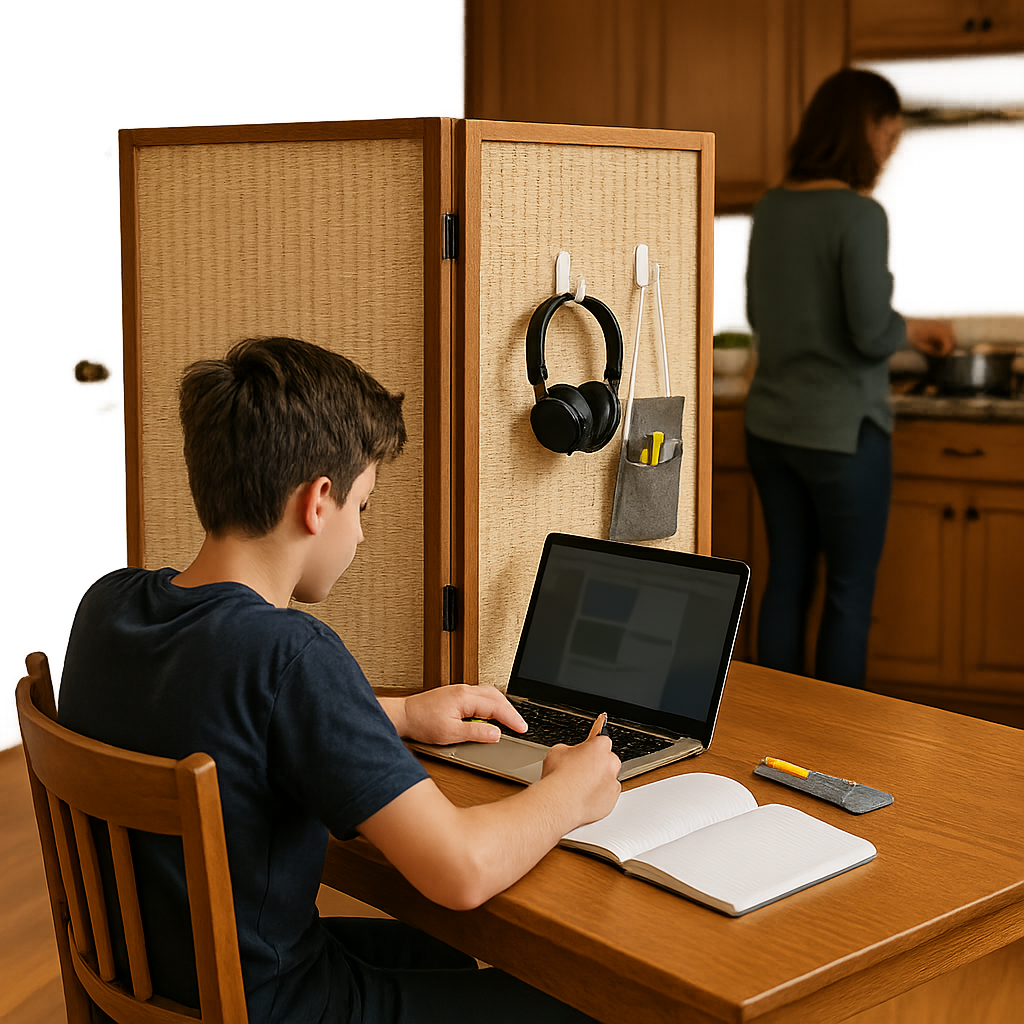
My favorite homework setup is almost stupidly low-tech: a folding room divider that lives behind a bookcase and only comes out on school nights. Not because I care about aesthetics. Because homework dies the second the kitchen turns into dinner, phones buzzing, someone asking where the garlic press went, the dog doing laps. A screen makes a clean visual boundary without permanently claiming a room you don't have.
I set it so it blocks the line of sight to the stove and sink, not so it seals anyone off. Think of it like creating a little corner office at the end of the dining table. The kid sits on the quiet side with their back to the commotion, and I keep the messy side for cooking and the inevitable mail pile. If you don't have a dedicated desk, this is the closest thing I've found to making the table feel like it has two modes.
A few things that matter more than you expect: pick a divider that stands solidly on its own (the wobbly ones become a fidget toy), and add two command hooks on the student side. One hook holds headphones. The other holds a small pouch with two pencils, an eraser, and a highlighter so nobody is doing the slow-motion wander around the house hunting a mechanical pencil. If your kid uses a laptop, run the charging cable along the baseboard first and tape it down with painter's tape where it crosses a walkway. Otherwise, you'll spend the whole evening saying, "Watch the cord," and they will absolutely not watch the cord.
When homework is done, the screen folds up, the hooks stay on it, and the table goes right back to dinner. The best part is that it doesn't require anyone to be tidy as a personality trait. You just need one object that changes the space on purpose.
A rolling cart that carries the whole station away
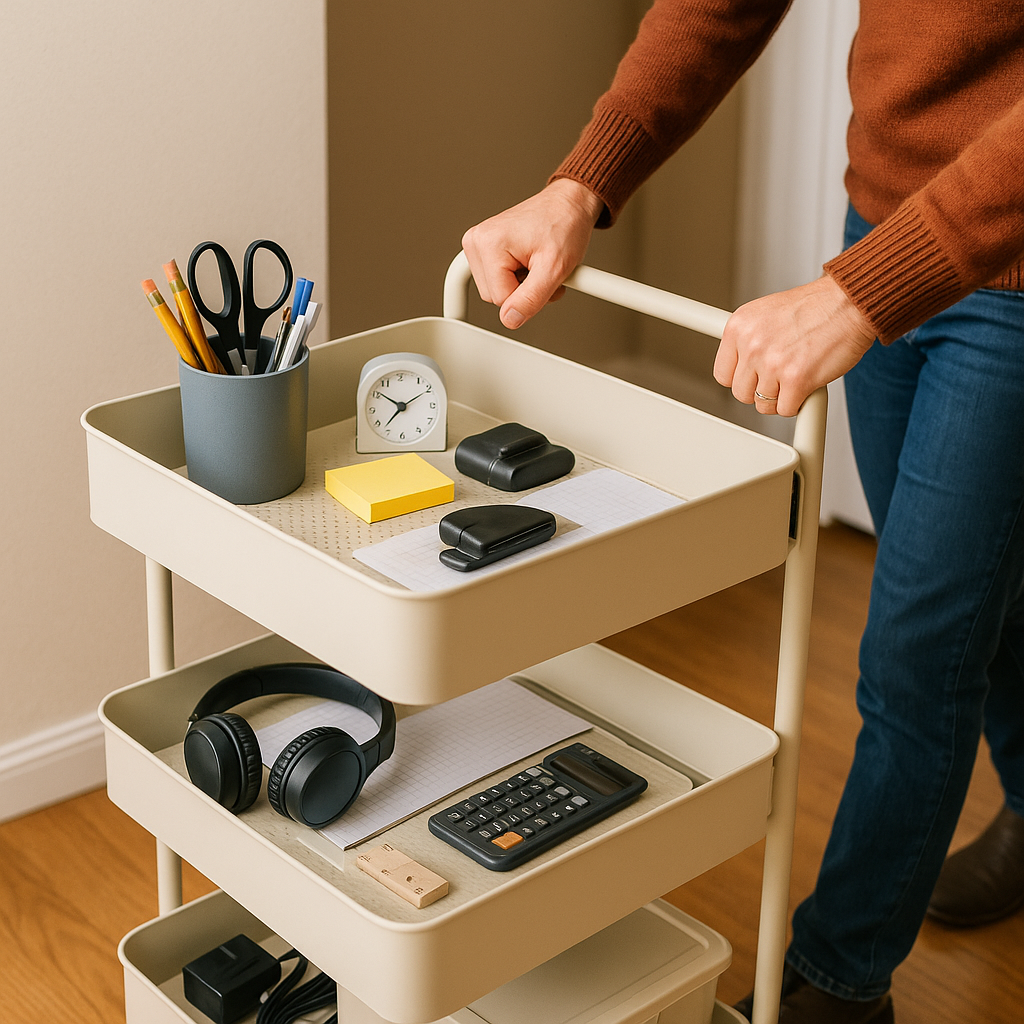
When a homework station falls apart in a normal house, it usually isn't the kid. It's logistics. The scissors went to a craft project. The ruler is in someone's backpack. The Chromebook charger vanished into the couch cushions like a magic trick. A three-tier rolling cart fixes that because you can set up the whole ecosystem once, then wheel it out like you're opening a tiny shop for 45 minutes.
Here's how mine is loaded, top to bottom, and yes, the order matters. Top shelf: the stuff they reach for every five minutes. Pencil cup, extra lead, sticky notes, a small stapler, and a timer (the cheap kind with a physical dial that clicks down, not an app that becomes a detour). Middle shelf: paper and tools that need a flat surface. A clipboard, graph paper, a ruler, a calculator, and the headphones. Bottom shelf: the heavy, awkward things. A hole punch, the laptop charger, and a lidded bin for anything class-specific that changes day to day.
That lidded bin is the sanity saver. I label it by day, not by subject. Monday is one bin, Tuesday is another, and each one gets whatever handouts, library book, or half-finished poster board thing is in play. If I label by subject, it turns into a debate about where something belongs. Day labels end the argument because the question becomes, "Is it due tomorrow?" If yes, it goes in tomorrow's bin. Done.
Practical details from doing this night after night: add a small silicone mat to the top shelf so pencils don't rattle to the floor every time you roll over a threshold. Put a cheap surge protector on the side of the cart with zip ties, and plug the cart into the wall when it's parked. That way charging isn't a separate step you remember at 9:50 p.m. It also means you can run a lamp, laptop, and calculator without playing outlet musical chairs in the kitchen.
When it's time for dinner, the whole station rolls into a closet or a corner. One motion. No sorting. No dramatic clean your space speech. The cart makes your home feel flexible because the system doesn't live on the table, it lives on wheels.
Use one lamp and a timer plug as the homework boundary
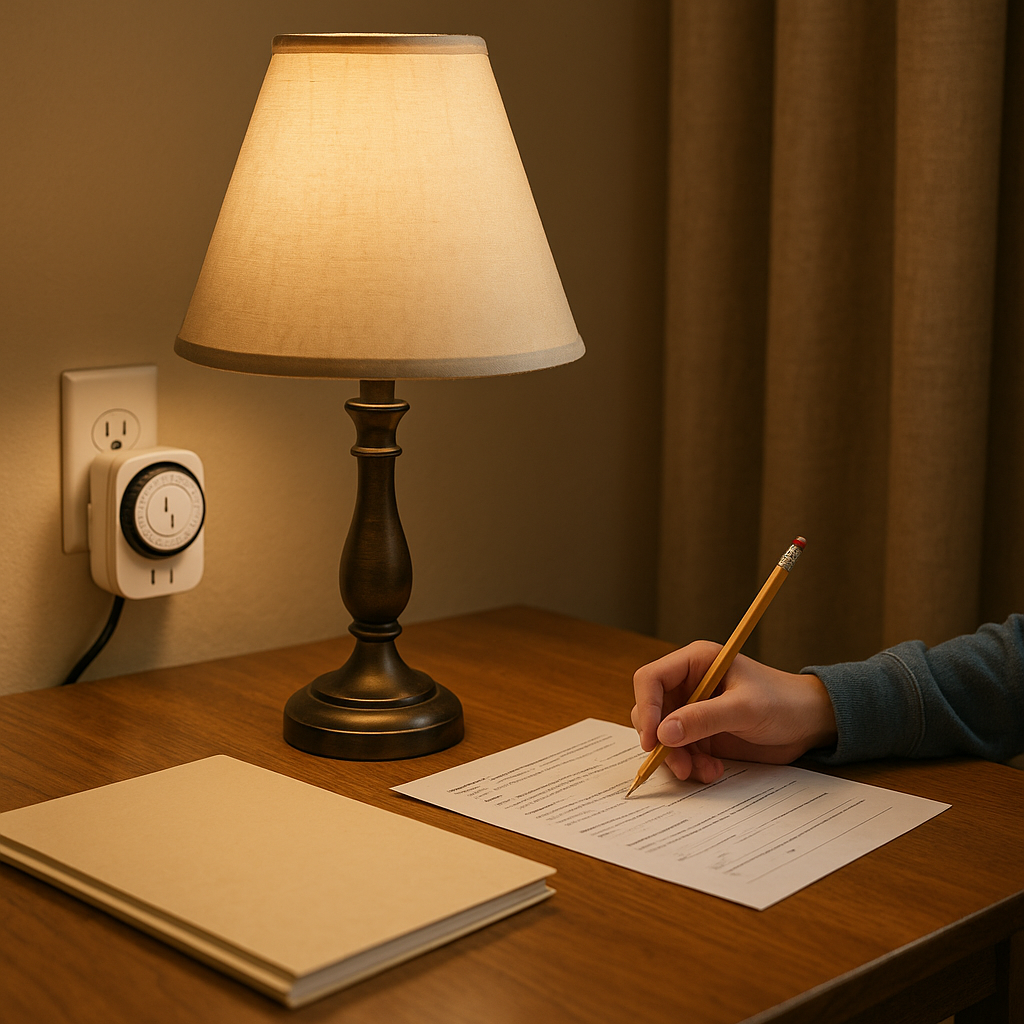
If you want a multi-use homework spot to survive hobbies and friends coming through the house, you need a boundary that doesn't require you to be the boundary. Mine is a dedicated lamp that only comes out for homework, plugged into a timer plug. Not a ceiling light, not whatever happens to be on. One specific lamp. When it turns on, the table is a work zone. When it turns off, the table is just a table again.
I stumbled into this because I was tired of policing start times. I'd say, Get started, they'd shuffle papers, I'd repeat myself, and suddenly I'm in an argument I didn't plan to have. A lamp makes the start feel like a switch instead of a negotiation. I use a smart plug with a schedule so it clicks on at the same time on weekdays. You can do this with a basic timer too, but the smart plug makes it easier when sports or band practice shifts the evening around. I don't tell them what the schedule is anymore. I just let the lamp turn on, and the cue does the nagging for me.
Set the lamp up like you mean it. Warm bulb, bright enough that they aren't hunched over a worksheet squinting. Place it on the far side of the table so the light lands on the paper, not in their eyes. If the table is also where you eat, pick a lamp with a stable base that won't tip when someone slides in with a backpack. I learned this after a near miss with a ceramic lamp and a hydro flask.
Here's the key part: tie the lamp to a tiny, physical reset. When the light turns on, the rolling cart comes out and the screen goes up. When the light turns off, papers go into a single inbox tray (one tray, not a stack of cute organizers) and the cart gets parked. Friends can come over, hobbies can take over the table, dinner can happen, and you still have a repeatable way to flip the room back into homework mode tomorrow without starting from scratch.
The lamp isn't magical. It's just consistent. In a busy house, consistency is the only thing that feels like extra space.