
Three schedule tweaks that survive nights, naps, and the random pediatrician call nobody wrote down.
We put the next handoff on the fridge
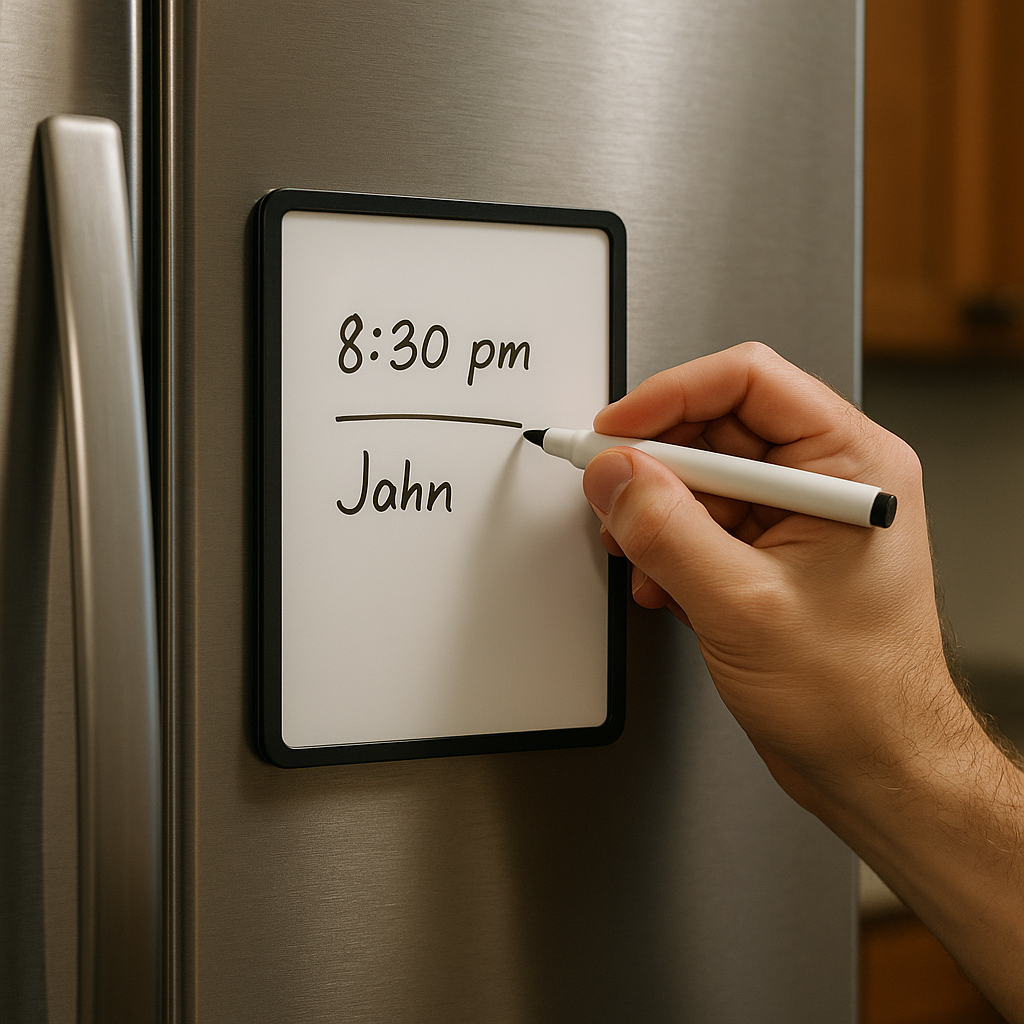
We tried being chill about the schedule at first. Big mistake. When you're running on two-hour chunks of sleep, "I thought you were doing it" is basically a swear word. The thing that finally stuck for us was a dry-erase magnet that lives on the fridge, at adult eye level, not buried in a notes app. It has exactly one sentence on it at any time: Next handoff: [time] / [person]. That's it. No to-do list, no running commentary, no cute stickers. Just the next baton pass.
Here's how we keep it from becoming yet another ignored system. Every handoff has a 20-second reset built in: the person coming off shift writes the next handoff line before they disappear into the shower, bed, or their first hot coffee. If you forget, you don't fix it later. You fix it immediately, because later is how you end up with both of you standing in the kitchen at 2:07 a.m. listening to a newborn ramp up.
We use clock times for our handoffs, but feeding still follows the baby's needs rather than our schedule. If the day is chaos, pick a checkpoint you can see: 8:30 p.m. (after the bottle) or 11:00 a.m. (after the walk). The extra five words matter when one of you is holding a squirmy kid, the other is hunting for the gas drops, and neither of you can remember what day it is. The magnet doesn't solve every argument, but it stopped the specific fight where both people felt like they were working and somehow no one was on duty.
We use a backup schedule for rough nights

Our first mistake was trying to find one perfect co-parenting schedule and then getting mad when reality laughed at it. A newborn doesn't care about your beautifully balanced plan. Growth spurts happen. A clogged duct happens. Somebody gets a work call at the worst time. So we stopped pretending one schedule could cover every day and wrote two modes that we can flip between without a conversation.
Mode 1: Weeknight rhythm. This is the plan for a normal day when nobody is sick, and the baby isn't staging a personal protest at bedtime. For us, that meant one person did the last stretch before bed, the other took the first overnight window, and we swapped again at a fixed time. The key detail: each window includes the annoying parts, not just the cuddly parts. If your shift ends right when the bottle parts need washing, resentment builds fast. We made the window include cleanup, restocking the formula, and putting the burp cloths back where they belong.
Mode 2: Rough-night backup. This is for nights when sleep is falling apart, and you're starting to talk to each other like you're both the enemy. Backup mode has one goal: to protect one adult's uninterrupted sleep block. We aim for a solid 4- to 5-hour stretch for the off-duty person. If needed, the off-duty person uses earplugs, and the on-duty person gets the next sleep block. If you're breastfeeding and can't fully offload feeds, triage can still mean your partner handles everything except the minutes you're actively nursing: diaper, resettle, swaddle redo, and the "why are you suddenly wide awake" pacing loop.
We keep both modes written down (same fridge magnet, different corner) so it doesn't turn into a midnight negotiation. The weird relief is that backup mode isn't anyone failing at parenting. It's just acknowledging that the baby had a loud night, and you still have to function tomorrow.
We added a three-minute handoff

Pure handoffs sound efficient: one person clocks out, the other clocks in. In newborn life, that version tends to produce a different kind of stress, because the incoming parent spends the first 20 minutes playing detective. Why is the baby fussy? When was the last feed? Did we already give today's vitamin D, or does the next parent still need to handle it? (No, a glance at the dropper doesn't tell you anything. Ask me how I know.)
We added a three-minute overlap, and it changed the tone of our days more than any app did. The quick handoff happens while we're both upright, even if one of us is still in pajama pants and holding a bottle. The script is always the same, which is what makes it doable when you're tired:
- Last feed: time + how it went ("took 3 oz, fought the last ounce")
- Diaper situation: normal, blowout watch, rash cream already on
- Sleep: last nap ended when, and whether the baby is due soon
- One thing to know: hates the swaddle tonight or "only settles with the pacifier"
Two rules keep it from ballooning. First, you don't add a fifth bullet. If something extra matters (like a pediatrician callback window), it replaces a bullet; it doesn't stack on top of it. Second, whoever is coming on shift checks that the changing station has wipes, diapers, and cream, while the person going off shift refills one thing before leaving.
It sounds small, but it prevents that specific couple-fight where you're not mad about the diaper. You're mad that you're always the one who has to reconstruct the last six hours from clues.