
A tiny clipboard by the nursery door, a shared code for wakeups, and fewer whispered arguments over who does what.
The Doorway Notebook (and the one rule that makes it work)
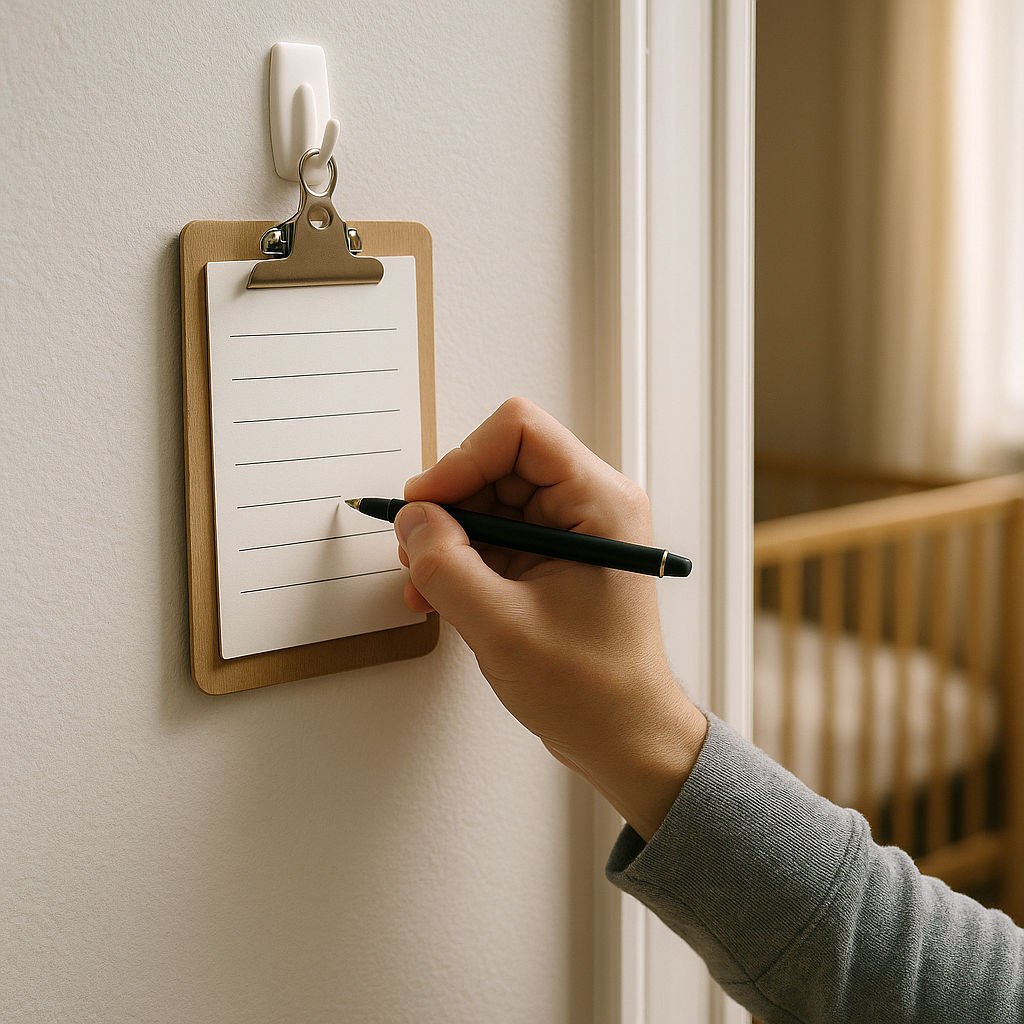
I stole this from restaurant life: if it isn't written down, it doesn't exist. We keep a small clipboard and a pen on a Command hook right outside the nursery door, at adult eye level, so they aren't toys. On the paper, there are only three lines for the night, nothing fancy: Plan, Notes, Morning. The whole point is to stop the sleepy courtroom cross-examination that starts with, "Did you get the last one?" and ends with both of you wide awake and mad.
Before the first bedtime attempt, we fill out the Plan line in plain language: who is on first wake, who is on second wake, and what counts as an exception. Example: "I take first wake until 1:30. You take anything after. Exception: if there's a diaper change plus a feed, tag-team." It looks almost insultingly simple on paper, which is why it works when your brains are running on fumes.
During the night, whoever goes in writes one quick note after they get back out. Not a diary. Just the kind of detail your partner will otherwise ask about at exactly the wrong time: "2:08 pacifier only, 6 min" or "3:41 feed, left side, 12 min" or "4:55 poop, new sleeper." When you're exhausted, those details can be surprisingly easy to forget. A paper note worked better for us than an app because we could both see the same update without opening our phones.
The one rule: no discussing the notes at night. The notebook is a handoff tool, not a conversation starter. If you want to change the plan, write a single sentence on the Morning line, like "Need earlier swap tomorrow," and leave it there. It sounds strict, but the alternative is whisper-fighting while a baby does that hiccupy half-cry that makes you both panic and snap at each other. This keeps you on the same team without needing either of you to be eloquent at 2 a.m.
Two codes for wakeups: one for urgency, one for patience
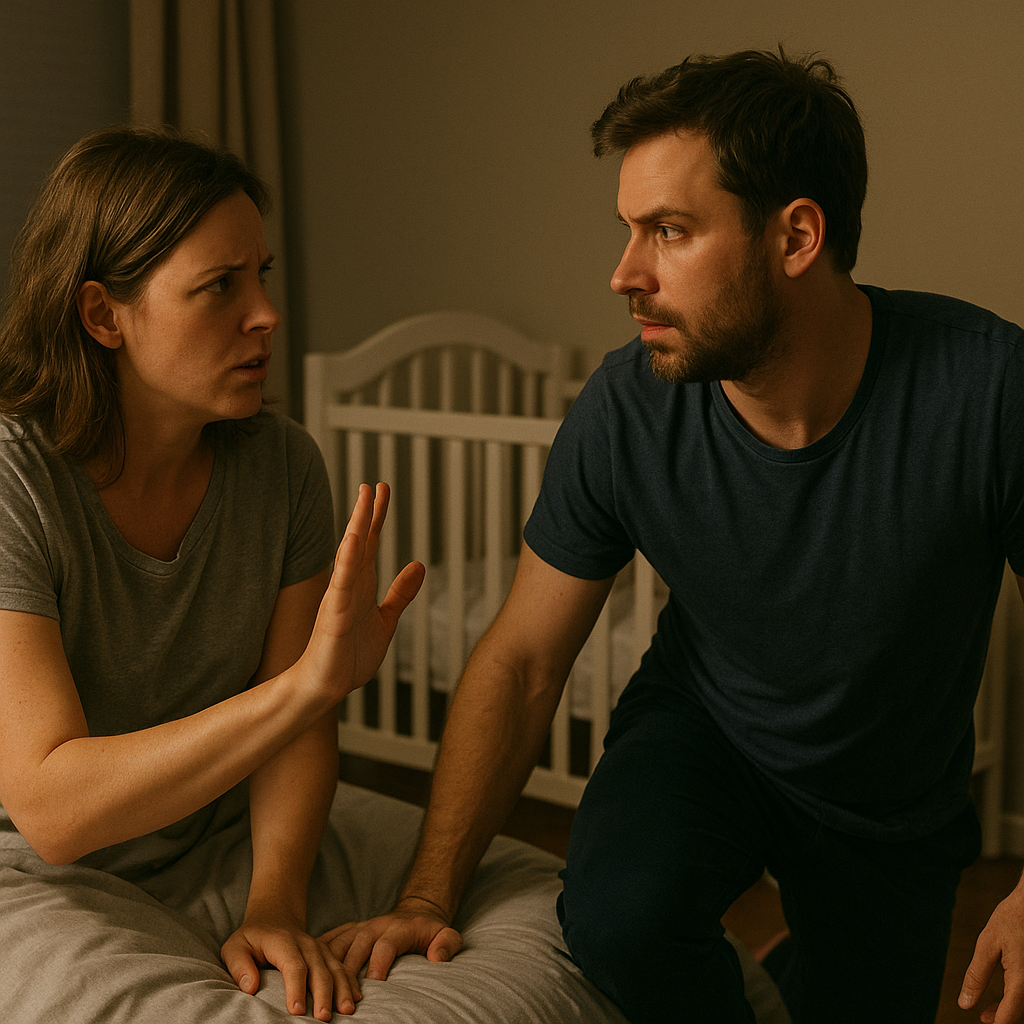
We used to do the classic nighttime thing where one of us would bolt upright at the first squeak, the other would say, Give it a second, and suddenly we were arguing about parenting philosophy instead of listening to the actual sounds coming from the crib. What helped was agreeing on two simple codes in advance. Not cute ones. Not inside jokes. Just boring words that mean something specific when your patience is thin.
Code 1 is the urgency word. Ours is now. If the person who is awake says now, it means: get up, no questions, no debate, no sighing. This is for obvious distress, repeated coughing, vomiting, breathing trouble, or anything else that makes one of us think the baby needs immediate attention. I don't want my partner trying to talk me out of my gut check at 3:12 a.m., and they don't want me doing it to them either. One word gives you instant alignment.
Code 2 is the patience word. Ours is hold. If the baby is only stirring or making brief sleep noises, hold means: listen for a moment before stepping in. Actual crying, hunger cues, illness, or anything that feels wrong gets a prompt response. Most nights, that small pause prevents us from waking the other parent unnecessarily. It also keeps the on-duty person from feeling policed, because the pause is something they chose and named.
Here's the part that surprised me: the codes are as much about how we talk to each other as how we respond to the baby. Without them, every wake becomes a micro vote on who is more tired, who is more anxious, and who is more right. With them, the conversation shrinks down to logistics. You still won't love being awake. But you won't add a side of resentment.
We wrote the two words at the top of the doorway notebook for a while because otherwise we'd invent new language in the moment and then argue about what it meant. If one of you hates the chosen words, pick different ones. The only requirement is that you both know exactly what happens next when they're said, even if you're half asleep and annoyed by it.
The handoff spot that keeps the off-duty person off-duty
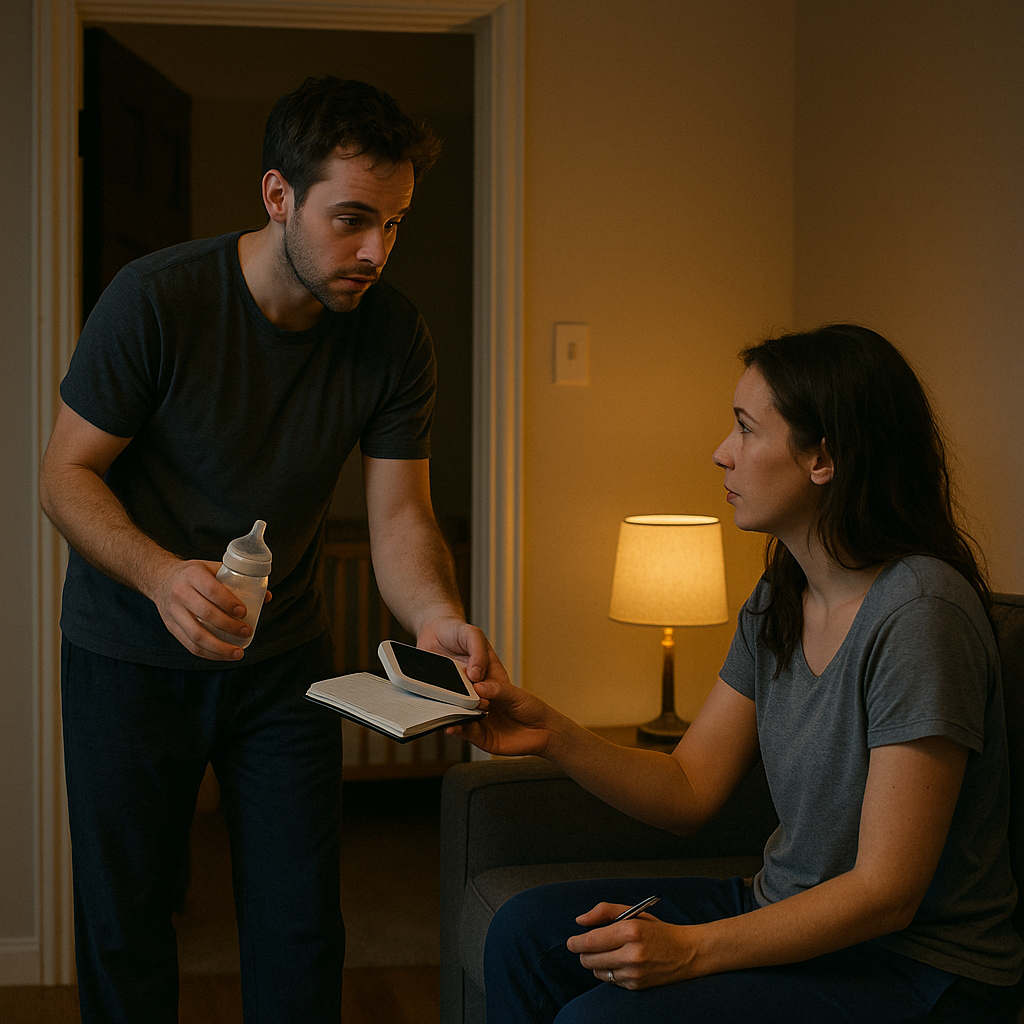
We learned the hard way that saying "tag me in" isn't much of a plan. Without a clear handoff, we ended up standing in a dark hallway, whispering and getting increasingly frustrated. What helped was choosing one place for shift handoffs so the off-duty person could actually stay off duty.
Ours is a designated handoff spot outside the nursery, away from wherever the off-duty parent is sleeping. We keep it simple: pass the monitor and notebook over, share the update in one sentence, and let the other person go back to sleep. If the baby needs feeding or soothing, we avoid couches and armchairs whenever there's any chance of dozing off.
We also keep the lighting dim and consistent in that space. A small lamp with a warm bulb is less jarring than switching on bright overhead lights. If you use a sound machine, keep it well away from the baby's head and set it to the lowest practical volume. The AAP also recommends limiting the duration of infant sleep machines.
The biggest relationship benefit for us was simpler: it reduced the number of times we were physically in the same stressed space together at night. Less opportunity to snap, less opportunity to keep score, and fewer scenes where one of us is holding the baby while the other is explaining what we should be doing differently. Save that for daylight, with coffee.