
A tiny paper bookmark and two repeatable pages that make bedtime reading easier when you're wiped out.
The Bookmark Rule: pick two pages
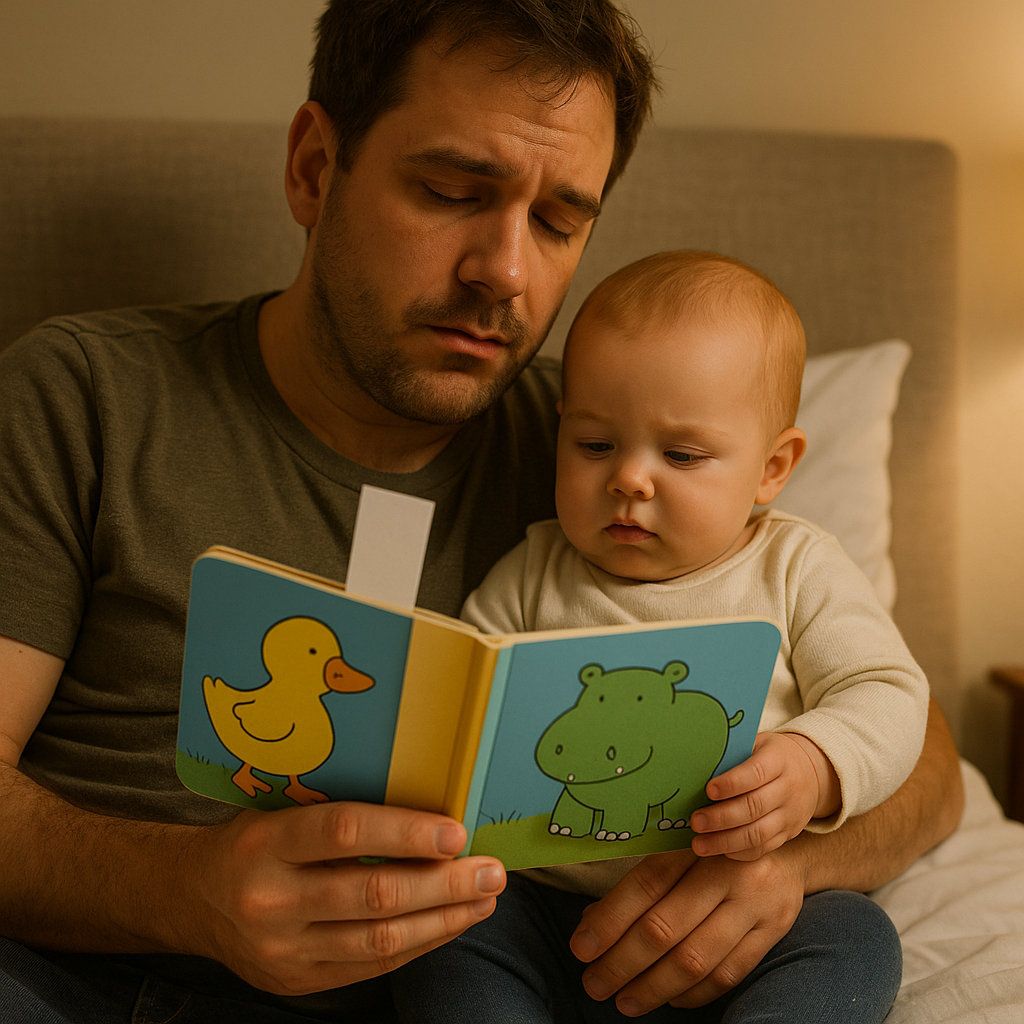
When you're a first-time parent, bedtime stories start out sweet and then turn into a nightly negotiation with your own fatigue. The move that saved us wasn't a new book, a bigger stack of books, or a more ambitious routine. It was one narrow, almost boring rule: we commit to two pages.
Here's what that looks like in real life. Pick one board book that doesn't make you dread the last page. The kind with thick pages that can survive a gummy hand and a grabby little thumb (Sandra Boynton, Karen Katz, that whole aisle). Slide a plain paper bookmark in at the start of a two-page spread you can read even when you're half-asleep.
Night one, you read those two pages and stop. Night two, same pages. Night three, you can move the bookmark one spread forward if you want, but you don't have to. At this age, the point is less about finishing the story and more about making reading a predictable part of the bedtime routine.
The part that surprised me: once I stopped forcing myself to finish a book, I got more consistent about reading at all. Two pages are short enough that you don't start bargaining with yourself. And because the bookmark is visible, your partner can walk in mid-bedtime and instantly know where you are without asking, which matters when you're both trying not to talk too much and wake the baby up.
If you want to make it even simpler, keep the bookmark inside the book permanently. It lives there, so you're building a repeatable closing moment that you can do on the nights when everything else has been loud.
The two-page swap that gives each parent a turn
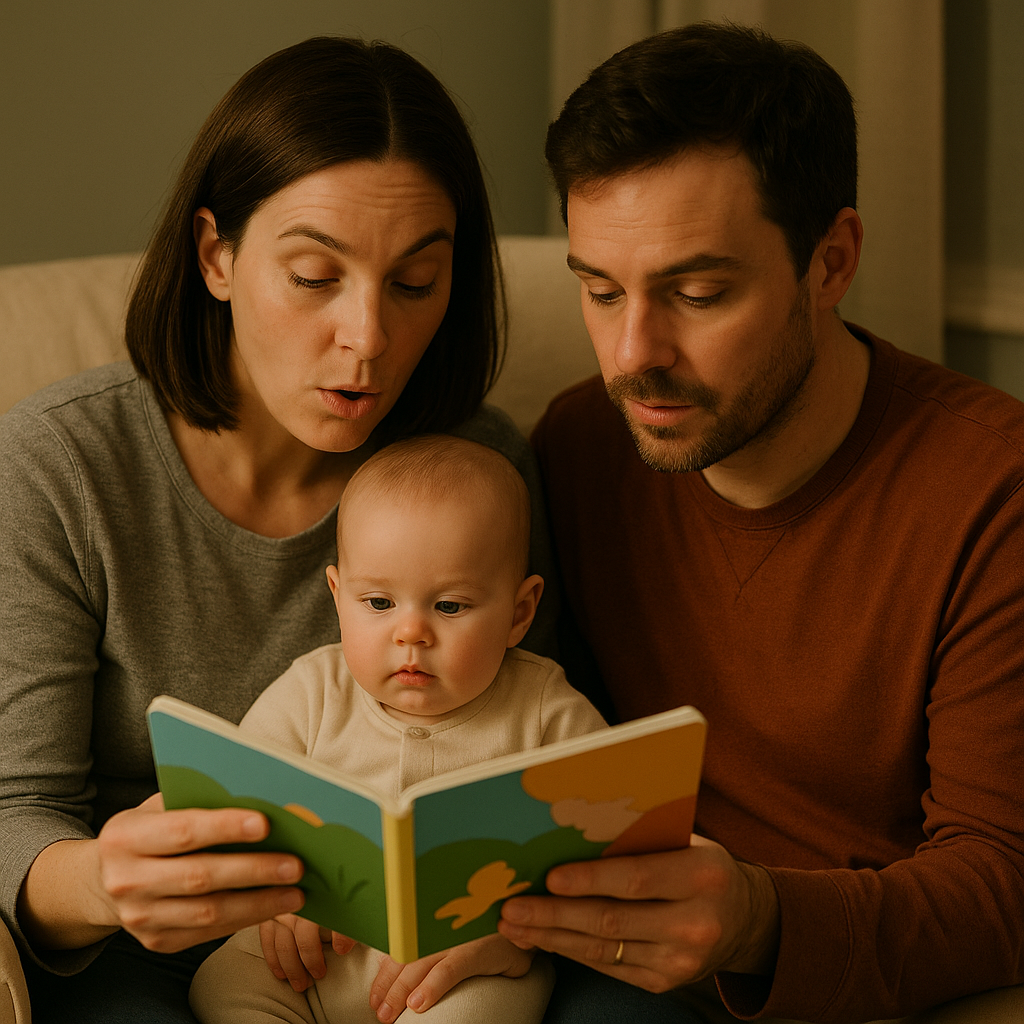
Bedtime stories can accidentally crown a winner. One parent gets better at the silly voices, the baby settles faster for them, and suddenly the whole house starts orbiting around one person's nightly performance. If you're both exhausted, that drift turns into resentment fast, even if nobody says it out loud.
The fix we landed on is almost comically small: each adult gets one page. If it's a board book with short text, it's one spread each. You trade pages, right there, at the same bedtime.
It sounds fussy until you try it, and then it feels like a relief. There's no debate about who is doing bedtime. You're both there for the story part, and you can split immediately afterward if the baby needs a little longer to settle. We started with a book that had a clear rhythm, so the handoff didn't feel like an interruption. One of us reads in a regular voice, the other person reads the next page a tiny bit slower, and then we close the book. Done.
A detail that helped us: we sat together in the same spot for the story, rather than splitting up on opposite sides of the room. The goal is calm. When we sat on opposite sides, it turned into a whole event. When we sat together, the handoff between voices felt less noticeable.
If breastfeeding or bottle-feeding is part of your routine, do the page swap after the feed. During the feed, you're already juggling burp cloths, a bottle, a latch, or a pacifier that keeps popping out. (If you know, you know.) After the feed, we found it easier to fit in the short, shared story before lights out.
The nice side effect is that you learn each other's pacing. Nobody has to imitate the other person's style. You just show up, read your page, and let that be enough. Over time, the baby associates the book with both voices.
Keep the book near the sleep gear
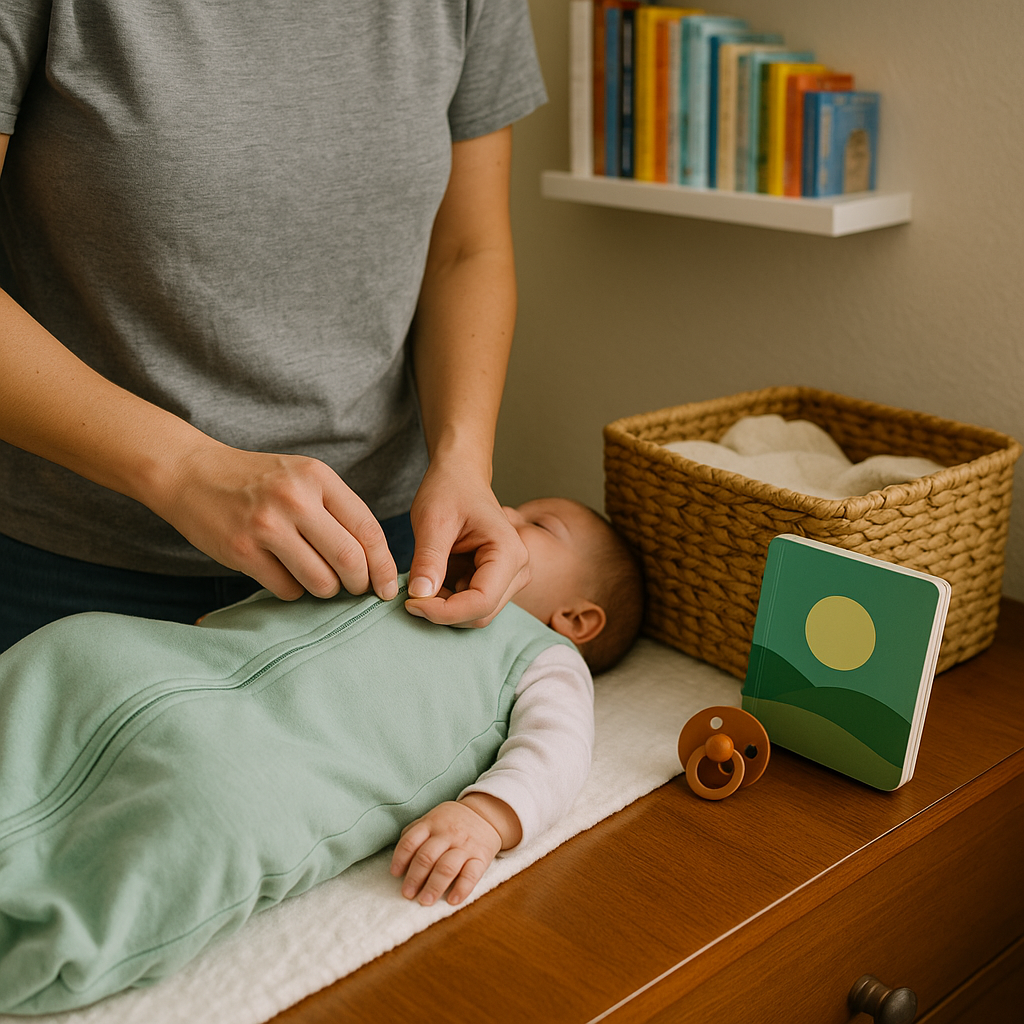
I used to think the nursery bookshelf was part of the vibe. Cute little ledges, a row of covers facing out, the whole Instagram-worthy thing. Then we hit the months where bedtime arrives like a freight train, and your brain is running on fumes. And that's when I learned the shelf is a trap.
If the book isn't easy to reach when you're getting the baby ready for bed, you're more likely to skip it when you're exhausted. In such situations, the last thing you want is to step away, cross the room, and turn on more light just to pick a book. So you tell yourself you'll read tomorrow. Tomorrow becomes a week.
Put the bedtime book somewhere convenient near the sleep area, but outside the crib or bassinet. Ours is in the same basket as the sleep sacks and spare pacifiers. When I'm fastening snaps or pulling on a footie pajama, I can grab the book without shifting my body or changing the lighting. When my partner does bedtime, they find it in the same spot.
Board books also make sense for this setup because their sturdy pages hold up well to everyday handling. They can take a hit when you toss them into the basket after a late-night diaper change. And when the baby reaches out and slaps the cover mid-sentence, you aren't panicking about torn pages.
We also keep a tiny clip-on reading light nearby, the kind people use for paperbacks. The clip light stays dim and local, aimed at the book, so the rest of the room stays boring. Once the book was part of the sleep gear, the whole thing stopped feeling like an optional enrichment activity. It became part of the sequence your hands already know: diaper, pajamas, sleep sack, two pages, lights out. When you're exhausted, the routine that takes the least effort is the one you're most likely to repeat. Make the story the easiest path.