
A single card on the nightstand turns stalling into a clear, repeatable bedtime deal you can both live with.
The nightstand index card with three non-negotiables
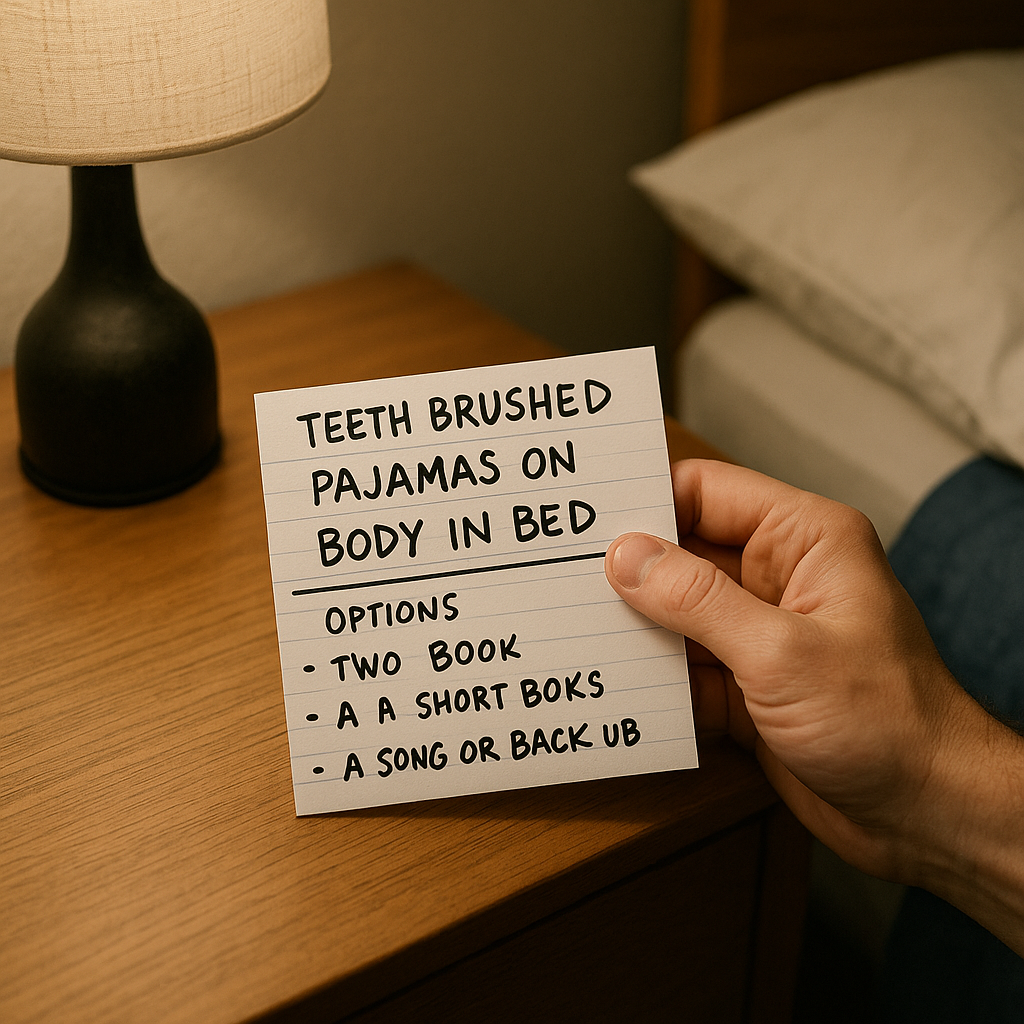
I keep a single index card on the nightstand with three lines written in thick Sharpie. Not a poster. Not a whole chart. Just a card that says what has to happen before lights out in our house: teeth brushed, pajamas on, body in bed. Those are the non-negotiables, and I don't bargain with them because if I do once, I will be bargaining with them forever. Everything else that kids love to negotiate gets moved to the bottom half of the card as options we can choose from: one book or two short books, a song or a back rub, a quick talk about tomorrow, a stuffed animal parade (yes, sometimes). The weird magic is that the arguing drops once the menu is visible. My kid can point, not plead. I can say, "Pick one," and it doesn't sound like I'm making it up on the spot because I'm annoyed.
Here's how I set it up so it doesn't become another thing to manage. I write the card earlier in the day when no one is tired. Right after school pickup is good, when they still have opinions but they aren't already melting. I ask, matter-of-fact, what they want bedtime to include. Then I choose three basics I can enforce even when I'm cooked. If your child pushes back with, "But I need three stories," I don't argue about needs. I just say we can add that request to the options section, and we can test it for a few nights. If it makes bedtime blow up, it comes off. Having the card makes that conversation feel less personal, which is exactly what you want at 8:42 PM. The card isn't a contract, but it keeps you from renegotiating the entire world while holding a toothbrush and trying not to step on a LEGO.
Trade minutes, not the whole routine
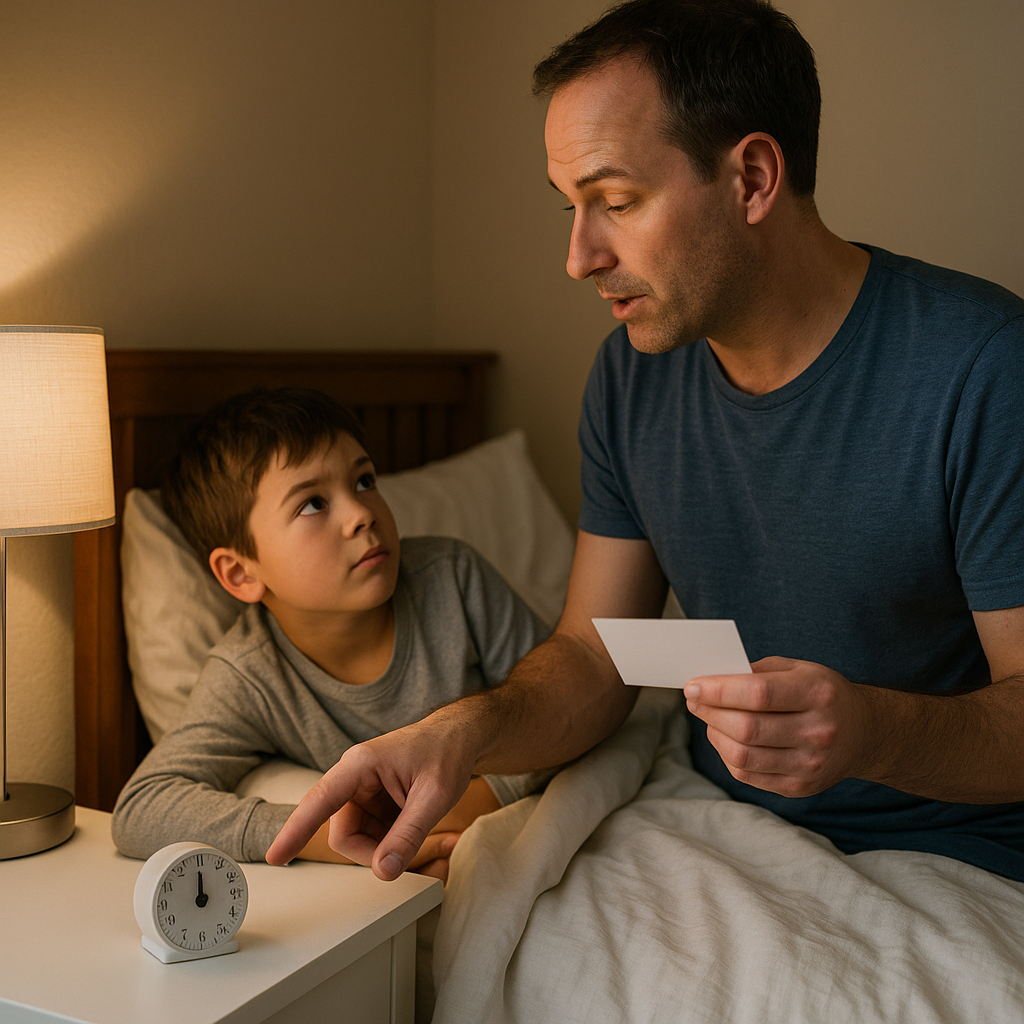
When kids start pressing hard on rules, the easiest trap is arguing about the entire routine like it's one big object: bedtime. They want it later. You want it to happen. Everyone ends up yelling about an abstract thing that feels like control. I stopped doing that and started trading minutes, because minutes are concrete. You can count them. You can swap them without caving on the big stuff.
This is the script that works for us: "We have 15 minutes until lights out. You can spend them on two stories, or one story plus a chat, or one story plus music." I say it while pointing at a simple kitchen timer or the timer on my phone, volume on, screen turned away so it's not a bedtime YouTube portal. The timer sits where they can see it from bed. When it dings, the option time is over. I don't use it as a threat. I use it as a boundary object that isn't my face. Kids hate feeling like you're just deciding things based on mood. A timer makes it feel consistent, even when you're tired and not at your best.
A detail I learned the hard way: don't start the timer when they are still roaming around. Start it at the moment the non-negotiables are done and they're physically in bed. Otherwise you're basically rewarding dawdling because they "used up" their story time arguing about the toothpaste. Also, keep the trade fair. If you offer 15 minutes one night and 30 the next because you feel guilty, they'll notice, and the negotiation will be back. Pick a number you can live with most nights. On the nights they're wired, I don't add more time. I change the option to something that helps their body settle, like a quick back rub, and I keep the same end point.
This is also where kids' stronger opinions can be useful. Let them propose what the 15 minutes include, as long as it fits your house rules. Mine once asked to "tell me three things from when you were little" instead of an extra book. I can do that with the lights low and the room calm. They get the sense of influence they want, and I get a routine that doesn't expand like a balloon every time they ask a clever question.
The two-sentence redo for tomorrow night (use it in the morning)
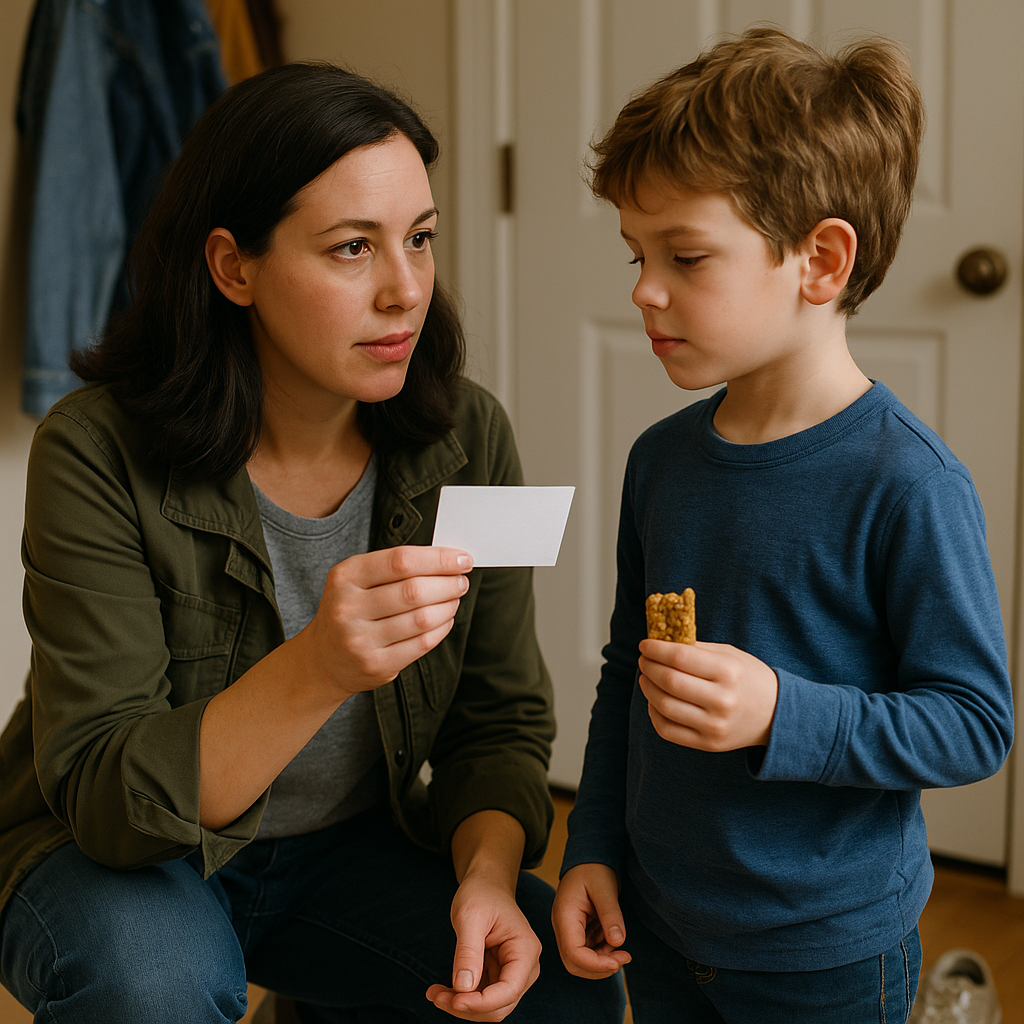
The most useful bedtime tool I've found isn't something you do at bedtime. It's a two-sentence redo you use the next morning, when everyone has shoes on and a granola bar in them. If the night before was a mess, my kid will often wake up still wanting to litigate it. And I used to either shut it down or rehash the whole thing, which just taught them that arguing earns extra airtime. Now I keep it short and specific: "Last night, we got stuck on the book choice. Tonight, we'll pick the book before pajamas." Then I stop talking.
That's it. No lecture. No big feelings speech. Just a tiny plan that moves one decision earlier so it doesn't hit when they're tired and you're trying to keep the hallway light from turning on ten times. If you want to get fancy, write that plan on a sticky note and put it where you both see it, like on the toothbrush cup or the bathroom mirror. (I use painter's tape sometimes because sticky notes fall into the sink and die.) The note isn't for motivation. It's for memory. Bedtime arguments are often about who gets to decide what, and when. Moving one choice to earlier in the day gives your child influence without letting the whole evening drift later.
A real example from our house: the one more question stall. My kid isn't trying to be manipulative. They're trying to connect, and bedtime is when they finally slow down enough to remember they have a brain full of thoughts. So the next morning I said, "Tonight you get one big question during dinner, and I'll answer it. At bedtime, we do the card and the timer." That night, dinner took five extra minutes because we talked about whether whales sleep. Bedtime was smoother because we weren't starting that conversation at 9:05 PM with pajamas half on.
This approach also gives you a place to say yes without feeling like you caved. You're not rewarding the fight. You're adjusting the routine in response to a pattern you can both see. Kids can handle rules when the rules feel like they were built for the actual household, not dropped from the sky at the worst possible time.