
Three screen habits that stop blue light from turning bedtime into a second wind, including the exact amber bulb I keep in the nightstand.
Night Shift is not a bedtime switch
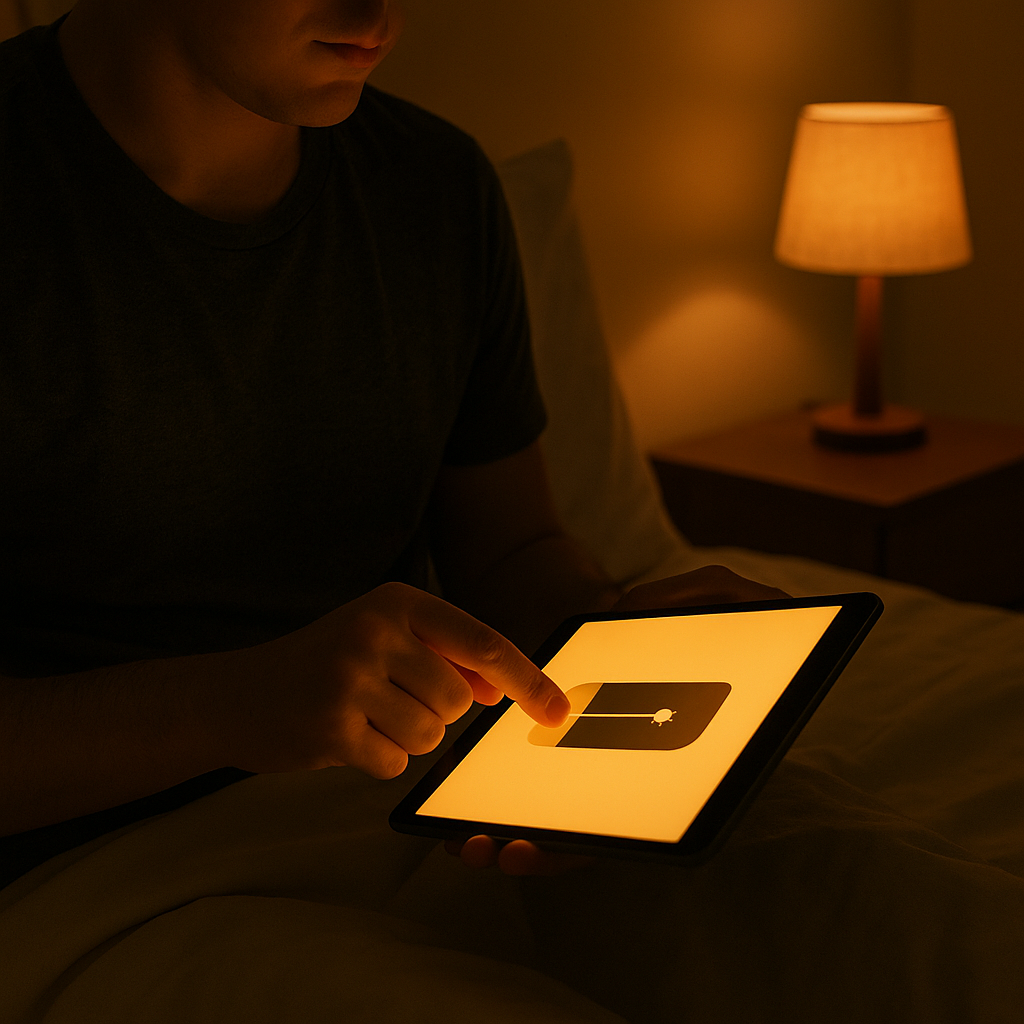
I used to feel weirdly betrayed by Night Shift. I did the dutiful thing: warm the screen, dim it, and then wonder why everyone was still bright-eyed at 10:45. Here is the part I had to learn the hard way. Night Shift (or Android's bedtime mode) changes the color temperature, but it doesn't magically turn an iPad into a candle. If the screen is still blasting at 70% brightness in a dark room, your eyes are still getting a strong signal that it is not time to downshift.
What works in our house looks almost boring on paper: 90 minutes before we want sleep, we flip the devices into the warmest setting and then cap brightness hard. Not "as low as feels comfortable". Low enough that if you walk into the room from a lit hallway, the screen doesn't look like a little stage. On iPhone, I go Settings, Accessibility, Display & Text Size, then reduce white point (I keep it around 70%). On an iPad, I also make sure True Tone is on, because it stops the screen from getting extra crisp when the room lighting changes.
Two practical details that keep it from turning into a nightly negotiation: First, I do it once, during the day, while I'm calm. Then I put the brightness slider on Control Center and tell everyone, "After dinner, it lives down here." Second, if you're watching something, pick a darker show or switch the theme of your app. A white-background news site at night hits different than a dark-mode Kindle page. This is one of those tiny levers that changes how long people keep scrolling without noticing.
The charger lives outside the bedroom now
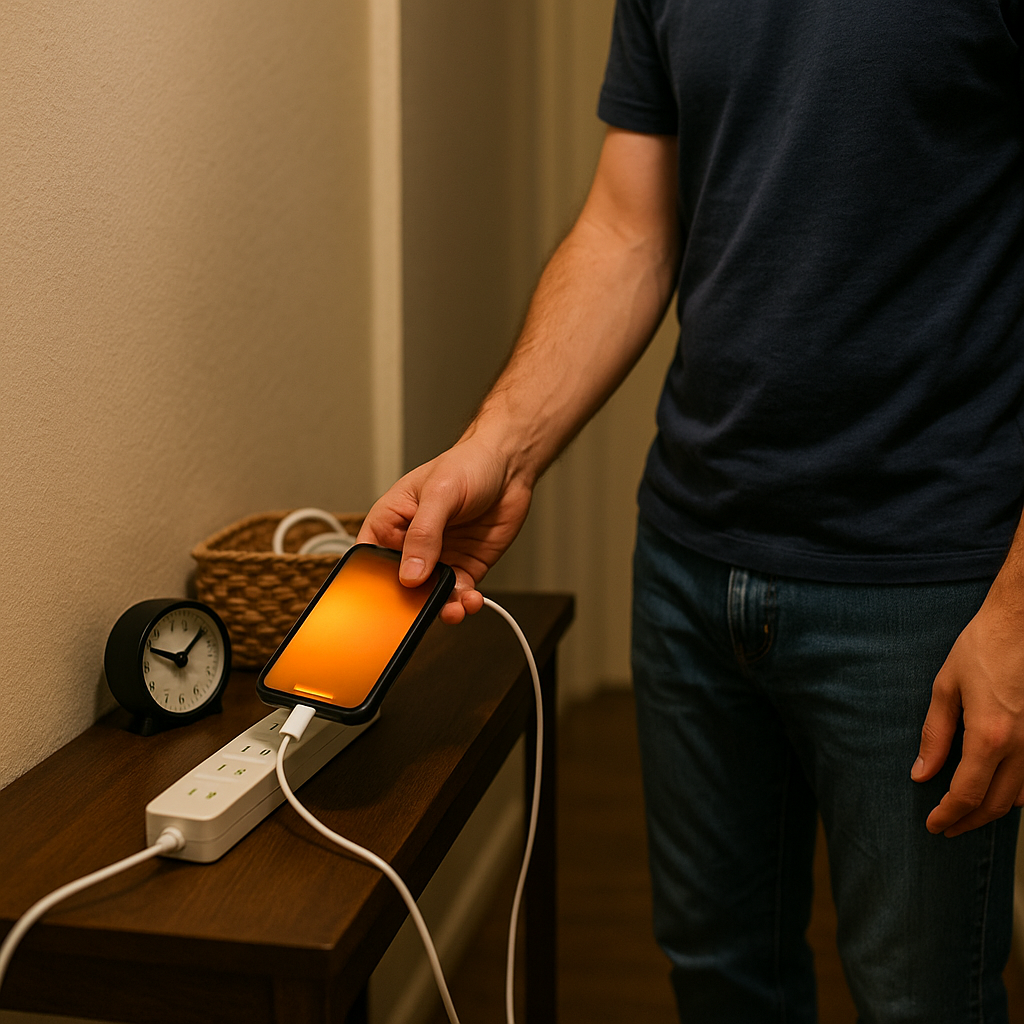
This is the change that fixed the most without feeling like a lecture: we stopped charging phones in bedrooms. Not because charging is evil, but because the glow is relentless. Even if you swear you won't look, the lock screen lights up, the notification preview pops, and your eyes get hit with a tiny dose of daytime. Then you do the one thing that always extends bedtime: you sit up. You scroll. You get a second wind.
Our setup is almost comically simple. A power strip on a hallway table, plus a little basket that catches cables so they aren't dangling everywhere. Everyone plugs in there after dinner. If you need an alarm, use a basic alarm clock or set the phone alarm and leave the phone on the hall table. Yes, you can still hear it. If you're worried you won't, test it once and turn the volume up. The point isn't punishment. It's creating a physical gap so you don't take a bright rectangle to bed and then act surprised when sleep gets slippery.
When someone says, "But I read on my phone," I don't argue. I offer two swaps: (1) switch the reading to an e-ink device (a Kindle Paperwhite with the front light turned way down and set warm) or (2) keep the phone, but read sitting up in a lit spot and then leave it to charge outside before you get under the covers. That second one matters more than people think. The bed becomes associated with being horizontal and bored, not with backlit pages and that little adrenaline pop when a message comes in.
If you're doing this as a family, the adult has to follow it too. The fastest way to make it fail is one person "just finishing emails" in bed while everyone else is supposed to be winding down.
Amber light beats a warm screen (and it's a $12 fix)
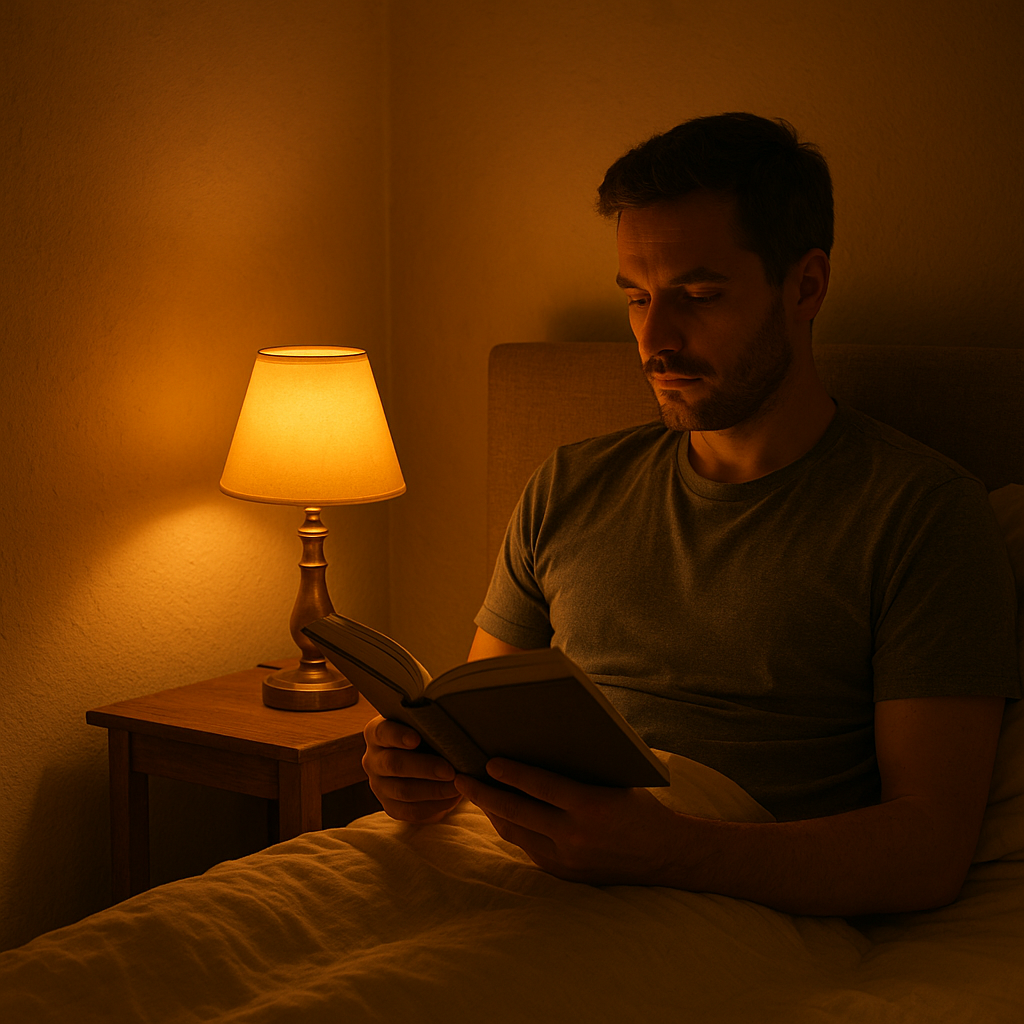
If I had to pick one object that made evenings smoother, it's the dim amber reading light I keep in the nightstand. I bought a simple amber LED bulb (the kind marketed as "amber" or sleep lighting) for about $12 online, screwed it into a little lamp we already owned, and stopped trying to make a bright overhead light behave. The difference is immediate. The room stops looking like a place where you should clean, fold laundry, or start a new episode. People get quieter without being told to.
Here's how I use it in a way that stays practical. About 20 minutes before lights-out, the overheads go off and only that lamp stays on. If someone needs to do a last bathroom trip, we don't turn on the vanity at full blast. We keep a small plug-in night light in the hallway and let that be enough to navigate without waking fully. The goal isn't a perfect cave. It's reducing the amount of blue-white light hitting your eyes right when your brain is deciding what time it is.
This also pairs nicely with movement habits, because it naturally changes what you do. With the amber lamp on, we do low-key stretching on the rug (hamstrings, hips, slow neck rolls) or a short walk around the house to put things away. Nothing that spikes heart rate. If you try to do a sweaty workout at 9:30, you're asking your body to be alert. But a few minutes of gentle mobility under soft light feels like clearing the static out of your shoulders.
One more thing I didn't expect: conversations get shorter. Not deeper. Just shorter. When the lighting says we're landing the plane, people stop opening new tabs, literally and mentally.