
A bottle by the faucet, a 90-second light check, and a two-step breakfast that keeps energy from crashing before second period.
The sink-side water bottle that kids will use
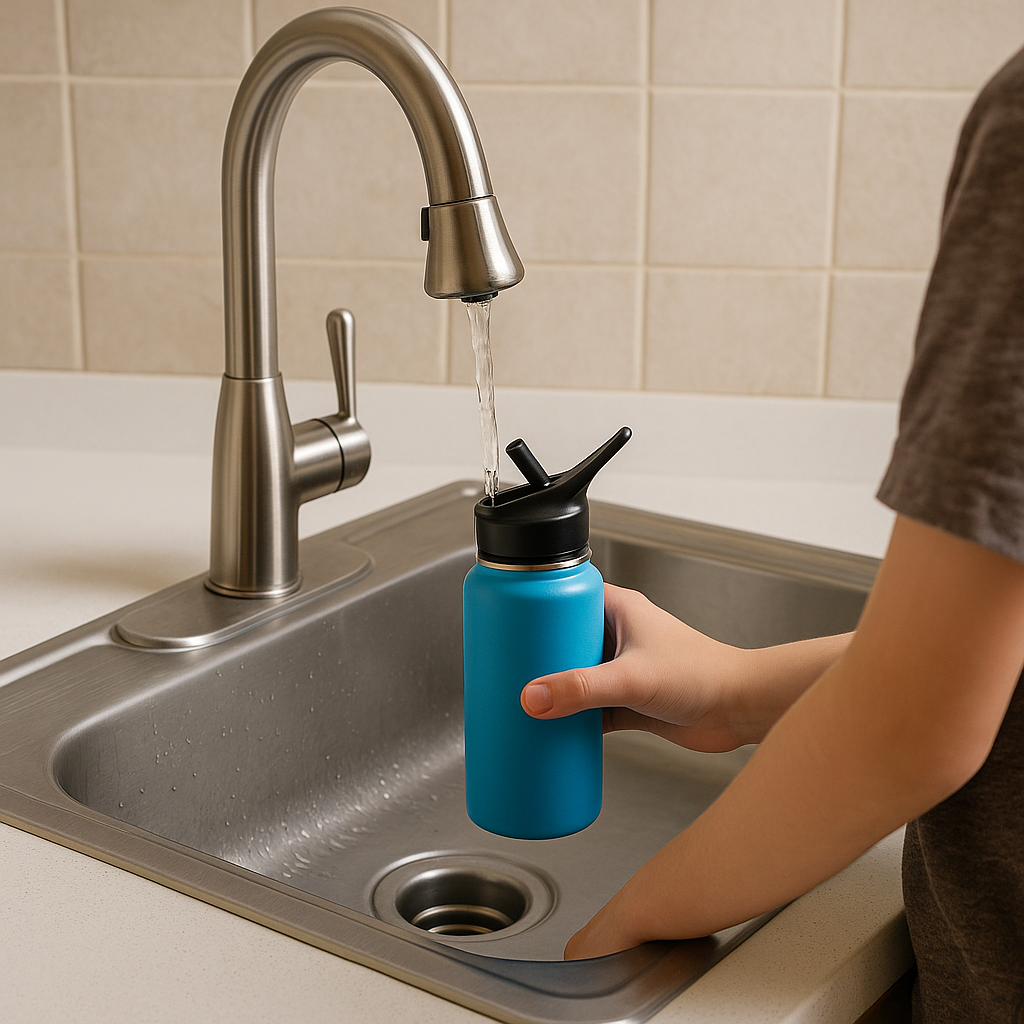
I used to do the whole "pack the water bottle" thing the night before. And then I'd find it on the counter at 7:58 a.m., still bone-dry, while someone hunted for a missing shoe. What finally worked in our house was admitting that the first drink of the day has to happen at the sink, not in theory. I keep a kid-size bottle (we rotate between a 14 oz Hydro Flask and a CamelBak Eddy) parked right next to the faucet. Cap off. Straw flipped up. It's not precious, it's just there.
Here's the routine: as soon as they wash hands (or pretend to), the bottle gets filled and they take five big sips before they leave the bathroom/kitchen area. I say it exactly the same way because kids respond to scripts: "Fill it. Five sips. Cap it." The reason I like the straw-lid styles is they turn the drink into a mindless action. No glug-glug drama, no spilling down a shirt that was clean for 45 seconds.
If you're thinking, my kid won't drink water in the morning, same. That's why the location matters. If it lives in a backpack pocket, it becomes optional. If it's sitting by the faucet, it's part of the teeth-brushing orbit. Once it's filled, it goes straight into the same backpack side pocket every day, so it becomes a tactile check: you can feel the cold weight and know you didn't forget it.
I don't sell this as a magic fix. It's just the difference between starting class mildly dehydrated and starting class with your brain online. When we skip it, I can tell by mid-morning: more headaches, more "I'm tired" complaining, and the focus is gone the second a teacher asks for quiet work.
A 90-second sunlight check (even on gray days)
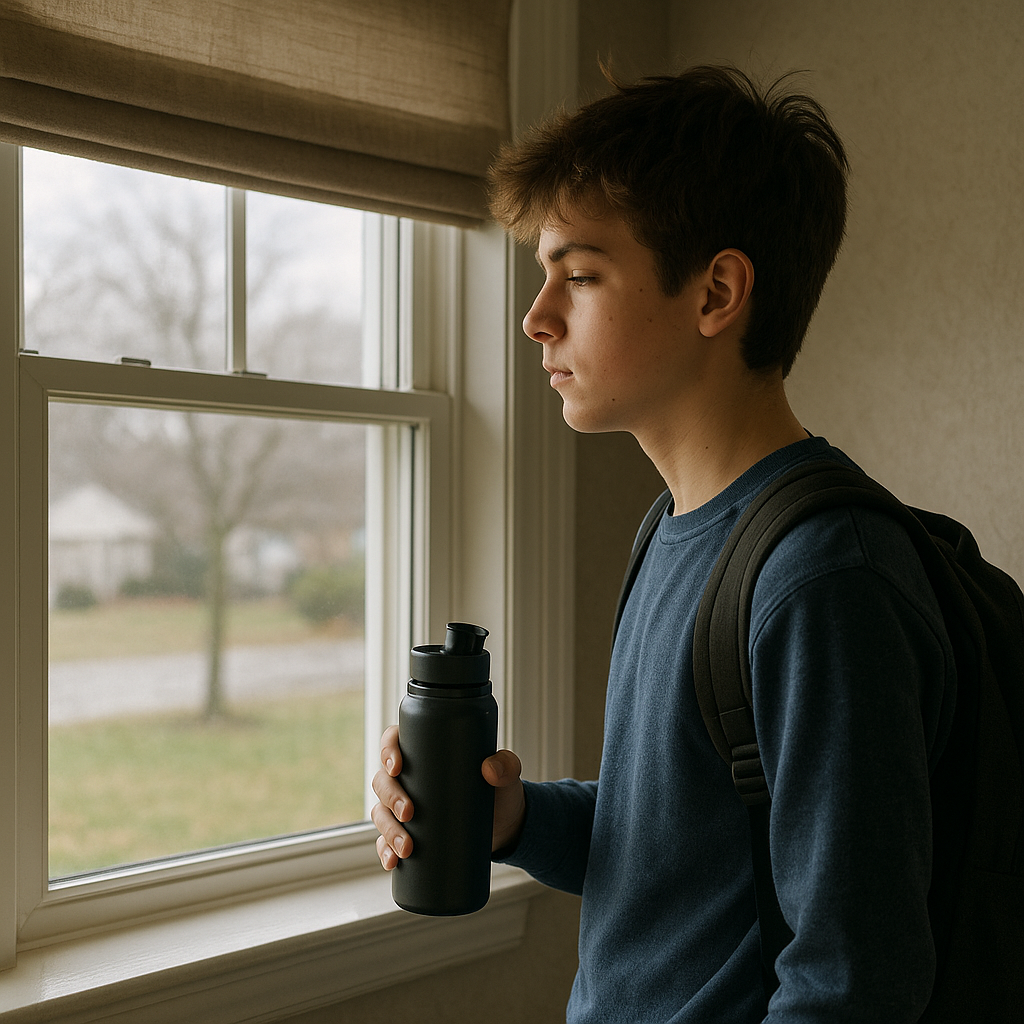
When mornings feel like wading through wet cement, I don't start by pep-talking. I start by changing the light your kid's eyes are getting. Not mood lighting, not a cute lamp. Just plain daylight, as early as you can manage without turning it into a production.
My rule is 90 seconds. That's it. After the first bathroom trip, we open the blinds and stand by the brightest window in the house. If the weather's decent, we step onto the porch and do the same thing. No phones. No bargaining. If I'm packing lunch, they can just stand there and drink those first sips of water and look outside like a bored cat. It still counts.
On truly dark winter mornings, I don't pretend a quick glance out the window is the same as a June sunrise. But the consistency matters, and most kids respond to the cue faster than you'd expect. The first time I tried it, I thought it would be met with groans. Instead, it became this oddly calm pocket because nobody had to talk yet. The benefit for school is subtle but real: the I can't wake up feeling lifts sooner, which means less rushing, which means less stress before they've even hit the bus.
If you want to make this stick, pair it with one fixed micro-task so it doesn't float away. Ours is: stand at the window and do a backpack check. Laptop? Charger? Band instrument? Library book? It's a quick scan, but it's also confidence-building because the kid walks out the door feeling prepared, not scattered. And when the day starts with prepared, it's easier for them to participate instead of hiding in that low-energy fog.
Breakfast that doesn't boomerang at 10:30
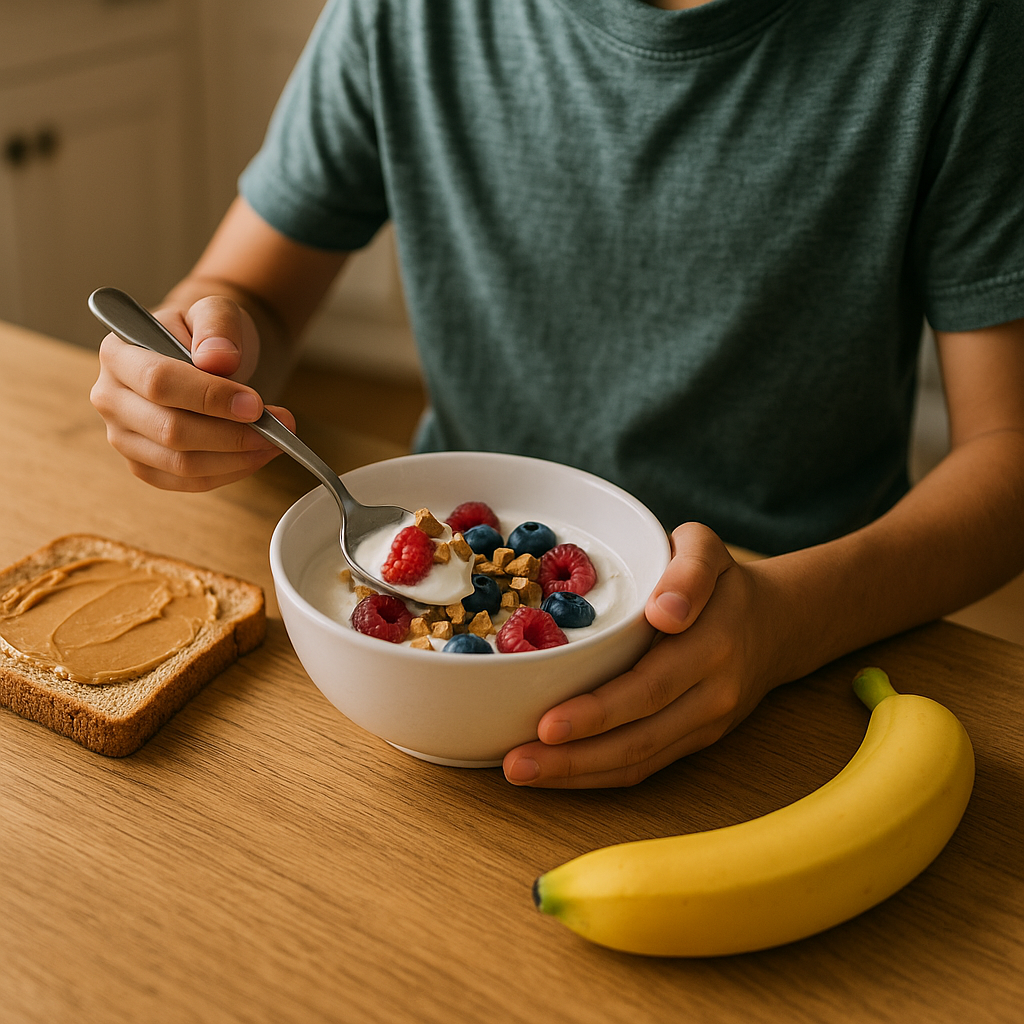
I've watched the same pattern too many times to ignore it: a kid grabs something sweet, feels amazing for fifteen minutes, then hits the wall halfway through morning math. If your goal is energy and focus through the first chunk of school, breakfast has to be boring in a specific way. Not flavorless, just built around protein plus fiber so it doesn't boomerang.
I keep two breakfast lanes because mornings are not the time to experiment. Lane one is eat with a spoon: plain Greek yogurt with a real add-in (berries, sliced banana, or thawed frozen cherries) and something crunchy like chopped walnuts or a sprinkle of low-sugar granola. If your kid hates yogurt, don't force it. Cottage cheese works for some kids, and for others it's a hard no. Lane two is handheld: a slice of whole-grain toast with peanut butter (or sunflower butter if you need it), plus a piece of fruit. If I'm on top of things, I add a hard-boiled egg. If I'm not, I don't spiral. Toast and nut butter still does the job.
The hands-on tip that made this doable: I set the bowl, spoon, and topping on the counter before I wake them up. Not the night before. Morning-of, while the coffee's brewing. It changes the whole vibe because the choice is already narrowed and nobody is rummaging through cabinets half-awake. Also, if your kid is the slow eater, let them start with three bites before you talk about anything else. You'd be shocked how much easier shoe-finding gets once they've had food in them.
Confidence shows up here too. When they make it to school without that shaky, hungry feeling, they participate more. They raise their hand. They don't spend the first period thinking about the vending machine. And on mornings when they claim they can't eat, I aim for two bites and a water refill, not a lecture. Two bites turns into eight more often than you'd think.