
Three kid-sized privacy nooks that still keep you in the household loop: a hall curtain, a loft pocket, and a bench that faces out.
The hallway curtain nook (privacy without disappearance)
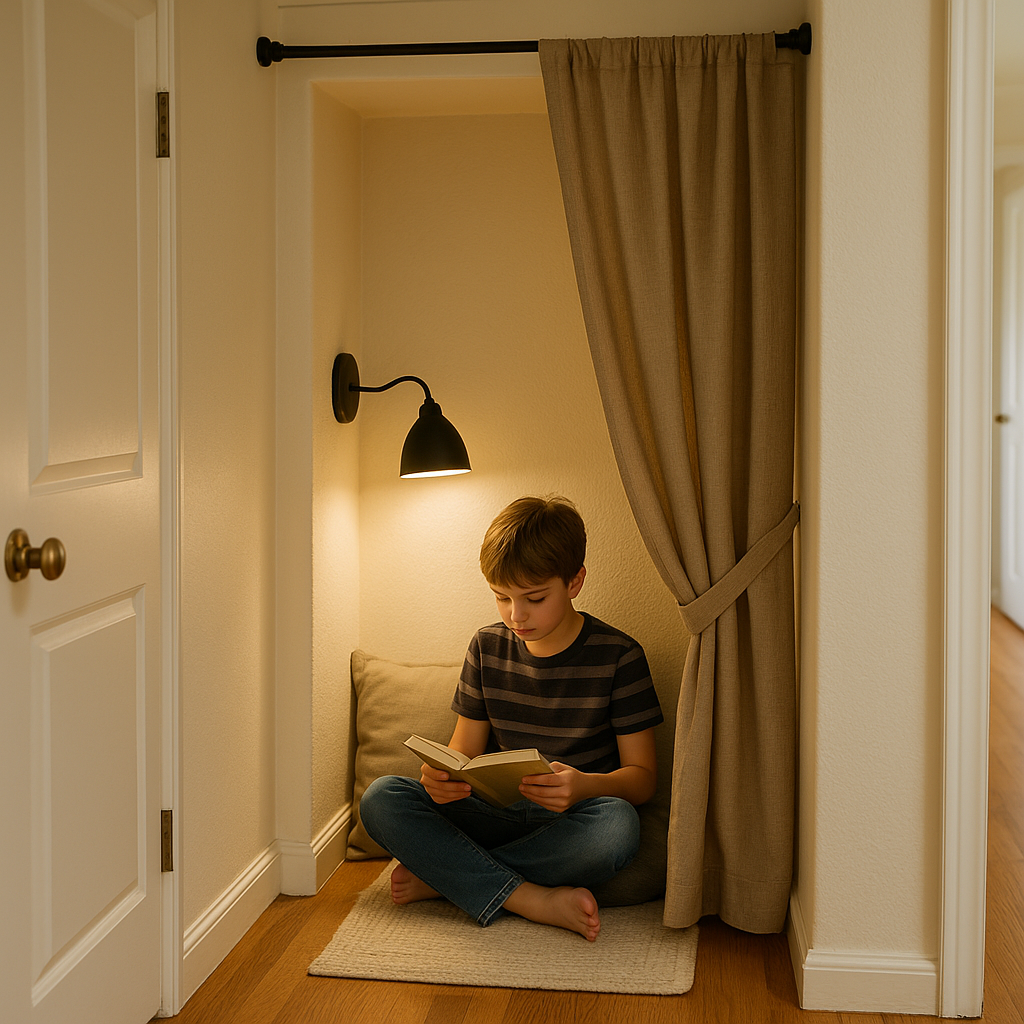
When kids start wanting privacy, the default move is a closed bedroom door. And sure, sometimes that is what they need. But in a busy house, a shut door can also turn into the signal for everybody else to start knocking, teasing, or escalating. The fix that worked best for us was putting a tiny, kid-sized nook in a place that already has traffic: the hallway. Not the center of the hallway like a weird museum exhibit, but a shallow pocket right outside their room (or outside a bathroom, or in that dead space near the linen closet).
Here is the setup. Mount a simple curtain rod high enough that the fabric clears kid shoulders, then hang a curtain panel that is thick enough to feel like a boundary. I like a washable cotton canvas or a linen-look panel, not a sheer. The detail that matters is the bottom edge: if it drags, it becomes a mop and a tripping hazard. Hem tape is fine. Put a small rug or floor cushion inside the pocket so it reads as a place to land, not a place to hide. Then add a single light source that is not overhead. A plug-in wall sconce or a warm clip light aimed at the book makes the nook feel intentional.
The reason this works for independence is that the kid gets to control an in-between. Curtain open means available. Curtain closed means do not narrate my feelings right now. But because it is in the hall, they are still in earshot of dinner happening, still catching the family rhythm, still hearing you call, Hey, I'm starting the pasta. You will also hear the difference between quiet reading and the kind of silence that means trouble. The funniest part is how fast kids invent their own rules. One of mine decided the curtain could be closed for Lego building but had to be open for homework because, in his words, homework needs witnesses.
One practical note: if you have younger siblings, teach the curtain like a door. Knock on the wall trim before you peek. It sounds silly until you have watched a little brother whip the panel open like he is revealing a magic trick. A $3 felt strip stuck to the wall at kid height (as a knock target) made it feel like a real boundary, and it stopped the dramatic curtain yanks.
Claim a loft-bed pocket with a book ledge and a timer light
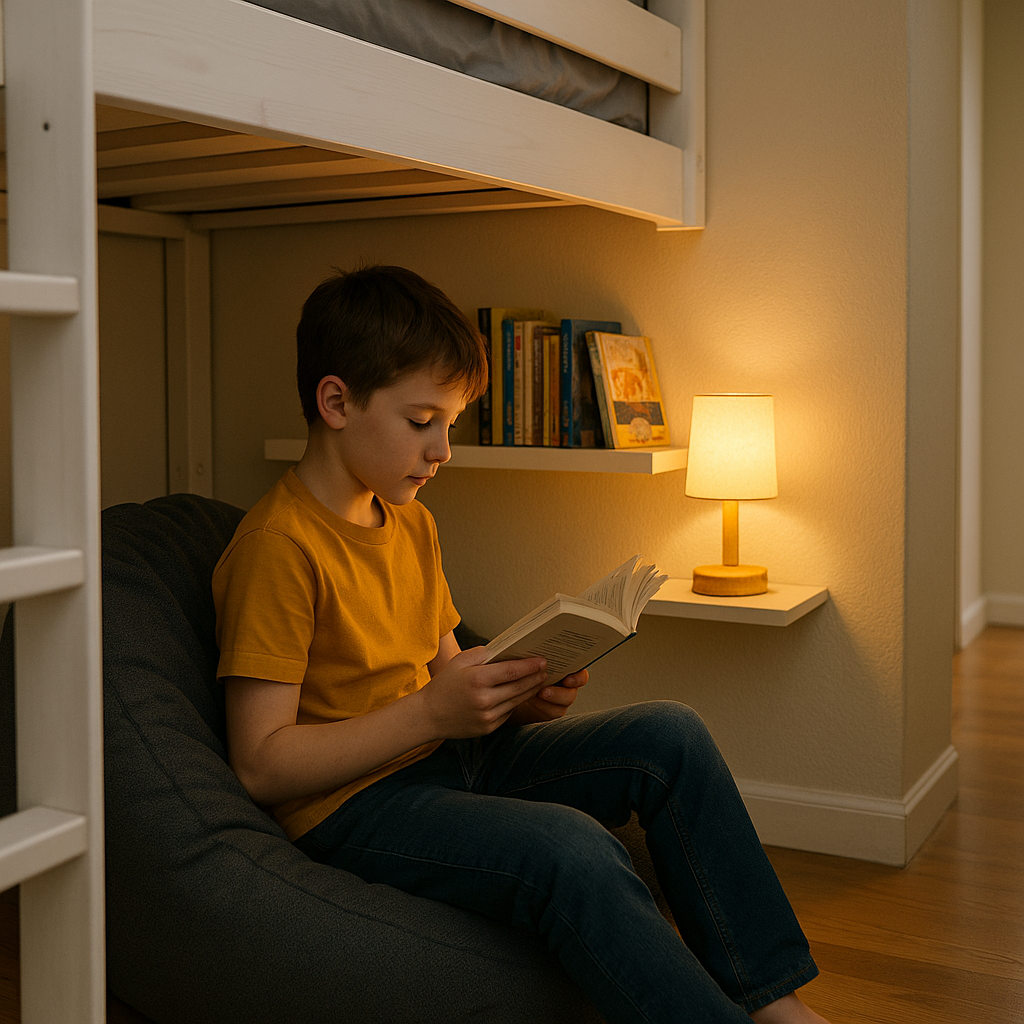
Loft beds get marketed like they are mainly about storage, but the bigger win in our house was psychological: a loft creates a pocket of space that is clearly theirs, even when their bedroom is small. The trick is resisting the urge to turn the under-bed area into a full-on clubhouse that blocks the room. You want privacy, not a cave that disconnects them from the rest of the house.
What I do instead is build a reading-and-reset spot that stays visually open on one side. Put a narrow picture ledge or slim shelf at shoulder height under the loft. It becomes a book rail, not a junk shelf, because nothing else fits. Add one comfortable seat option that is easy to move: a beanbag that does not swallow them whole, a floor rocker, or a thick cushion against the wall. Then add a light that has a built-in timer. This sounds like a tiny thing, but it changes the whole vibe. We use a warm LED lamp plugged into a smart plug, and the rule is simple: the nook light is on for reading, drawing, or decompressing, and it auto-shuts off after 30 minutes. No one is policing it, which matters when you are trying to hand them ownership without making it another chore chart.
To keep family connection in the mix, aim the seat so it faces out toward the doorway or the open room, not into the wall. That way they can be in their own head without being socially gone. I have watched my kid sit under the loft, half listening to me talk with his sister while he flips through Dog Man, and that is exactly the balance I wanted. He is near us, not performing togetherness, but still part of the hum of the house.
If you want one more detail that makes the nook feel grown-up, give them a small container for personal items that is not a toy bin. A lidded box for a journal, earbuds, a sketchbook, and a pencil. No one else opens it. I do not mean secrets, I mean dignity. The first week we did this, my kid put a note inside that said, Please knock even though there is no door. It was a good reminder that privacy is often less about hiding and more about being able to choose when you are perceived.
Turn a bench into a two-way nook: back covered, face open
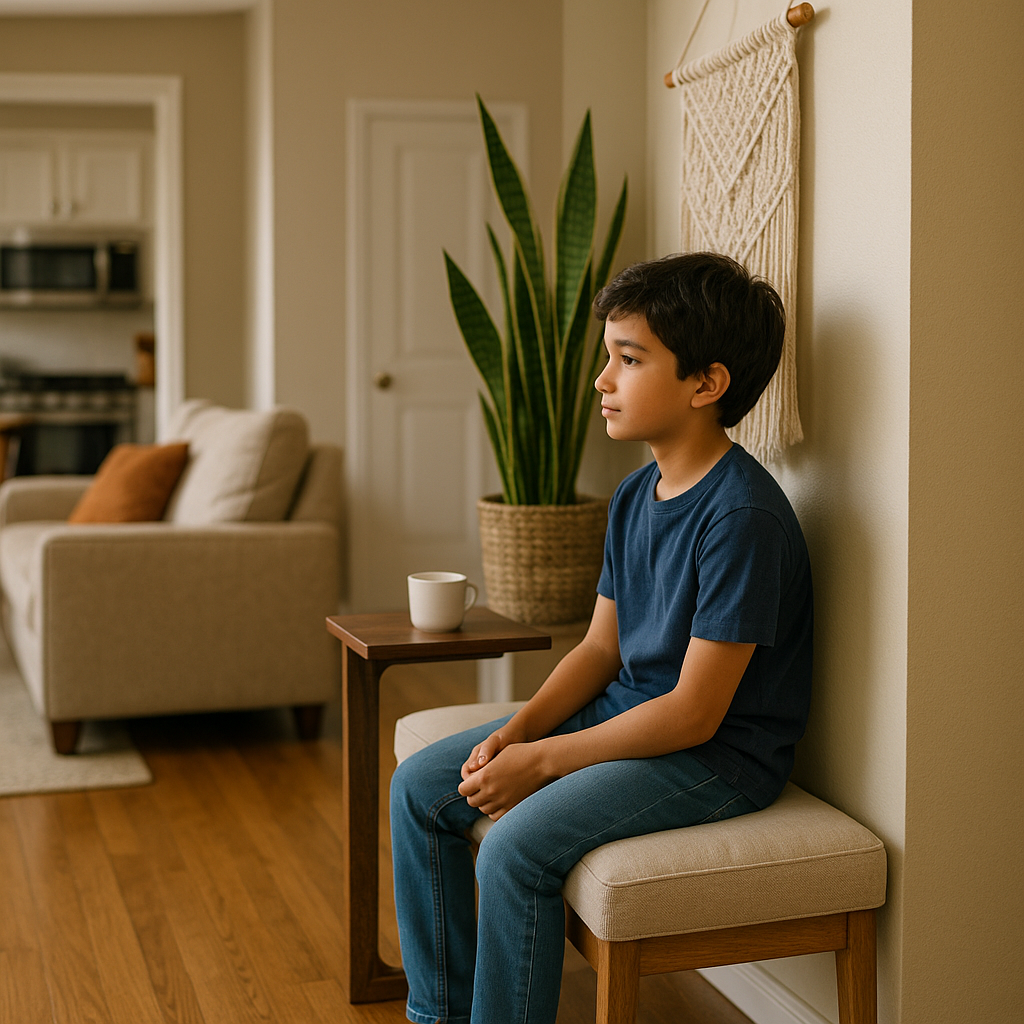
This one is for the kid who wants space but also wants to keep tabs on everything. If you have ever watched a child drift to the edge of the living room during a noisy family moment, you have seen it. They are overwhelmed, but they are not trying to leave. They are trying to regulate while still being included. A simple bench nook does that better than sending them to their room.
Start with any bench that is comfortable for 10 minutes, not just cute. Upholstered is great, but a wood bench works if you add a thick cushion that does not slide. Place the bench so the kid sits facing the room, with their back to a wall, bookshelf, or the side of a cabinet. That back coverage is the whole point. It is the same reason adults pick a booth seat in a restaurant. If you have the space, tuck the bench into a corner of the family room or at the edge of the kitchen where homework and dinner overlap. If you do not, a landing or a wide hallway works.
Now add two things that make it a nook instead of random furniture. First, a small side surface. I like a narrow C-table or a wall-mounted shelf so the floor stays clear. Second, a boundary behind their head. Not a full divider, just something that visually holds the space. A tall plant, a woven basket on a hook, or a fabric wall hanging. Nothing fragile. The goal is: when they sit there, they feel like their back is protected, but they can still answer when you ask, Do you want to help set the table or do you need five minutes?
In practice, this became our debrief spot. Kids would sit there and watch me cook, and then talk in bursts. You get the half-sentences they do not deliver face-to-face at the dinner table. It also quietly teaches a skill: you can take space without opting out of the family. One more thing I learned the hard way: do not put this bench directly under the TV. You want it to be a regulation spot, not the default screen perch. If the room only has one layout, put a basket of quiet supplies at the bench instead. A paperback, a small sketchpad, a puzzle book, and a pair of over-ear hearing protectors for the kid who is noise-sensitive. When they start using the bench before the meltdown, you will know you placed it right.