
A color-coded month view, one quiet planning call, and three rituals that leave room for everybody's originals.
The fridge calendar summit (15 minutes, no kids listening)
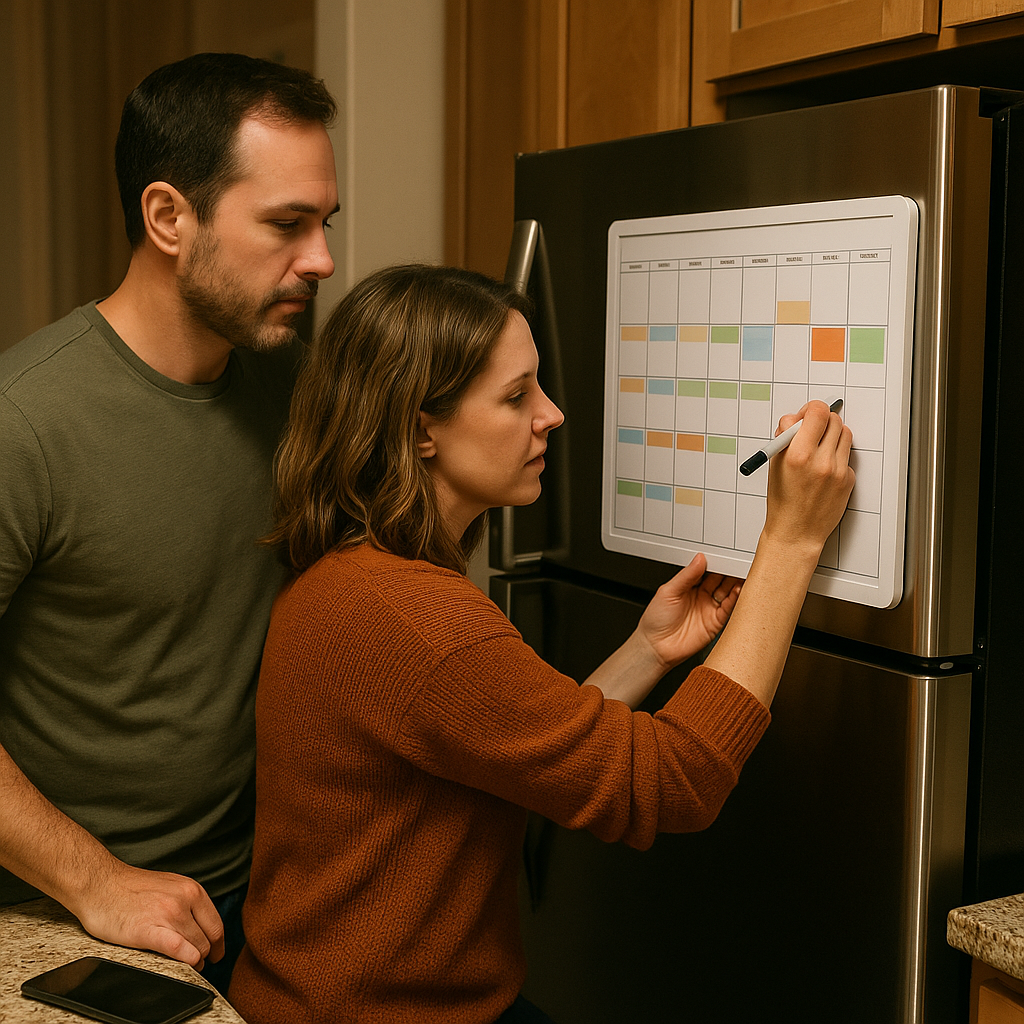
I learned this the hard way: holiday tension in a stepfamily usually isn’t about the holiday. It’s about who gets to decide what counts. So I stopped trying to solve it with speeches, and I started solving it with a calendar you can touch. Early November, I put a dry-erase monthly board on the fridge (paper works too, but the board survives the whole season), then I invite the adults to a 15-minute “summit” after bedtime. Phones face-down. No kids within earshot. The rule is simple: we’re not negotiating meaning, we’re just placing dates.
We give each household a color. Then we fill in what already exists: custody schedule, travel days, school concerts, the other parent’s standing traditions the kids already expect, and any non-negotiables like a grandparents’ brunch that’s been happening since before I was in the picture. Only after the “old stuff” is visible do we add anything new, and we cap it at one new ritual per holiday weekend. Not three. One. The point is to make space, not to compete.
Two details make this work in real life. First, label blocks with the kid-facing name, not the adult label. “Dad’s Eve lasagna” lands better than “Other house dinner.” Second, build in one buffer night that’s deliberately blank. When the kids bounce between houses, that blank night becomes the decompression zone where nobody has to perform gratitude on command.
If you want a script for the moment it gets prickly, here’s mine: “Let’s keep what’s already theirs. We can add one thing that’s ours.” Then you point to the square and write it down.
The Ornament Exchange: one box, one story, no replacements
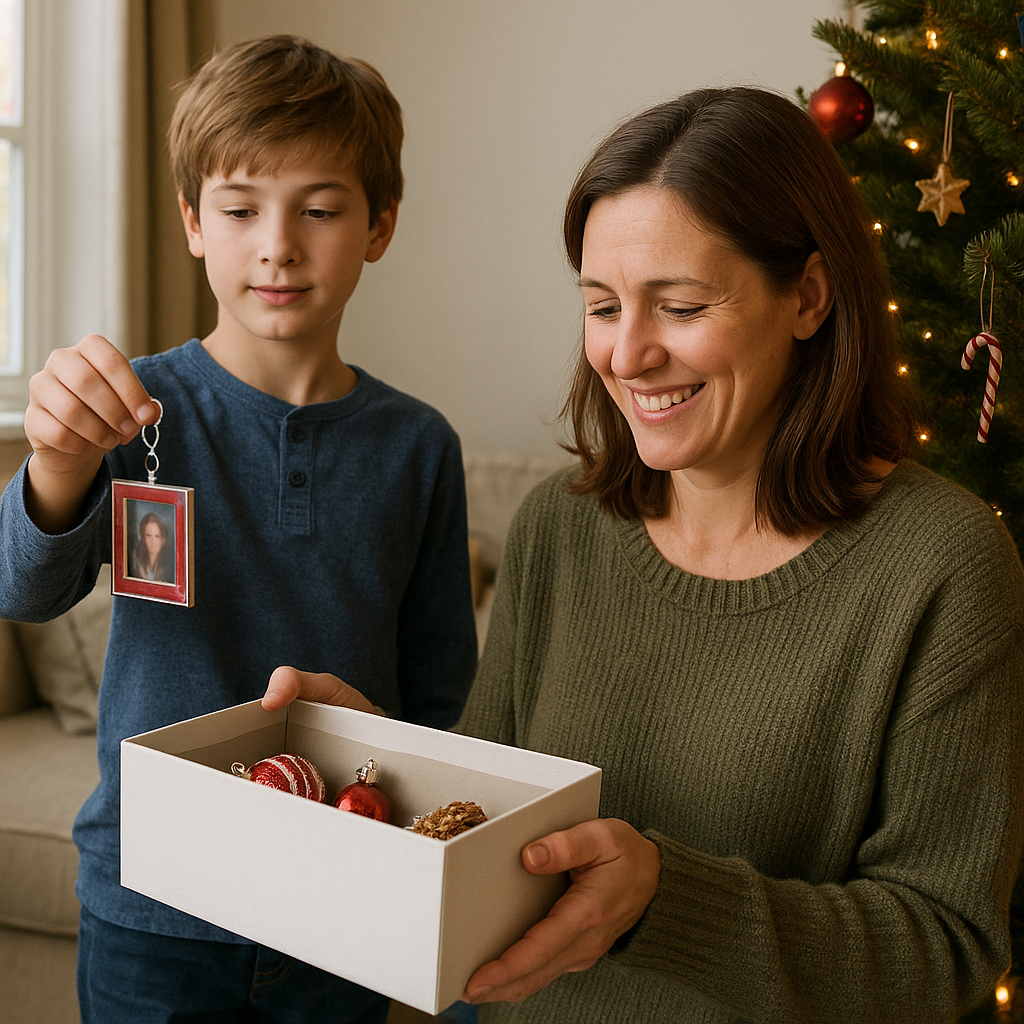
This is the only “new tradition” I’ll suggest that involves buying anything, and it’s because it solves a specific problem: the quiet panic kids feel when they think loving the new house means betraying the old one. We do an Ornament Exchange that’s basically a permission slip in disguise.
Here’s the whole setup. I keep a small lidded box (shoebox size) labeled with the year. In early December, each person adds one ornament or tree decoration that represents something true about their life in the last year. It can be a handmade salt-dough blob, a team logo, a tiny photo frame, or a $5 Target ornament that made them laugh. The price and polish don’t matter. What matters is the story attached.
On decorating night, we take turns pulling one item at a time from the box. The person who brought it says two sentences: what it is, and why it’s in the box. That’s it. No forced compliments, no ranking, no “aww” chorus. Then the ornament goes on the tree, even if it’s weird, even if it clashes, even if it’s from the other house and it stings a little to see. Especially then.
The hands-on part that surprised me is how much calmer it gets when the kids see their pre-existing traditions treated like VIPs. If a child brings an ornament that only ever lived on their mom’s tree before, it doesn’t get side-eyed. We hang it. If we have two trees because schedules are chaotic, the exchange box travels and both trees get at least a couple pieces from it. It’s not symbolic. It’s practical: the kids don’t have to decide where their memories belong.
The only boundary I hold: we don’t use the exchange to take shots. No ornaments that are basically a joke about someone else. If it can’t survive sitting on a branch for a month without starting a fight, it doesn’t go in the box.
How we do two mornings without making it weird
Some years you get one holiday morning together. Some years you get two partial ones, and one of them is basically a pit stop between houses. I used to overcompensate with a big breakfast spread, matching pajamas, the whole curated thing. It made everyone tense, including me, because there’s no faster way to make a kid miss their other parent than by trying to manufacture a perfect scene.
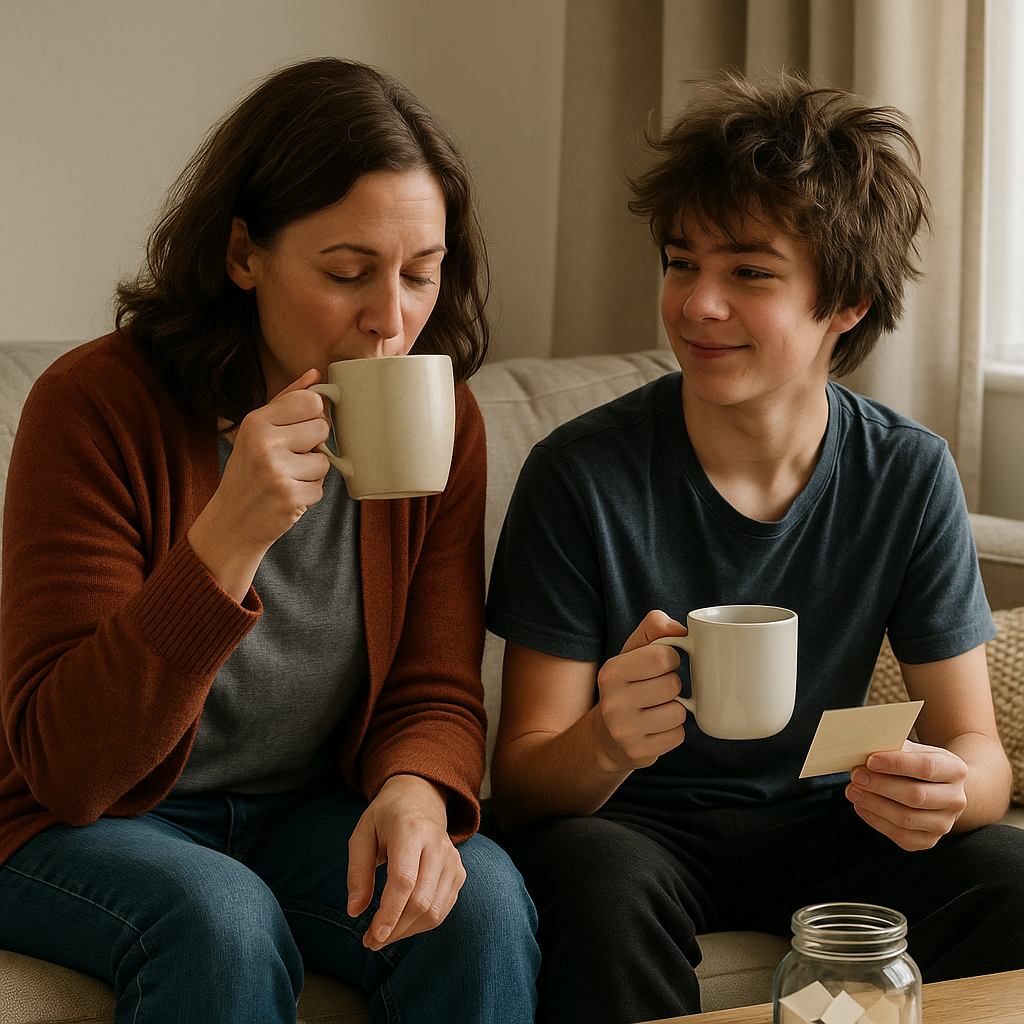
Now we do a portable ritual that works whether the kids wake up here or roll in at 11:30 with bedhead and a backpack. It’s a “first sip” moment: hot cocoa packets, tea, or coffee for the adults, and one specific mug for each person that lives at our house year-round. Nothing seasonal, nothing precious. We sit on the couch, we take the first sip, and each person answers one question from a jar.
The jar is the whole trick. It’s just index cards, but the prompts are tuned for stepfamily reality. Not “what are you grateful for” (too loaded), and not “best gift ever” (guaranteed comparison). Ours look like:
- What’s something you hope we keep doing next year?
- What’s one thing you want more of this winter (sleep counts)?
- What’s a food you want on the holiday menu somewhere, even if it’s not here?
- What’s a song you want played today?
That third question is sneaky in the best way because it lets kids name traditions from the other house without anybody getting defensive. If they say, “I want Grandma’s cinnamon rolls,” I don’t hear it as a critique of my kitchen. I hear it as information: that’s a comfort food that matters to them. Sometimes we make our own version on a different day. Sometimes we don’t. The important part is that they’re allowed to want it out loud.
When time is tight, we do three prompts total, not one per person. When the house is fuller, we go around. It scales up and down without breaking. And because the ritual is about a mug, a jar, and a couch, it doesn’t compete with anyone else’s morning. It just gives our house a recognizable opening beat.