
A wooden spoon, one rhyme, and a tiny pause can teach your baby what's coming before you move them.
The spoon tap that turns a rhyme into a timing signal
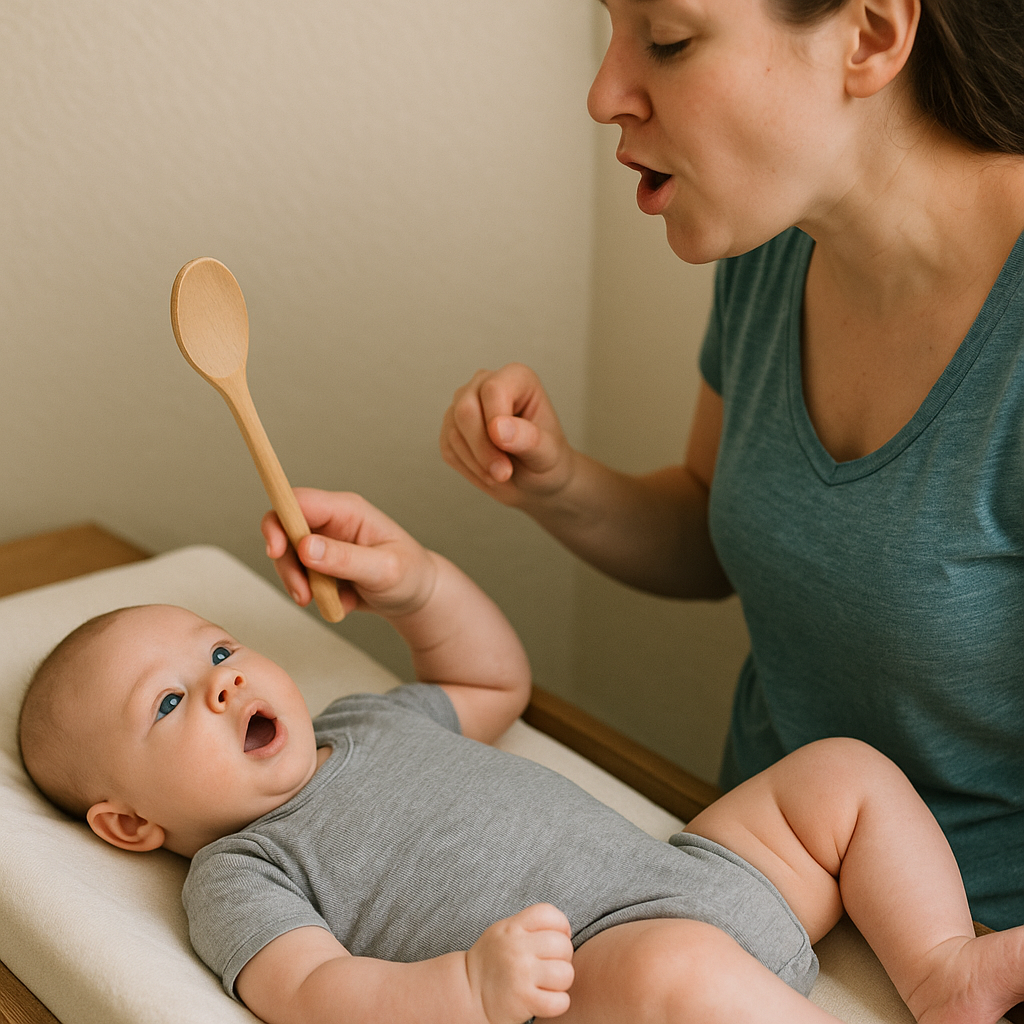
I didn't expect a wooden spoon to be the thing that made our diaper changes smoother, but it did. Not as a toy, and not as a distraction. I used it as a metronome. Here's the move: before you pick your baby up, tap the spoon twice on the changing table (or the dresser top, or the pack-and-play pad) and sing one short line of a rhyme you already know by heart. Keep it the same line every time. I used the first line of "This Little Piggy" because it's short and it has a built-in beat.
The important part is the timing. Tap, tap, sing, then pause for one full breath before you lift. That pause is where the learning happens. At first, it's just noise. After a few days, you start to see the micro-signals: their eyes shift toward you on the second tap, their legs loosen a little, their hands stop windmilling right before the lift. It's not magic. It's them building a tiny prediction loop: sound pattern, familiar words, then the body sensation of being picked up.
When it works, it feels almost boring. You don't get a big reaction. You get fewer startled flails, less stiffening, and less of that sudden cry that sounds like, "Hey! I wasn't ready." And if you're doing this at 2 a.m., boring is a gift. I keep the taps light so the table doesn't thunk, and I use my regular speaking voice instead of a performance voice. A rhyme isn't a concert in the nursery. It's a cue.
If you try it and nothing changes, don't add more words. Shorten it. One line. Same taps. Same pause. The predictability is the whole point.
Why the pause matters more than volume (and how to keep it consistent)
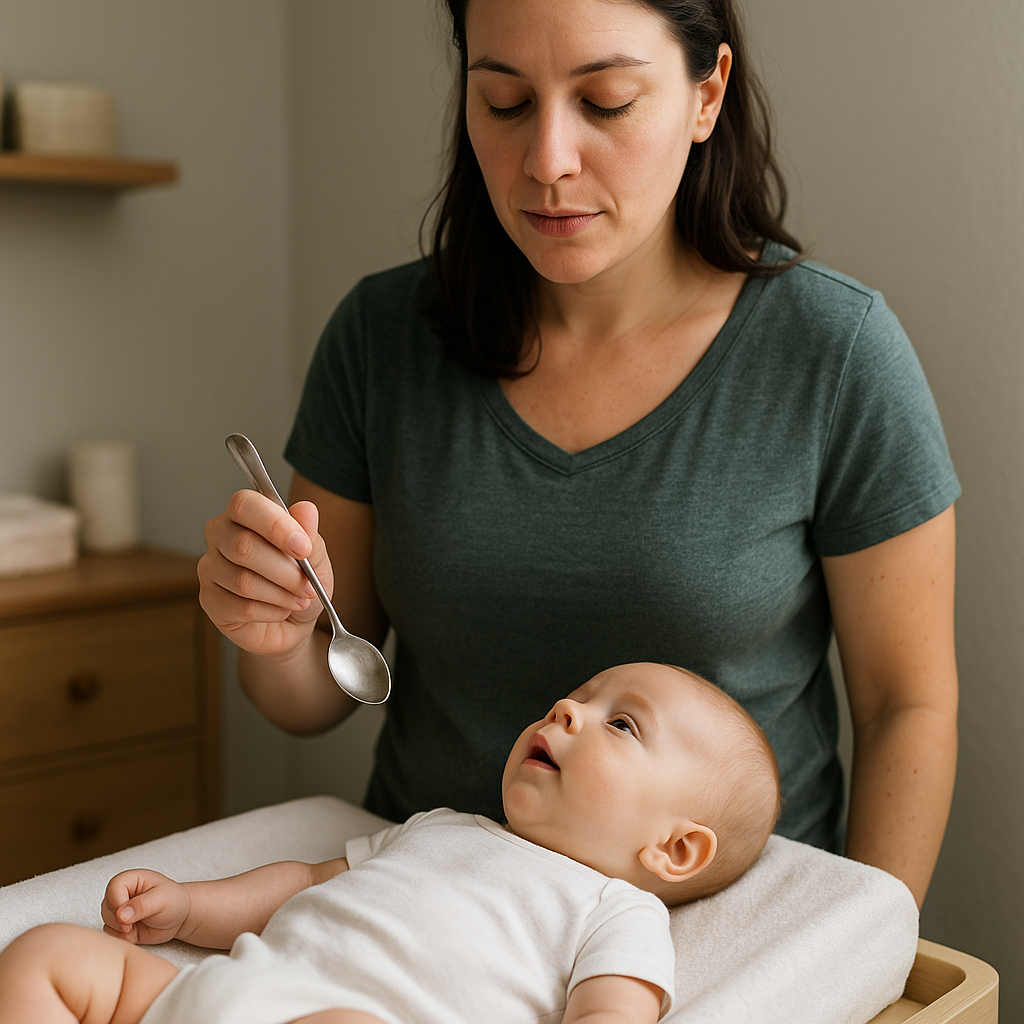
People fixate on the rhyme like it's a spell. The rhyme helps, sure, but the quiet beat right after it is the part your baby can grab onto. Without the pause, the cue just smears into the action. With the pause, your baby gets a clean pattern: familiar sound, then a predictable gap, then the next step. That gap is where you start seeing anticipation instead of surprise.
I learned this the hard way because I used to rush. I'd start singing, already sliding my hands under their back, already unfastening the onesie snaps. My baby would tense up, which made me speed up more, which made them tense up more. So I forced myself into a tiny rule: rhyme line first, hands second. Even if I'm juggling a fresh diaper, wipes, and a squirmy kid, I don't touch them until the end of the line.
Two small tricks keep it consistent when you're tired:
- Pick a physical marker for the pause. I exhale. One slow breath out. That's the whole pause. No counting, no looking at the clock.
- Use the same start position every time. I stand at the same corner of the changing pad, hands off the baby, spoon already in my right hand. If I start in a different spot, I end up improvising.
You'll notice it first in the limbs. The shoulders soften. The knees unhook. Sometimes they open their mouth like they're about to vocalize, because they're matching the rhythm with you. That's the anticipation you're building: not I understand language anticipation, but I know this sequence anticipation.
And yes, it works outside diaper changes. I use the same idea before I buckle the car seat. One rhyme line, then the pause, then the chest clip. In the car, you can almost see the prediction: they stop trying to sit up right as the straps come over their shoulders. It feels like you're getting cooperation, but it's really just timing.
Swap the words, keep the rhythm: choosing a rhyme that won't annoy you
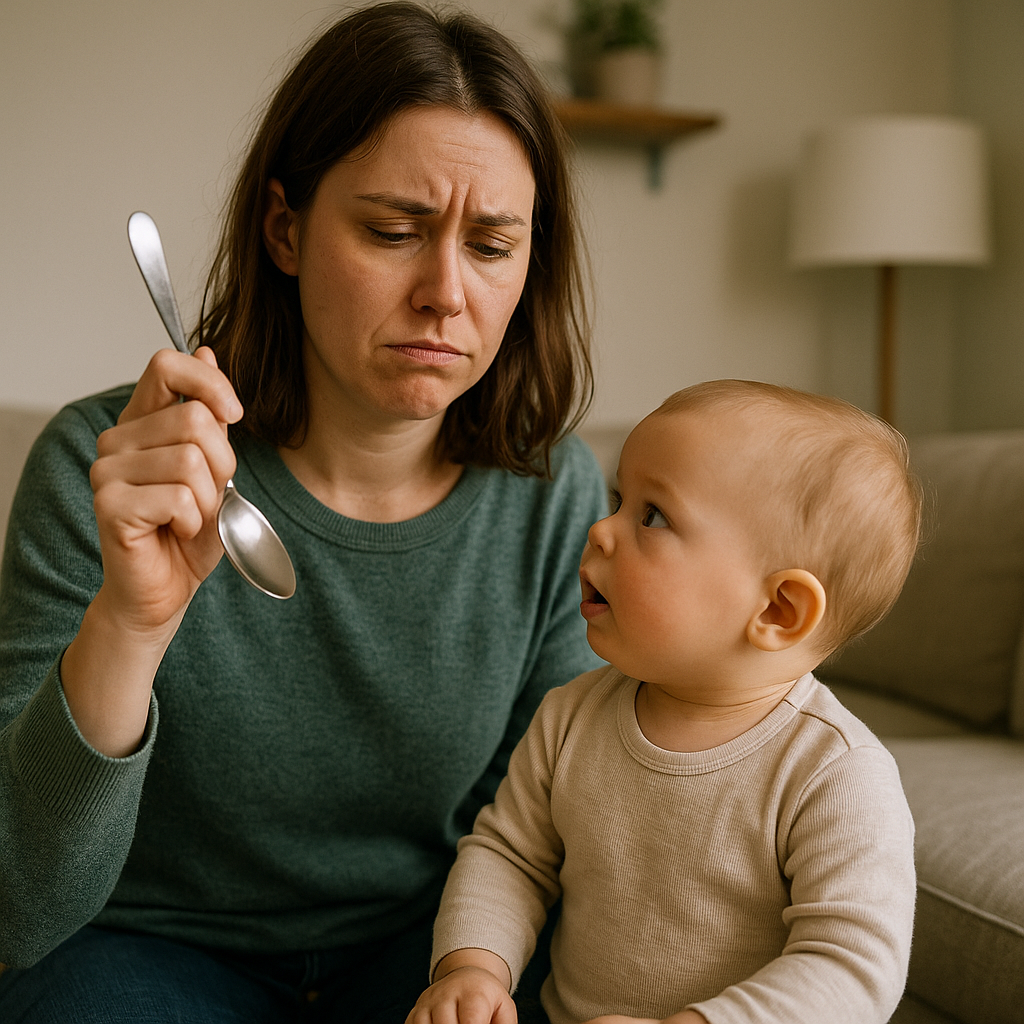
Here's the trap: you pick a rhyme you think you should use, then you hate it by day three, then the cue dies because you can't make yourself do it. So choose like a practical adult, not like you're curating a playlist for an imaginary parenting montage.
I like rhymes with a steady beat and a natural stopping point after one line. "Row, Row, Row Your Boat" works because you can stop after gently down the stream and it doesn't feel chopped. Pat-a-cake is great for quick transitions because it's basically percussion. Twinkle, Twinkle is a little long for a tight cue, but one line is fine if you don't accidentally roll into the next.
What matters is what stays constant: the rhythm, the first few words, and the pause. You can change the rhyme for different routines without losing the skill your baby is building. I use one rhyme for pick-ups, a different one for wiping hands after meals, and a third for bath exit (the part where a warm baby suddenly realizes air exists). Same structure every time: cue sound, line, pause, then the body move.
If you're wondering how you know it's working, look for the quiet tells. They don't always smile. Sometimes they do the opposite: they go still. Stillness can be anticipation. When my baby started learning the bath cue, they'd stop splashing on the last word and brace their feet against the tub floor. Not because they loved getting out, but because they knew it was next.
One more practical note: keep the cue portable. I used the same spoon for a while, then I forgot it at the sink and the whole thing fell apart for a day because I was rummaging for it mid-routine. Now I treat the object as optional. If I have it, I tap. If I don't, I tap my fingernail twice on the nearest hard surface. Same beat. Same pause. Same next step.