
Three ways to practice healthy risk-taking at school age without throwing them into the deep end: one step bigger, then pause.
The one-step rule for everyday risks
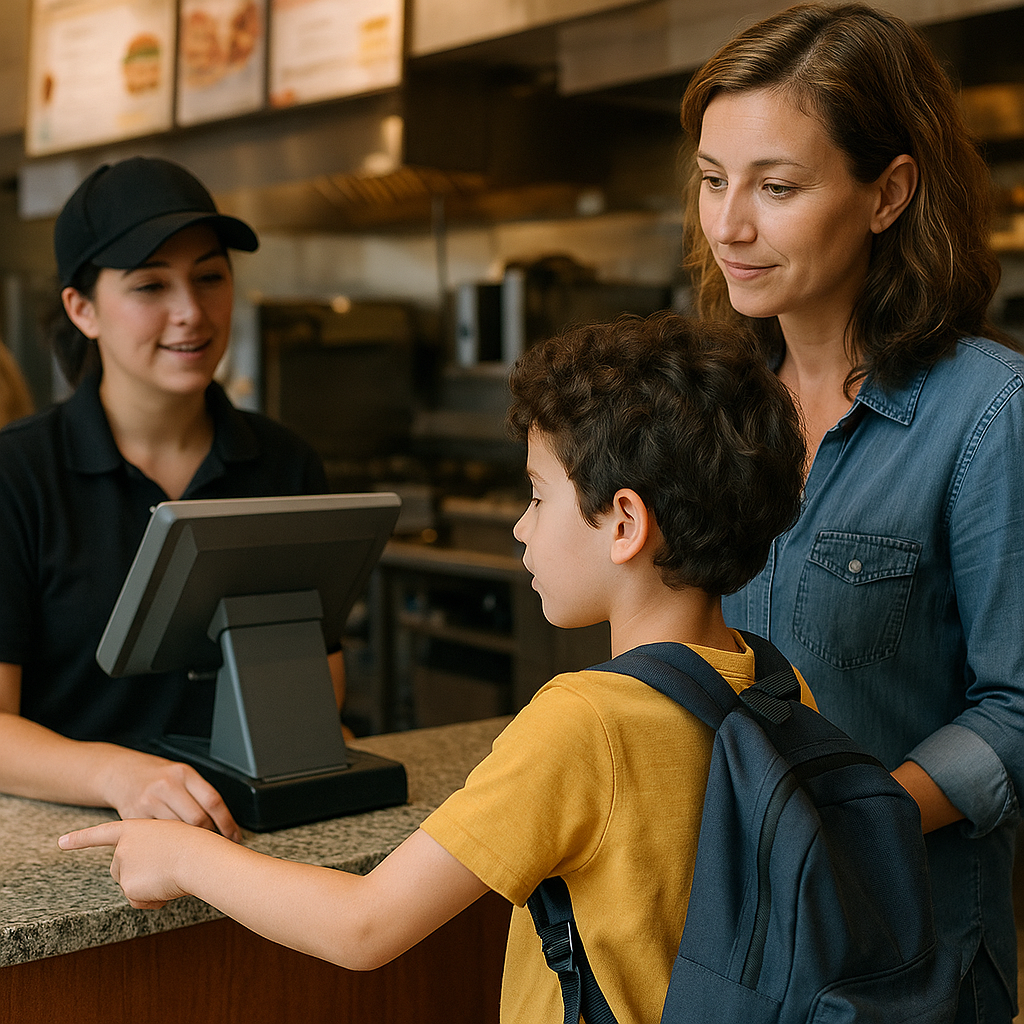
I used to treat independence like a switch: either I was helping, or I was backing off. That works fine when they’re little and the stakes are mostly snacks and shoes. Once school gets rolling, the stakes start showing up in weirder places. They want to walk in a little ahead of you at pickup. They want to handle the after-school sign-in on their own. They want to order their own food at the counter, with a line forming behind them. It’s not dangerous-dangerous, but it’s the kind of risk that makes a kid’s stomach flip and makes a parent want to jump in and speed-run the moment.
The one-step rule is how I keep myself from either hovering or tossing them into something too big. I’m looking for one small notch past what’s already comfortable, and I name it out loud before we do it. Not a speech. More like: “Today you’re going to ask the librarian where the graphic novels are. I’ll stand right here.” Or: “You’re going to put your name on the pizza order. I’ll hold the wallet, you do the talking.” That’s it. One step.
Here’s how it plays out in real life: I pick a moment we’re already in (school office, playground, a friend’s doorbell), and I decide what I’m not going to do. Not “I’m going to be brave and let them.” Something concrete like, “I’m not going to answer the question for you.” Then I give them a script that’s short enough to remember: “Hi, I’m in Mrs. Lee’s class. Where do I put this?” Kids don’t need you to write a screenplay. They just need the first sentence so they can get rolling.
Afterwards, I don’t do the whole debrief-tour. If they did it, I just move on. If they froze, I treat it like a normal data point. “Okay, next time I’ll stand closer, and you’ll still say the first sentence.” The win is that they went near the edge and came back in one piece, not that the moment looked smooth.
Let them own a low-stakes mistake at school
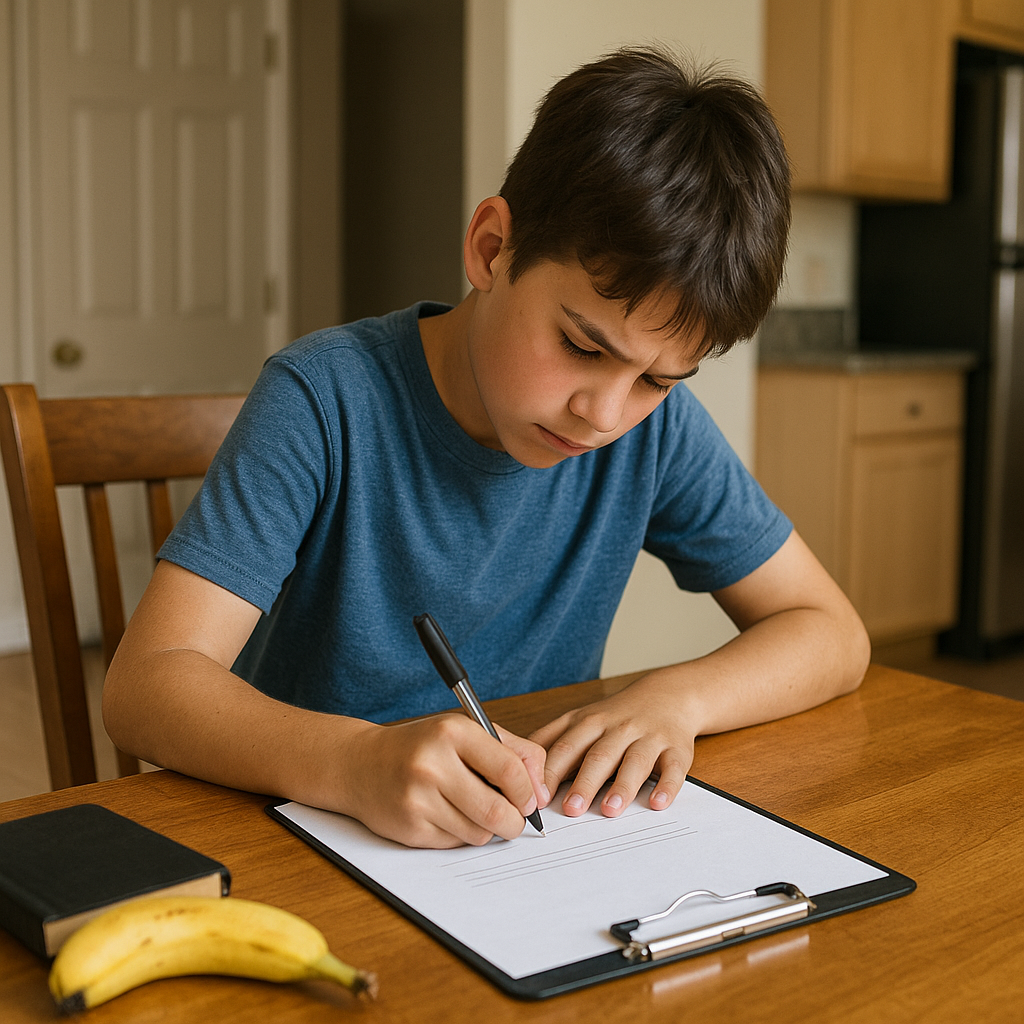
The fastest way to teach a kid that risk is intolerable is to quietly erase every consequence before they feel it. I’m not talking about big consequences. I’m talking about the classic school-year stuff: the water bottle left on the kitchen counter, the library book still on the nightstand, the permission slip sitting on the table under a banana peel. Those are the exact moments where kids can learn, “I can fix this,” and where adults tend to sprint in because it’s inconvenient, or because the front office is awkward, or because we don’t want our kid to feel embarrassed.
In our house, we have a simple line: “Is this fixable by you, today?” If yes, they handle the fix, and I’m just the driver or the calendar.
Example: the permission slip. If we’re still at home and there’s time, I hand them the clipboard and a pen and I say, “Bring it to me when it’s ready.” I don’t hover while they write their name. If we’re already in the car, I don’t U-turn unless it’s truly time-sensitive. Instead, they practice the next move: walking into the school office and asking for a new copy. That’s a healthy risk for a lot of kids. Fluorescent lights, grown-ups behind a counter, and the fear that everyone can tell you messed up.
What I do in that moment is painfully specific. I stand off to the side, not at the counter, so the kid is the one who has to be seen. If they’re stuck, I give a prompt that’s about the first five words, not the whole ask: “Start with ‘Hi, I need…’” I also let them feel the tiny discomfort of waiting while the office staff looks for the form. Waiting is part of the risk. It’s the part that makes kids blurt, or bolt, or start negotiating with you using their eyebrows.
Then the part that matters most: I don’t rescue it with a joke to the staff or an apology tour. I don’t say, “We’re usually on top of it.” That’s my ego talking. The kid did the repair. The adult behind the counter is fine. And later, when the next form comes home, I’ve noticed the change: they’re quicker to say, “I’ll put it in my backpack now,” because they’ve learned what fixing feels like, not just what forgetting feels like.
Practice risk before it shows up as panic
A lot of “my kid isn’t ready” moments aren’t about skill. They’re about surprise. School days are full of tiny risks that hit out of nowhere: a new coach at practice, a substitute teacher, a group project partner they don’t like, a bus driver who doesn’t smile. Kids who do fine in calm conditions can melt down because the risk wasn’t on the schedule in their heads.
So we rehearse. Not in an intense, theater-kid way. More like how you do a fire drill so your brain has a path when it matters.
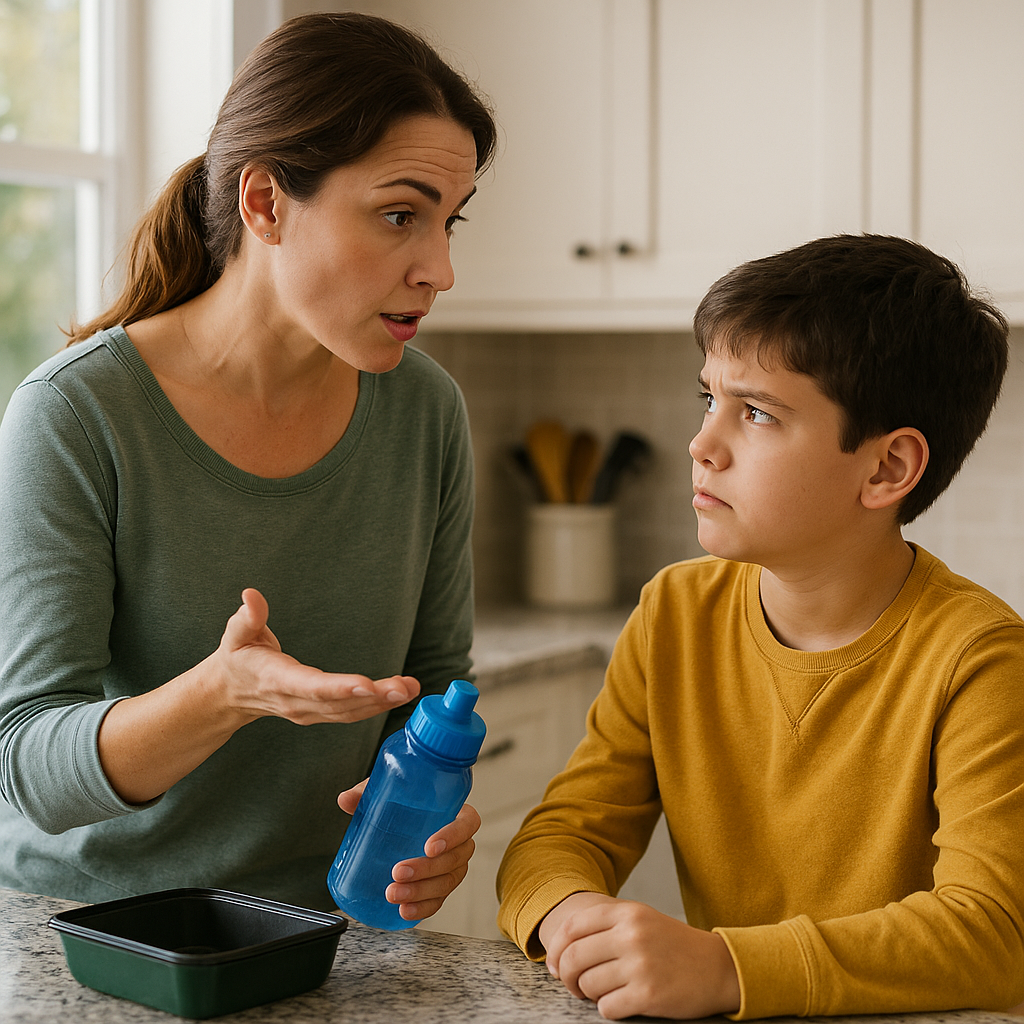
I pick one recurring situation that tends to go sideways and I run a five-minute “what if” once a week, usually while I’m packing lunches or washing a couple of water bottles at the sink. The key is to keep the practice anchored to a real place and a real sentence. “What if the teacher says you’re in a different reading group today?” Or: “What if you get to the cafeteria and your friend is sitting somewhere else?” Then I ask for two options, not ten. Kids can hold two. Ten turns into a debate club.
Here’s what this looks like with healthy risk-taking: I’m teaching them to try a move even when they can’t predict the outcome. Option A might be, “I can ask, ‘Can I sit here?’” Option B might be, “I can sit at the end and eat first, then decide.” I’m not promising it’ll feel good. I’m giving them a next action that doesn’t depend on me being there.
When it’s about speaking up to an adult at school, we practice the exact opening line, because that’s where kids choke. “Excuse me, I have a question.” I’ve watched a kid who couldn’t get a word out in September walk into the library in March and ask for help finding a book series, with the quiet confidence of someone who’s done it before. It wasn’t magic. It was repetition when the stakes were low.
The trick is that I don’t use practice time to warn them about everything that could go wrong. I keep it simple and I stop while they’re still relaxed. If you keep going until they’re anxious, you’ve turned your “prep” into the stressor. Five minutes, done. Then when the real moment comes at school, it feels familiar enough that they can take the step without looking back for your face.