
Set one timer, write one note, and you won't be renegotiating bottles and burps half-asleep.
The timer-backed feed window
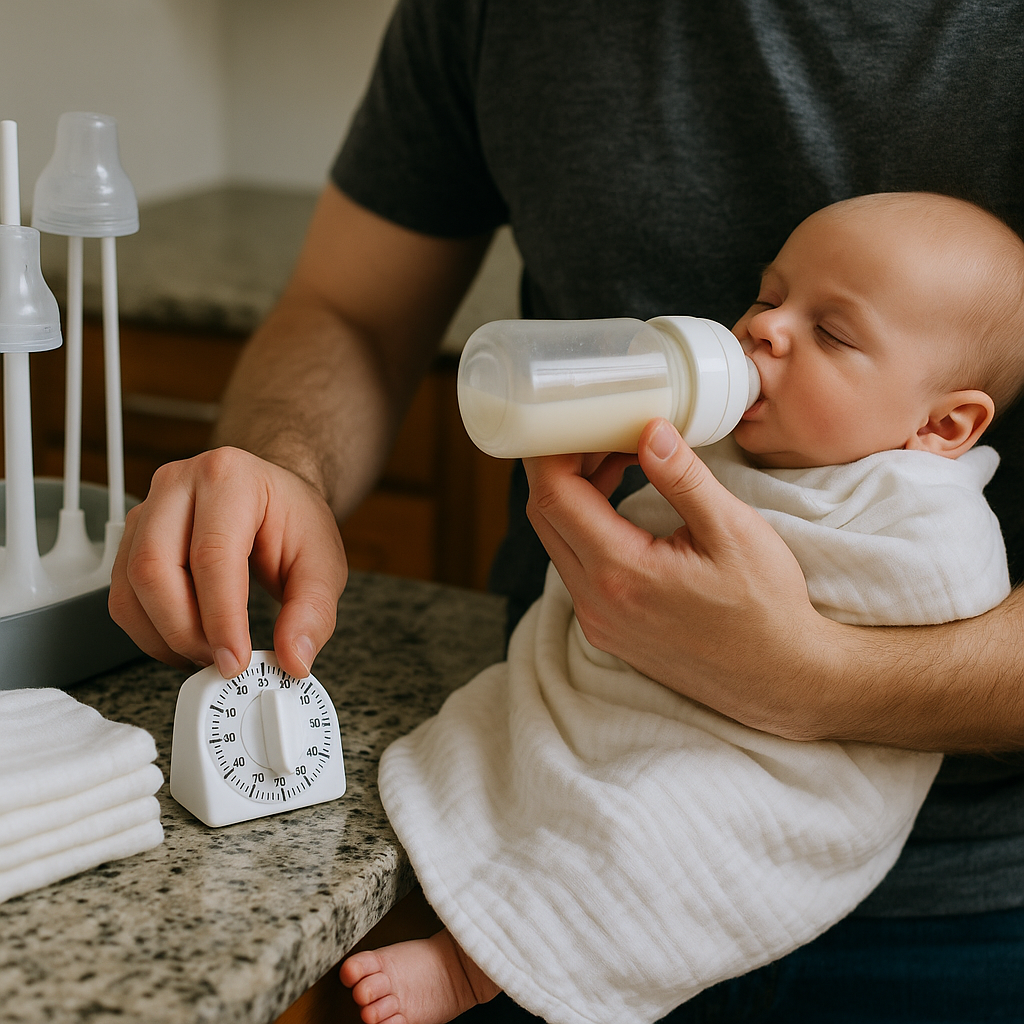
Pick a feed window you both agree counts as "your" shift, then make it physical. Not in an app, not in a text thread that gets buried under pediatrician screenshots. I mean a loud, dumb kitchen timer that sits next to the bottle rack or the pump parts. When it's your window, you start the timer at the top of the feed and treat it as a rough shift marker, not a rule about how long the baby should eat or stay with one parent.
Here's why this works in real life: the handoff moment is where resentment breeds. Not because either of you is a villain, but because half-asleep brains do math badly. One person feels like they were up forever. The other swears it was ten minutes. Meanwhile, the baby is wide awake, doing that tiny angry grunt that escalates into a full-body wind-up if nobody commits.
For us, the timer covered the whole feed-and-settle routine rather than setting a feeding limit. Your baby's hunger and fullness cues should determine the feeding itself, but set your number based on your actual routine. If you're nursing, the timer can be "from latch to back in bassinet," so it accounts for the burp-and-settle part that somehow takes longer at night. The point isn't precision. It's that you both stop renegotiating the same question: "Am I done yet?"
Two specifics that matter: First, make the timer start a ritual, not a debate. The person on shift starts it automatically, even if they're annoyed. Second, put the timer where the work happens. Ours lived beside the Haakaa and the little stack of burp cloths because that was the truth-telling corner of the room. If the timer is across the kitchen, it becomes optional; optional becomes invisible; and invisible becomes "I always do this."
Write the three-line night script (before the sun goes down)
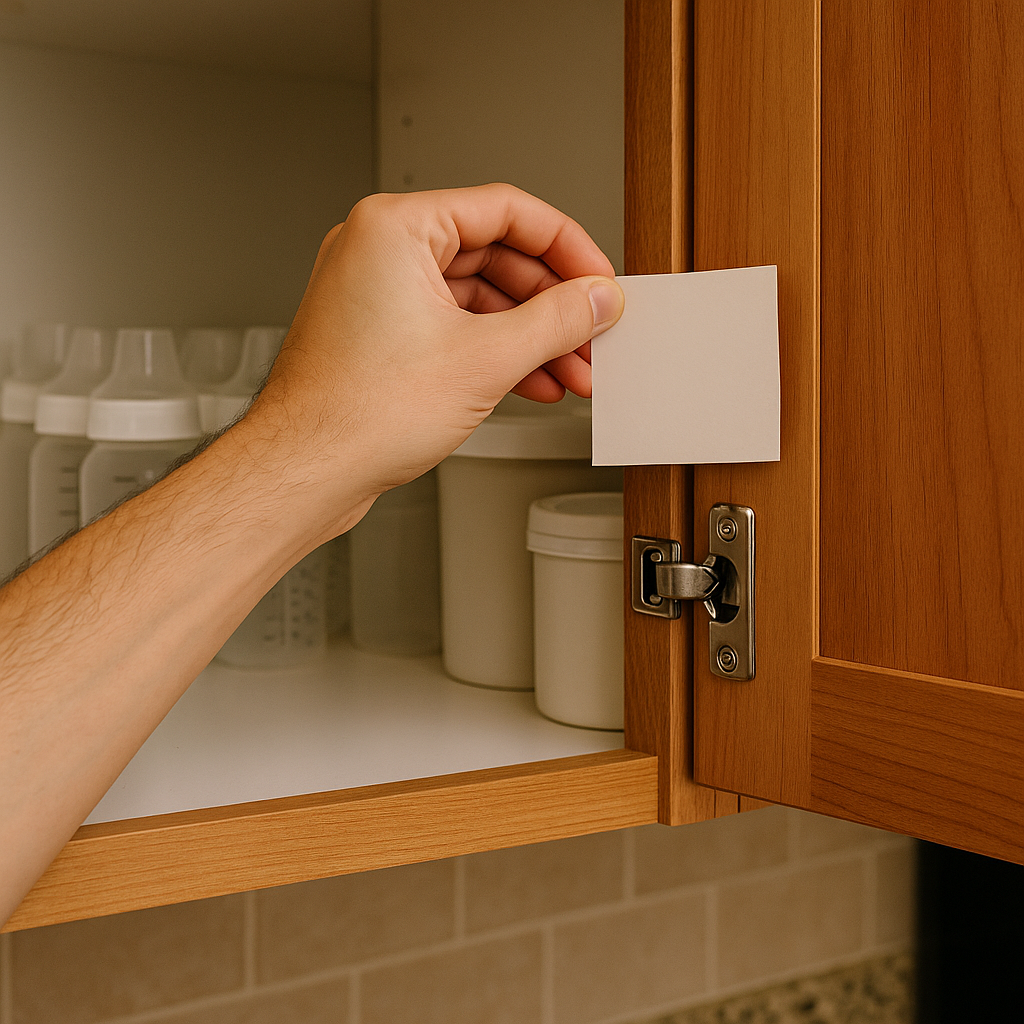
Do this when you're both still capable of sentences: write three lines on a notecard and tape it inside the cabinet door where you keep bottles or formula. Not on the fridge. Not in a shared doc. Inside the cabinet, because that's where your hand goes when you're trying to be quiet, and the dog is already suspicious.
The card is a script, not a manifesto. It should answer three questions you will absolutely fight about at 1:48 a.m. if you leave them open:
- Who responds first? Example: "If the baby wakes before 2:00, Sam goes first. After 2:00, Jordan goes first."
- What counts as a full turn? Example: "A full turn includes feed + burp + reset (diaper if needed) + back down."
- When do we wake the other person? Example: "If the baby is still unsettled and you need help, tap the other person. No long debrief required."
I know the temptation is to write seven exceptions. Don't. Exceptions multiply when you're tired, and then the card becomes one more thing to argue about. Keep it to three lines that reduce the number of decisions you have to make while holding a warm little wiggle that smells like milk.
This is also where you put the unsexy details that are invisible until they're not: where the spare pacifiers live, which bottle nipple size you're using tonight, whether you're warming bottles or going room temp, and which burp cloths don't shed lint. Those details feel tiny until you're the person hunting for a clean cloth with one hand while the other person sleeps and somehow doesn't hear the squeaking bassinet.
Once it's taped up, the rule is simple: in the moment, you follow the card. You can change it tomorrow. Nighttime is for execution, not negotiations. The first time you do this, it will feel almost too blunt, like you're running a tiny pit crew out of your kitchen cabinet. Good. Blunt beats bitter.
One bottle station, two restocks, no guessing
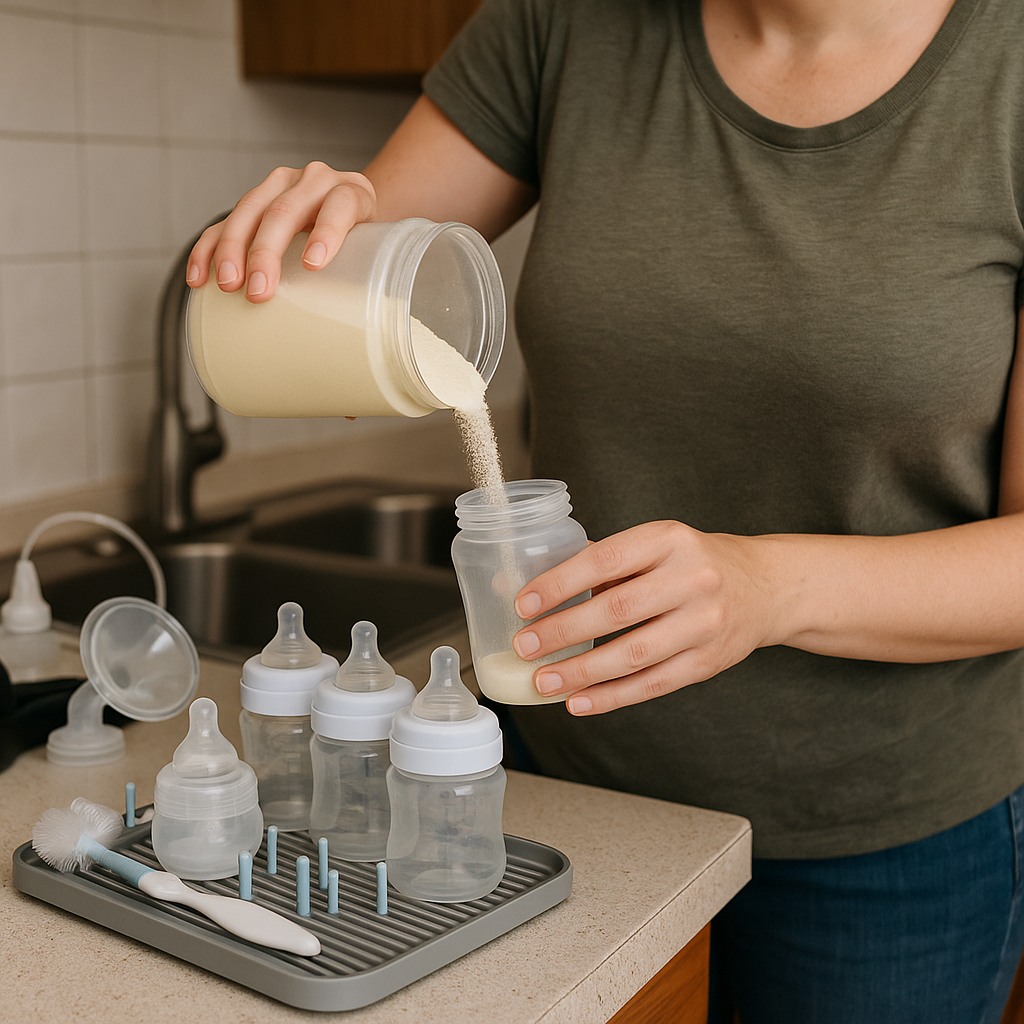
You can split feeds 50/50 and still end up furious if one person is also silently doing the restock. This is where a lot of the less-visible work shows up: washing pump parts, counting clean bottles, checking supplies, and finding all the bottle pieces before the next feed.
The fix that held up for us was treating the bottle station like a tiny set, with two assigned restocks that happen whether the night was smooth or a disaster. Not a whole-house reset. Just the stuff that prevents the 2 a.m. scramble.
- Before you go to bed, the first-on-shift person restocks. That means: line up however many clean bottles you expect to use, set out clean bottles and the formula container so you can measure and mix it exactly according to the label when needed, and set a full water bottle next to the chair you feed in. If you're pumping, it also means the flange set and collection bottles are clean and in one place, not split between the drying rack and a dish towel.
- After the last feed of your shift, you reset the station for the next person. You don't have to wash the whole day. You do have to make sure the next feed isn't a scavenger hunt. Dirty parts go to one bin. Clean parts go to one spot. A single burp cloth and a spare onesie are visible rather than packed away.
Here's the detail that kept us from "but I thought you did it" loops: we picked one container for dirty stuff. Ours was a cheap plastic tub that lived under the counter. Pump parts, nipples, caps, all of it goes in there. We used the tub for items waiting to be washed and kept cleaned feeding parts together once they were fully dry. No gray area, no sniff tests, no weirdly damp "maybe-it's-fine" pieces at night.
This doesn't sound romantic. It sounds like running a coffee shop. But it removes the quiet punishment where one person gets the baby, and the other person gets the whole inventory problem. Once the station stays predictable, the schedule negotiation gets easier too, because each shift is the same size in practice, not just on paper.