
A family screen curfew sticks better when the off-ramp has a timer, a landing spot, and a repeatable last-15 routine.
The 2-timer curfew (one for them, one for you)
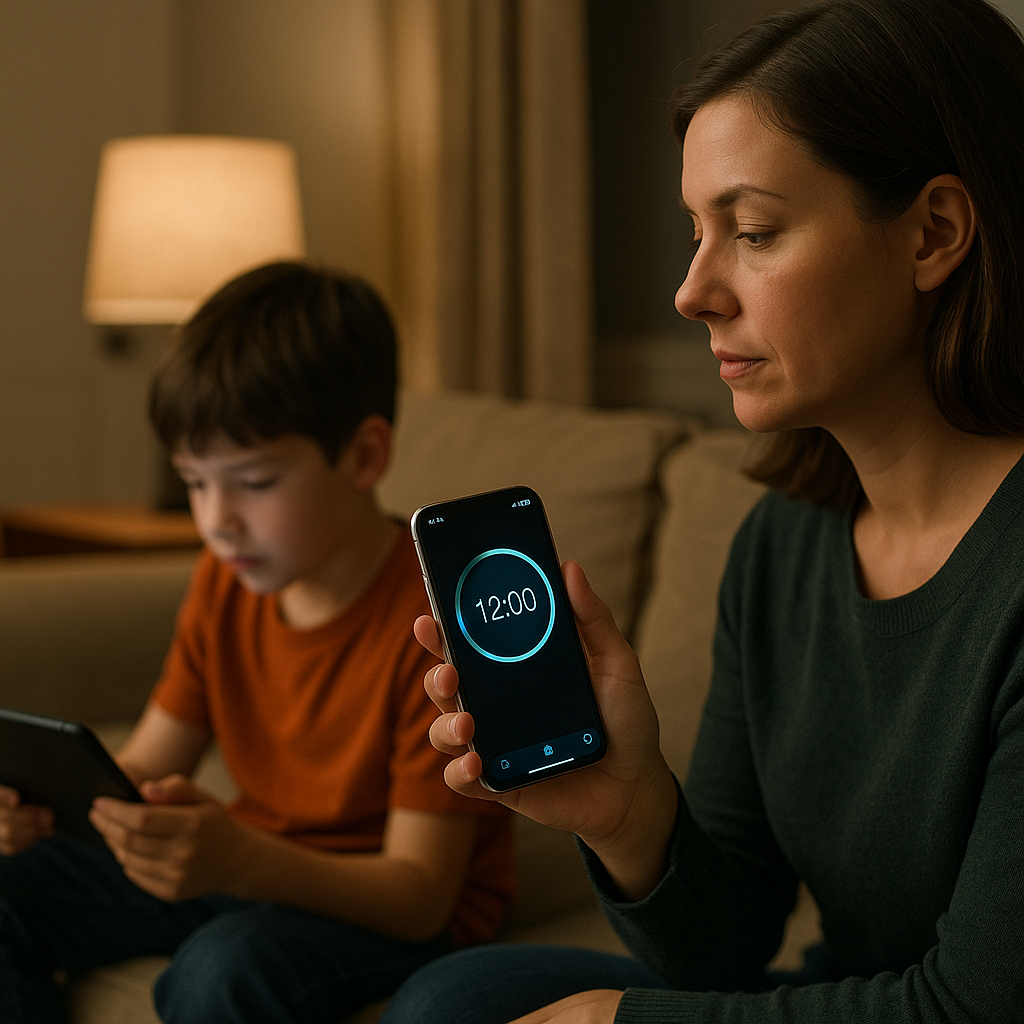
The problem with a screen curfew in a real house is that everyone hears it differently. Kids hear, "I might get another level." Adults hear, "Please don't make me negotiate when I'm exhausted." The only thing that's worked for us consistently is setting two timers, out loud, and letting them run the show. Timer one is the kid-facing warning timer: 10 minutes. Timer two is the grown-up timer: 12 minutes. That little offset matters because it gives you two minutes to get ahead of the crash without hovering like a hall monitor.
I use the Kitchen Timer app on my phone if I'm nearby, or a cheap little digital timer that lives on the counter if my phone is staying out of it. When the 10-minute timer goes off, I don't say, "Get off." I say, "You have one more thing. Pick it." One more match, one more episode decision point, one more Minecraft trip back to base to park the character somewhere safe. Then, when my 12-minute timer goes off, I start my part of the routine: lights down in the living room (just lamps), water bottles filled, and a quick check that tomorrow's shoes and backpacks are in the same place they were yesterday.
This is the wellness part people skip: you're not only protecting bedtime. You're protecting the nervous system from that hard slam where bright stimulation turns into a power struggle, and then turns into a body that can't settle. The two-timer trick makes the off-ramp predictable, and predictable is calming in a way no lecture ever is. If you want to make it even smoother, keep the timer sound the same every night. Our kids can tell the difference between the oven beep and the timer chirp, and yes, they will argue with the wrong beep.
Make the last 15 minutes physical, but not "exercise"
If your screen curfew ends with everyone sitting perfectly still, you're basically asking bodies to go from 60 to 0 with no brake pads. The fix for us wasn't a big workout plan or a wholesome family yoga session that nobody asked for. It was building in a short, physical reset right after screens go dark, while everyone's still a little buzzy.
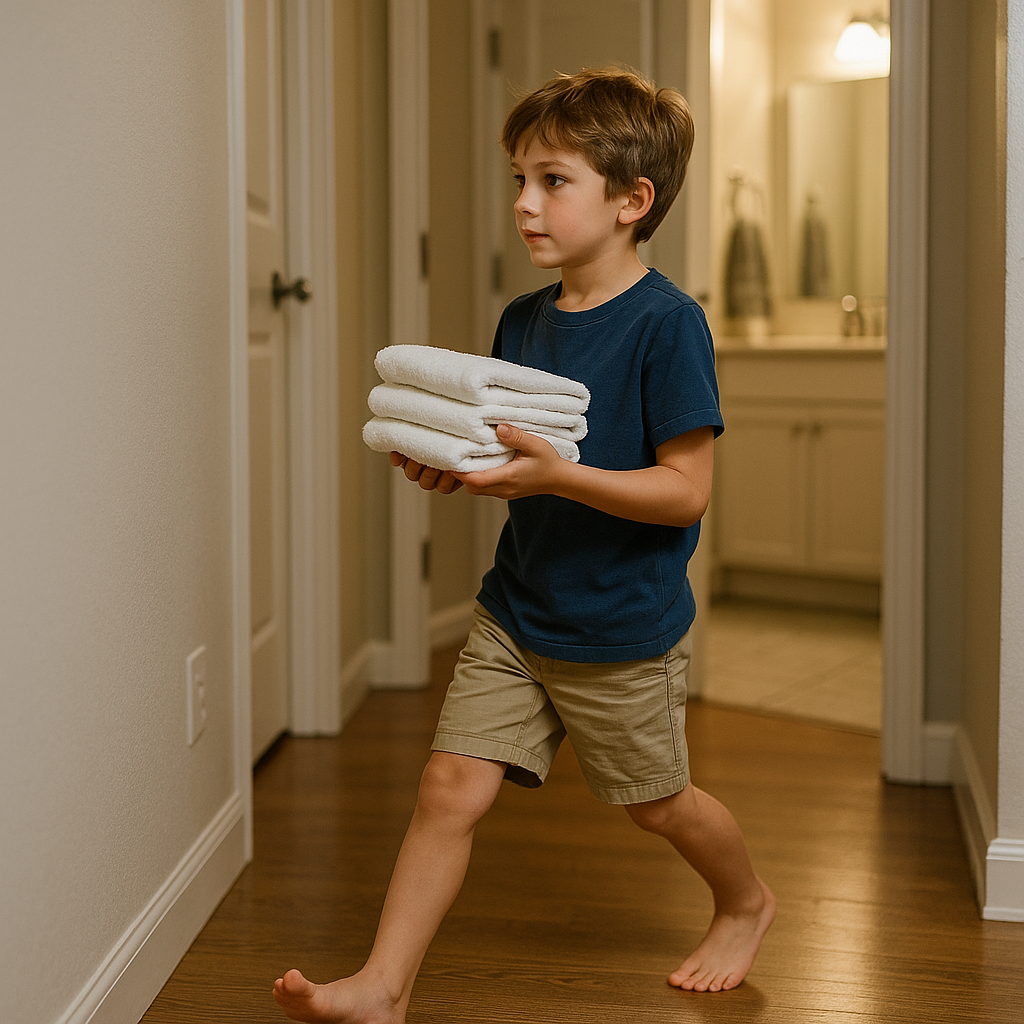
Our go-to is what we call the hallway loop. It's boring on purpose. One lap to the bathroom, one lap to put dirty clothes in the hamper, one lap to grab tomorrow's outfit. Nothing is timed, nobody is racing, and it keeps the body moving just enough that the stuck feeling from being hunched over a tablet starts to unwind. If your kid is the type who flops dramatically when you say, Time for bed, give them a job that has a destination and a return: carry the clean towels to the bathroom, refill the dog bowl, set three forks on the table for breakfast. You're sneaking in movement without turning it into a performance.
On nights when I can tell the screen time was extra intense (fast-cut videos, loud games, lots of laughing and yelling), we add one sensory step: a warm shower or bath with the bathroom fan on so the air doesn't feel heavy afterward. Not because water is magical, but because the temperature shift and the steady sound change the whole vibe in the house. I keep it simple: unscented soap if skin is picky, a dim light, and no new toys introduced in the tub. The goal is a downshift, not an aquatic extension of playtime.
One detail that surprised me: when we did the movement reset in socks on hardwood, everyone got weirdly ramped up from sliding. Now it's bare feet or grippy socks. Small thing. Big difference. This is the kind of stuff you only notice when you've repeated the routine enough times to spot what quietly derails it.
Where the devices sleep matters more than the rule
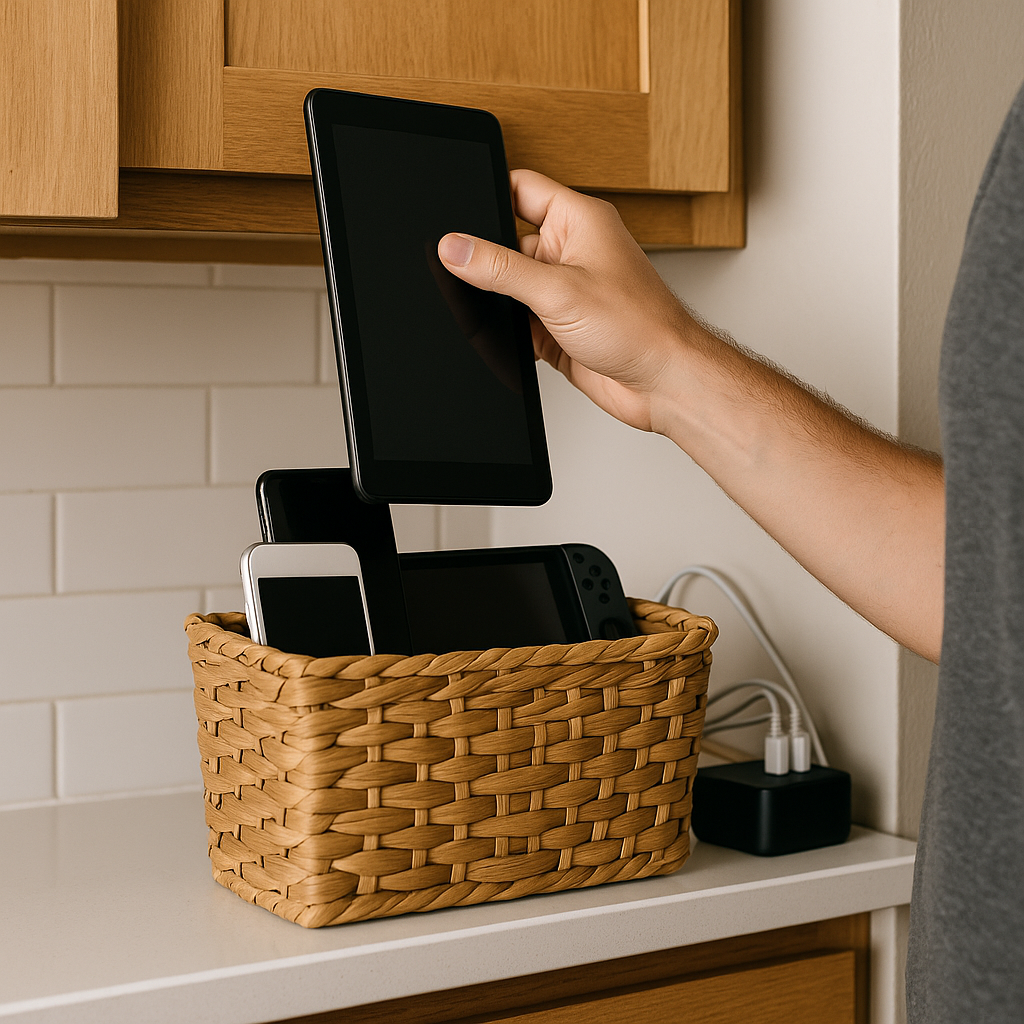
I've watched families fight the same battle every night because the curfew is a sentence, not a system. You can say screens off at 8 with all the confidence in the world, but if the phone is still in a hoodie pocket, the tablet is face-down on a bed, and the Switch is within arm's reach, the rule turns into a late-night scavenger hunt. The change that tightened everything up for us was deciding, once, where devices sleep. Not where they charge (different issue), but where they physically land at curfew and stay put until morning.
Ours is a simple basket in the kitchen, on a high shelf. It's not fancy. It's just annoying enough to reach that nobody absentmindedly grabs a device on the way to the couch. We added a cheap multi-port USB charger so we're not juggling bricks and loose cables. If you want to get granular, label the cables with painter's tape so you can tell which one is the iPad cable versus the random one that only works at a certain angle. I didn't think that mattered until I realized half of our but I need it arguments were really my battery is low panic that could've been prevented.
For kids who use a device for music or a bedtime story, we separate content from the device. A small Bluetooth speaker can play an audiobook from a parent-controlled phone in another room, or you can use a standalone white noise machine. If you do stories, pick one source and stick with it so the routine isn't, Wait, where's the app.
This setup also changes adult behavior, which is awkward to admit but true. When the basket is the default, I'm less likely to sit in bed scrolling and telling myself I'm winding down. The house quiets faster. People move more in the morning because they're not glued to a screen the second they wake up. And if someone really needs to use a device after curfew, it's a deliberate choice: walk to the basket, take it out, and bring it back. That friction is the point.