
Three ways I've split open space and quiet zones without turning the house into a maze of rules.
The headphones-on rule that doesn't become a fight
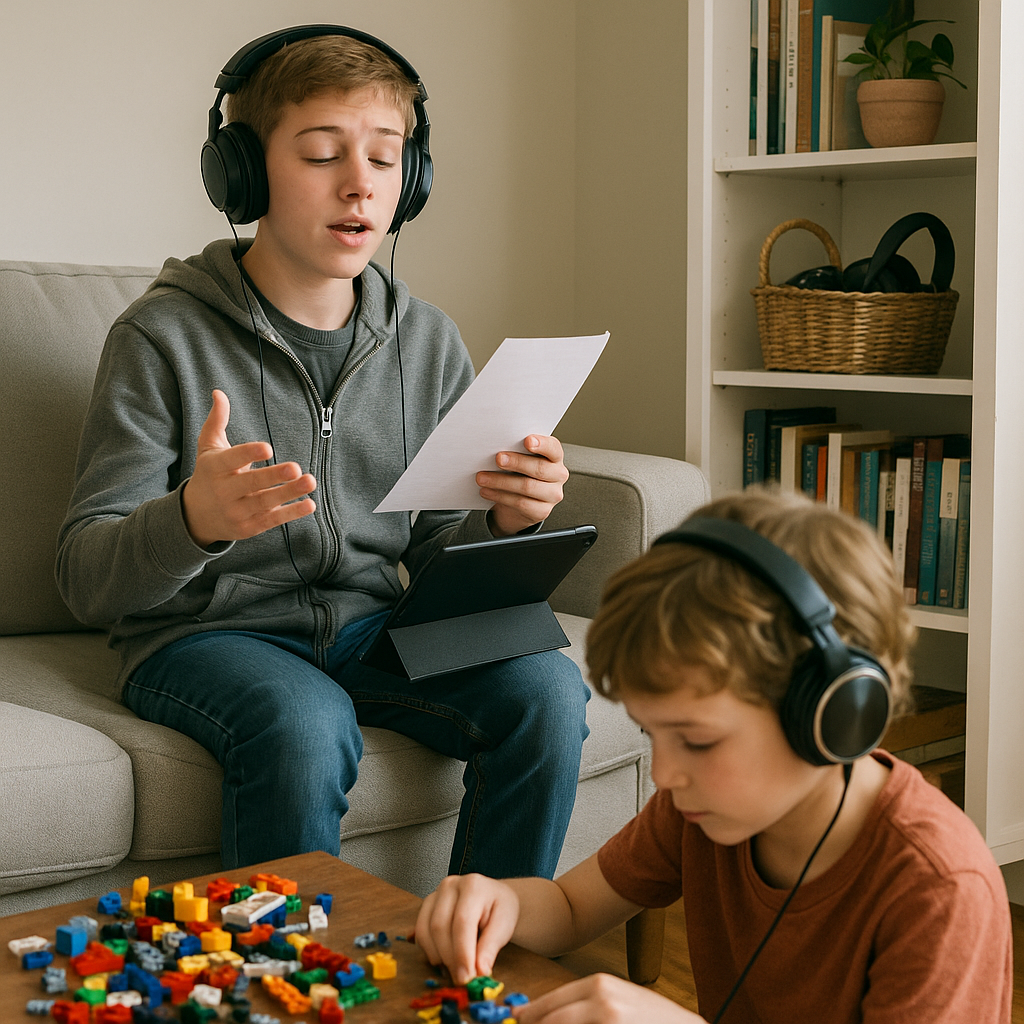
I used to treat noise like a manners issue. Then my kids hit the age where they could read the room well enough to feel embarrassed about everything they were doing in it. The oldest wanted to practice a presentation out loud, but not with an audience. The younger one wanted to build LEGO with full sound effects, but not be told to keep it down every three minutes. The fix, for us, wasn't more shushing. It was picking one clear sound boundary that made the open space usable for everyone: in the shared room, anything with audio gets headphones, period. Not as punishment. As a default.
The part that made it stick was making it physically easy. I put a little basket on the bookshelf with three options: a couple of wired earbuds (the cheap kind you don't cry over), one set of over-ear headphones, and a simple headphone splitter so two kids can watch the same iPad on a long weekend without blasting the rest of the house. I also added a short extension cable so they aren't hunched like a question mark on the floor by the charger. If a device can't take headphones, it goes into a different space, or it becomes silent. Those are the only two choices, and it keeps me out of the referee chair.
You'll still get the classic complaint: they can't hear you. Good. That's the point, and it's also why I paired the rule with a non-negotiable visual cue. If I need them, I stand in the doorway and flick the kitchen lights twice. It sounds silly, but it beats shouting names and it doesn't pierce someone else's quiet zone. The bonus is that once the room isn't an audio free-for-all, the kids start making their own quiet corners with a blanket and a book instead of hunting for privacy by slamming a bedroom door.
Tape lines beat lectures when you need a quiet zone
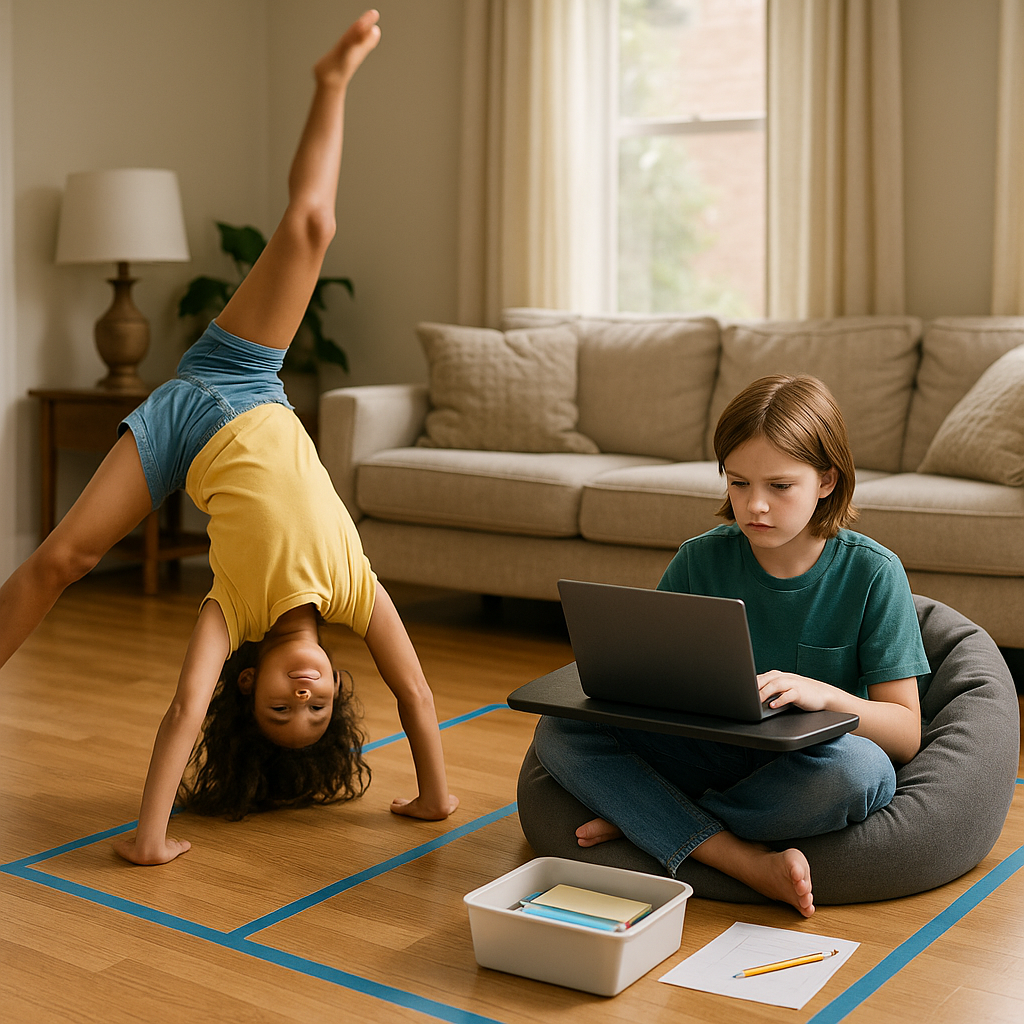
Open space is great until one kid is trying to do homework and the other is practicing a cartwheel sequence that ends exactly where the pencils are. I don't love policing movement in our own house, and I also don't love watching a tween get more and more tense because everyone is brushing past their shoulder. So I stole a trick from elementary classrooms and used painter's tape like it was a piece of furniture.
Here's what I did on a random Tuesday, not during some big reset. I cleared the main room, then put down two tape outlines on the floor. One is the quiet zone: a rectangle that fits a beanbag, a lap desk, and a small bin for whatever they're working on (graph paper, a Chromebook, a stack of library books). The other is the open zone: everything outside the rectangle, where the normal chaos can live. It's not perfect. Kids will toe the line like it's a sport. But the tape does something my voice never did. It makes the boundary visible, and it makes the correction neutral. I can point, not lecture.
We have two rules attached to the tape, and that's it. One: if you're in the quiet zone, you don't get climbed on, surprised, or talked at from six inches away. Two: if you enter the quiet zone, you go at quiet volume and you ask first. That sounds formal, but in practice it's just, "Can I come in?" and a nod or a shake of the head. The first week, I modeled it like a weirdo. I asked permission to step into my own kid's taped rectangle to drop off a snack. They noticed, and then they started doing it to each other.
A practical note from doing this wrong: painter's tape works best on hard floors and low-pile rugs. On fluffy carpet it turns into linty noodles. If you have carpet, use a heavier gaffer-style tape for a week, or switch to a thin area rug as the quiet island. This setup looks almost too simple, which is why I like it. Nobody has to explain why they need space today. They can just go sit inside the lines.
The doorframe hand signal that protects independence
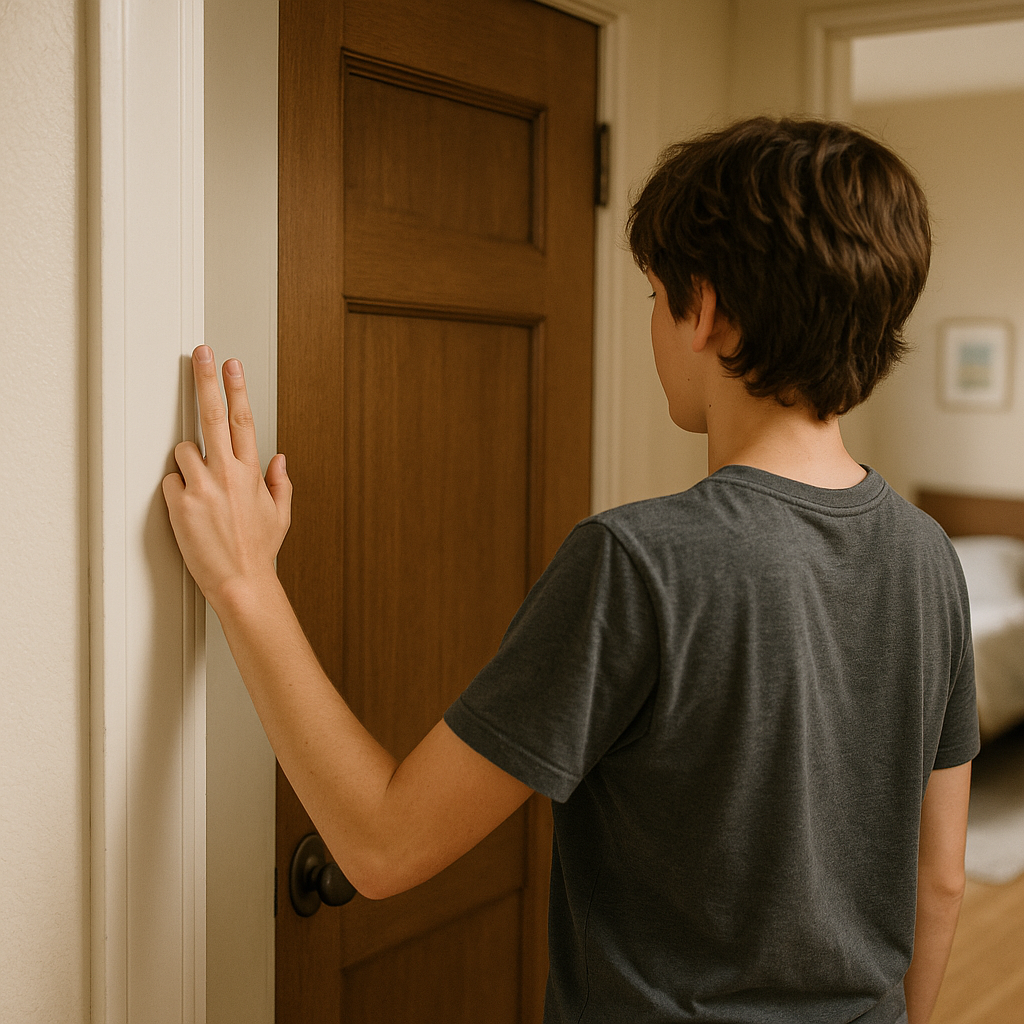
There was a stretch where my kid wanted the bedroom door closed all the time, not for mischief, but because existing in a shared house started to feel like being on display. I get it. I also need to be able to call them for dinner, check on a fever, or step in if sibling energy spikes. A lock wasn't the right move for us, and neither was pretending privacy is optional. So we landed on a small, almost boring system that works in any house: a one-handed signal on the doorframe that means, clearly, how available they are.
We keep it simple enough that everyone remembers it. Hand flat on the doorframe as you walk by means, I'm open to a quick question. Two fingers on the doorframe means, only interrupt if it's urgent. No hand signal means knock and wait. The point isn't to create a new etiquette hobby. It's to stop the constant boundary testing where a parent barges in, a kid snaps, and then everybody feels gross about it.
What surprised me is how much this helped the shared spaces too. When the bedroom feels respected, kids stop trying to carve out privacy in the middle of the living room by glaring at siblings or hoarding the couch like it's their territory. They come back out sooner. They take a break, then rejoin. Independence looks a lot like that, by the way, not a dramatic declaration.
If you're wondering how to get buy-in, I didn't pitch it as a character-building exercise. I pitched it like a tool. I said, I'm not going to guess if you want company, and I'm not going to read your face from the hallway. Give me a signal I can follow. The younger sibling learned it fast because it also protected their space when they needed it. And yes, I still knock even if I think I know what's going on. That's the whole reason it works. A quiet zone isn't only a corner. Sometimes it's a moment, and the doorframe is where you decide whether to step into it.