
When a baby starts solids, dinner can suddenly become much more hands-on. The baby needs help getting settled safely at the table, trying new textures, and learning to eat, while the older child is still looking for the same attention they had before. Even a few minutes of focused attention on the baby can make an older sibling feel pushed aside, especially when meals become centered around the baby's needs. That doesn't necessarily mean they're jealous of the baby; they may simply be reacting to a change in the attention and routines they're used to. I've found that the easiest way to prevent that feeling from building is to make sure the older child still has a clear place at the table. These are the three small things that helped me keep my older child involved while the baby learned to eat.
Give Your Older Child One-on-One Attention First
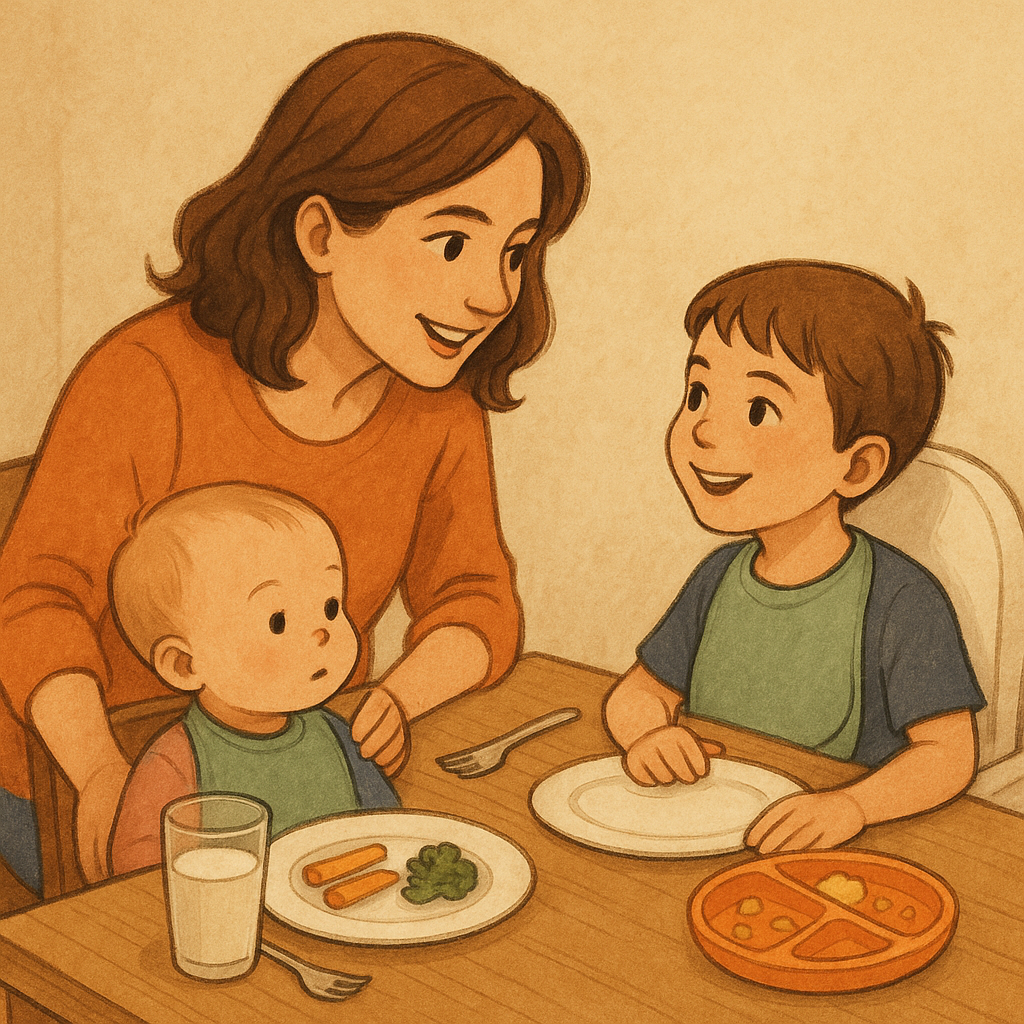
First, don't begin dinner with your whole face pointed at the baby. The older kid sees it as a demotion. And to be fair, it kind of is. Suddenly, the table has new rules, new gear, and a new main character in a silicone bib.
So I started doing what I call the first 90 seconds. I sit down with the older one and do something that feels like a normal dinner again. It can be as simple as pouring his milk first, letting him choose between the small and the big fork, or asking a question about his day.
Then I narrate the shift out loud so it doesn’t feel like a rug pull. Something like, "I’m going to help the baby for a minute because she’s still learning. I’ll be back to you in a second." And I mean it. I don’t disappear into a five-minute wipe-down and forget the older kid is even there.
Practical stuff that helps: I put the older kid’s napkin and utensils down where I can reach them one-handed, and I keep their plate simple on nights I know the baby’s meal will be hands-on.
Give Your Older Child a Positive Role at Mealtimes
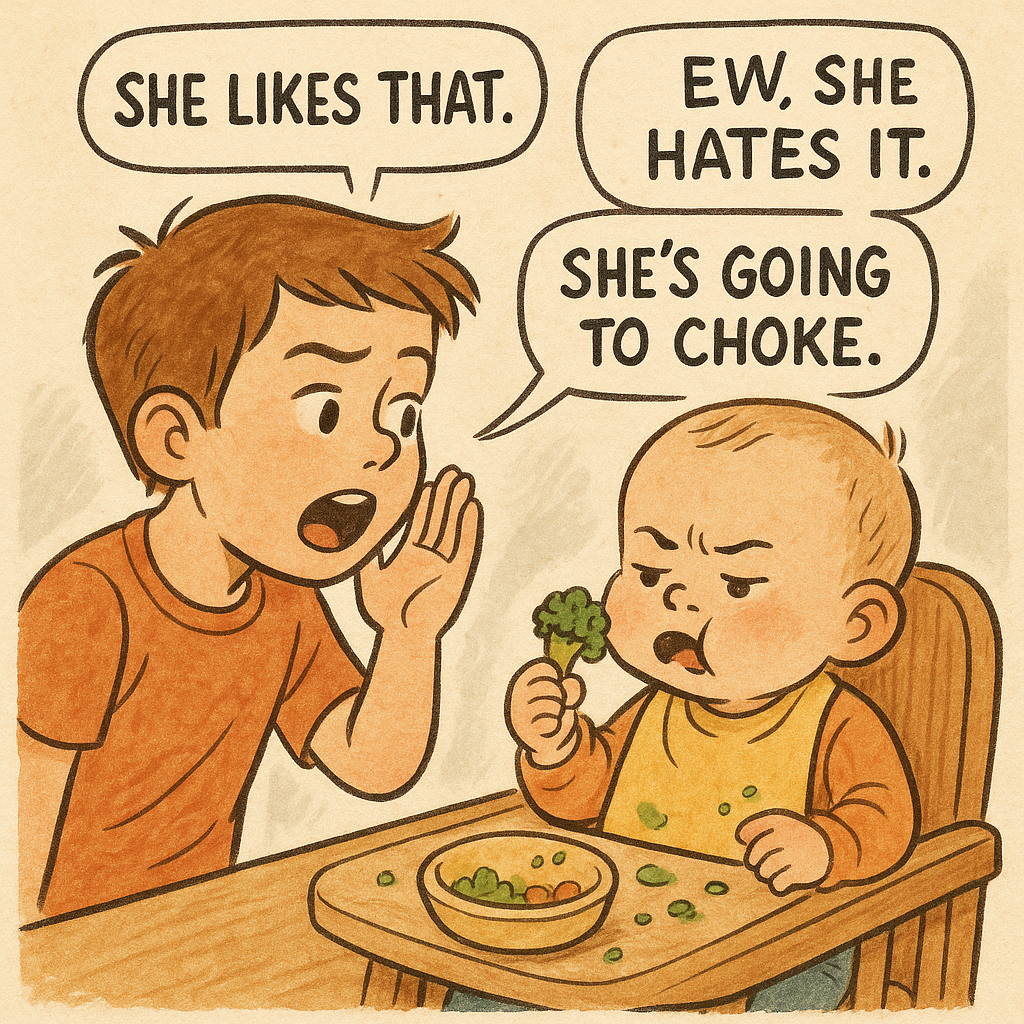
When we started solids, my older kid turned into a tiny sports announcer. Every bite had commentary. "She likes that." "Ew, she hates it." "She’s going to choke." (That one will spike your blood pressure in record time.) It sounds harmless, even cute, but it sets up a weird power dynamic where the older sibling gets to be the expert and the baby is the spectacle. Then the baby starts getting reactions for the reactions.
I had to shut down the commentary without shaming the older kid for noticing things. What worked was giving him a different role that wasn’t about judging the baby’s mouth. I told him, plainly, that we’re not going to talk about the baby like she’s a show, and then I gave him two ways to help:
- Table logistics: "Can you hand me the wipes?" "Can you put the little spoon in the sink when I’m done?" (Yes, this is a job, but it’s not the tired trope of turning the older kid into a third parent. It’s a short, specific assist.)
- Neutral observations: I’ll accept her face is messy, or that’s a big piece because it’s factual, and it doesn’t invite a pile-on.
If the older kid starts up, I redirect fast with something physical: "I need your help opening the yogurt," or "Pick which cup you want tomorrow."
And when the older kid really wants to feel in the loop, I move the conversation up a level. Instead of Does she like avocado? we talk about what everyone at the table likes, including the older kid. "You hated scrambled eggs for a year, then you loved them." It takes the baby off the stage and puts the whole family back on it.
Create a Simple Sibling Ritual Around Mealtimes
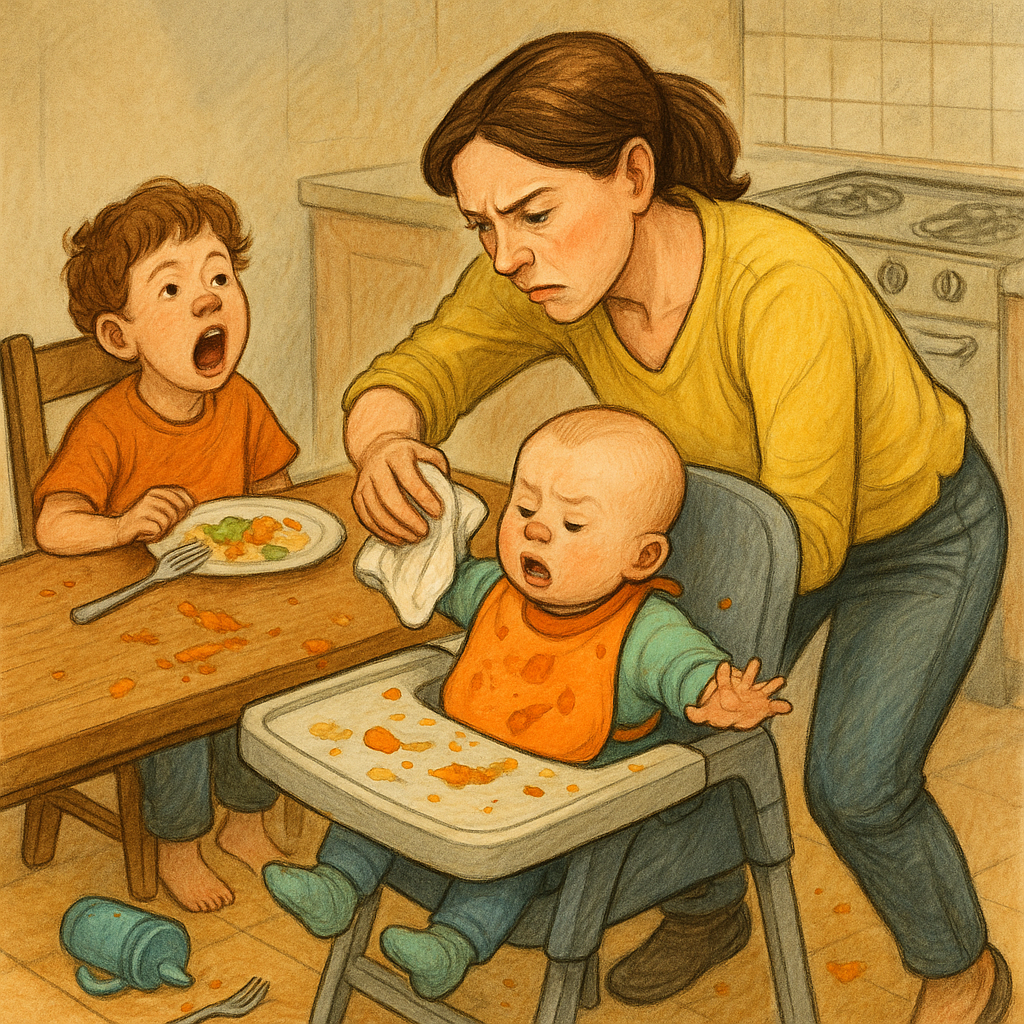
If your dinners are anything like mine when solids begin, the middle is chaos. Someone drops a spoon. The bib catches nothing. The baby discovers gravity. You end up doing that half-stand from your chair where you’re not fully sitting and not fully parenting, just hovering like a stressed-out restaurant server.
The mistake I made at first was trying to create sibling bonding in the messy middle, like I could orchestrate a sweet moment while also preventing sweet potato from hitting the floor. It never happened. The older kid would get ignored, then resentful, then loud. The baby would pick that exact moment to throw the cup. It was predictably bad.
What finally worked was putting a tiny sibling ritual at the end of the meal. Ours is called last bite, first pick. The older kid gets to pick one thing for tomorrow’s dinner plate that feels like theirs: strawberries, shredded cheese, soft-cooked vegetables, or a specific cereal for breakfast. Then the baby gets a first too: a chance to practice eating whatever baby-safe food is already on the menu. I keep it low-stakes and age-appropriate, and I don’t do it if anyone’s overtired or the baby is melting down.
This way, both kids get a turn that’s predictable and not dependent on who behaved better. The older kid doesn’t have to compete with the baby’s novelty because they have a built-in moment to lead. The baby isn’t used as a prop for the older kid’s entertainment because the baby’s part is about learning to eat, not getting applause.