
A monthly coffee debrief, a boundary phrase, and a three-person backup plan you can run even when sleep is wrecked.
Set Up a Monthly Check-In
I used to tell myself I was fine because nothing was on fire. Then a Tuesday would hit, my chest would feel tight for no good reason, and I'd realize I'd been carrying everything in my head like a packed backpack I never set down. The fix wasn't a dramatic intervention. It was a recurring, low-stakes meet-up with two people who don't need me to perform.
Here's how I run it: same cafe, same week each month, 50 minutes. Not brunch. Not dinner. Coffee and out. The rule that makes it feel like a resilience circle instead of a hang is that we do a quick round in the same order every time: (1) what's been heavy lately, (2) what's been surprisingly okay, (3) what you need this month, and (4) one concrete ask, even if it's small. My most common ask is boring, like, "Can you text me on Wednesday afternoon and ask if I ate lunch?" If that sounds too basic, try it during a rough week and see how much it helps to have someone ping you who isn't judging your kitchen.
Keep it practical: I bring a Notes app list titled "coffee debrief" with three bullet prompts, so I don't blank when I'm tired. We also end by choosing a single next date before anyone stands up. If we don't, it drifts, and the whole point is the steadiness. I've found the emotional payoff isn't the advice. It's the moment someone says, plainly, "That would make me melt down too," and you stop treating your reaction like a personal flaw. That's the part that can make the rest of the week feel more manageable. When you're less flooded, you handle the evening routine, the budget conversation, the random school email, all of it, with a little more margin.
Build a Three-Person Support Bench
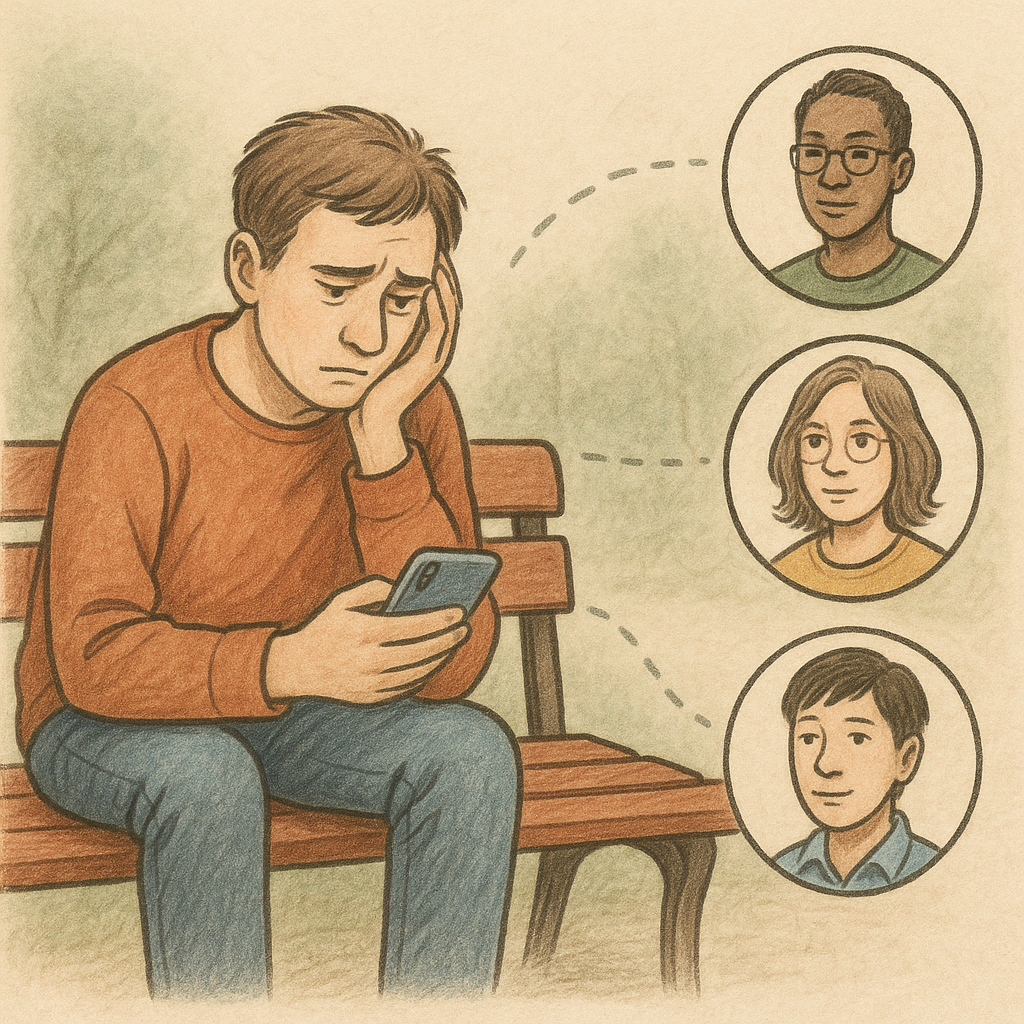
Some weeks, you don't need a big conversation. You need somebody else's calm to borrow for ten minutes so you don't snap at the wrong person in your own house. That's what I mean by a bench plan: three humans you can rotate through when your emotional stamina is low, so you're not leaning on one friend until they start ducking your calls.
Make it specific enough that it feels usable. I keep a tiny contact note for each person with (a) the best time to reach them, (b) what kind of help they're good at, and (c) what I should not do when I'm stressed. Example: Friend A is great at voice notes during a lunch break. Friend B will talk after 8:30 p.m. and does not want a 14-message text dump. Friend C loves logistics and will help me sort a messy to-do list, but they get overwhelmed by emotional processing.
Then I set a personal rule: I can call one bench person per day, and I start by naming the category. "I need five minutes to calm down, not a solution," or "I need help making a decision, and I can answer yes/no questions." It may sound picky, but it helps avoid a mismatch. When you call someone for co-regulation, and they launch into problem-solving, you end up feeling more alone, not less.
For the circle to be mutual, I also tell them my consent boundaries upfront when we're not in crisis: I won't call during their family dinner hour, I won't vent about their partner, and I'll ask before I get heavy. In return, I give them the same structure. It turns support into something sustainable, not a late-night emergency habit. And when support is predictable, it's easier to keep a difficult week from spilling over into everything at home: fewer blowups, fewer resentful silences, fewer "why are we fighting about trash bags?" moments that are never about trash bags.
Set Boundaries Around Emotional Support
Support circles fall apart for a boring reason: unclear expectations. Not betrayal. Not drama. Just that one person becomes the default emotional trash can, and then everyone starts tiptoeing. I learned to protect my own circle with a single boundary phrase that I use in both directions, so it doesn't sound like a speech.
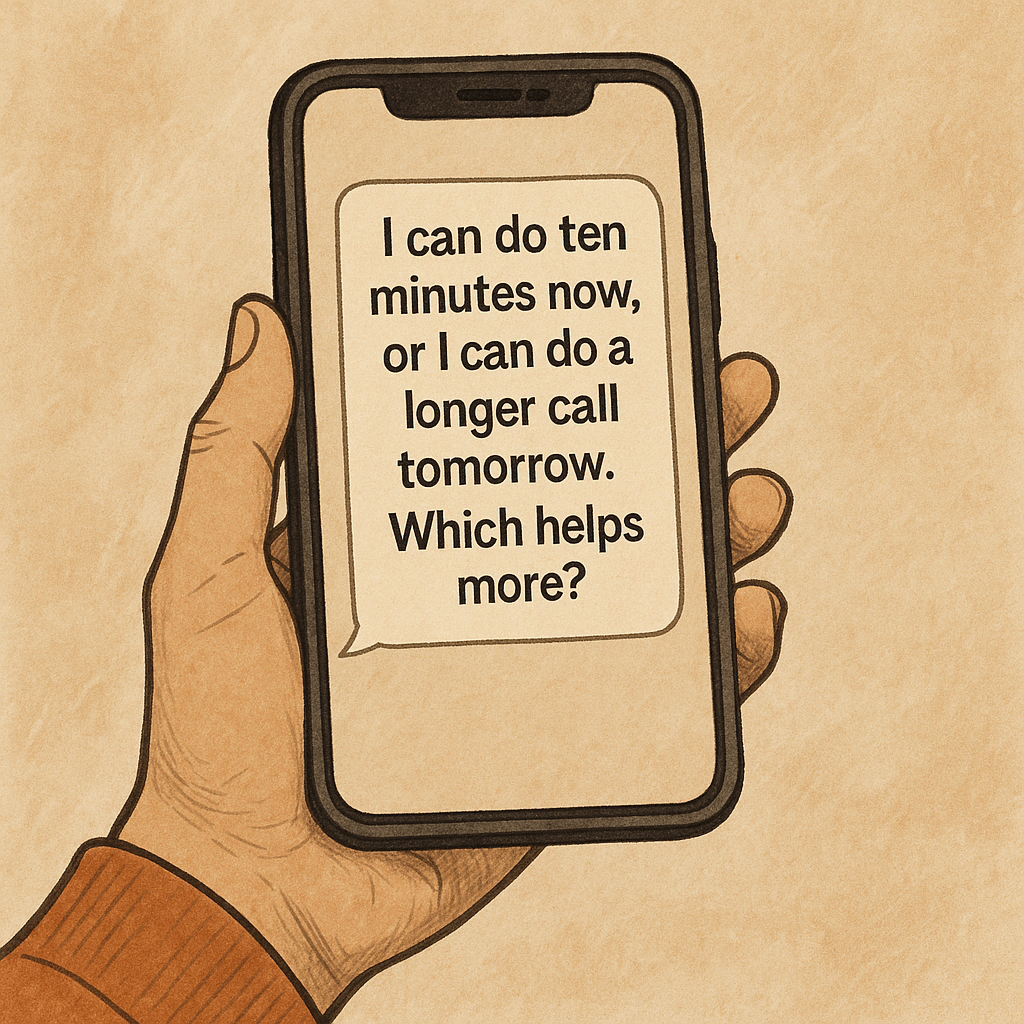
The phrase is: "I can do ten minutes now, or I can do a longer call tomorrow. Which helps more?" It works because it offers a yes instead of a shutdown, but it also puts a clear limit on the conversation. Ten minutes is a real time box. You can stand in your kitchen, make tea, and talk until the kettle clicks off. You can do a quick walk around the block. You can even set a timer and say, "I'm at eight minutes, tell me the most important part."
When I'm the one reaching out, I ask for the format I want: "Can I send you a three-minute voice note and you just reply with your gut reaction?" That keeps me from dropping a wall of text that somebody feels obligated to fix. When I'm the one receiving it, the ten-minute option stops me from offering more than I can hold. I don't become resentful, and they don't feel like a burden. That balance is the whole point of emotional resilience circles. You're building something you can keep doing when everyone's tired.
Two small details make this land. First, I schedule the follow-up immediately if we choose "tomorrow." I send a calendar invite while we're still on the phone. Second, I keep the exit line consistent: "I'm with you, and I'm hopping off now. Text me the one thing you want me to remember." It's simple, but it prevents that awkward fade-out where nobody knows how to hang up, and you both end up depleted.