
Three sleep-driven patterns that decide who leads, who follows, and how you two stay a couple while the baby runs the clock.
The nap gatekeeper (and how it becomes a personality)
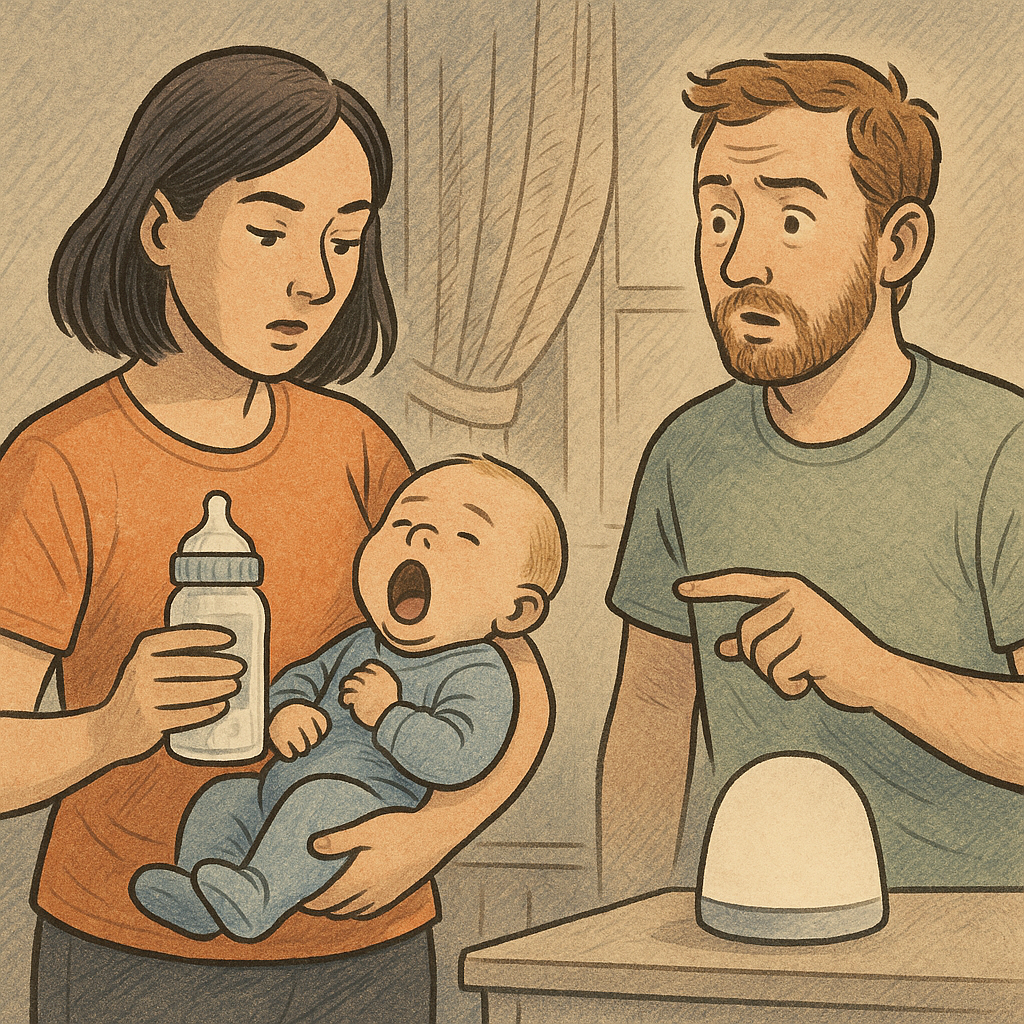
It starts out practical. Someone has to notice the first yawn, heat the bottle, dim the Hatch, and do the little math problem of wake window plus last feed plus that weird time the neighbor's dog barked. That person becomes the nap gatekeeper, and if you don't name it out loud, it hardens into a personality: the Responsible One, the Fun One, the Chill One, the One Who Doesn't Get It.
I've watched this happen in my own house in under a week. One partner learns the baby's tells (the eyebrow rub, the sudden thousand-yard stare at the ceiling fan). The other partner keeps asking, totally innocently, "Is she tired?" and after the fifth time, it starts to sound like outsourcing. Then comes the shift in tone: reminders turn into corrections. Corrections turn into monitoring. Suddenly, you aren't debating whether to run to Target; you're debating whether the other adult can be trusted to interpret a yawn.
The fix is not to give up the schedule or to pretend it doesn't matter. It's to trade the power, on purpose, in a way that forces learning. Pick one recurring block where the non-gatekeeper owns the whole nap cycle: notice, decide, prep, put down, and handle the first resettle attempt. No hovering. If you're the person who normally runs it, leave the room. Go fold laundry with AirPods in, take a shower, sit in the car and eat a granola bar like a raccoon, whatever. The point is that the default doesn't get to be default because they're better; they get to be default because they get reps. If you want the dynamic to shift, you have to hand over reps, even when it feels slower and messier.
When the rigid one and the flexible one swap sides
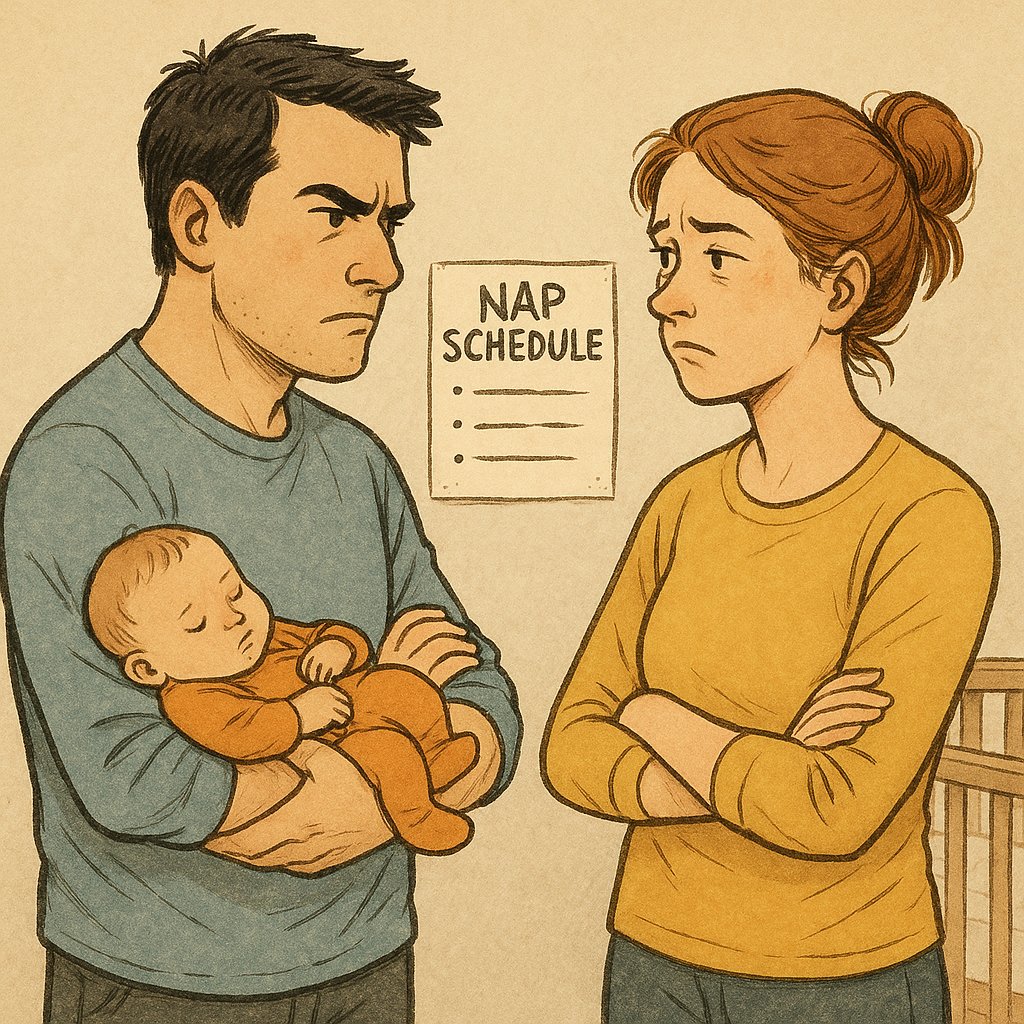
Before the baby, most couples already have a vibe: one of you is the let's wing it person and one of you likes a plan. Infant sleep is the funniest, cruelest way to scramble that. The partner who used to be spontaneous can become the strictest one in the house, because they're the one who feels the consequences in their body when bedtime slides. The planner can become the one saying, "It's fine, we'll just deal," because they're numb from tracking variables that refuse to behave.
This is where parenting style gets misread as character. One person isn't controlling; they're trying to keep the baby from getting overtired because they know what the 45-minute false start looks like. The other person isn't careless; they're trying to keep the household from becoming a shrine to naps where nobody speaks above a whisper, and you eat dinner standing up. Both motives are decent. The collision is brutal.
What helped us was separating the two kinds of rules that sneak in. There are hard rules that protect the baby's sleep physiology (for us: consistent wake time, a dark room, and not letting the last nap run into the danger zone). Then there are comfort rules that just make the anxious adult feel better (rewriting the whole day because the first nap was 12 minutes short, canceling everything, rechecking the monitor every three minutes). Comfort rules feel urgent, but they don't always change outcomes.
Do a quick, boring audit together when nobody is fried. Write three hard rules on a sticky note and put it on the fridge. Everything else becomes negotiable by default, which is a relief for the more flexible partner and a boundary for the more rigid one. And if you need a tie-breaker, pick a phrase you both respect. Ours was: Protect tonight. If a decision improves the odds of a decent night, it wins. If it's just a control ritual, it doesn't get to run the house.
The silent scorecard: who suffers when sleep goes sideways
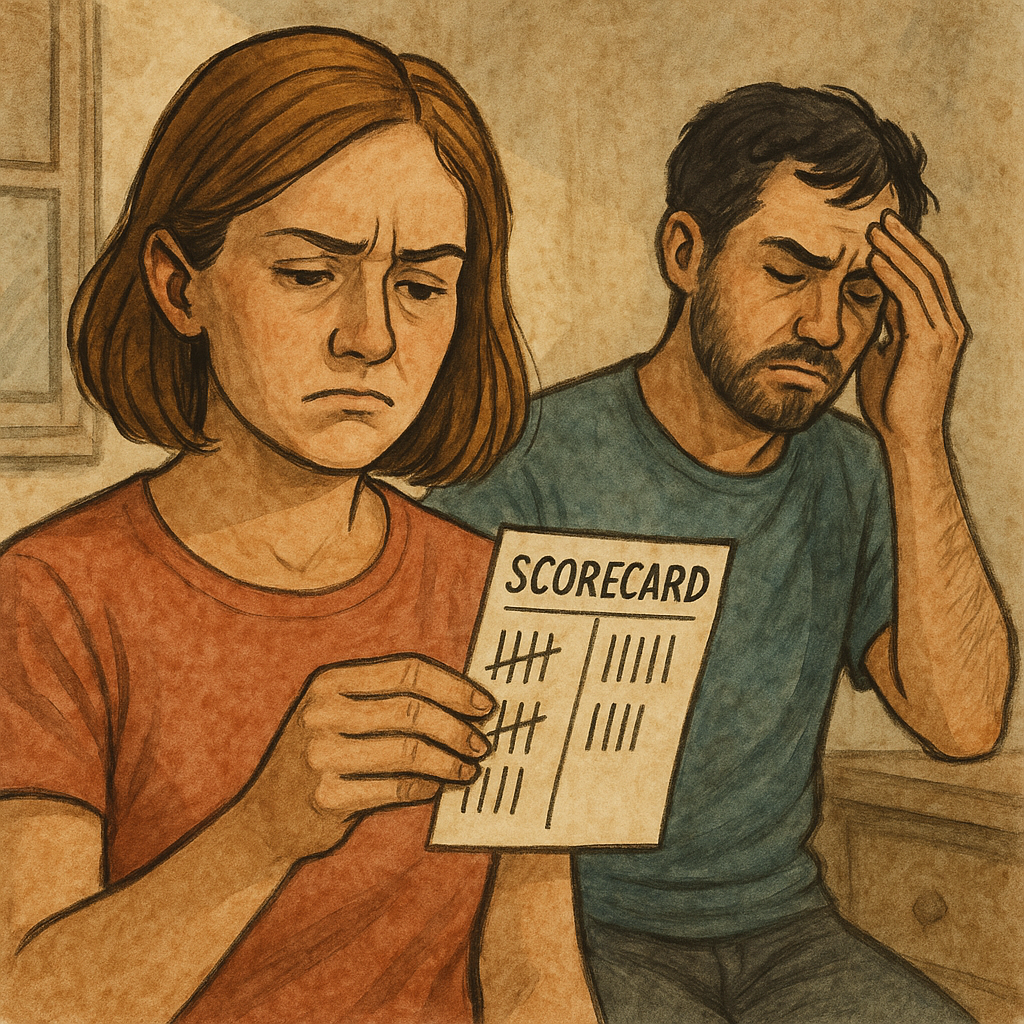
Every couple I know has a secret sleep economy. Not money. Consequences. Who misses the workout. Who shows up to work with a cotton mouth and a headache. Who takes the fussy afternoon shift because the other has a meeting. When you don't talk about that economy, you start running a scorecard in your head, and it turns you petty in ways you don't recognize as pettiness until later.
The pattern is sneaky: the partner with the more flexible job, or the one who breastfeeds, or the one who can fall back asleep faster, becomes the person who absorbs the chaos. The other partner doesn't mean to be selfish. They just don't feel the same pain signal, so the urgency doesn't register. Then you get these awful micro-moments. One of you is begging to move dinner earlier because the baby is melting at 5:10, and the other is saying, "But we always eat at six." That isn't about food. That's about who is going to spend the next four hours walking laps in the hallway with a baby who won't settle.
If you want household dynamics and romance to survive this phase, you have to make the consequences visible without turning it into a trial. The most useful thing we did was a weekly 10-minute sit-down with a literal note on the phone titled What wrecked us and What helped. Under "wrecked us," we'd list concrete stuff: late stroller nap, caffeine at 3 p.m., letting the last nap go past 4:30, arguing in whispers while the sound machine roared. Under helped, we'd list the boring wins: an earlier bath, one person handling bedtime while the other cleaned bottles, and switching sides of the bed so the lighter sleeper got the far side from the monitor.
Then we assigned a cost. Not a punishment, just reality. If one person chooses the late nap because they want to meet friends, they also take the first wake that night. If the other person insists on a strict cutoff that cancels plans, they owe some trade later, like owning the next Saturday morning, so the other person can leave the house alone. It sounds transactional, and it is, a little. But it beats the unspoken version, where you keep smiling while quietly deciding your partner is the reason you don't touch anymore.