
A simple floor grid plus three tiny rules keeps sleep training from turning into nightly eye contact and giggles.
The floor-grid boundary (before you change anything else)
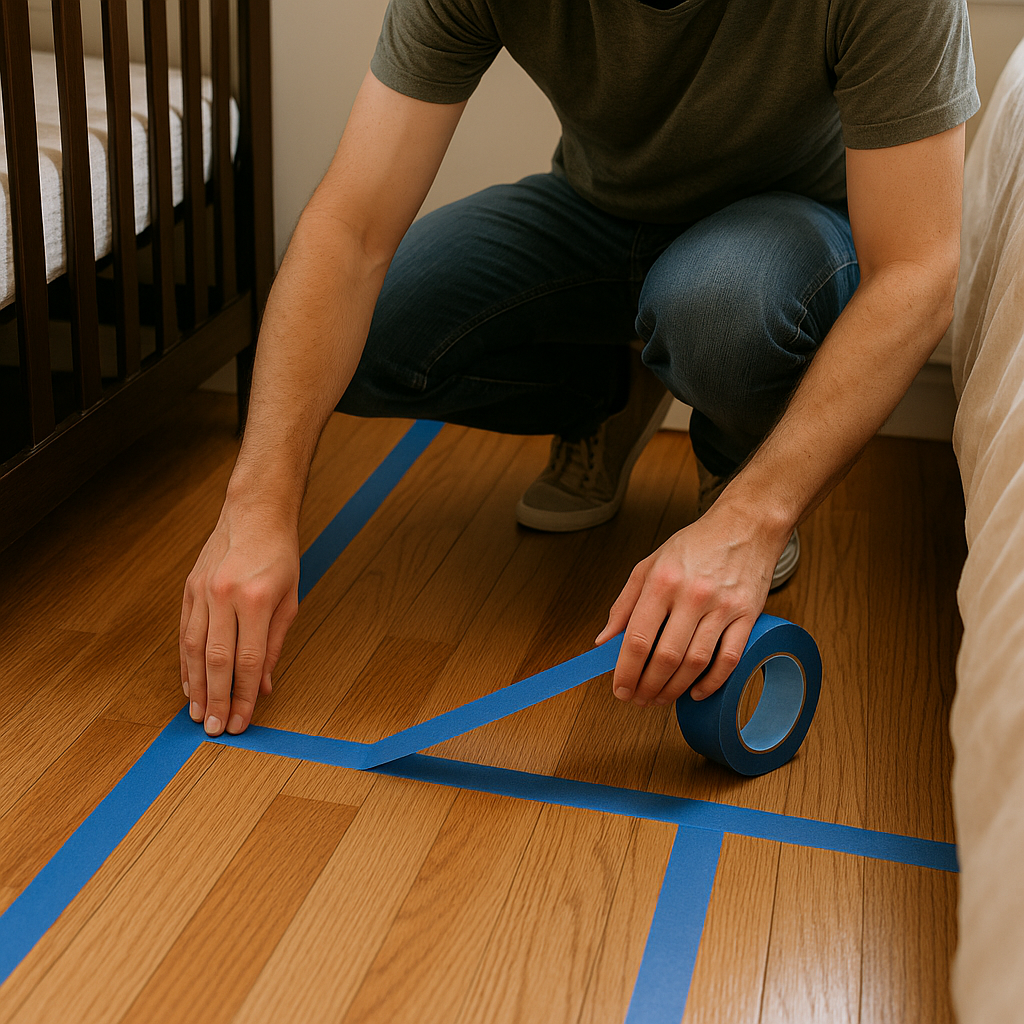
When you're trying to teach independent sleep in the same room you also live in, fold laundry in, or crash on a bed, the hardest part isn't the noise. It's the accidental engagement. One step into the wrong spot, one rustle of your charger cable, and your kid pops up like you rang a dinner bell. So before I touch bedtime timing or responses, I make the room legible with a painter's tape grid on the floor. Blue 3M ScotchBlue is my go-to because it peels cleanly and doesn't feel like a permanent decision at 11 p.m.
I put the crib or pack-and-play on one side of the room, and then I tape out a rectangle about the size of a yoga mat between it and where I sleep. That rectangle is my lane. It means: if I'm inside the tape, I'm invisible. No face near the rails. No leaning in to do a last-second pacifier rescue. If I need to intervene, I step out of the lane, do the one thing I'm doing (replace the pacifier, give a quick pat, whatever your plan is), then step back into the lane and freeze for 10 seconds before I move again. That last part sounds goofy, but it kills the urge to keep fiddling.
The first two nights feel like theater because you're over-aware of your feet. Then the grid starts doing the work for you. Even my partner caught themselves mid-step and backed up without a word. The surprising win is that it also protects connection: you can still do your normal bedtime routine with warmth, and then the tape becomes the handoff. Routine happens on one side. Sleep practice happens on the other. In a shared room, that separation is the difference between calm and a nightly comedy show.
Use a red headlamp, not your phone screen
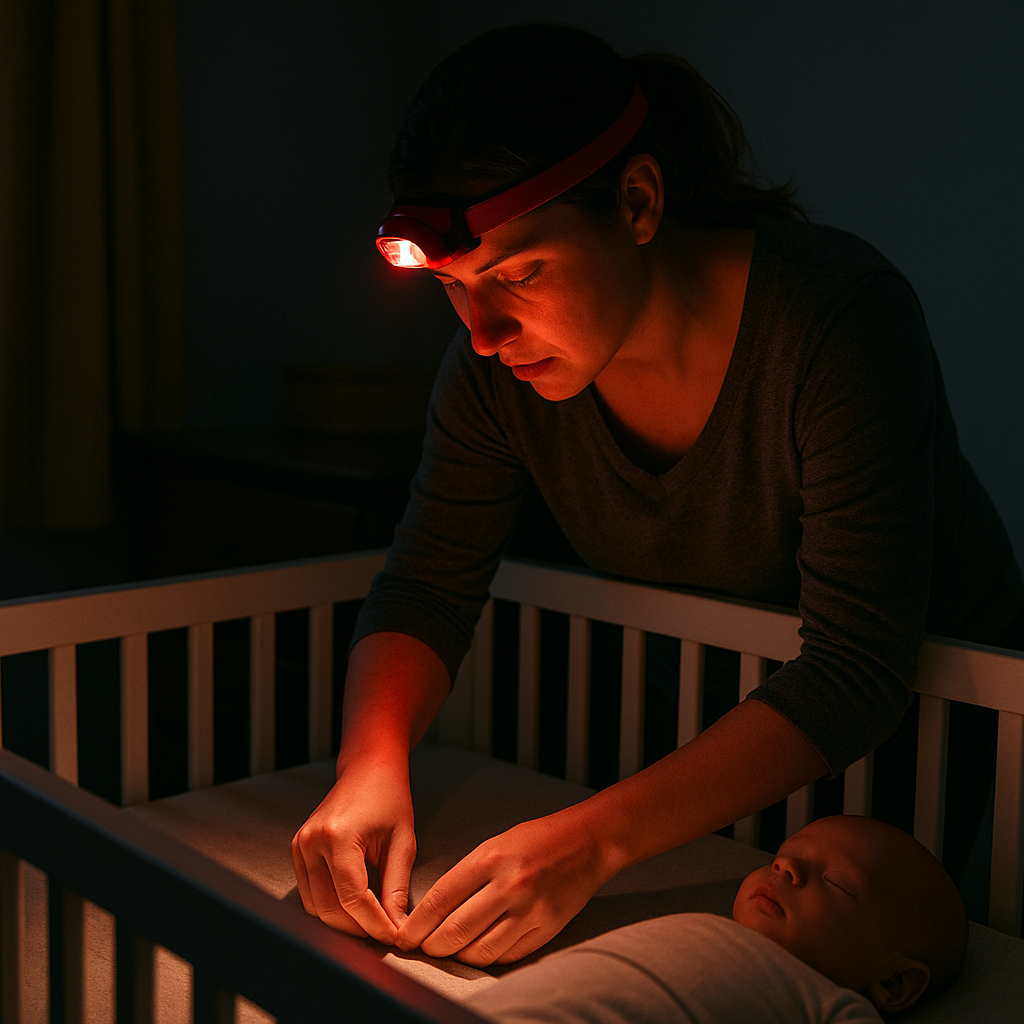
Room sharing turns every night wake into a lighting problem. The glow from a phone screen doesn't just light your hands, it lights your whole face. If your baby is the kind who watches for your eyes to open, that screen is an invitation. I learned this the hard way while quietly trying to find a pacifier under the fitted sheet. The phone woke them faster than the actual noise.
Now I keep a headlamp in the bedside caddy, the same one I'd toss in a camping bag. Look for one with a red-light mode (Petzl and Black Diamond both make versions) because red is bright enough to see the binky on the floor without flipping the room into daytime. The move is simple: the headlamp goes on before you sit up. Keep it pointed at your hands or the floor, not into the crib. If you need a diaper change, do it with the lamp angled down at the changing pad so the light never hits their face straight-on.
This is where room sharing gets weirdly specific. Velcro is loud. So is a zipper. I pre-open the fresh diaper tab a little before I go to sleep, and I keep wipes in a soft pack instead of a crinkly plastic tub. If you're using a sleep sack with snaps, practice finding the snaps by feel in the evening, because the midnight snap hunt is where you end up hovering and whispering, and hovering is basically applause.
You'll still be present. You're not pretending you're not in the room. You're just removing the spotlight. When I switched from phone-light to a red headlamp, the wakes didn't magically disappear, but they stopped escalating into full sit-ups and grin-at-mom sessions. In a shared room, that's a real difference.
The white-noise placement that stops the “I heard you” cycle
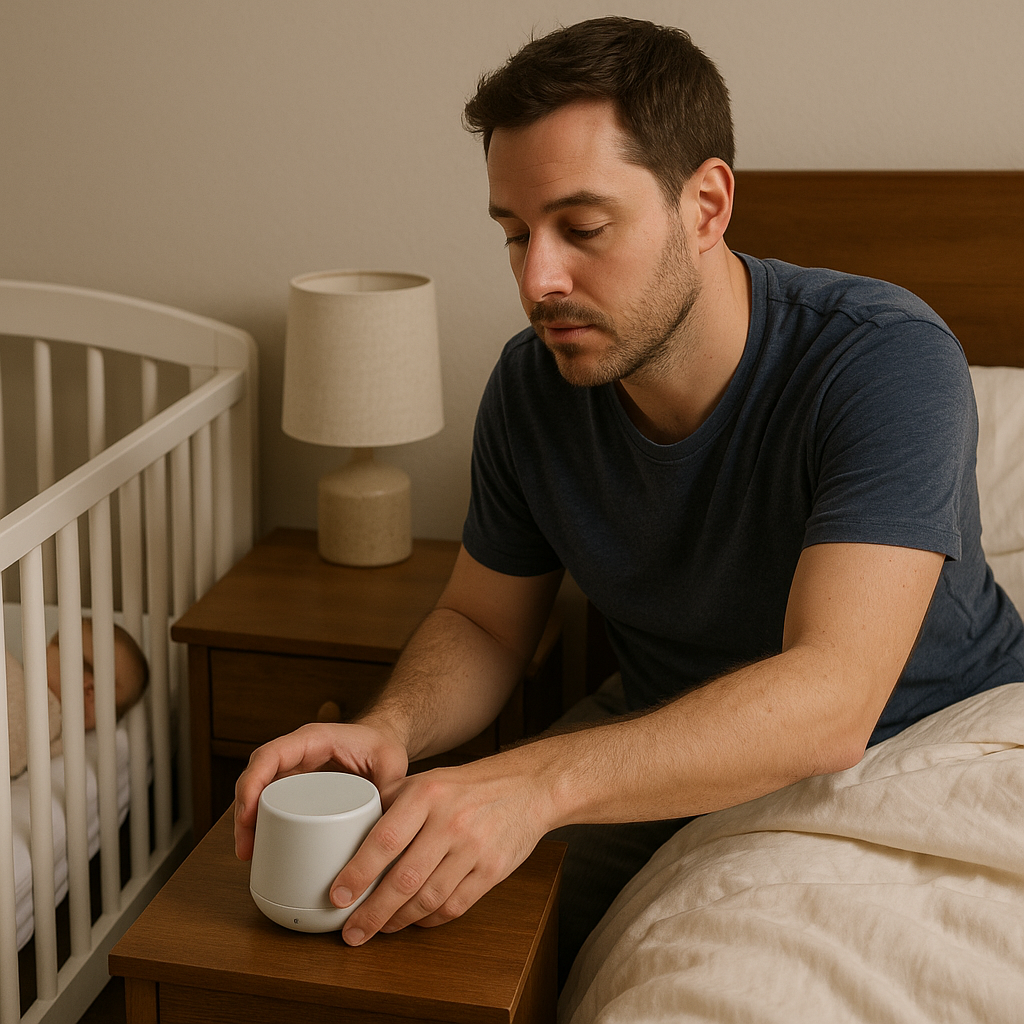
Most people put white noise near the crib and call it done in a shared room, which can backfire because the problem isn't street noise. It's you. It's the mattress creak when you roll over. It's your partner's throat-clear. It's the soft click of an AirPods case. If your kid is in a phase where they're waking, listening, and then deciding whether to protest based on whether they hear you, you need the sound to cover the parent noises first.
Here's the setup I landed on after too many nights of tiptoeing like a cartoon burglar. I keep the sound machine well away from the crib and use the lowest volume that still softens ordinary household noise. Rather than trying to drown out every creak or whisper, I treat it as background sound and keep the speaker directed away from the baby's sleep space. That way, when I exhale, shift, or whisper to my partner, that noise gets swallowed early instead of traveling across a quiet room and landing right in the crib.
Volume matters, but I'm careful with it. I don't crank it to win a battle. I keep the volume conservative rather than turning it up until every household sound disappears. Infant sleep machines can become surprisingly loud, so keeping the crib at a distance and using a low setting matter more than perfectly masking every creak. The point is to soften the little household noises, not erase them completely.
The benefit is subtle: you stop doing the frozen statue thing every time your kid fusses. In a room-share, that calm body language is half the job. They can still sense you're there. Reducing unnecessary light and noise may make it easier to keep nighttime interactions calm and brief without removing the comfort of having a parent nearby.