
Three low-drama ways to fuse celebrations in a blended family: recipe cards, a two-language toast, and a shared playlist rule.
The Recipe Card Swap That Doesn't Pick a Winner
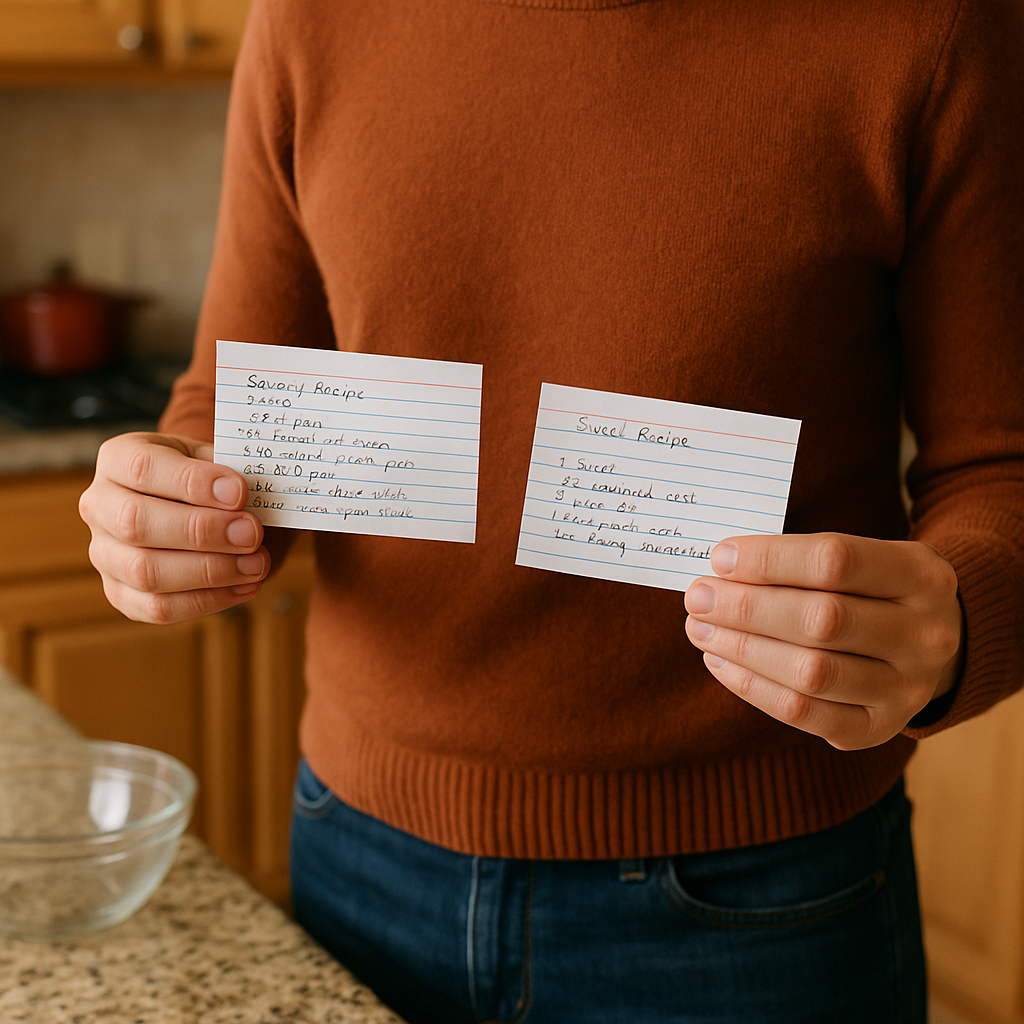
I stole this move from a friend who got tired of the yearly tug-of-war over what counts as the meal. Not the main dish. Not the centerpiece dessert. The small, beloved thing that never makes it into the big conversation, then someone notices it is missing and gets quiet. Do a recipe card swap before the season even starts. Two index cards per household, one for a savory tradition and one for a sweet one. Handwritten is the point. If you don't cook much, it can be a store shortcut, but write it like a recipe anyway: brand names included, oven temp, the exact pan size, the note that says "don't skip the lemon zest" or "use the cheap frozen hash browns, not the fancy shredded ones."
Then you set one simple rule: each side chooses one card that will be made as-written this year. No upgrades. No fusing it with your own version. If Aunt Rosa's arroz con gandules is written with Goya pigeon peas, you buy the can. If your dad's spinach dip says Knorr vegetable mix, you don't turn it into a from-scratch moment. The first time we did this, the win wasn't the food. It was the fact that nobody had to defend their thing like it was on trial. The kids loved being the "card captains" who got to read out loud, catch you when you tried to improvise, and tape the card to a cabinet with painter's tape while you cooked.
Keep the cards in a small photo box after the holiday, not in someone's phone notes. Next year, you add one new card that belongs to the new household. That's the whole fusion: not replacement, not a takeover, just a growing stack you can flip through when the calendar starts filling up again.
A Two-Language Toast (and the 20-Second Translation)
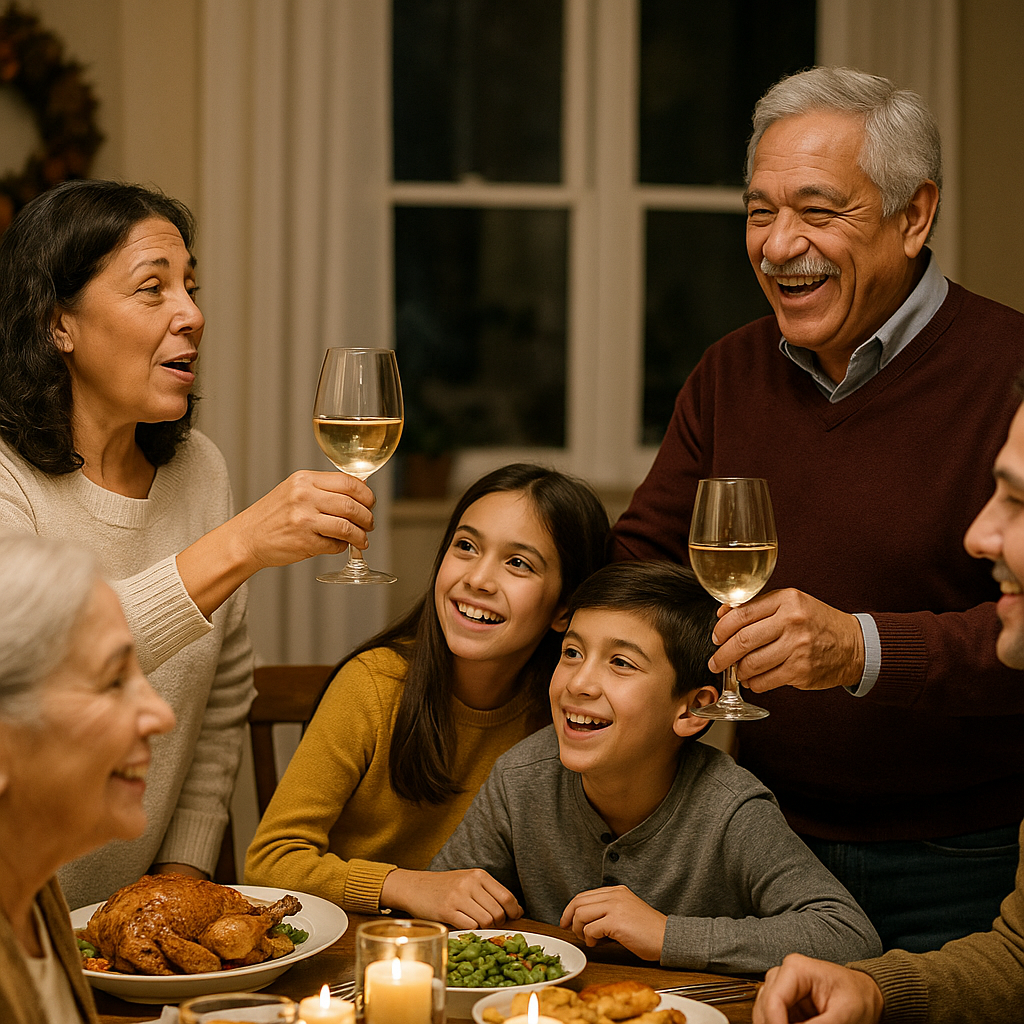
If your blended family includes more than one language, the holiday table can get awkward in a very specific way: half the room is laughing, half is smiling politely, and the kids are doing that quick back-and-forth translating that turns them into tiny exhausted diplomats. The fix I like isn't "everyone speak English" or everyone speak Spanish or any other grand rule that makes somebody's grandparents feel like guests. It's a two-language toast with a built-in 20-second translation, every single time, regardless of which holiday it is.
Here's how it works in practice. Pick one person from each side of the family to own a one-sentence toast. Not a speech. One sentence. It can be as plain as: "I'm grateful we're at the same table" or "May this year bring you good health." They say it in the language they reach for at home. Then the other person repeats the same meaning in the other language, not word-for-word like a textbook, but the way you'd explain it to a kid in the back seat. You don't need perfect accents. You need warmth and consistency. The repeat matters because it tells everyone, out loud, that understanding is part of the ritual, not an extra chore for the quiet people.
What surprised me was how quickly the kids started anticipating it. They'd nudge the adults when plates were down and say, Toast time. They also started collecting the phrases. One year, my stepson practiced salud for days because he wanted to be the one to say it first. Another time, my daughter insisted on adding a tiny line in both languages about the dog, which was goofy and exactly right for the room.
Keep it short enough that nobody has time to get self-conscious. If someone gets emotional, let it hang there. Don't rush to explain it. The translation already did the job.
The Playlist Rule: One Song From Each House, No Skips
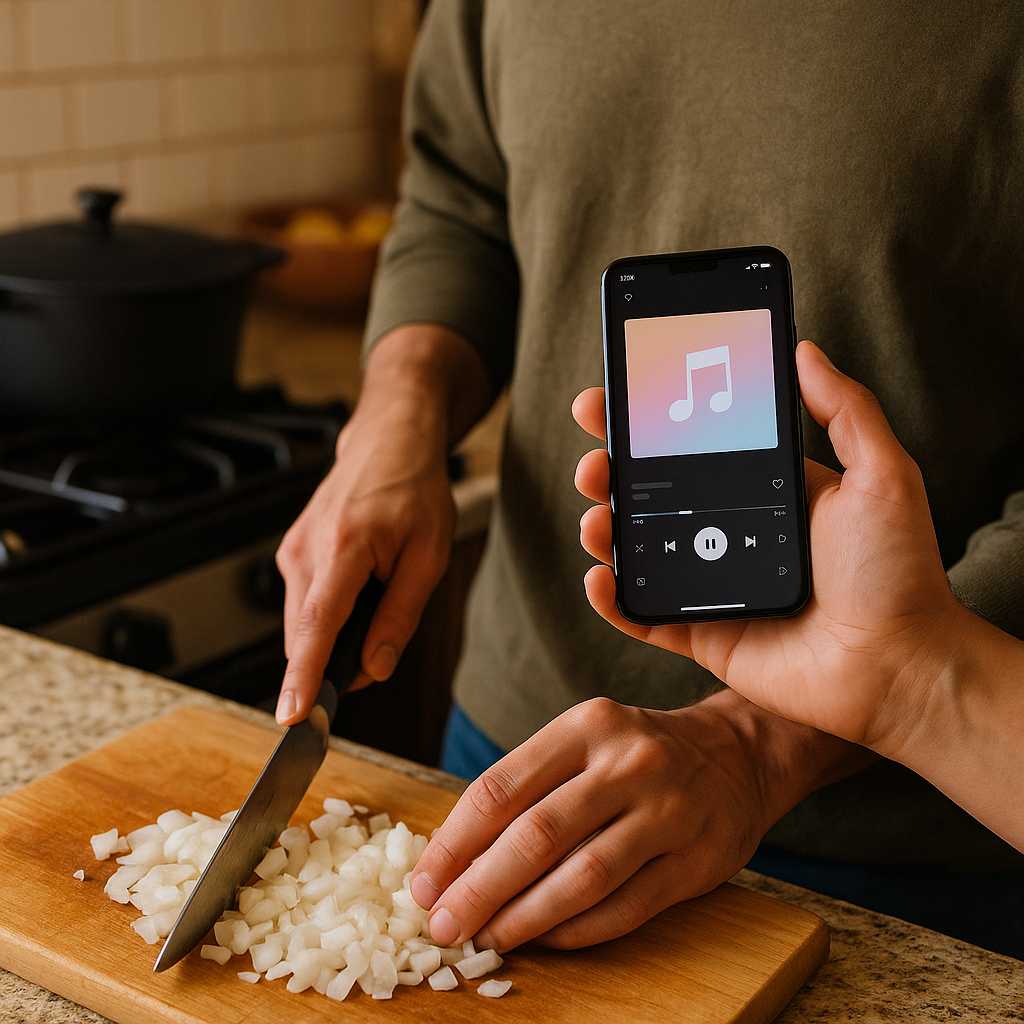
Food can feel high-stakes. Decorations can feel like territory. Music, weirdly, slips past a lot of that. It fills the kitchen while you're hunting for the potato masher. It plays while coats are tossed on a bed. It can carry culture without requiring anyone to perform it. My favorite tradition-fusion tool is a shared playlist with one hard rule: each house adds one song, and during the celebration you don't skip anyone's pick. Not the kids' picks, not the in-laws' picks, not the song your ex used to blast in the car. You let it play, you keep chopping onions, and you watch what happens.
Make the playlist collaborative on Spotify or Apple Music, whatever you already use, and name it after something concrete, not sentimental. Ours was literally called December Kitchen. When it was time to add songs, we set a timer for ten minutes at the kitchen table. Everyone had to pick one track that says this is our holiday in their body. That wording matters because it pulls out the songs with memories attached. For one side of our family it was a Motown Christmas track that instantly made the older relatives start telling stories about a specific living room. For the other side it was a Spanish-language parranda song that got the kids clapping on the wrong beat, then laughing and trying again. One year my stepdaughter added a K-pop winter single and my uncle, who'd never heard anything like it, asked her to show him the dance. I nearly fell over.
To keep it from turning into background noise, give the playlist a moment. Not a toast. Just a small announcement from whoever is on speaker duty: "Next song is from Dad's side" or "This one is from Lena." It takes five seconds. It gives the room a reason to listen. And because you aren't skipping, people stop bracing for their stuff to be treated like a joke.
If you want one extra layer, print the playlist QR code and tape it inside that recipe card box. Next year, you're not starting from scratch. You're adding to a history that belongs to the new family, without deleting anyone's old one.