
Three voice tweaks (pitch, pace, and placement) that make routines land before you hit the chorus.
The Low-Note Cue for Transitions
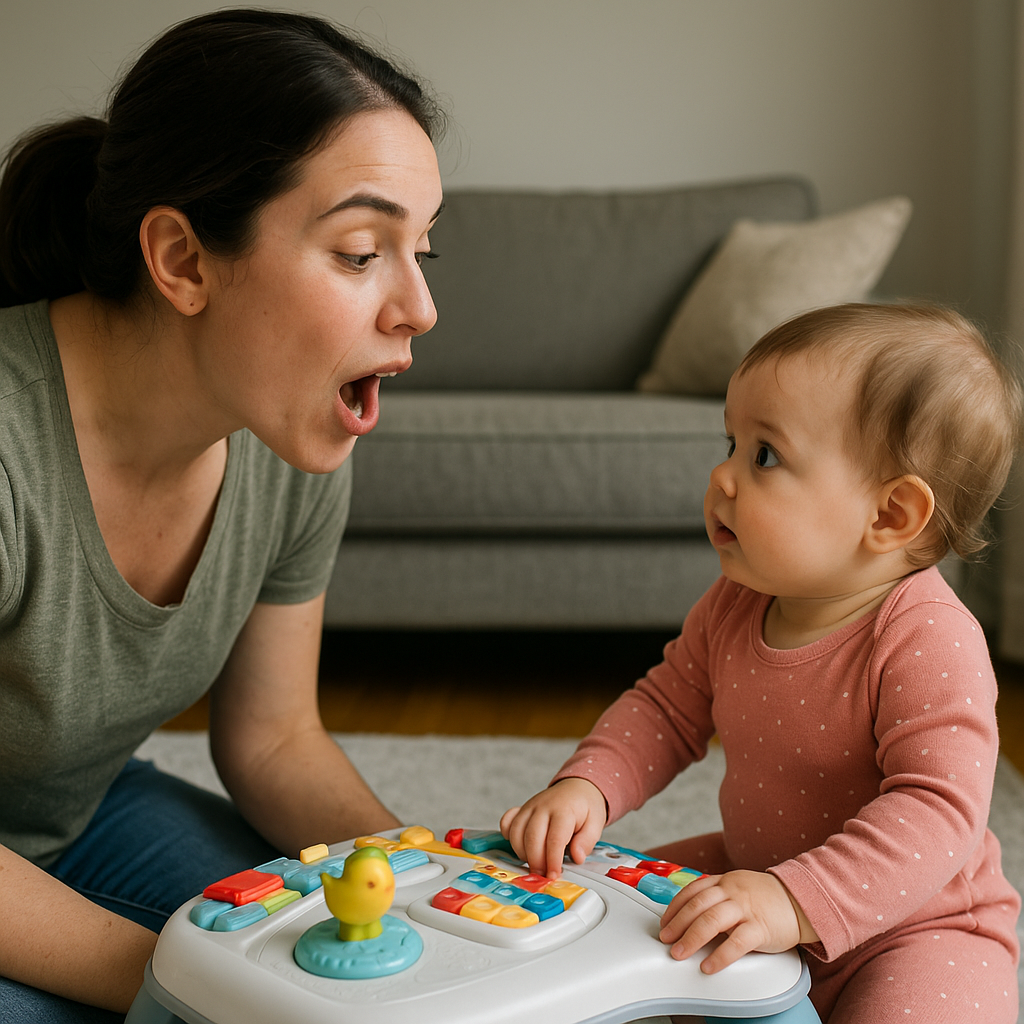
I used to think my kid just wasn't listening. Then I noticed something embarrassingly consistent: the higher and brighter my voice got, the more her body revved up. It makes sense. My excited voice sounds like play, and play is the enemy of getting from floor time to a diaper change without a wrestling match.
What helped was giving transitions a specific voice that I only use for transitions: a slightly lower note, fewer words, and the same short phrase every time. Not a speech. More like a label. I do it when I'm close enough that she can see my mouth and read the whole situation: "Diaper time." Then I pause long enough for her to turn her head or stop banging the Skip Hop activity table. Then I repeat it once, same exact tone.
The key detail is the pause. If I talk through the whole transition, I drown out the cue with extra language. Babies aren't decoding paragraphs. They're clocking patterns: your face, your hands reaching for the Huggies, the cold wipe packet crackle, and that one voice that always means, yep, we're moving.
When it works, it looks boring. She softens her legs instead of stiffening, and the pickup into the changing area is smoother. When it doesn't, it's usually because I've used that low voice for other stuff (like telling the dog to stop licking the high chair). Once your "transition voice" gets repurposed, it loses its punch. Keep it weirdly specific to the routine you want them to anticipate, and you can feel them start to brace for the next step before you even touch the diaper tabs.
Stop Narrating, Start Placing Your Words
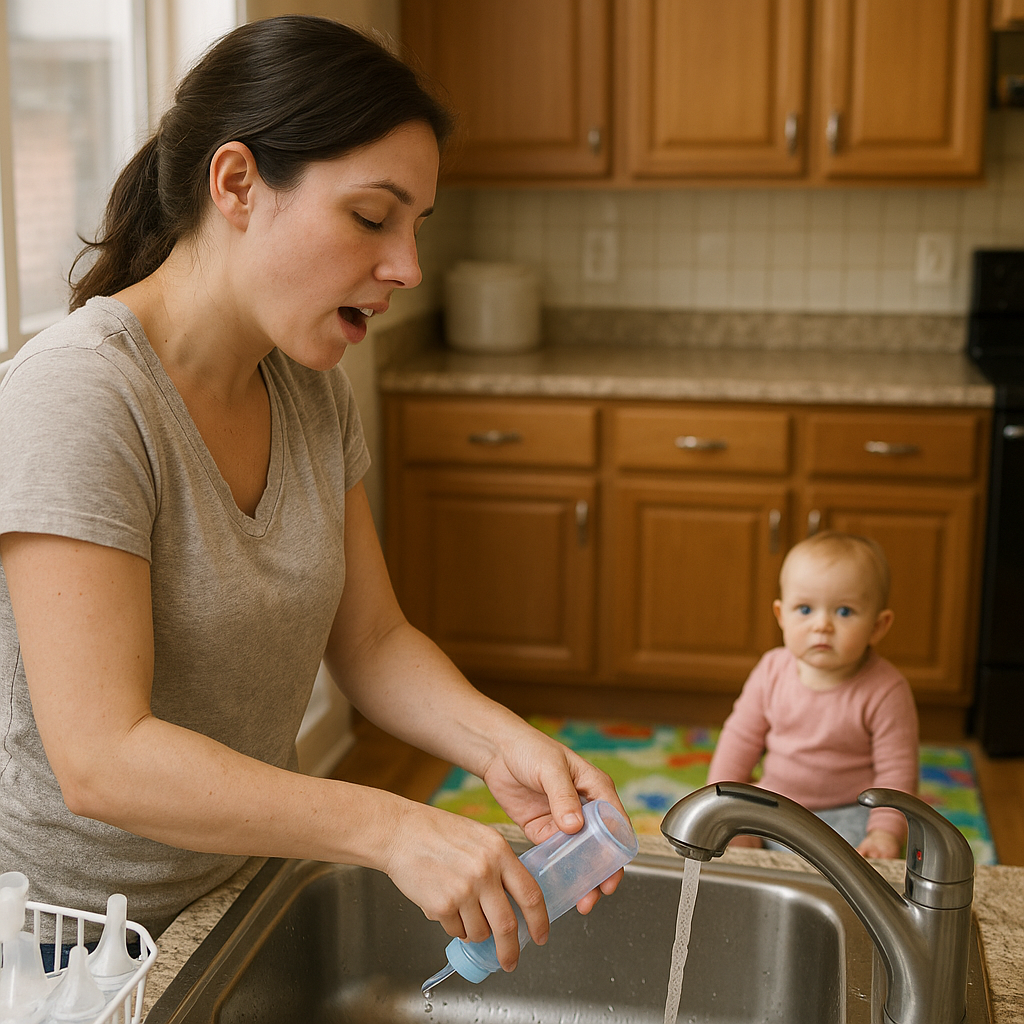
I learned this the hard way at the sink. I'd be halfway through washing bottles, calling across the kitchen like a sportscaster: "OK, we're going upstairs, then pajamas, then book!" And my kid would stare at me like I was background noise. Because I was. My voice was floating from somewhere behind her, competing with the faucet, the dishwasher, and whatever fascinating crinkle she found on the play mat.
What works better is placing your words right where the next action happens. If I'm about to wipe hands after dinner, I don't announce it from the stove. I walk over, get down to her level, let her see the washcloth in my hand, and then say the phrase right next to her. Same for getting into the car seat: I say Buckle when my hand is on the chest clip and I'm looking at her, not while I'm digging for my keys.
Babies are unbelievably literal about timing. If your phrase comes too early, it's just another sound. If it lands right on top of the first physical cue, they start to connect the dots: voice + object + movement. That's the recipe for anticipation. You can watch them do it. The second time you reach for the Aquaphor or the Aveeno lotion, you get the little pre-wiggle. By the fifth time, they open their hand like they know the sleeve is coming.
Two practical tweaks that made a difference for me: (1) use fewer future-tense words. We're going to... is long. Up or Buckle is clean. (2) keep your mouth pointed at them. Sounds silly, but it matters, especially if there's white noise running or you're in a parking lot. You're not trying to be louder. You're trying to be locatable. Once I stopped broadcasting and started delivering the cue at the scene of the action, routines got easier without me having to turn into the household hype person.
The Same Words, Different Speed
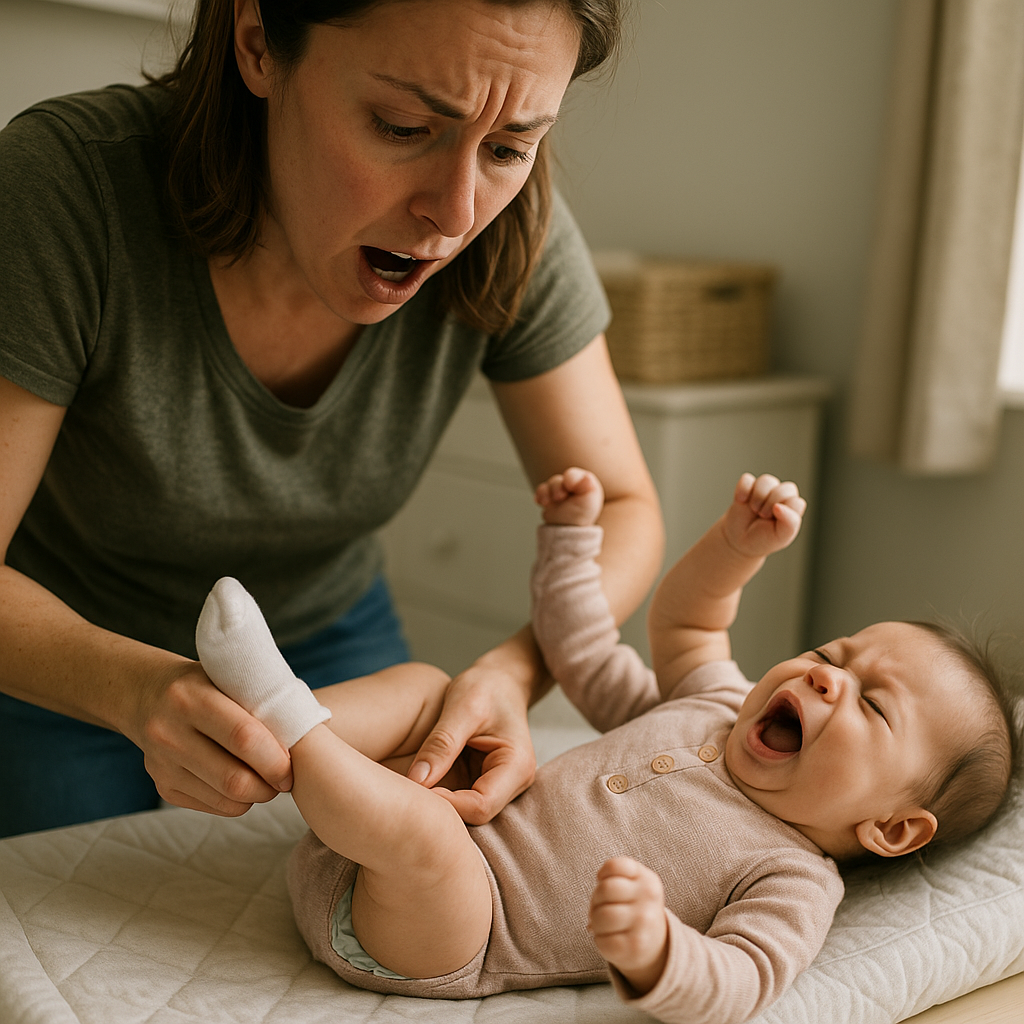
There's a version of my voice that shows up when I'm trying to get out the door: fast, clipped, and slightly panicky. It doesn't matter if I'm saying the same phrase as always. The speed changes the meaning. Babies hear it as urgency, and urgency reads like excitement, and excitement turns into flailing. I can watch the chain reaction start in real time when I'm snapping a onesie or trying to slide a sock over a curling foot.
So I started doing something that feels almost theatrical: I keep the words the same, but I slow them down on purpose at the exact moment I want my kid to anticipate, not resist. For example, during the after-bath routine, my phrase is short. When I say it at normal speed, she stays squirmy. When I say it at half speed while I'm already holding the towel open, she relaxes into it. Not always, but often enough that I notice.
Here's how I practice it without turning it into a whole production. I pick one micro-moment that happens every day: towel wrap, bottle warming, sleep sack, wiping hands, buckling in. Then I match my cadence to the movement of my hands. If I'm pulling the Halo sleep sack up, I say the phrase on the pull, not before. If I'm tightening the diaper tabs, I say it as my fingers press the adhesive, then I stop talking. The silence is part of the cue because it lets the little sounds come through: the Velcro rip, the snap, the zipper.
What surprised me is how quickly the anticipation shows up when the speed is consistent. My kid started lifting her hips a beat earlier. She started opening her mouth when the bottle was in my hand, not when it touched her lip. That's the routine learning you're hoping for, and it isn't fancy. It's you being steady enough that your voice becomes one of the reliable signals, like the lamp turning on or the bath water running. If you only change one thing, change the speed. It's the easiest lever to pull when you're tired and your words are starting to race ahead of your hands.