
Three ways to use tracking, cameras, and alerts so they support your relationship instead of running it.
The shared dashboard problem: you both see it, you both spiral
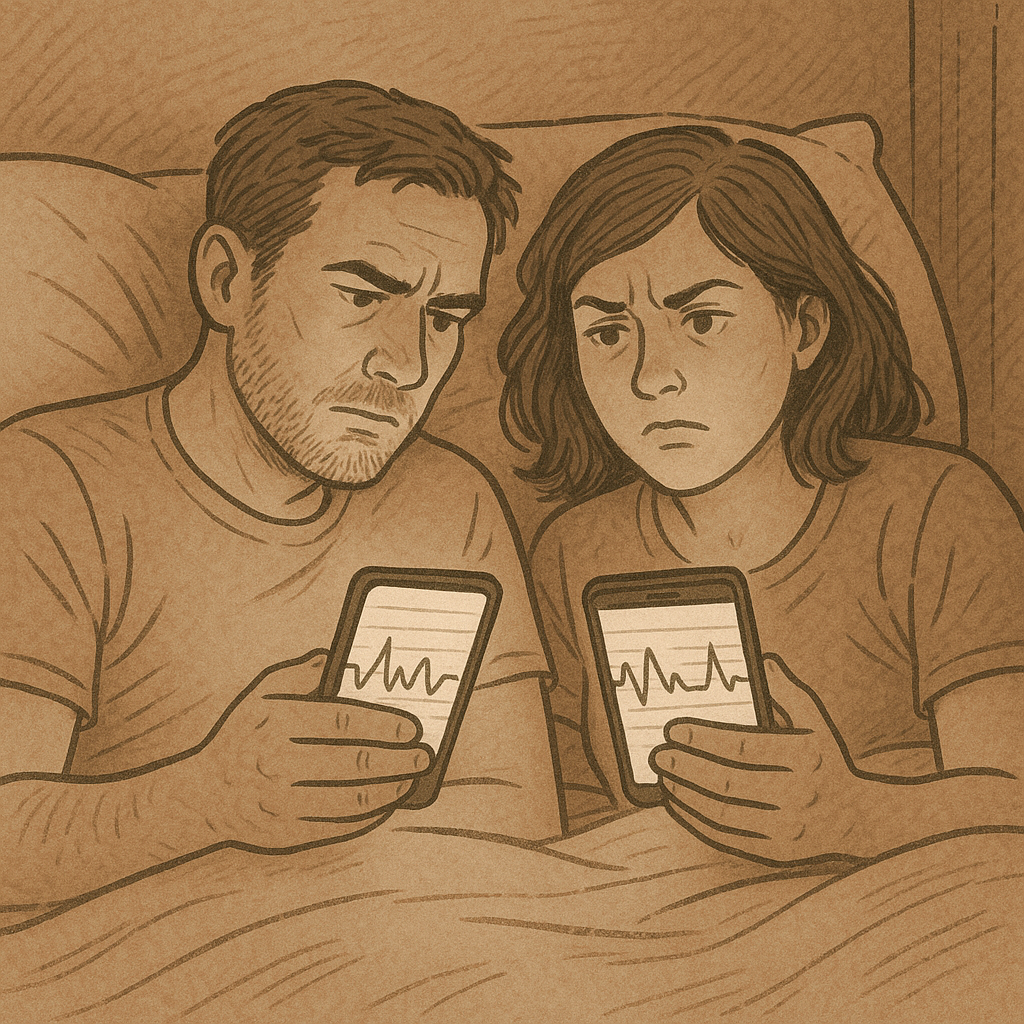
The first thing that surprised me about sleep tech wasn't the accuracy. It was how fast it turned us into coworkers. If both of you have the app open, you start narrating the night like you are doing play-by-play: awake at 1:12, back down at 1:19, stirring again at 2:03. That seems harmless until you realize you are now watching a graph instead of listening to the room. And if you're both watching the same graph, you can end up reacting twice to the same event. One person hears a rustle and grabs the phone. The other sees an alert and walks in too. Now nobody's resting, and nobody feels like they made a good call.
What helped was choosing one person to manage the alerts each night instead of having both phones react to every sound. We picked one "primary" device for the night, not forever, just for that stretch. If we're using an Owlet sock, a Nanit breathing band, or even just an audio-only monitor plus an app log, only one person is signed in to notifications. The other person can still check in if they want, but they aren't getting buzzed. The point isn't control, it's fewer interruptions. The relationship aspect shows up in the shift in tone: if only one person is on duty for alerts, the other person can offer something that isn't operational. A hand on the back. A whispered "Do you want me to take this one?" without both of you already mid-analysis.
And yes, you'll miss some data. You'll also miss fewer chances to be kind to each other. The irony is that the more information you have, the more you can argue about interpretation. Keeping one set of eyes on the data makes the room quieter, and it keeps the conversation from turning into a nightly review meeting.
Silence the phone, keep the tap: setting alert thresholds you can live with
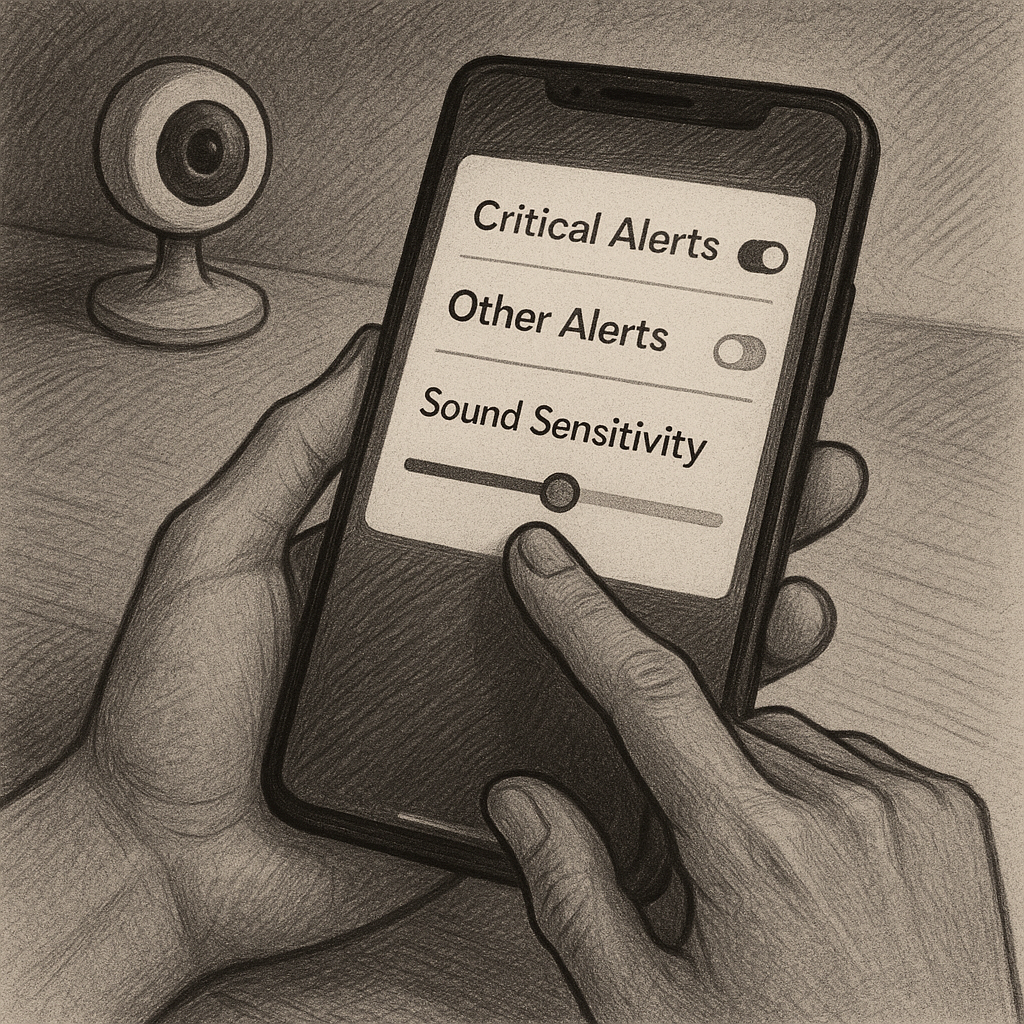
I used to think the goal was to catch every wake-up. That can leave both parents tense and unable to settle back to sleep. With infant monitoring, the default settings can be way too chatty, especially if you have a camera that calls every squeak a "sound event" or a tracker that flags normal squirming as a problem. The tech is doing what it was built to do. It's just not living in your house, with your two adults trying to function.
Instead of debating the baby every night, we adjusted the alerts like we were setting up a smoke detector, not a group chat. We kept the high-priority stuff loud and immediate (lost signal, a true red alert if your device has that category, battery low on the sensor). Everything else became quiet by default. On iPhone, that meant putting the monitor app in a Focus mode that allows only critical alerts, while regular notifications land silently. On Android, same idea with notification categories. If your monitor offers sensitivity sliders, start by lowering sound sensitivity one notch for two nights before making bigger changes. You don't need a perfect setting. You need a setting that lets you fall back asleep.
There's also a romance angle here that feels almost stupidly practical: a phone that stays dark keeps the room dark. If one of you is constantly checking timestamps, your face lights up, and then your partner is awake too, and now you're both irritated for a reason you can't even fully explain at 2:40 a.m. I like having one manual check baked in, a glance when I'm already up, and then I put the phone face-down. If the tech is always interrupting, it becomes the boss of your evening. If it's quiet unless it matters, it does its job and gets out of the way.
This is also where I stopped chasing meaning in the numbers. A graph can show you patterns over a week. It cannot tell you whether tonight needs comforting, a diaper change, or just ten seconds to resettle. Use alerts as prompts to check the baby rather than treating the app’s interpretation as definitive.
NOTE: Consumer sleep monitors should support attentive caregiving, not replace direct observation, safe-sleep practices, or professional medical guidance.
Review nights like athletes: weekly trend checks, not nightly trials
Our biggest relationship improvement with monitoring tech came from moving the conversation out of the night entirely. When you talk about sleep at 11:30 p.m., you're not problem-solving. You're litigating. Somebody's going to feel blamed for missing a cue, for responding too fast, for responding too slow, for buying the wrong gadget in the first place. The room is quiet, the nerves are loud, and every little disagreement lands like a moral failure.
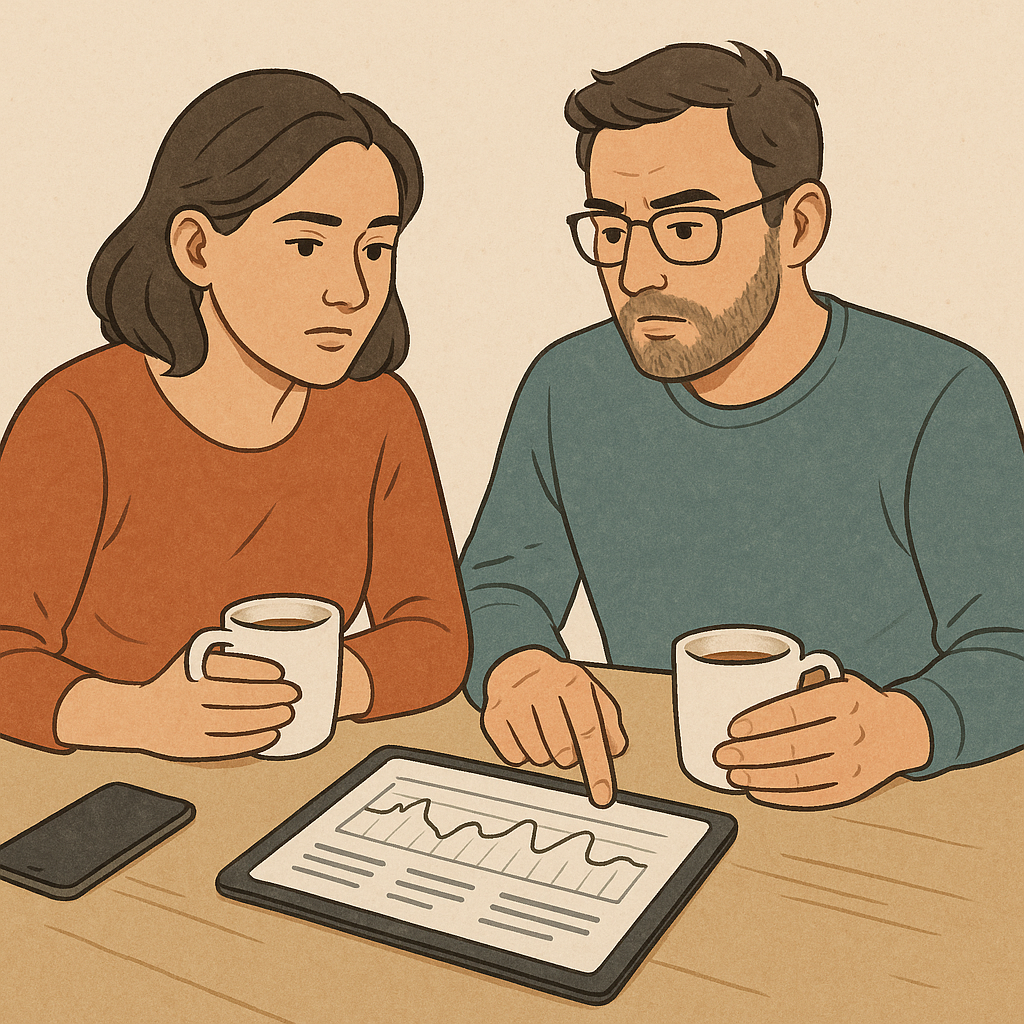
So we did a weekly review, in daylight, with coffee. Ten minutes. Phone on the table, not in anyone's hand. We opened whatever view the system had (Nanit's summary, an Owlet trend, a simple log in Notes if we were doing it low-tech) and looked for only three things: bedtime consistency, longest stretch, and what time the first wake-up usually hits. That's it. No replaying the entire night. No rewinding camera clips like we're breaking down game film for a championship. It's amazing how much calmer the week looks when you're not zoomed in to the minute-by-minute spikes.
Then we made one small change for the next week. Not a full overhaul. We chose one small adjustment, such as changing the white-noise volume, shifting the final feed by 15 minutes, or moving the camera so shadows did not trigger alerts. And because we weren't doing it while sleep-deprived, we could be honest about the human stuff the devices don't catch. Like, "I get tense when the app says 'light sleep,' and I'm worried you'll think I'm not doing enough." Or, "When you check the monitor from bed, I can't relax." Those are real sentences adults can say at 10 a.m. They come out as something else at 2 a.m.
Monitoring tech is supposed to lower stress, not give it a spreadsheet. When you make the data a weekly tool instead of nightly entertainment, you get the benefits without turning your relationship into tech support.