
Three no-phone dinner-night moves that keep you talking after the kids bolt for practice.
The one-card question that keeps dinner from turning into logistics
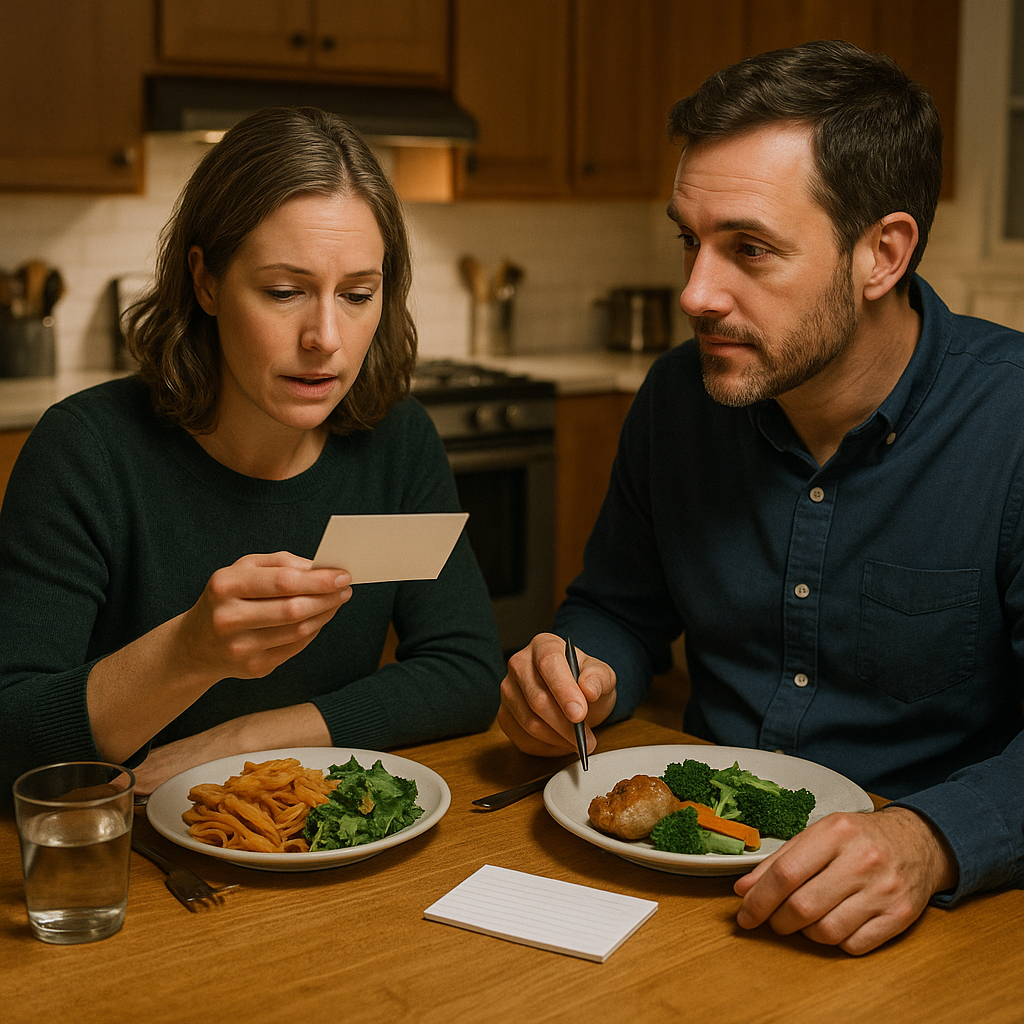
I learned this the hard way: when weeknights get swallowed by practices and pickups, the rare dinner that happens with just two adults can feel oddly empty. Not peaceful empty. More like you can hear the refrigerator cycling and you suddenly realize you don't have a shared script that isn't kids or scheduling. So for our technology-free dinner nights, I keep one index card and a pen in the junk drawer, and I write a single question before we sit down. Just one. It can't be about logistics, money, or who's driving where tomorrow. It's got to be about preference, memory, or taste.
Examples that have worked in my kitchen, with plates still steaming: What did you want more of this week but didn't get? (Not the same as complaining, and it isn't a trap if you answer first.) What was your favorite small thing you ate lately? (This one always goes somewhere because it turns into specifics: the burnt edge of a Costco frozen pizza, a perfect lime in seltzer, the way dill hits a potato salad.) Or What did you used to do after dinner as a kid? which somehow makes even takeout feel like a scene.
The card matters because it holds the line when your brain tries to slide into operations. You can still talk about the kids, but it has to be story-shaped. No calendar recitals. And yes, it feels a little dorky the first time you do it. Then you notice something: you're chewing slower, you're not reaching for your phone between bites, and you end up asking follow-ups instead of jumping to the next topic like you're clearing emails.
If you want one tiny rule that keeps it from turning into a therapy session, use this: the person who didn't write the question gets the first answer. It stops the whole thing from being a monologue with a polite audience.
After-plate ritual: 8 minutes at the sink, shoulder to shoulder
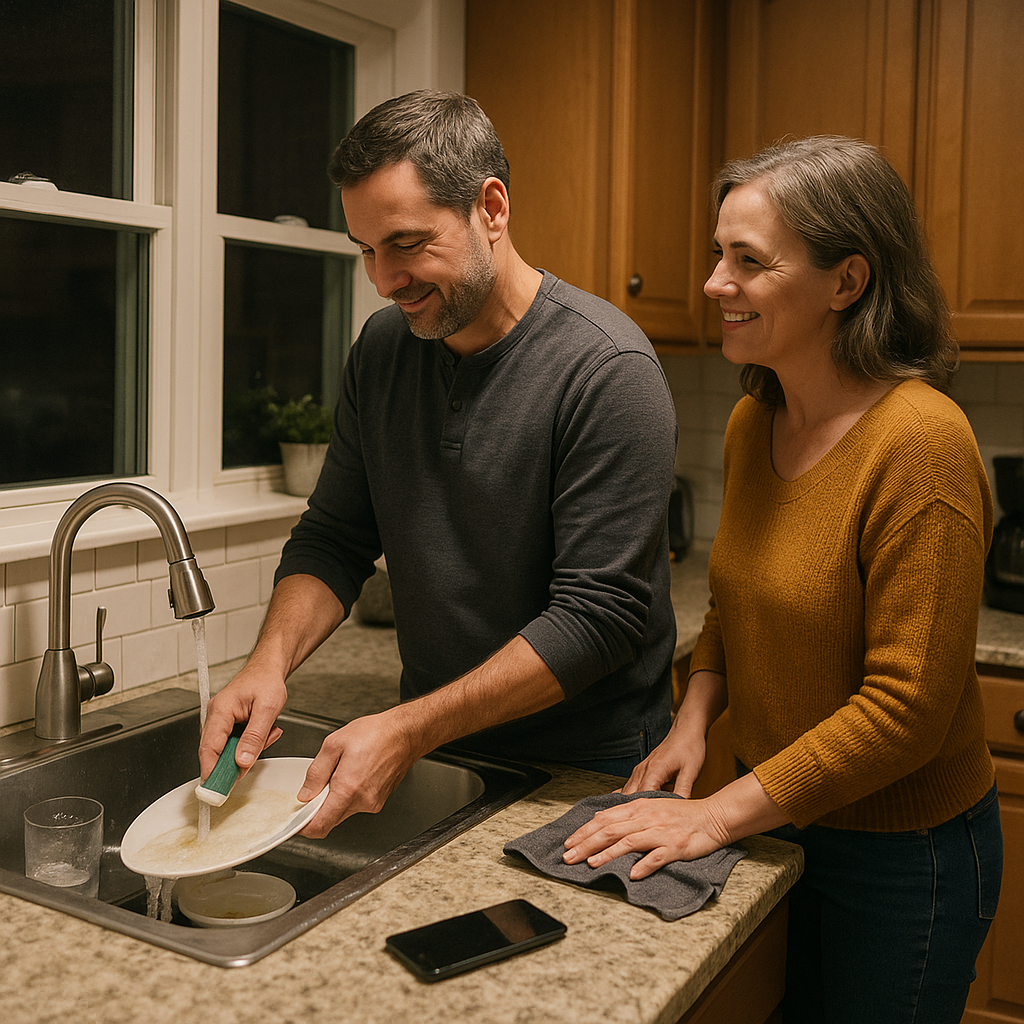
On nights when the kids are out the door and the house finally stops buzzing, my first instinct is to sprawl on the couch and disappear into scrolling. That's exactly why I like putting a tiny, physical speed bump right after dinner: we stand at the sink together and reset the kitchen for eight minutes. Not a whole clean. Not a performance. Just enough that tomorrow morning doesn't start with a stale smell and a stack of pans that makes you cranky before coffee.
Here's how it looks in real life: one person does the rinse and load, the other is in charge of surfaces and the floor zone right in front of the sink. I keep a dish wand with soap in it, a sponge that doesn't smell like a locker room, and a microfiber cloth tucked by the faucet so nobody has to go hunting. If we ate something messy, like sheet-pan chicken with sticky glaze, we do the pan first while it's still warm. If we wait, it's welded on, and then the whole vibe changes.
What makes this work for rebuilding quality time isn't the cleanliness, it's the posture. You're side by side. You're not staring each other down across a table. You can talk in fragments. You can pause to listen without it feeling intense. There's a lot of casual honesty that comes out while you're scraping a plate and the water's running. I notice we tend to tell the same kind of stories we used to tell when we were dating and driving places: little observations, annoyances that don't require a plan, the funny part of a tense moment at work.
The no-phone piece is easier here because your hands are wet. If you want to make it explicit without sounding like a hall monitor, put both phones on the counter across the room, face down, before you turn on the faucet. Not in a dramatic way. More like setting car keys in a bowl when you walk in.
When the timer ends (a stove timer is fine), we stop mid-task if we have to. Leaving one skillet to soak overnight is not a moral failure. The point is that you finish still liking each other.
The leftover candle: one flame, two minutes, and no phones allowed
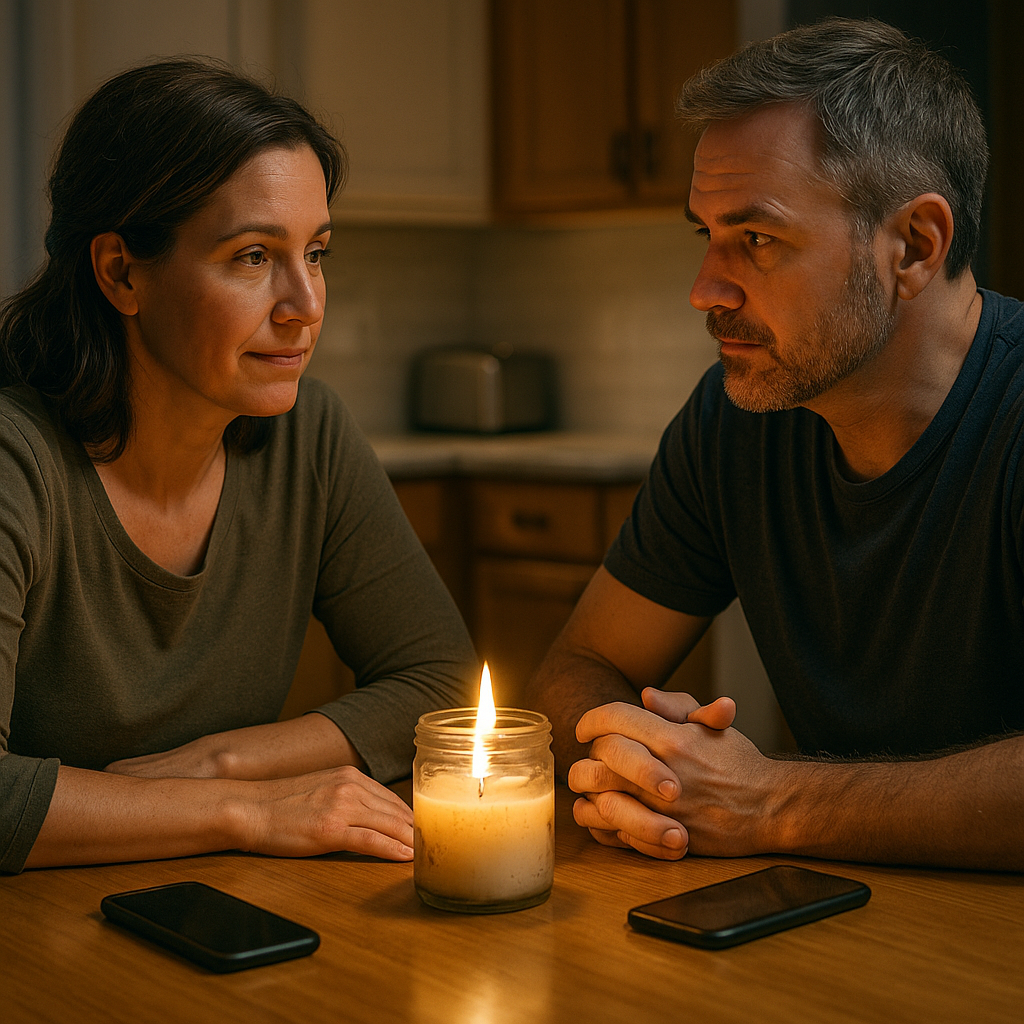
I used to think candles were for company, like you had to earn them. Then we hit that phase where every evening was a kid shuttle, and the rare quiet dinner felt too quiet. Now I light whatever candle is already in the house the second we sit down, even if it's half burned and the label is smudged. It sounds almost silly, but the flame changes what happens after the plates are cleared. It's a visible reminder that we're still in a shared moment, not just two adults resetting the house before we split into separate screens.
We call it the leftover candle because it's never fancy. Sometimes it's an old Bath and Body Works jar that's on its last legs. Sometimes it's a grocery-store pillar that has a weird tunnel down the middle. Doesn't matter. The rule is simple: while it's lit, phones stay off the table and out of hands. Not because technology is evil, but because the second somebody taps a screen, the room fractures. You can feel it. The other person starts talking faster, or they stop talking at all.
Here's the part that surprised me: you don't need a long activity after dinner to rebuild closeness. You need a clean handoff from dinner into a second, smaller pocket of togetherness. With the candle still going, we do two minutes of what I call the recap without problem-solving. Each of us says one thing we enjoyed today and one thing that took energy. The other person can ask one question, but it can't be a fix-it question. No advice. No action items. Just curiosity.
If your evenings are chopped up by practices, this works because it doesn't require a free hour. It fits in the gap before somebody has to run a load of uniforms or pack tomorrow's snack bag. Most nights, the candle burns for ten minutes and that's it. Occasionally it turns into twenty, and you realize you're still sitting there, talking about something besides who forgot shin guards. When it doesn't, you blow it out and move on. The point is the repeatable signal, not the perfect conversation.