
One text, one folding table, and a cooler by the door: the visitor boundary that protects baby time and your marriage.
The cooler-by-the-door rule
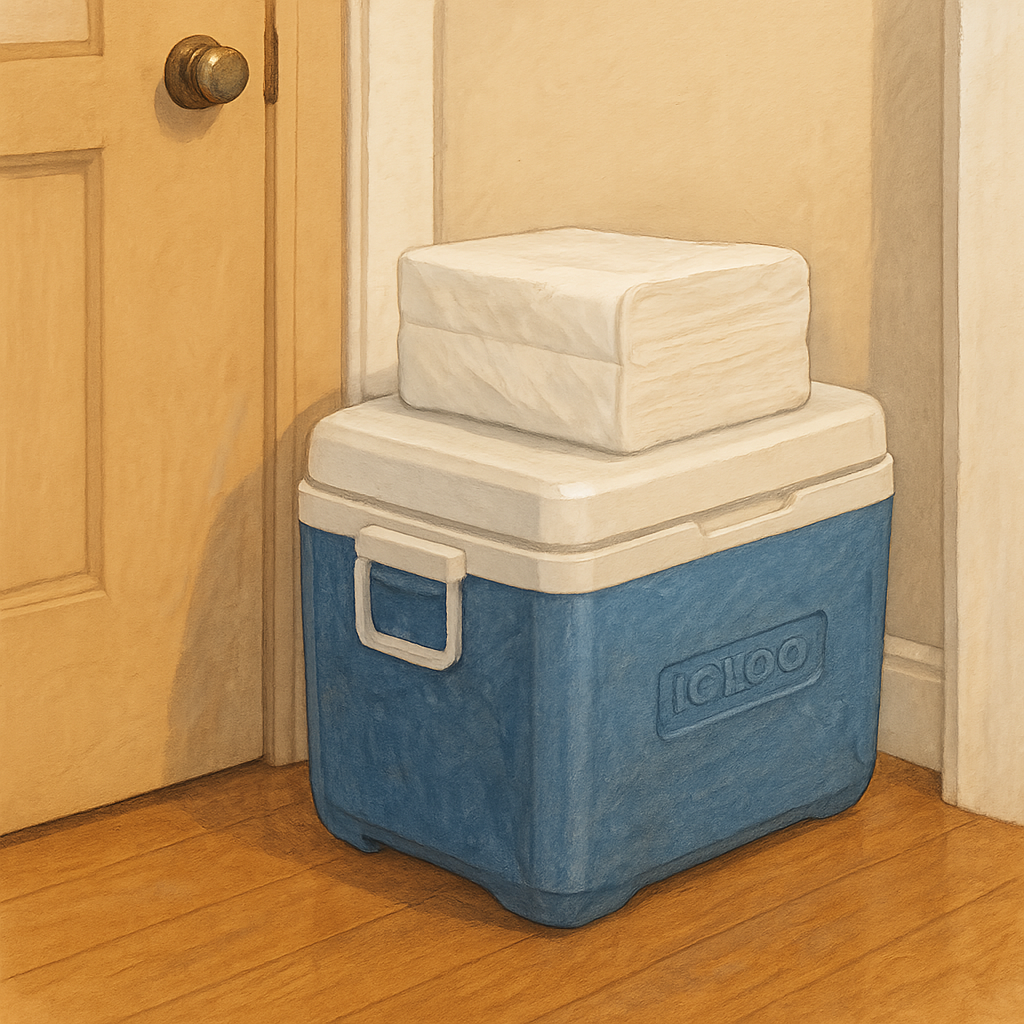
I learned the hard way that the first five minutes of a visit decide the rest of the visit. If someone walks in, heads straight for the bassinet, and starts narrating how tired I look, I'm already bracing. So I started staging the entry like an airport curb. There's a medium cooler right by the door, with a large pack of paper towels on top. The message is gentle but obvious: we are in logistics mode, not a receiving line.
Before anyone comes, I drop three things in the cooler: a couple of cans of LaCroix, string cheese, and pre-cut fruit in a lidded container. Nothing fancy. Then, when they arrive, I do not do the dance where I offer drinks while bouncing a newborn. I point at the cooler and say, "Help yourself, then wash your hands and pick a job from the counter." The cooler does two jobs at once. It stops visitors from hovering over the baby as their only activity, and it keeps me from playing hostess when I am running on two hours of sleep with a shirt that doubles as a burp cloth.
What counts as a job? Stuff that supports the baby's needs without turning the visit into a debate: refill my water bottle, swap a load of laundry, take out the trash, wipe the kitchen counters, wash bottle parts, or load them into the dishwasher. If someone wants baby snuggles, fine, but they come after clean hands and after I'm fed. When my partner and I agree on visitor expectations beforehand, neither of us has to introduce new rules or argue about them during the visit. We already decided. The visible setup reinforces what we have already communicated.
Send a one-screen text that leaves no wiggle room
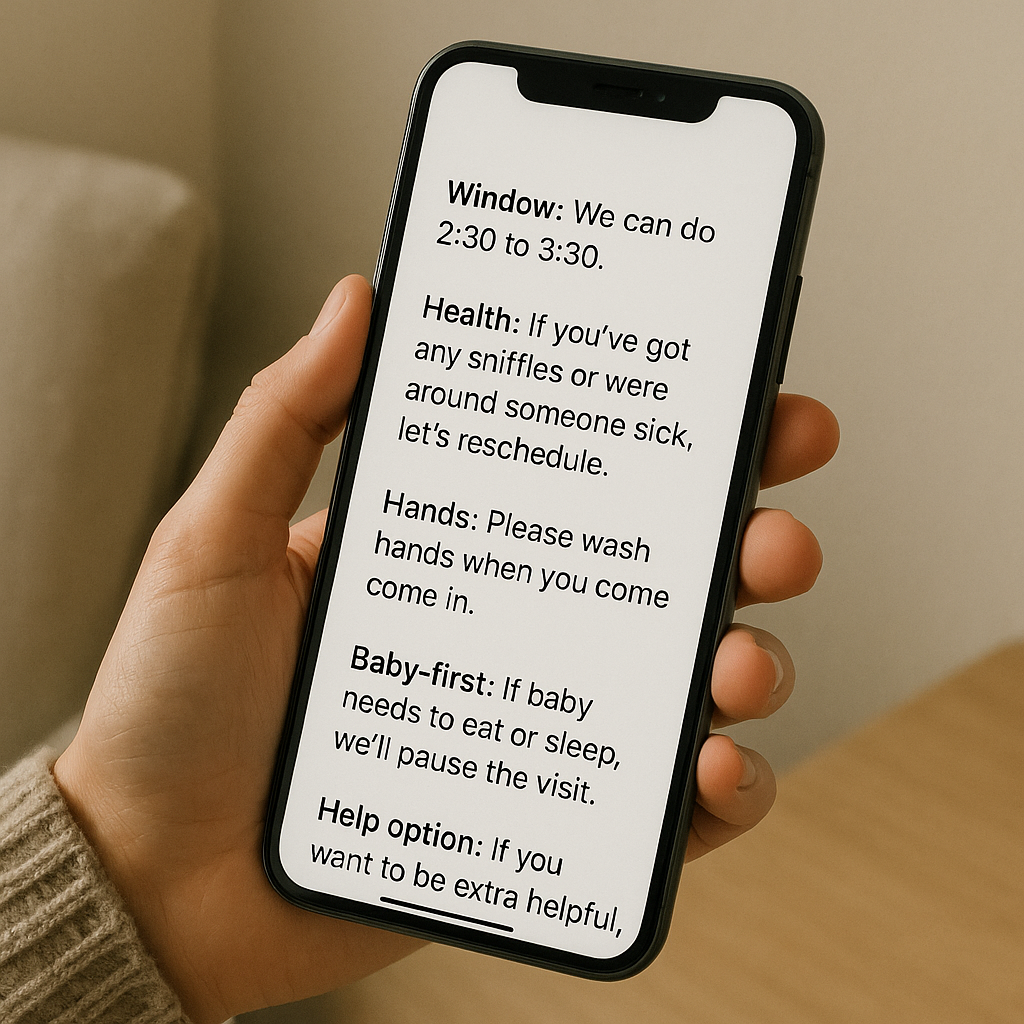
I used to over-explain visitor boundaries as if I were writing a policy memo. It invited negotiation. Now I send one message that fits on a single screen to everyone: the same words, every time. The message stays direct, calm, and focused on what the baby needs.
Here's my template (adjust the times, keep the structure):
- Window: "We can do 2:30 to 3:30." (One hour. Two hours is how you end up with a fussy baby and a resentful spouse.)
- Health: "If you've got any sniffles or were around someone sick, let's reschedule." (No arguing about how mild it is.)
- Hands: "Please wash your hands when you come in." (I put the hand soap out like a little stage cue.)
- Baby-first: "If baby needs to eat or sleep, we'll pause the visit." (This is the whole point.)
- Help option: "If you want to be extra helpful, we could use: taking out trash, folding laundry, or running the dishwasher."
Notice what's missing: a long story about my hormones, my stitches, my anxiety, or how exhausted we are. All true, but it doesn't help. The cleaner the message, the less room there is for someone to decide they get an exception because they're excited.
My partner and I agree on the visiting window, boundaries, and help list before I hit send. That one minute of coordination saves the moment later when one of us caves at the door and the other silently boils. Also, don't send it mid-argument. Send it during a calm moment, even if that means the ten minutes when the newborn is milk-drunk, and the house is quiet.
Use a folding table as the "drop zone" (yes, seriously)
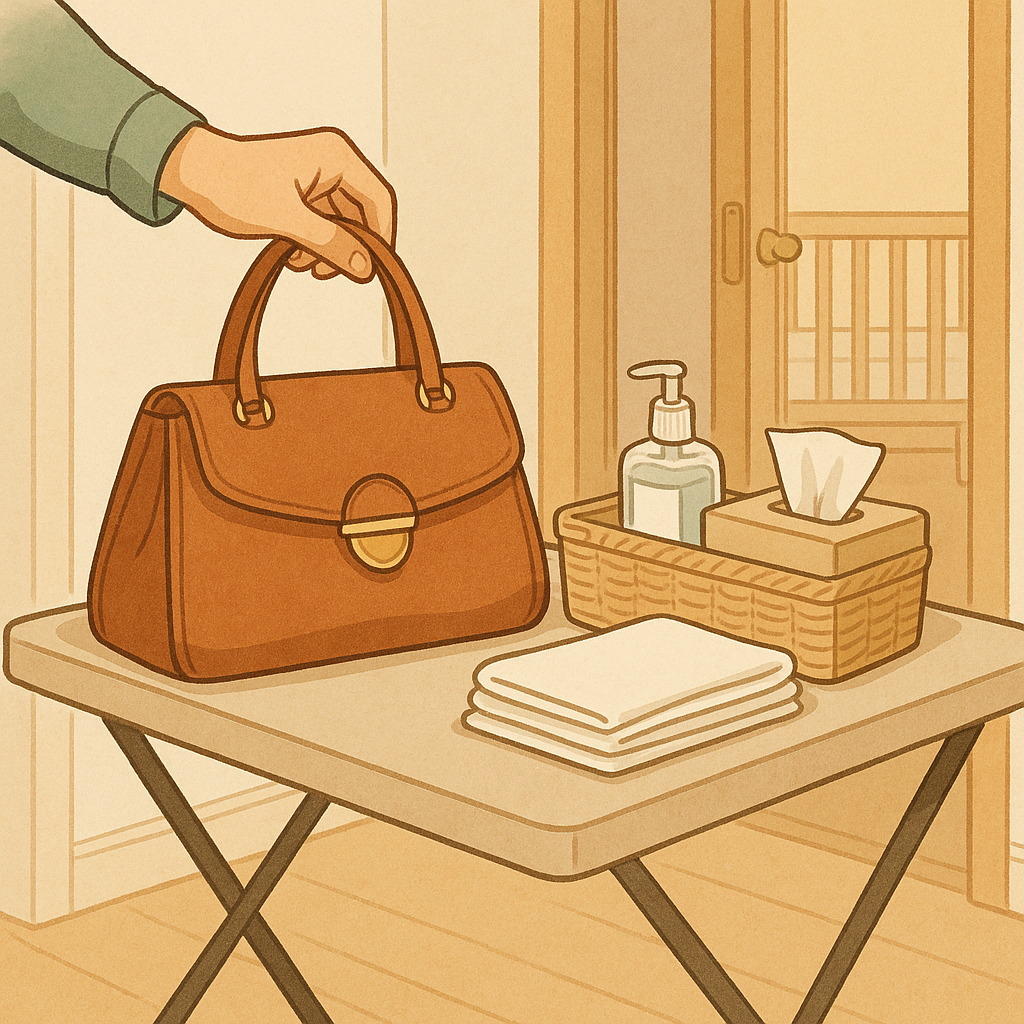
The problem with visitors isn't always the big stuff. It's the drip-drip of tiny intrusions: a purse on the clean burp cloths, a coffee set down on the changing pad, someone wandering into the bedroom to "just peek" at the nursery while the baby finally falls asleep. I stopped trying to correct each moment in real time. It made me feel like a hall monitor in my own house.
So I started putting a folding table (a basic Lifetime-style one) near the entry, and I treat it like an airport security tray. The table gets a little basket with hand sanitizer, a box of tissues, and a short stack of clean receiving blankets. That's it. Then I say one sentence when people arrive: "Can you put your stuff on the table? It'll keep it out of the baby's zone." A clearly marked drop zone gives visitors easy instructions without requiring repeated reminders.
Here's what changes when you do this:
- The visit stays focused on the baby instead of becoming a house tour. The table gives visitors a clear place for bags, drinks, phones, and keys.
- Feeding doesn't become a public event. If I need to nurse or pump, I can step away and close the door without having to navigate bags, drinks, or other belongings in the hallway.
- Your partner gets a clear role. My spouse is the table person. If someone starts wandering away from the entry area, he can redirect them without making it personal: "Leave your drink on the table, the baby gear's over here."
It sounds almost too simple, but it's the only setup I've found that protects mental bandwidth. When the baby starts rooting, or the swaddle breaks down, and you hear that little pre-cry squeak, you don't want to be negotiating where somebody's shoes go. Clear expectations let both parents focus on the baby without unnecessary tension between them.