
Three tiny mindfulness breaks (breath, pen, and sound) that fit into carpool, dishes, and the 2 a.m. spiral.
The 4-7-8 breath you can do in a car line
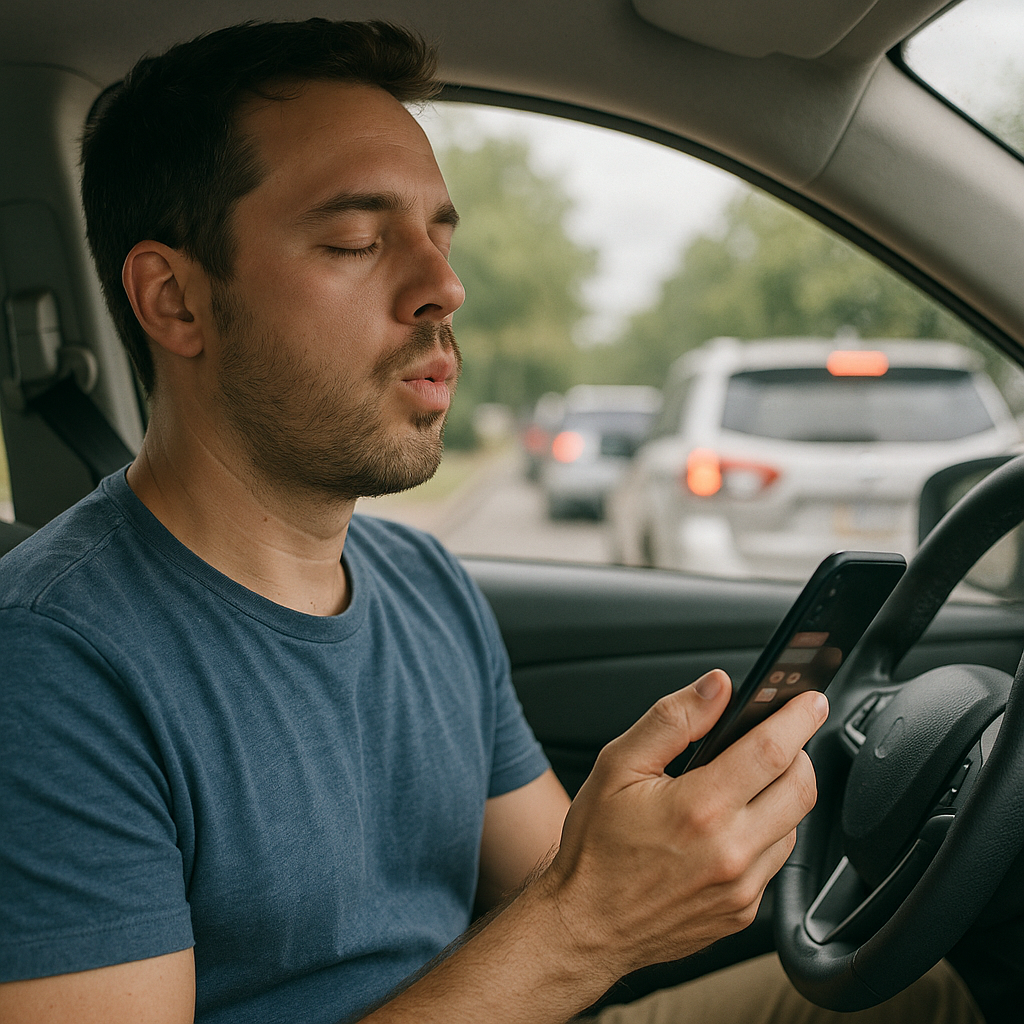
Car line is where my patience goes to die. The engine's running, my phone is lighting up with school emails that could've been a single sentence, and I'm doing that thing where I'm already late for the next hour even though it's not here yet. This is when I use 4-7-8, because it's structured enough to interrupt the mental noise but subtle enough that nobody notices you're doing it.
Here's the version I can pull off without getting lightheaded: inhale through your nose for 4, hold for 7, then exhale through your mouth for 8 like you're fogging a mirror. That long exhale is the point. If the full count feels like too much on a stressed body, shorten it and keep the ratio. I do 3-5-6 all the time and it still works. One round is fine. Two rounds is better. By the third, my shoulders usually drop without me forcing them.
A detail that matters: I rest my tongue on the roof of my mouth right behind my front teeth. If I don't, my jaw starts doing its own anxious choreography. Also, I keep my eyes soft. Not closed. Just not drilling holes into the pickup door like staring harder will speed up the line.
This isn't a magic trick, and I'm not claiming it fixes insomnia or anything dramatic. It's more like clearing the browser tabs. When family seasons get busy (holidays, tournaments, end-of-school chaos), I need one reliable button I can press anywhere. A counted exhale is that button. If you want a tiny upgrade, set a haptic timer for 60 seconds on an Apple Watch or any smartwatch so you're not sneaking peeks at your phone between breaths.
Dishwater grounding: one sensory cue, no pep talk
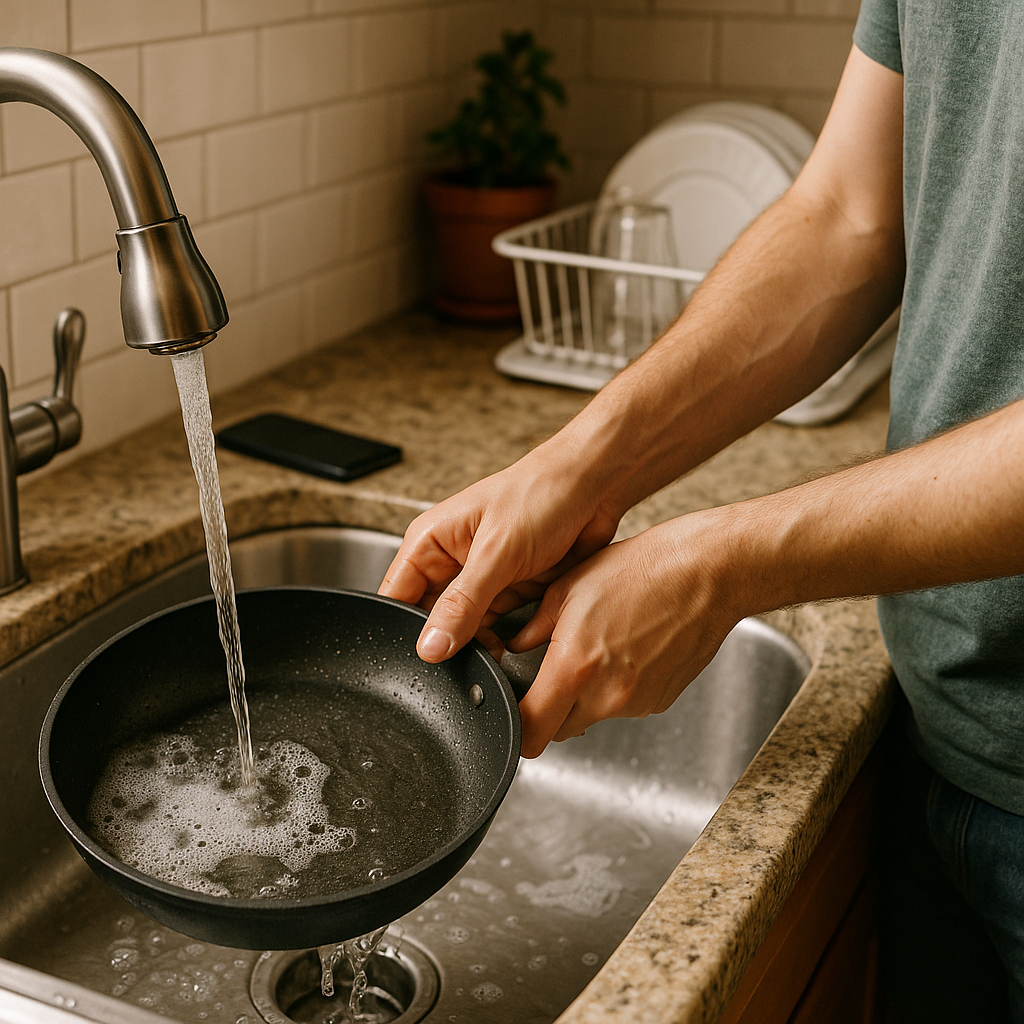
I don't meditate on a cushion. I meditate with my hands in dishwater because that's what my life allows in the season when the house is full and the calendar looks like a game of Tetris. The trick is to pick one sensory cue and stick to it for the length of a single task, like washing one pan or unloading one rack. Not the whole kitchen. Just one contained piece, so your brain doesn't start bargaining.
My cue is temperature. I turn on the water and notice the exact second it shifts from lukewarm to hot. Then I keep coming back to it: warm water over knuckles, steam on my face, the cold shock when I rinse a glass. If temperature isn't your thing, make it sound. The clink of a fork hitting the metal drying rack. The low rush of the faucet. The squeak a plate makes when it's truly clean. You're not trying to feel serene. You're training your attention to land somewhere that isn't the to-do list.
Two practical notes from doing this a lot: first, put your phone face down and out of splash range. I learned that one the hard way with a screen protector that never sat right again. Second, don't pick a cue that irritates you. If the sponge texture gives you the ick, you're not building resilience, you're just torturing yourself.
What I like about this one is that it doesn't add a new habit to your day. You're already at the sink. You're already moving. And if you live with family members who interpret any quiet moment as an opening to ask you a question, this is discreet. I can do a solid 90-second reset while the pasta water boils, and nobody in the house needs to know I'm trying to stay regulated.
The 2-minute brain dump that stops the 2 a.m. spiral
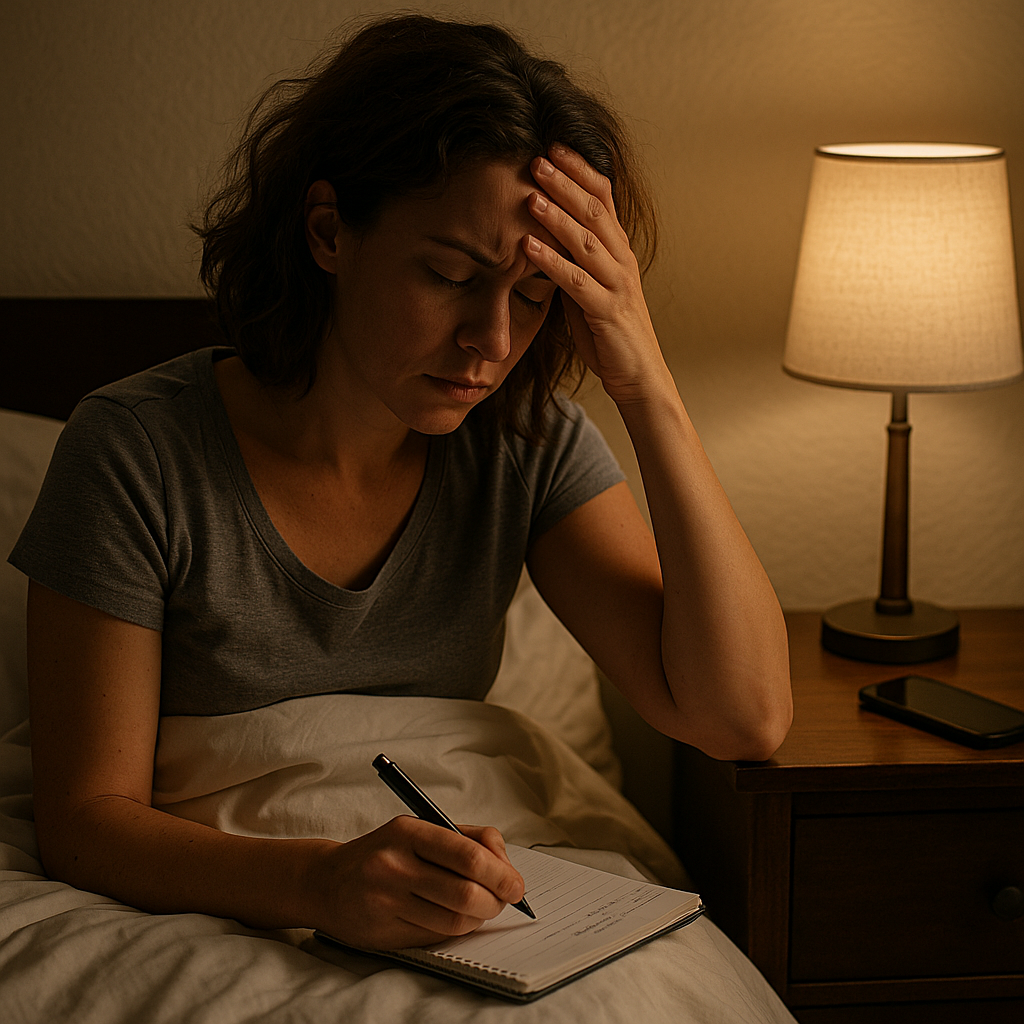
This is the one I use when I'm exhausted but my brain is acting like it just drank an iced coffee at 10 p.m. It happens most during busy family stretches: travel prep, birthdays, visiting relatives, or that end-of-year school pileup where every teacher discovers SignUpGenius at once. The theme is always the same. My head keeps reopening tiny tasks like they're urgent, and sleep turns into a negotiation.
I keep a cheap, boring notepad and a pen that writes smoothly (a Pilot G2 0.7 is my default) on my nightstand. Not my phone. If I use Notes, I end up scrolling, and then I've lost the plot. When the loop starts, I set a timer for 2 minutes and I write in bullets. No sentences. No journaling. Just a spill.
- Open loops: the stuff that keeps popping up ("return library book," "reply to coach," buy poster board).
- One next step: a single action for each loop (put book on keys, not be a better person).
- Not tonight: anything I'm tempted to solve in bed goes here. If it's truly urgent, I'll know in the morning.
Then I close the pad. Physically close it, like you're ending a meeting. If the thought tries to come back, I don't argue with it. I just tell myself, it's on the list.
This doesn't guarantee eight hours of sleep, and I'm not promising it will. What it does, reliably, is cut the time I spend awake doing mental admin. My brain seems to relax when it can see a concrete capture system, even if it's literally a notepad from a big box of office supplies. Pair it with a few rounds of the long-exhale breathing from earlier and you get a surprisingly strong reset for something that takes less time than brushing your teeth.