
A tiny wall station with a binder clip, a dry-erase card, and a pen on a string has turned our five p.m. dinner negotiations into one much simpler question.
The two-board system: options vs. commitments
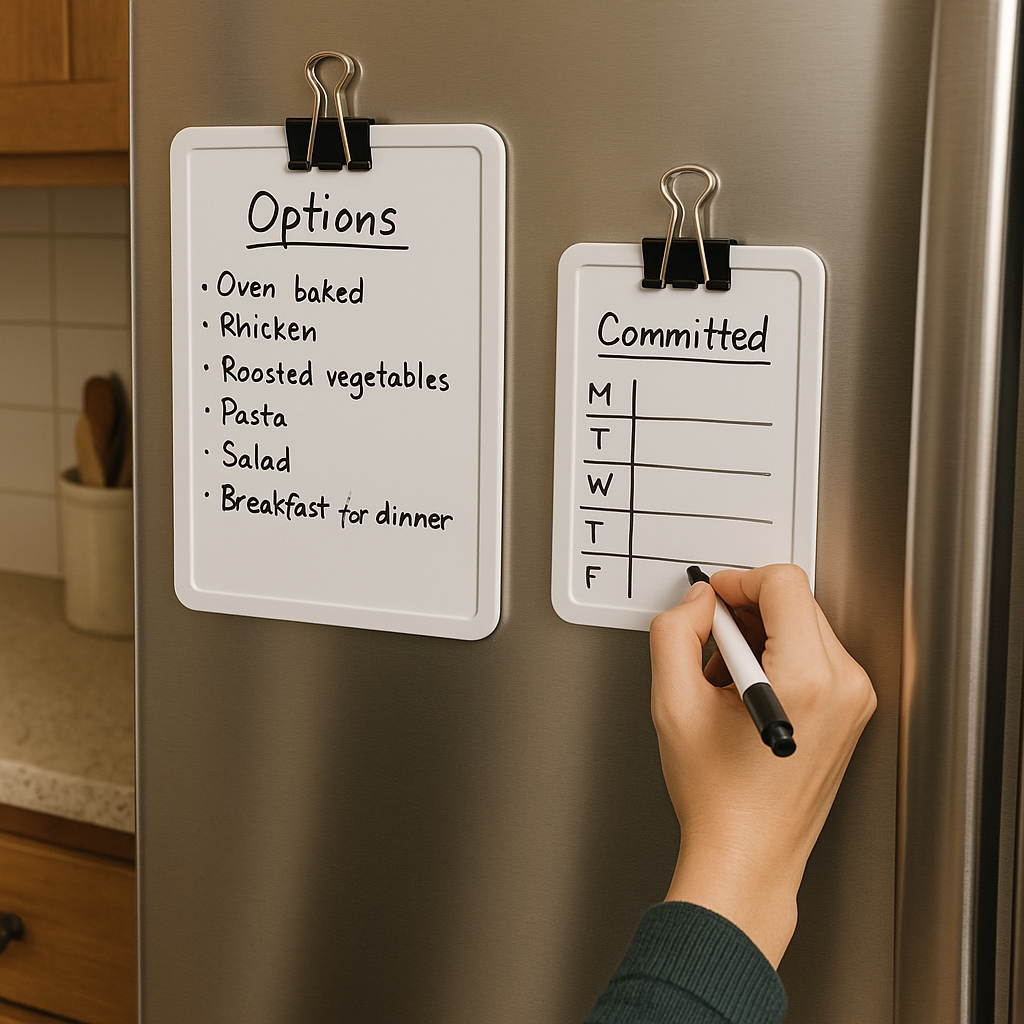
I used to keep one pretty meal-planning board on the fridge, and it turned into a weird little courtroom. Whoever wrote on it seemed to be issuing orders. Whoever came home late felt like they were being handed a sentence. The fix wasn't more recipes. It was splitting the station into two zones, each with a different job: an Options board and a Committed board.
My Options board is basically a running parking lot. I jot down low-effort ideas that are already in our orbit: sheet-pan chicken thighs, a rotisserie bird with bagged salad, breakfast for dinner, a frozen Trader Joe's gnocchi situation. Nothing on this board is a promise. It's just there so we aren't standing in the kitchen doing that tense ping-pong of, "What do you want? I don't know, what do you want?"
The Committed board is smaller and more blunt. It has five lines (Mon to Fri) and exactly one rule: if you put a meal on a day, you also have to answer the follow-up question you just created for your partner: "What do we need to make that happen?" That might mean: thaw the chicken (yes/no), grab the tortillas (yes/no), start the rice at 6:10 (yes/no). It keeps the plan from being just a vibe and turns it into something the other person can actually step into without you having to read their mind.
Where it becomes a relationship thing, not a home-organization thing, is the permission structure. We don't treat the Options list like a menu someone has to approve. It's just a shared memory aid. Our rule for the Committed board is simple: whoever adds the meal also takes responsibility for one of the small jobs needed to get it started (pulling something from the freezer, rinsing the rice, checking if we have soy sauce). If I had to pick one detail that makes it stick, it's the location. Ours lives where we naturally pause together: right by the drawer with the can opener and the good scissors, not in a back hallway no one looks at.
The binder-clip meal board (and why it beats texts)
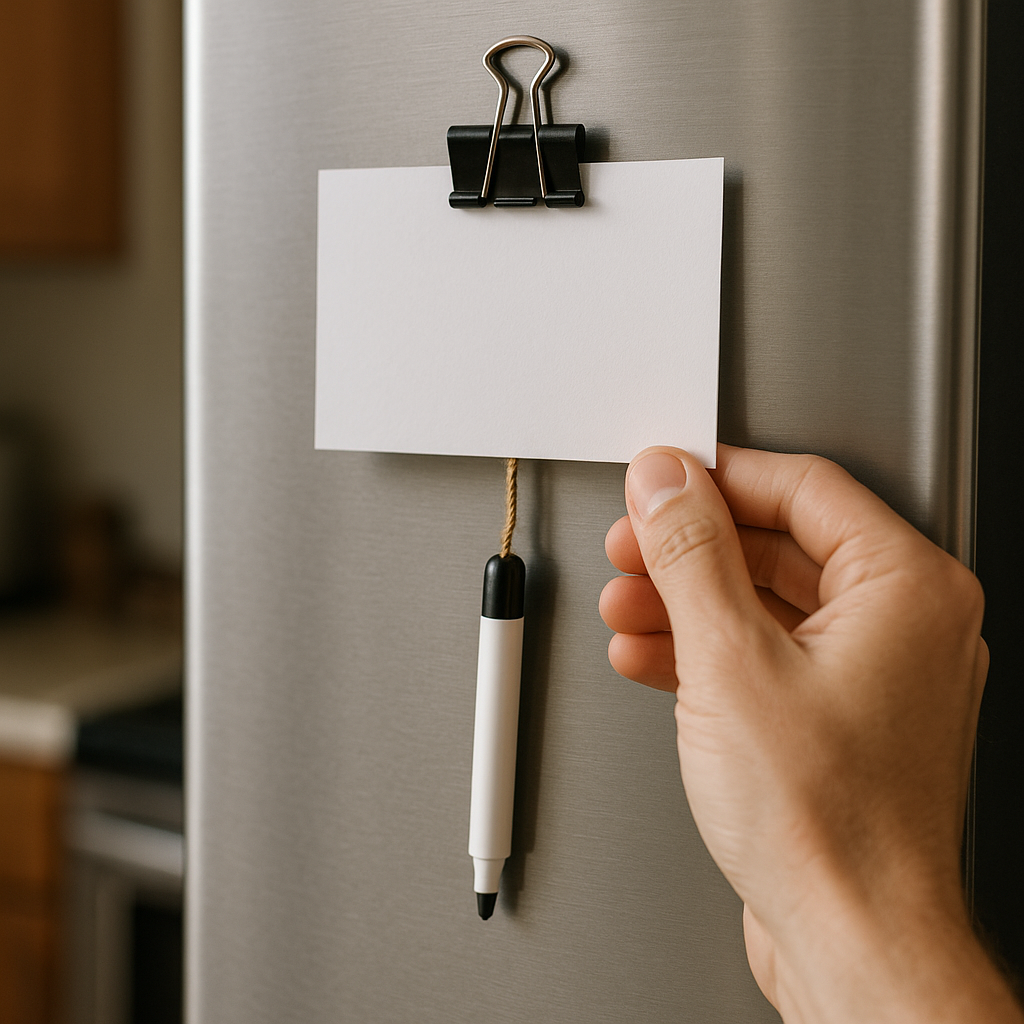
We tried the shared note. We tried the shared calendar. We tried the flurry of texts that starts at 3:47 p.m. and ends with someone resentfully ordering takeout at 7:12. The thing that finally worked in our house is stupidly physical: a single black binder clip holding a reusable 4x6 dry-erase card on the fridge, with a fine-tip dry-erase marker attached on a short string. It's not cute. It is visible, and that's the point.
Here's the exact setup. Clip the dry-erase card in the binder clip's spring-hinged jaw (not the wire handles), then stick the whole clip to the fridge with a small adhesive magnet or a magnetic hook. On the card, we write three lines:
- Tonight: (the meal)
- Start time: (a real time, not "soon")
- Who owns what: (two verbs, not a vague split)
The two-verb rule is what makes this work. "I cook, you do dishes" is clear. "You handle kid food, I'll do ours" is clear. "I'll grill, you make the salad" is clear. When we leave it as "we'll figure it out," we don't. We just circle each other, hungry, with that brittle cheerfulness that isn't fooling anyone.
For us, the biggest advantage over texting is that the card requires almost no back-and-forth. I can walk in, check the plan once, and know what dinner requires without reopening an afternoon text thread. The marker being physically there matters too. If the pen wanders, the station collapses. I used a cheap badge reel at first, then swapped to a short piece of kitchen twine because the reel made that constant clicking sound against the fridge every time someone opened it, which was somehow more aggravating than it had any right to be.
We also built in a tiny escape hatch: if either of us changes the plan, we change the card, not each other: no long explanation, no apology tour. Update the card and move on. It's oddly calming to have the agreement live on a piece of cardstock instead of inside a tired conversation.
A five-minute Sunday reset that doesn't turn into a meeting
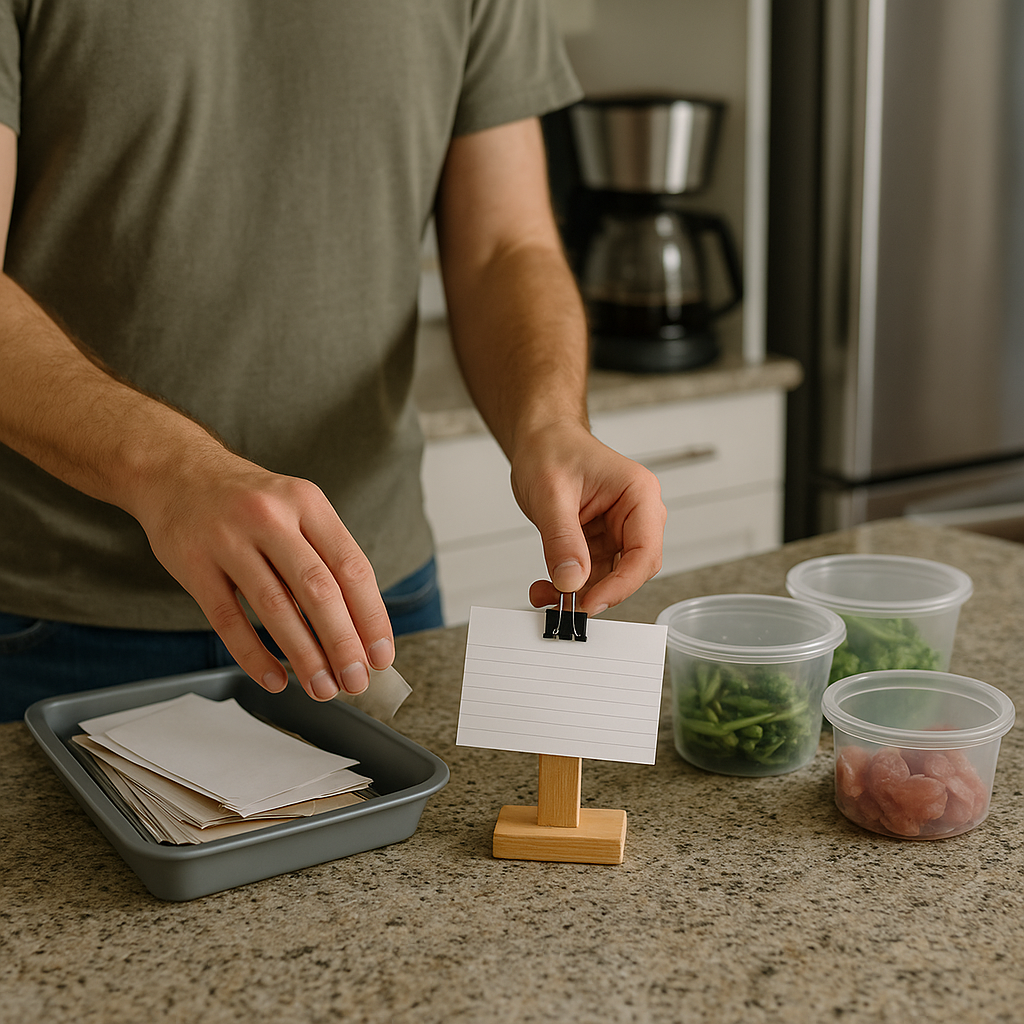
I don't do a big weekly planning summit. If I call it that, nobody wants to show up. What I will do is a five-minute reset of the meal station while something else is already happening, usually when coffee is brewing, and the kitchen is naturally quiet for a second. The goal isn't to design perfect dinners. It's to make weeknights less personal.
This is the routine that stuck for us:
- Clear the landing zone. The counter spot by the fridge gets emptied to one stack: mail, school papers, whatever. I shove it into a tray. If the station is buried, we won't use it.
- Pull three containers forward. One for proteins, one for veg, one for open-and-serve. Ours are mismatched Pyrex and deli containers, nothing fancy. I'm not inventorying, I'm just making the choices visible.
- Write three default dinners on the Options board. Not aspirational. The ones we can cook even when one of us is fried. Then I add one wildcard meal we both like, usually something saucy that feels like effort without being effort.
- Pick two nights to commit. Only two. If we try to lock in five, we end up in a debate about Thursday that takes longer than cooking Thursday's dinner ever will.
- Set one panic plan. This is the agreement for the night, something goes sideways: frozen dumplings, scrambled eggs, or a can of soup plus grilled cheese. The point is deciding it when nobody is hungry.
The relationship payoff is subtle. When the station is reset, the question at 5:30 becomes "Are we doing the card meal or the panic plan?" rather than "Why didn't you think about dinner?" It's a softer on-ramp into the evening. Also, it cuts down on that petty scorekeeping thing where one person feels like they're always the one who notices we're out of olive oil or that the kid has a weird school event that changes the timing.
If you live with a partner who hates being told what to do, keep the reset physical and short. No speeches. Just clean surface, visible food, two committed nights, and the binder clip card ready for Monday. Then stop. The hardest part is not turning it into a referendum on how the week is going.