
Three open-plan tweaks that let kids practice independence without vanishing behind a closed door.
Drop-zone baskets that kids can carry back
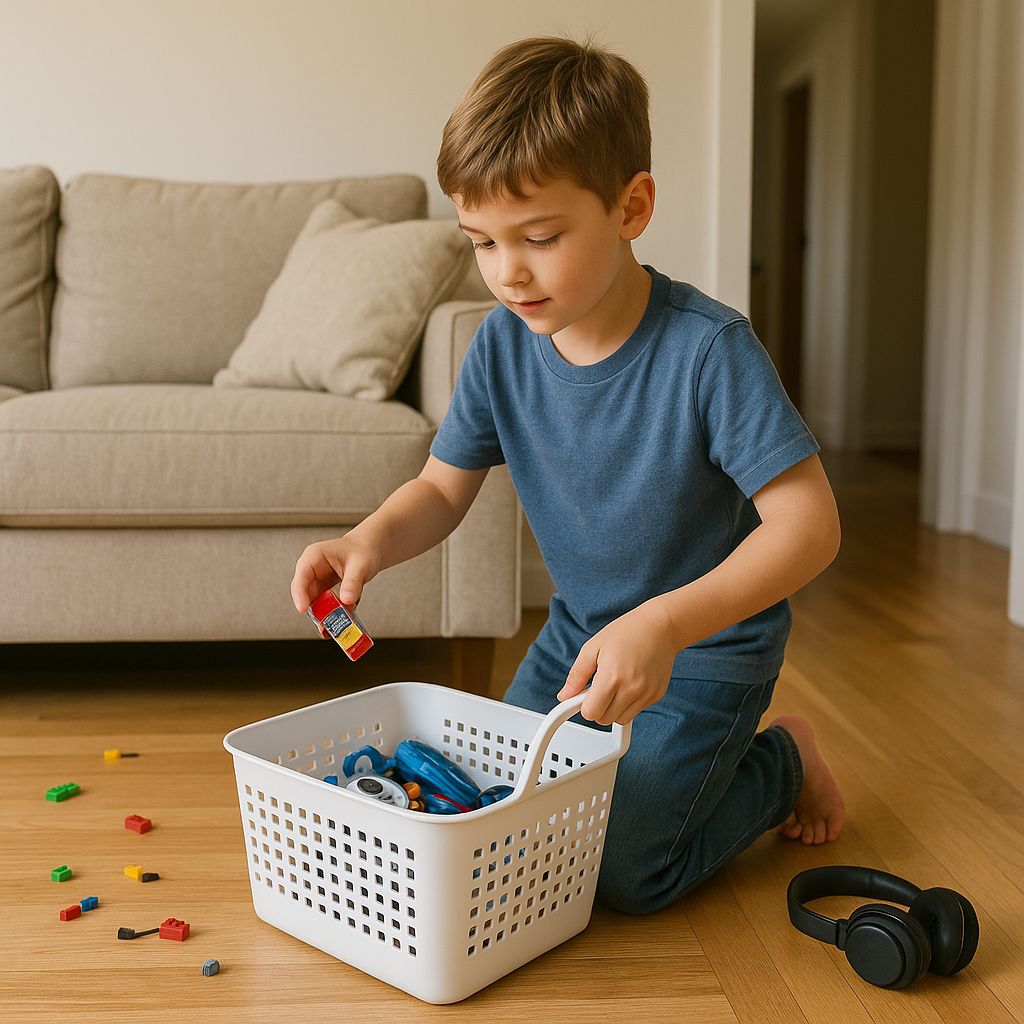
Open-plan rooms make it weirdly hard for kids to practice being independent, because their stuff spreads everywhere, and then you end up narrating your whole day as you step over it. The fix in my house wasn't another lecture about picking up. It was giving each kid one handled basket that lives in the same visible spot every day. The rule is simple: if something's migrating out of their zone (LEGO to the kitchen island, markers to the sofa, headphones to the hallway), it goes into the basket first. They can carry one load back without help, even when their arms are small and their attention is shot.
The part that surprised me is how much the handle matters. A bin with no handle becomes a drag-and-dump situation. A basket with a handle turns into a little tote. I like something that can handle crumbs and mystery stickiness, not a precious woven thing you have to baby. If you're buying, look for a sturdy plastic or coated basket, the kind you'd also use for pantry organization, with a handle that's comfortable to grip. Then label it in a way your kid can read at a glance, not in cursive on a cute tag. Painter's tape and a Sharpie beats cute every time.
We set ours right at the edge of the family room, near the path to the bedrooms, because it has to be on the natural walking line. If it's tucked in a cubby, it turns into another adult-managed system. When the room starts to feel like a yard sale, I don't say, "Clean up." I say, "Basket first." They scoop, they carry, and they get to decide where things go once they're back in their space. Meanwhile, I'm still on the couch, still available, and not doing the slow-burn resentment walk around the perimeter of the coffee table.
A homework perch that faces the room, not the wall
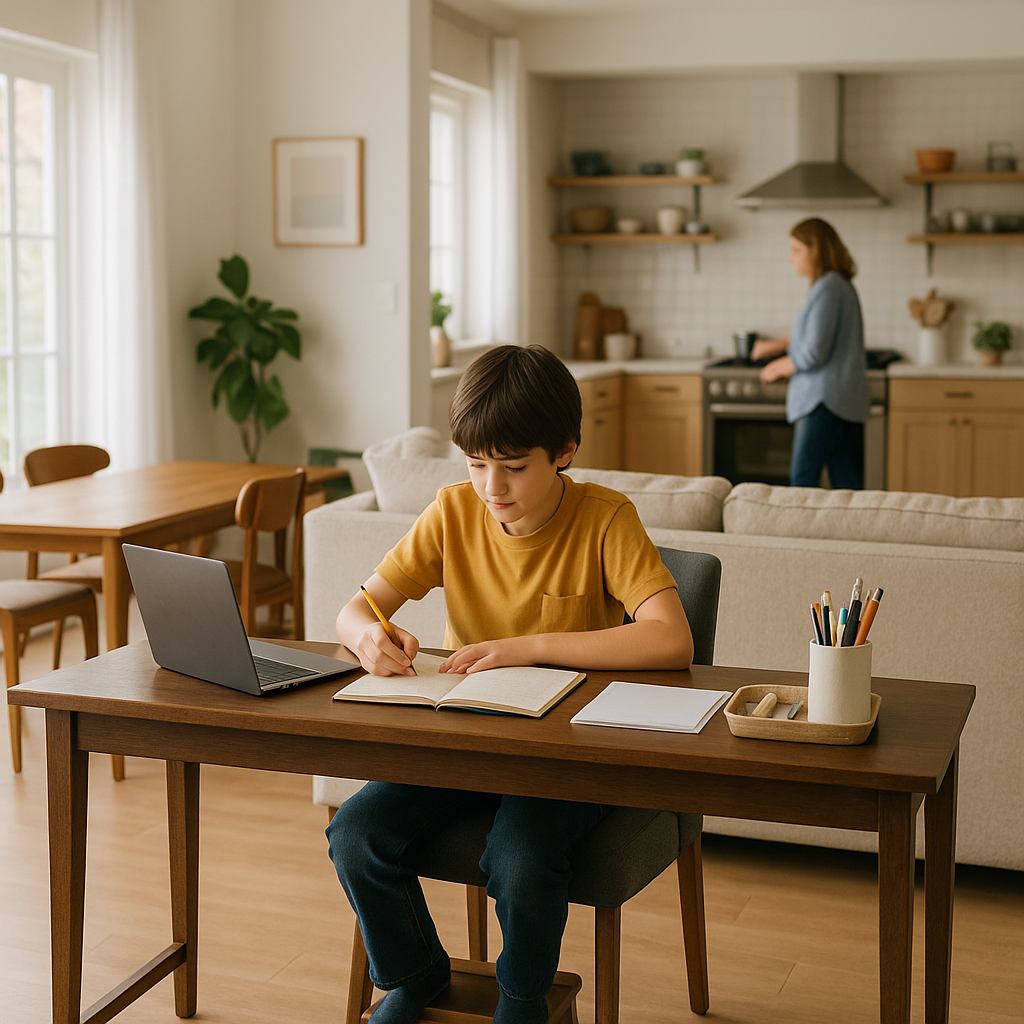
There's a sweet spot in open-plan living where a kid feels like they're doing their own thing, but you can still exchange a sentence without either of you relocating. I finally got there by making one specific homework perch that faces into the room. Not an office. Not a desk in a bedroom. A perch. Think: one end of the dining table, or a slim console behind the sofa, or even a kitchen peninsula with a decent chair. The point is orientation. When they're facing a wall, they disappear into their work and then pop back out only to ask for help at the worst possible moment. When they're facing the room, they're independent, but still part of the weather of the house.
I learned the hard way that the chair matters more than the surface. If the seat is too high and their feet dangle, they last about seven minutes before the full-body wiggles start, and then you're renegotiating everything. A simple fix is a footrest (even a sturdy step stool) so their feet are planted. If you already have an ergonomic chair you love, great, but don't overthink it. My baseline test is: can they sit, write, and get up without scraping the floor like a forklift? That sound alone will make everyone tense.
Then add a tiny amount of containment so the open-plan space doesn't become their supply closet. I keep a narrow caddy with pencils, a glue stick, scissors, and a charger, plus a little tray for papers I can't lose. The caddy lives on a nearby shelf, not on the table, so the surface still converts back to dinner without drama. Kids like having a setup that feels theirs, but they also like being able to call out, Can you check this? and not feel like they have to leave their post. You're still cooking, folding laundry, or answering one email, but you're in the same room, which keeps the tone lighter than the shut-door homework bunker vibe.
One note from living with this: don't put the perch where everyone's traffic cuts through. If they're getting bumped on the way to the fridge, they'll either melt down or start policing the room like a tiny hall monitor. Aim for a corner with a clear sight line, not a crossroads. When you hit it, you'll feel it. They settle in, you keep moving, and nobody has to announce that they're starting homework like it's a formal event.
Make one visible shelf the kids can control
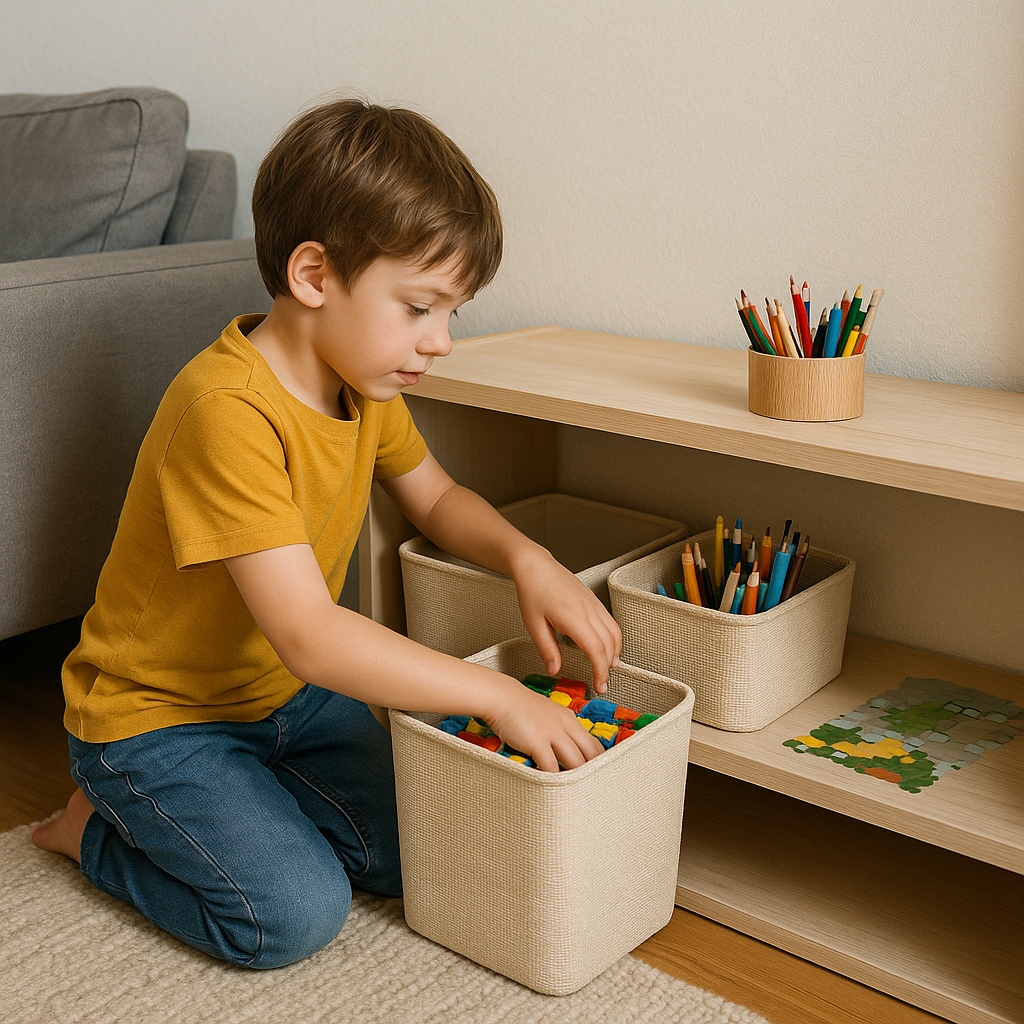
If your family room is also the hallway to everything else, your kid needs one spot that isn't a constant negotiation. For us, that was a low, open shelf that sits in the shared space and is genuinely theirs to manage. Not a toy chest you slam shut. Not a cabinet you secretly curate after bedtime. A shelf where they can see what's there, reach it, and make choices without asking you to be the gatekeeper. It's a small design choice, but it changes the tone of the whole room.
Here's the exact way I set it up so it doesn't turn into a chaotic display of half-broken plastic: I give them two always available bins (one for building stuff like LEGO or Magna-Tiles, one for art supplies), one spot for a current puzzle or model in progress, and one empty slot that stays empty on purpose. That empty slot is the pressure valve. When a birthday bag of random stuff arrives, it has a place to land temporarily without taking over the coffee table for a month.
The boundaries are physical, not philosophical. If it doesn't fit on the shelf, it doesn't live in the shared space. They can keep extra items in their room, or we rotate. I don't make rotation a ceremony. I just say, Pick what stays out. Kids like that they get to choose. They also like that the shelf is visible to you, because independence doesn't mean exile. They'll sit on the rug and build while you're nearby, and you'll hear the play-by-play without having to hover. You'll also notice the small, practical wins: fewer lost pieces in the kitchen, fewer frantic searches for the special marker, fewer abandoned projects shoved behind the sofa cushion.
Use containers that don't fight you. Open-top bins beat lidded boxes for daily life. Lids are where motivation goes to die. And label the bins with pictures if you have a younger kid who can't read yet, because the point is that they can run the system without you. The nicest moment is when they finish playing and you see them do the little sweep, hands moving fast, not because you asked, but because the shelf makes sense. The house still feels like a family lives there. It just doesn't feel like the floor is filing a complaint.