
A notepad, a four-minute timer, and a few simple rules can make everyday household disagreements easier to handle.
The parked-thought notepad
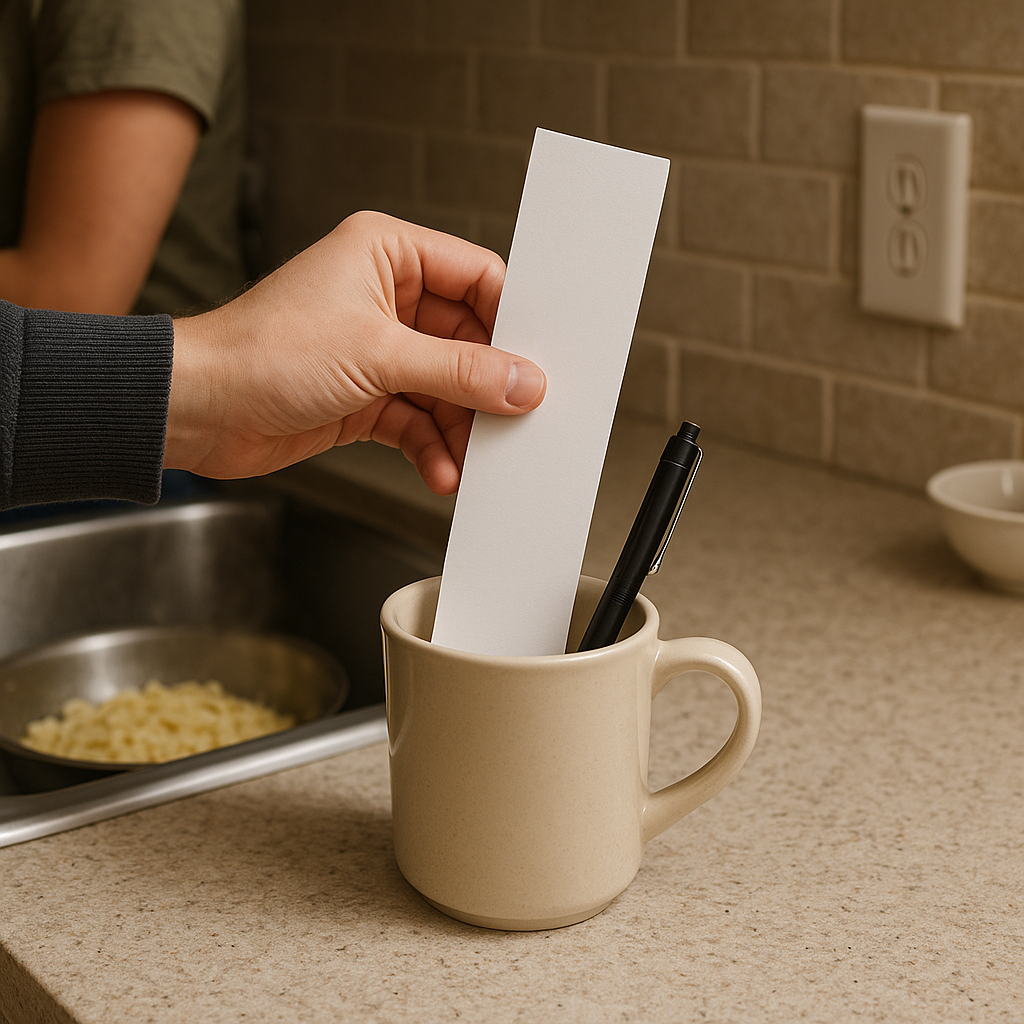
I started using this technique because I was tired of the exact same conversation showing up at the worst times: one of us is rinsing pasta, the other is hunting for the kid's shoe, and suddenly we're litigating who left the recycling on the floor. So I put a skinny paper notepad and a pen in a mug on the kitchen counter.
We call it the parked-thought pad, and the only rule is that it's for anything you want to bring up that isn't urgent. Everything else gets parked. You write one sentence, date it, and you do not add a paragraph. I keep it to one sentence because a long note defeats the point of parking the issue.
For us, writing something down takes some pressure out of the moment. I know the issue hasn't been ignored, and my partner knows we can come back to it when we're both able to focus. If I'm the one writing it, it also keeps me from doing the thing where I rehearse my complaint for an hour and walk into the living room already mad.
Once or twice a week, we pull two notes at most and talk about them when the room is calm. Usually it's 8:30 p.m. with the dishwasher humming and the lights low. Half the time, the note has gone stale, and you just toss it. That's the whole point. The pad keeps minor annoyances from turning into arguments in the middle of a busy evening.
The four-minute timer reset
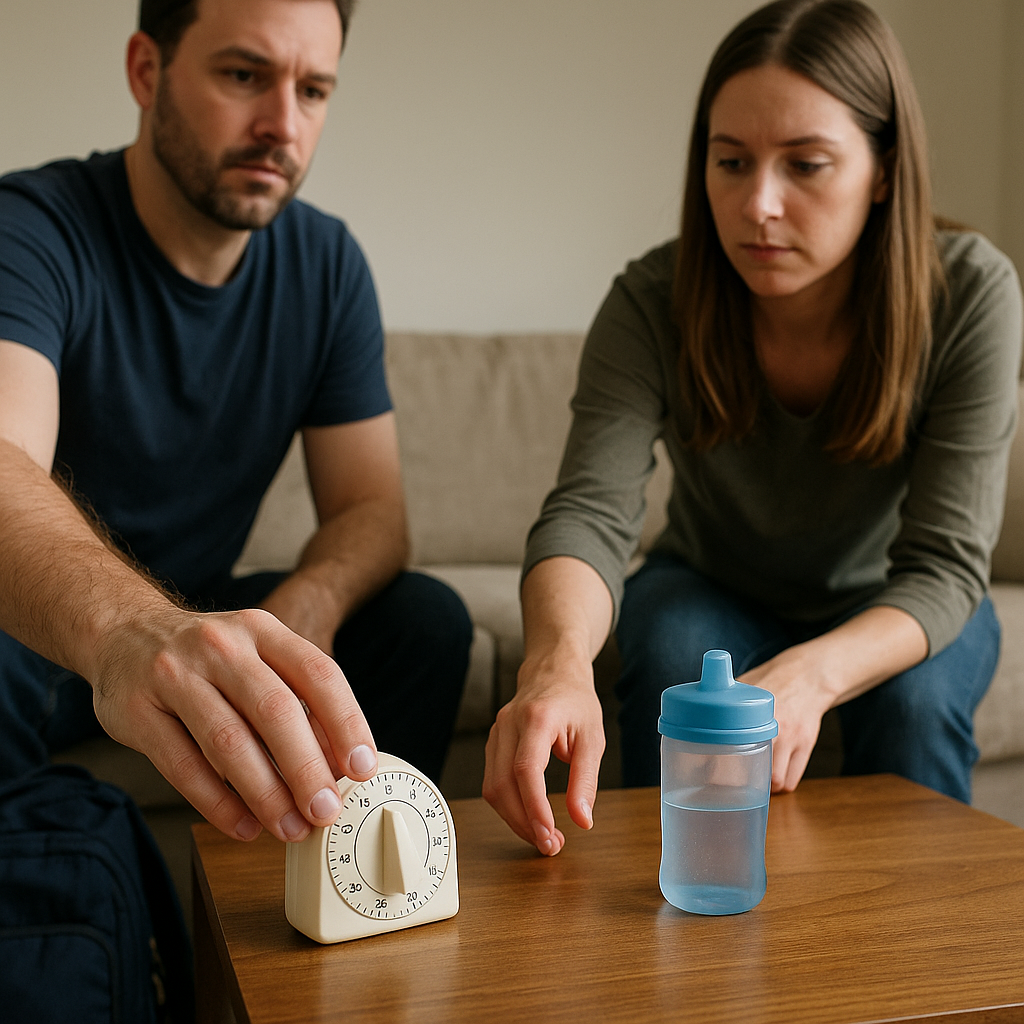
When our place starts to feel emotionally loud, it's almost never because of a single big thing. It's the pileup: backpacks by the door, a half-empty sippy cup on the coffee table, and two adults moving around each other like they're in each other's way. If I try to fix that with words, it comes out wrong. So I use a tiny, dumb constraint: four minutes on a kitchen timer.
I use a physical timer because it keeps the reset separate from our phones and makes the four-minute limit obvious. I twist it to 4:00 and say, "Reset," and then I start doing one visible task that makes the room feel less prickly, like clearing the table completely or putting all the stray cups in the sink. It has to be a task that changes the space fast. This is not the moment to reorganize a cabinet.
The timer also makes the reset feel more straightforward. It's four minutes, we're doing it together or separately, and then it ends. That ending matters. Without that limit, cleaning can easily turn into another source of resentment.
We also have one small rule: no commentary while the timer is running. If you want to put a complaint somewhere, that goes on the notepad from the other slide. During the timer, I try to choose tasks that reduce friction later: setting out tomorrow's water bottles, putting the remote in the same bowl it always disappears from, or taking the overflowing trash out to the bin so nobody gets the gross last push.
Four minutes won't solve the underlying disagreement, but it can make the room feel less chaotic before you sit down together.
One bowl for the daily blame objects
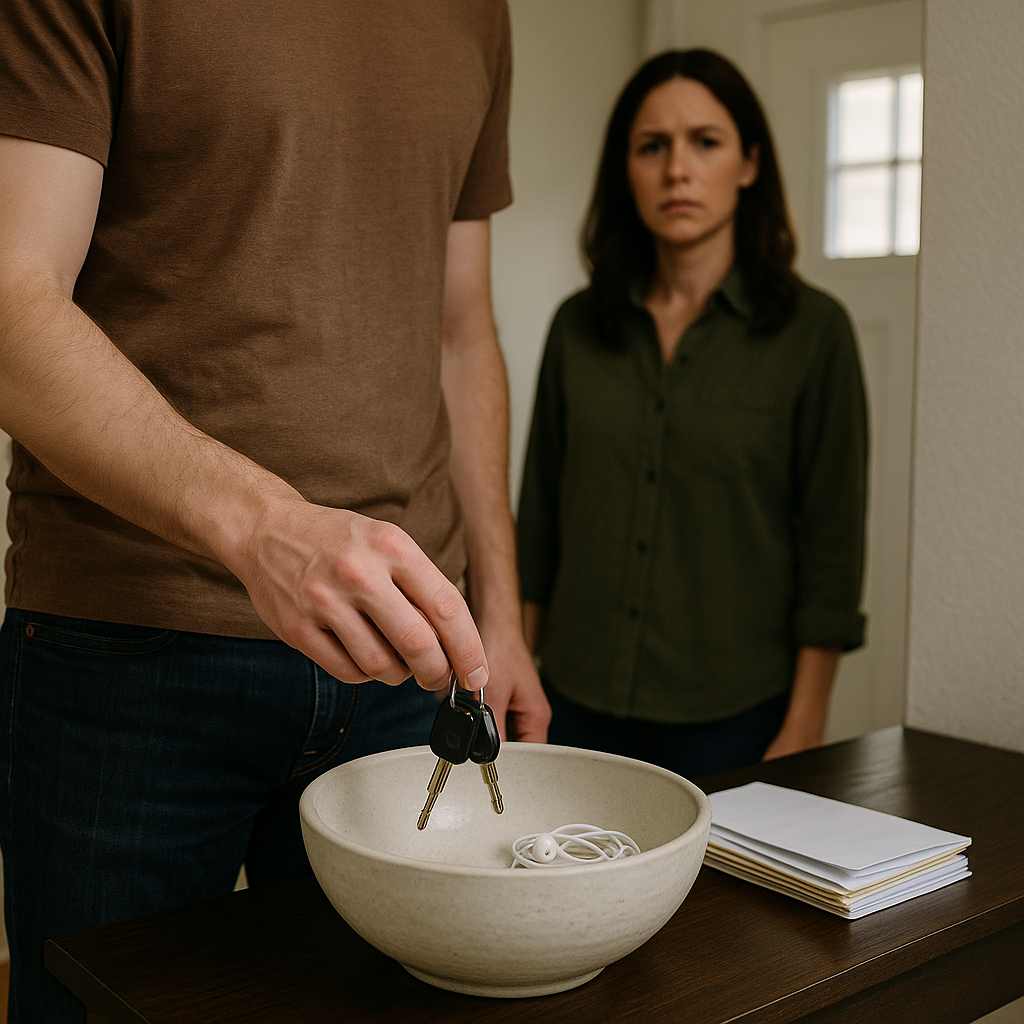
In our house, a few everyday objects had become surprisingly reliable sources of irritation. The keys that are never in the same place. The one charger that wanders. The library book that somehow lived under the couch for three weeks. In our house, those objects weren't just clutter. They were triggers. I'd see them and feel like I was carrying the mental load alone, and my partner would see my face and immediately brace for impact.
So we picked one container and gave it a job: a heavy bowl with a wide mouth that sits by the entry table. Ours is ceramic, because if it's too light, it migrates, and then you're back where you started. Anything that tends to get weaponized in a tense moment goes in the bowl the second you walk in. Keys. Wallet. Earbuds. The small stack of mail that otherwise drifts onto the counter and becomes your mess or my mess.
When the bowl is doing its job, you don't have to do the scanning routine the second you enter the room. The bowl gives those small items a designated place, so we spend less time looking for them or blaming each other for where they ended up.
The trick is choosing what goes in it. If you try to make it the drop zone for backpacks, shoes, and random toys, it becomes a junk crater, and everyone ignores it. Keep it for the high-drama small stuff. The objects that cause that specific line: "Where did you put my..." If you can't name the sentence, it doesn't belong in the bowl.
And when you mess up, you reset without commentary. If I find my partner's keys on the counter, I put them in the bowl and move on.