
Three low-tech communication hubs that helped us settle pickups, bills, and unanswered questions before they turned into recurring arguments.
The mail sleeve that keeps decisions visible
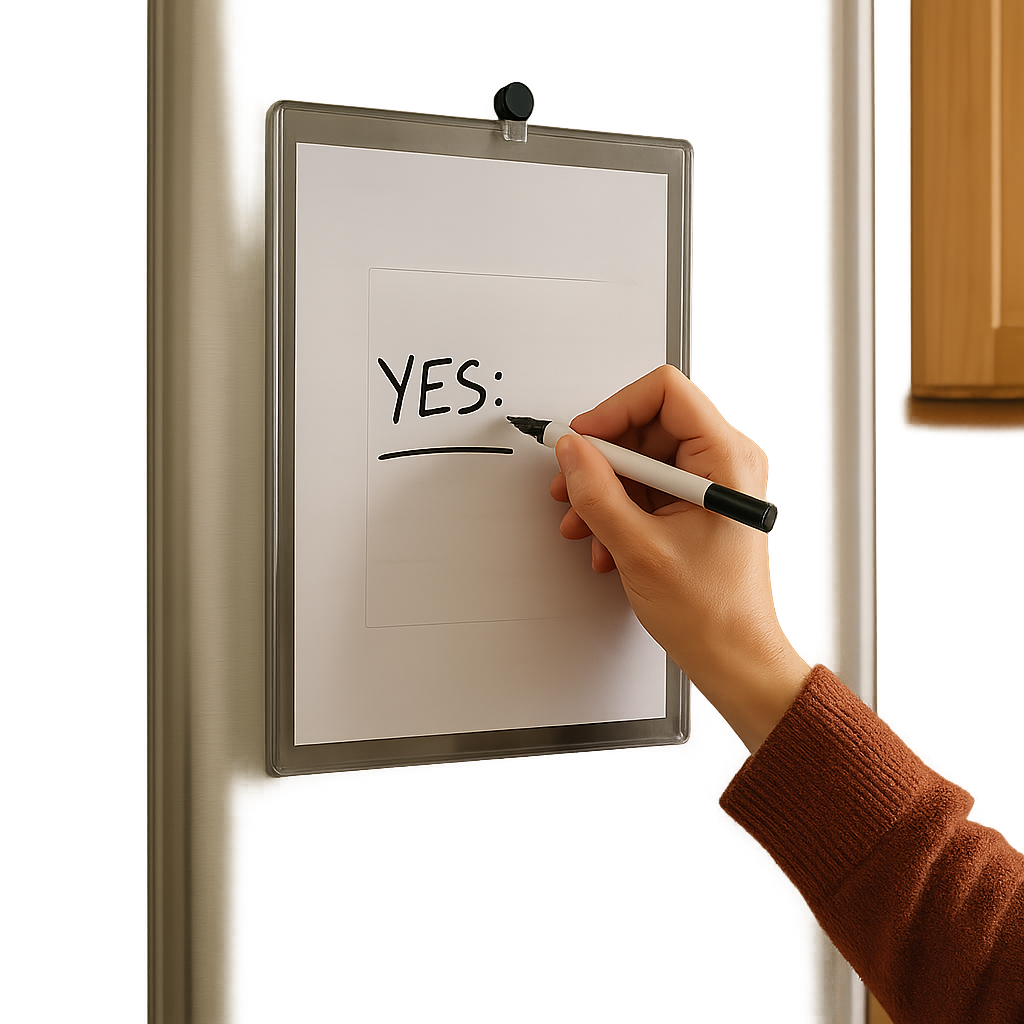
I resisted adding one more thing to the fridge because I thought it would turn into decor I stopped seeing. What worked for us was making the system physical: a clear, magnetic letter-size sleeve (the kind meant for menus or sign holders) and a fine-tip dry-erase marker clipped right to it with a tiny magnet. We use it as a mail and paper landing pad, but the sleeve also serves as the surface for the agreement. If a paper comes in that creates a decision, it goes in the sleeve, and we write the decision on the front in big letters. Not a paragraph. A sentence you can point at.
An invitation, permission slip, or appointment reminder that would normally prompt "Did you see my text?" goes straight into the sleeve, and the front reads: "YES: Wed 6:30, you drive" or "NO: can't make it". Under that, we add the one detail we always end up fighting about later, like where the car seats are or which credit card is on file. If the decision isn't made yet, it gets a "HOLD" and a date: Decide by Tue night. The date part matters because otherwise the HOLD can sit there indefinitely.
I noticed our conversations about these small decisions became calmer. Instead of saying, "You never answer," I can say, "The sleeve is on HOLD. Can you look before 8?" It keeps a missed pickup or unanswered question from turning into an argument about who never listens. When one of us is tired and prickly, the sleeve gives us something neutral to check instead of arguing over different memories of the conversation.
A two-column whiteboard: questions on the left, answers on the right
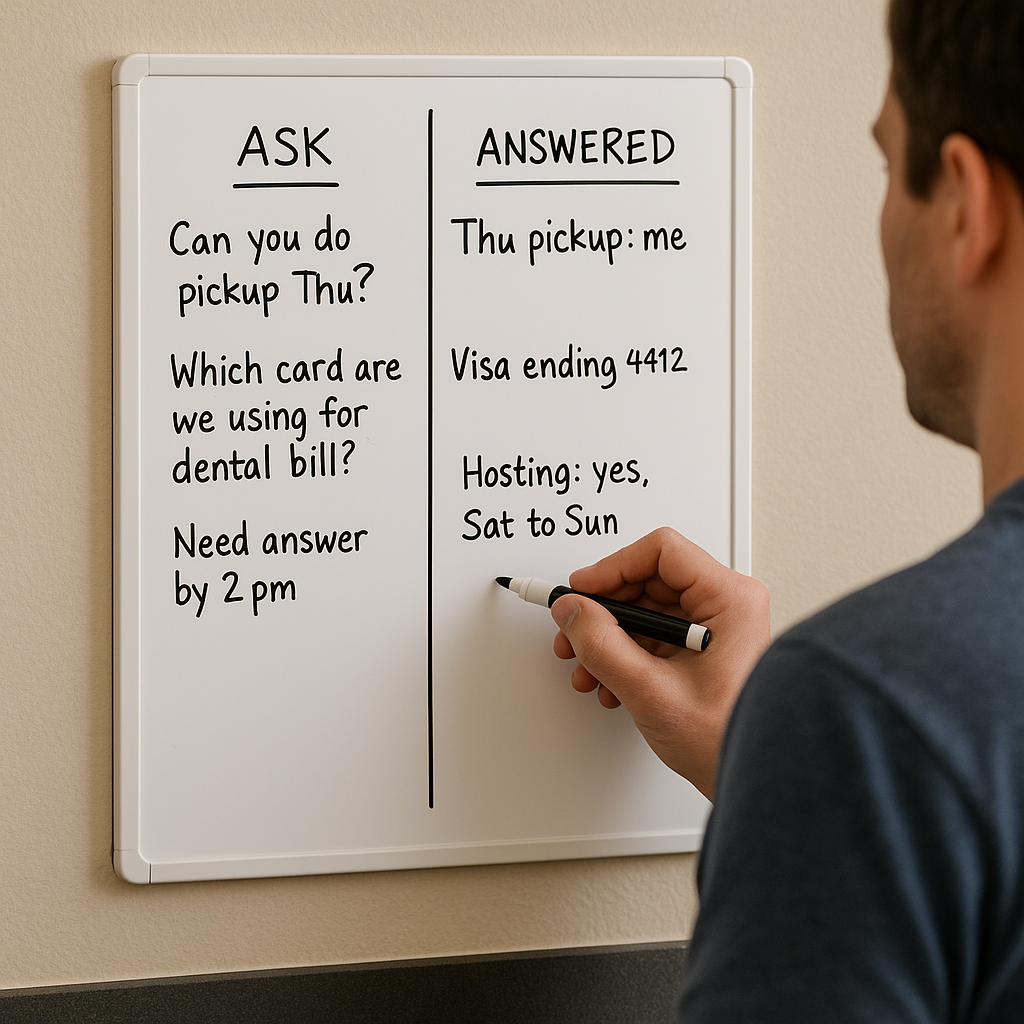
Most of our friction wasn't about the tasks. It was about the floating questions. They can sit in somebody's head for three days and then come out sideways: "So I guess I'm doing it." A small whiteboard helped with that for us, but only after we stopped using it like a to-do list and started using it like a conversation tracker.
Draw one vertical line. Label the left side ASK, and the right side ANSWERED. That's it: no cute headers, no color-coded key. When either of us has a question that needs a decision, it goes on the left in plain language. Don't write "schedule" or "money." Write the actual question: "Can you do pickup on Thursday?" "Which card are we using for the dental bill?" "Are we hosting your sister this weekend?" If it requires a time, it gets a time right there: "Need answer by 2 pm."
When we answer it, we don't erase it. We rewrite it on the right side as a sentence clear enough that neither of us has to guess later. Thursday pickup: me. "Dental bill: Visa ending 4412." "Hosting: yes, Sat to Sun." Moving the answer to the other column gives us a written record, so we're less likely to argue later about what either person remembered hearing.
I also learned something about timing: if we try to clear the ASK column in the middle of cooking dinner, we snap at each other because everyone is already overstimulated. Our best window is a five-minute stand-up when the house is quiet, usually right after the first cup of coffee or right after we lock the front door at night. It feels slightly ridiculous to stand in front of a whiteboard together, but it keeps the conversation on the question in front of us rather than everything else that happened that day.
One rule keeps the board useful: an ASK has to be a genuine question, not a demand written in marker.
The binder ring of receipts that ends the $12 mystery charge
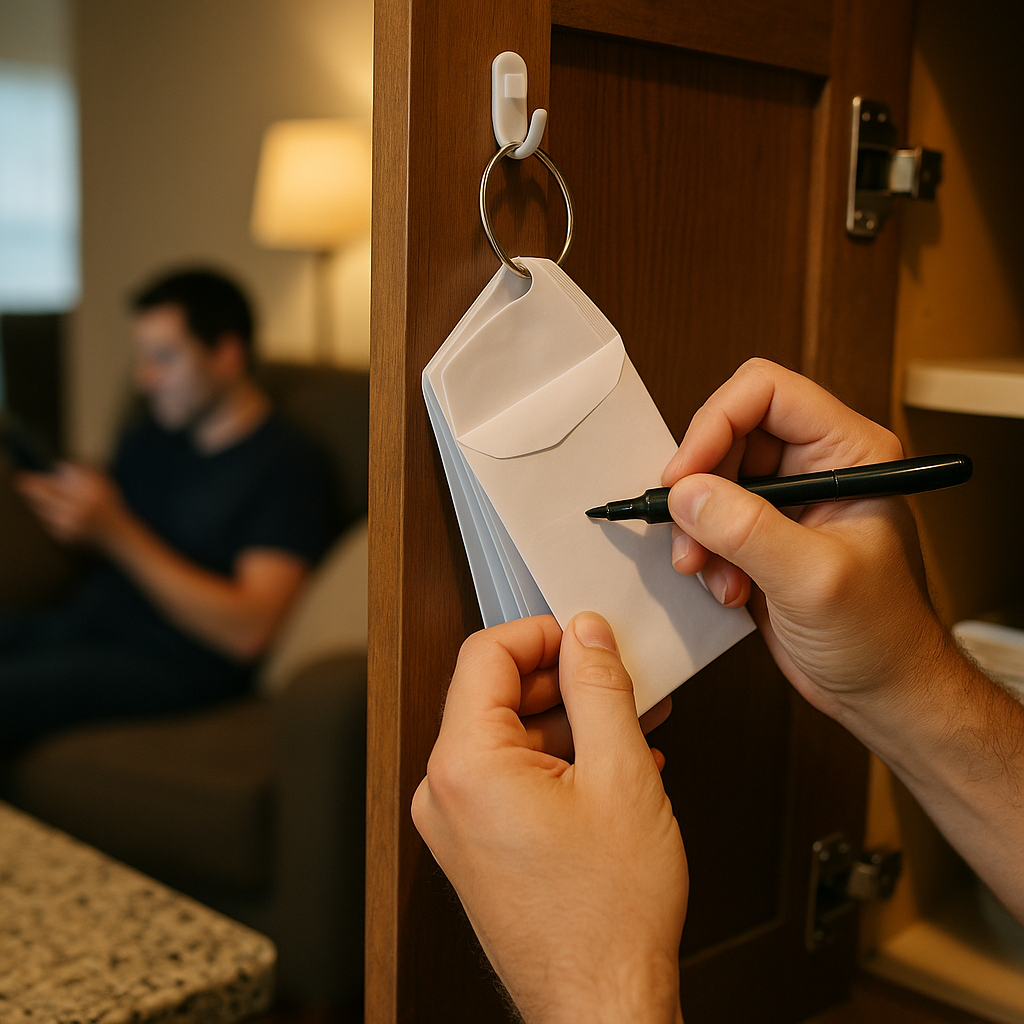
Money questions in our house have a habit of surfacing at 10:47 pm, usually from the couch with someone holding a phone and asking, "What's this charge?" Even in a solid partnership, an unfamiliar charge can turn a quick question into a tense conversation. Our fix wasn't a new app or a budget reboot. It was a binder ring, a stack of small envelopes, and a Sharpie.
Here's how we run it: we keep one metal binder ring (the kind that clicks open) hanging from a removable adhesive hook on the inside of a kitchen cabinet door. Next to it is a handful of #6 3/4 envelopes. Every time either of us pays for something that might look random later, the receipt goes into an envelope, and the outside gets one line: $12: parking for dentist or $38: class supplies. If there's no receipt, we write the purchase details directly on an envelope. Either way, the envelope gets punched once in the corner and clipped onto the ring. That ring gives us one place to check those purchases for the month.
The useful part comes later, when a charge looks unfamiliar. Instead of asking, "Why did you spend...?" we check the cabinet and usually find the answer without trying to reconstruct the purchase from memory. And because the notes are short, it doesn't feel like one person is auditing the other.
A couple of practical details I learned the hard way: permanent Sharpie markers can bleed through thinner or more porous paper, so I write on the envelope flap, where the paper is doubled. And don't try to archive it forever. We clear the ring once a month, snap one photo of the envelopes laid out (just for backup), then recycle the paper. Clearing it monthly keeps the system simple enough for us to keep using.
For us, it cut down on tense questions about charges we simply couldn't place. The receipt notes make those small money questions easier to answer before frustration builds.