
A lamp choice, a basket rule, and one low shelf change how often your family ends up reading there.
Light that doesn't glare off glossy pages
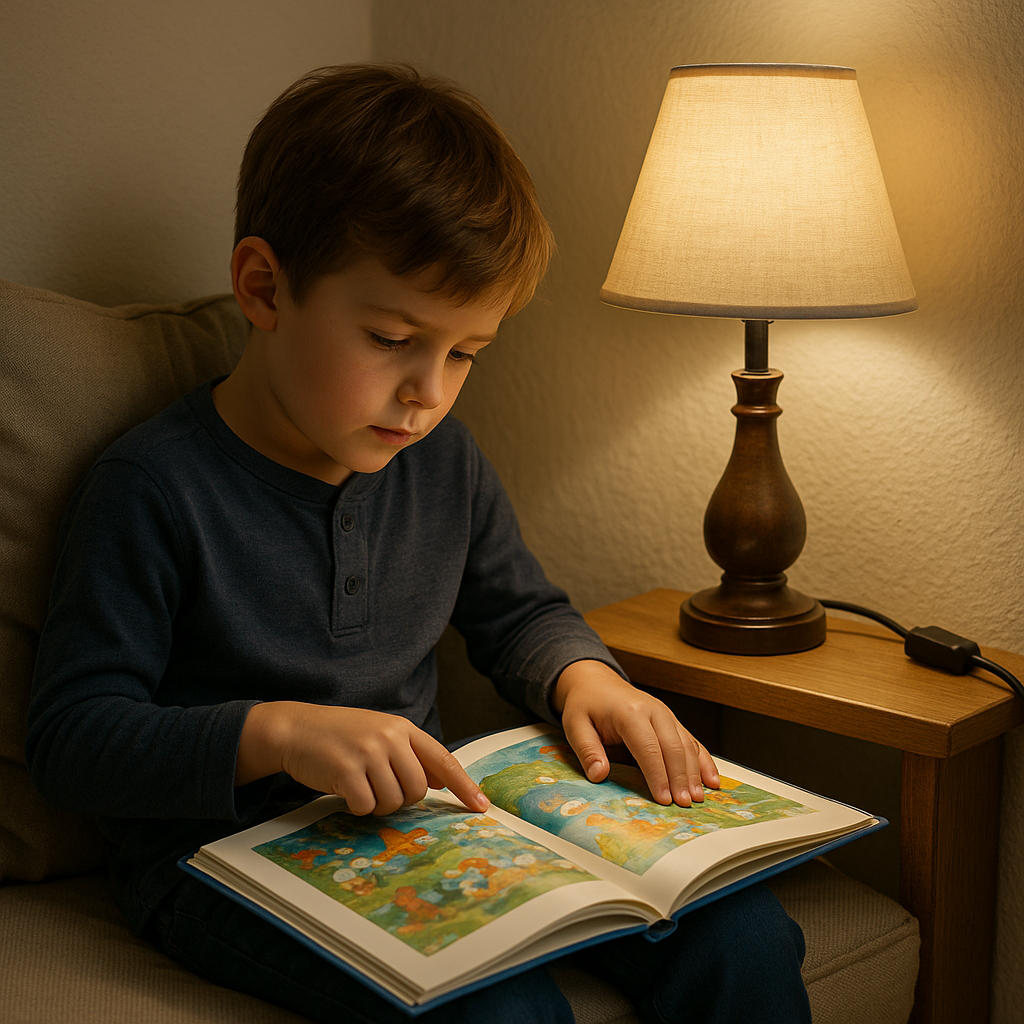
I didn't understand how fussy nook lighting is until we built ours and my kid kept scooting the book around like it was a metal detector. Overhead light made every shiny picture book throw a white streak across the page, and the little clip-on lamp we tried first was so harsh it felt like interrogation. What finally worked was treating the corner like a tiny library table: a warm bulb and a shade that aims light down, not into your eyes.
Here are the two choices that mattered more than anything else. First, the bulb. I buy a warm LED (around 2700K) because it looks cozy at night and doesn't turn skin tones in illustrations gray. Second, the shade. A fabric or frosted shade softens the beam so you can read board books with glossy pages without that bright stripe running across the words. If you can, put the lamp slightly behind the reader's shoulder, not straight in front. That angle makes the page bright but keeps the glare from bouncing back at you.
One practical detail: if this nook is for family use, you want a switch everyone can reach without climbing. I prefer a lamp with a big rocker switch on the cord, or a simple plug-in outlet switch, so a child can turn it on without yanking the shade. And if you're doing bedtime stories in there, keep a spare bulb in a drawer nearby. When the light goes out mid-chapter, nobody feels like being flexible.
The one-basket rule (and what goes in it)
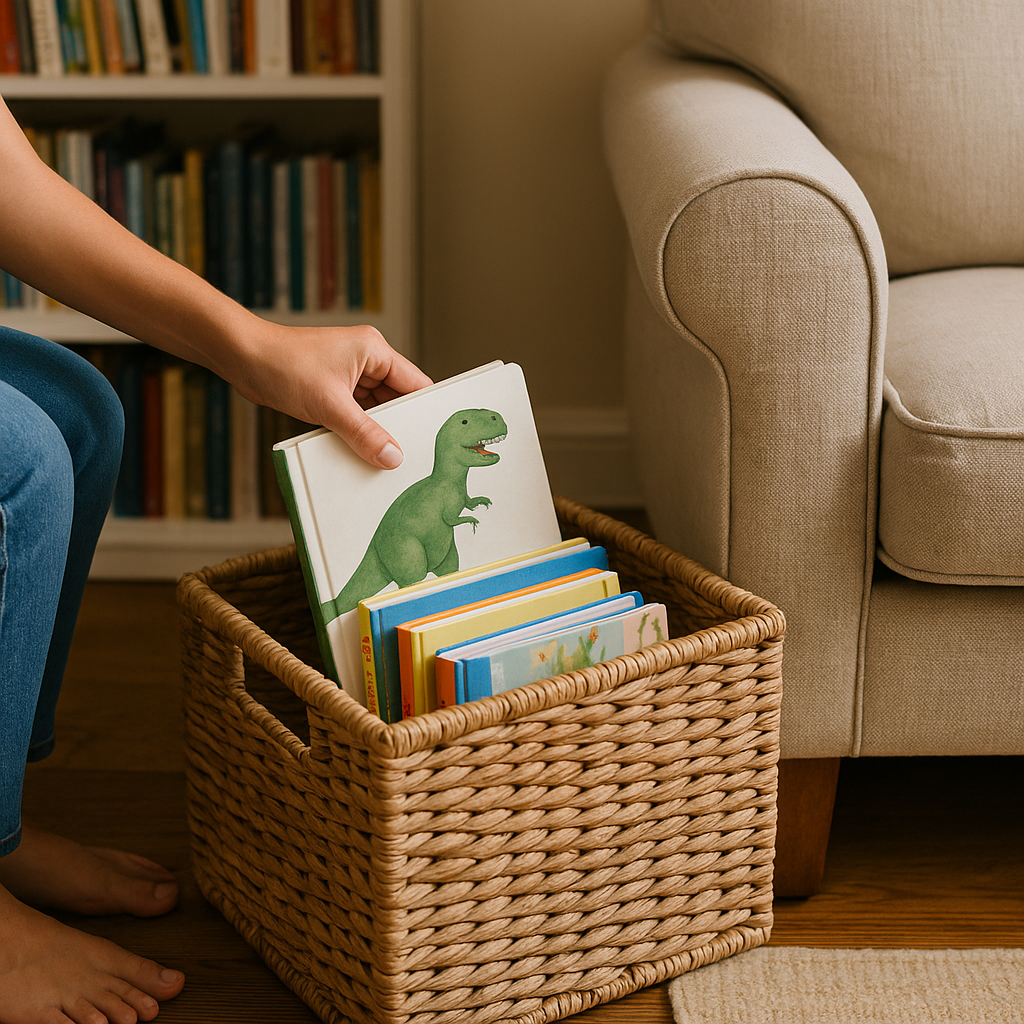
Every reading corner I've regretted had the same problem: too many options. A full bookshelf looks nice, but in a busy house it turns into background. Or worse, it turns into a tug-of-war when someone can't find the dinosaur book because it's behind three chapter series and a random puzzle. What fixed it for us was a single basket that lives next to the seat, with a hard limit on how many books can be in rotation at once.
The rule is simple: only the books that are fair game for independent grabbing go in the basket. That means board books, sturdier paperbacks, and the picture books you won't be heartbroken to see face-down. Special editions, delicate pop-ups, and library books with a dust jacket stay elsewhere. I like a wide, low basket (IKEA's BRANAS style size is about right) because kids can see covers and pull without dumping everything. Tall skinny bins look tidy until the first enthusiastic selection, and then you're picking up a confetti pile of bookmarks and bent corners.
What goes in the basket is weirdly specific in our house: two comfort reads that never leave (the ones that get requested when everyone's tired), two "stretch" books (a longer story or a nonfiction book with real vocabulary), and two wildcards. The wildcards are where I swap in seasonal stuff, a new library haul, or whatever topic is having a moment. If you keep it to six to eight books, you can rotate them weekly without making a project out of it.
And yes, the basket needs a home position. Ours touches the leg of the chair. If it's floating in the corner, it migrates. I learned that the hard way when I found it next to the pantry, full of crackers and one lonely book.
A low shelf that makes kids the librarian
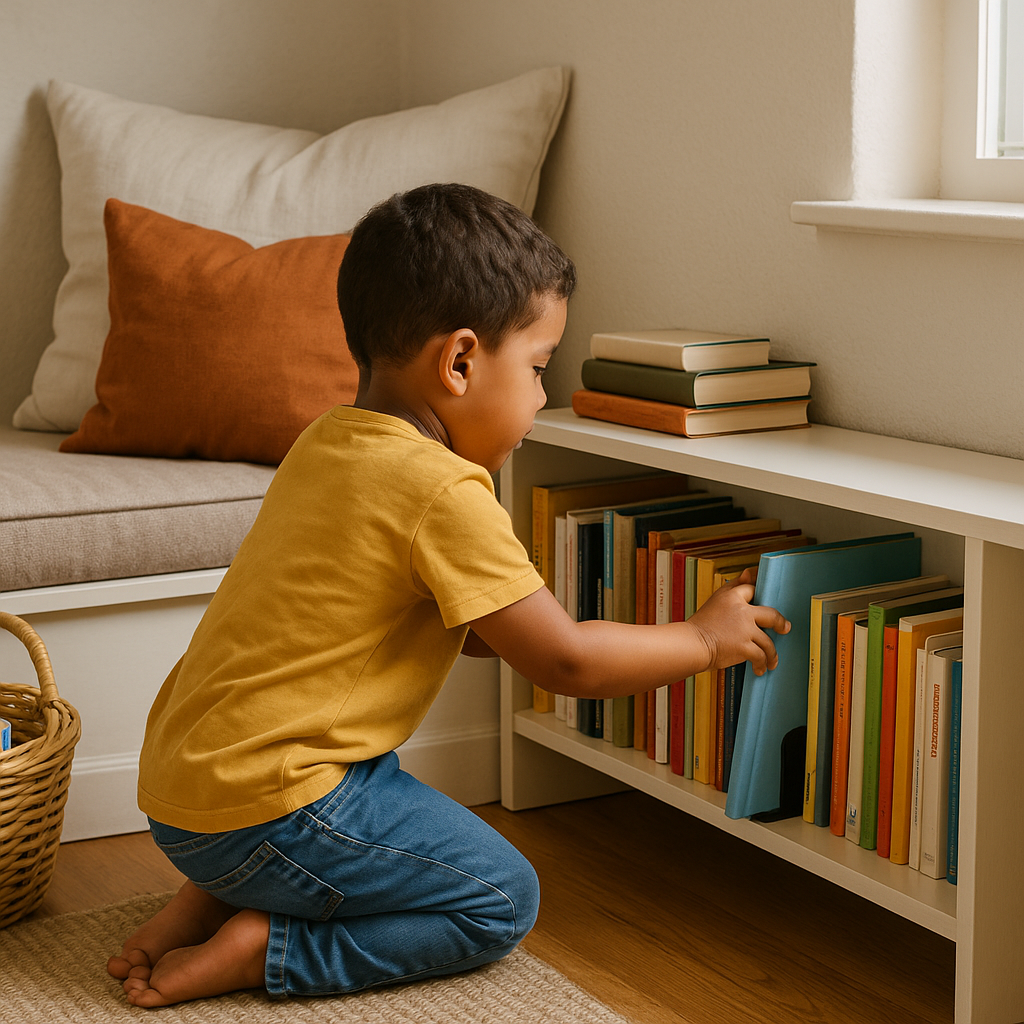
The thing nobody tells you about a family reading nook is that it's only as good as your re-shelving situation. If every book has to be handed to an adult to put away, the nook slowly turns into a floor stack, and then people stop sitting there because they're stepping on hardcovers. I stopped fighting that battle by building one low shelf into the setup, not as a full library, but as a landing strip kids can manage.
Think knee-height, not shoulder-height. The point is that a child can put a book back without asking, and you can glance over and see what's out. A short bookcase or a couple of picture ledges work, but I prefer a standard shelf with bookends because ledges encourage face-out displays that look adorable and then get wrecked in 10 minutes. With a shelf, the books can lean a little and it still functions.
I set it up with three zones and no labels. Left side is "read again soon" (the books from the basket that are still hot). Middle is mine (whatever the grown-ups are reading in the corner: a novel, a magazine, a cookbook). Right side is return (library books and anything that belongs in a bedroom). The return zone is the real trick. It means you don't have to patrol the house looking for where that one library hardcover wandered off to. It eventually shows up on the shelf because it's the easiest place to drop it.
One more detail I stole from classrooms: keep a cheap, sturdy bookend on each side so the shelf never becomes a sideways domino run. I like metal L-shaped ones with a rubber base. The first time a kid slams a book in and the whole row stays upright, you'll feel your shoulders drop.