You Won’t Believe This Casio Gadget From the 70s Actually Existed
Pocket gadgets were getting smaller long before smartphones. By the end of the 1970s, digital calculators had already slipped into wallets, desk drawers, and briefcases. Then Casio released something that still feels improbable decades later: a calculator that also worked as a cigarette lighter.
A Calculator With an Unexpected Second Job
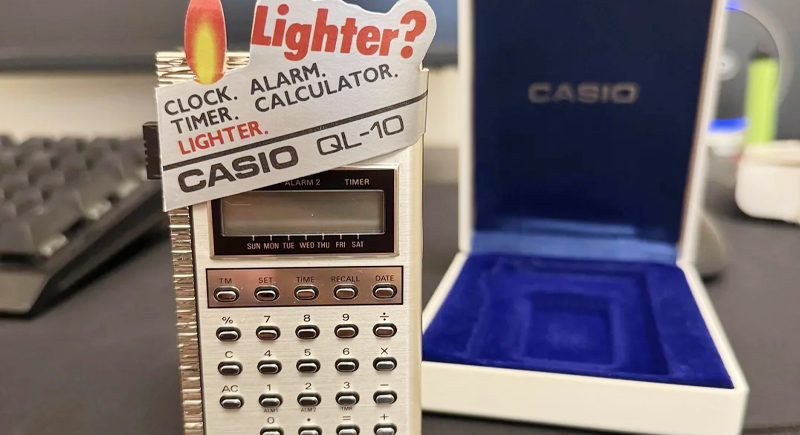
Image via Reddit/Dense_Tumbleweed7585
The device is best known as the Casio QL-10, sometimes called the “calculighter.” It combined a working digital calculator with a refillable butane lighter inside the same handheld body. Press the buttons on one side, flip it around, and it could produce a flame.
The QL-10 arrived in 1981, but its design belongs to the late-1970s mindset when electronics were becoming compact enough to blend into everyday objects. Lighters, watches, radios, and calculators all lived in pockets, bags, and desks. Casio simply fused two of them.
The unit stood roughly 4 inches tall and was built to be reused. At the time, it sold for about $90, which translates to roughly $300 today. That pricing placed it firmly in the serious consumer electronics category.
Why Casio Made Something Like This
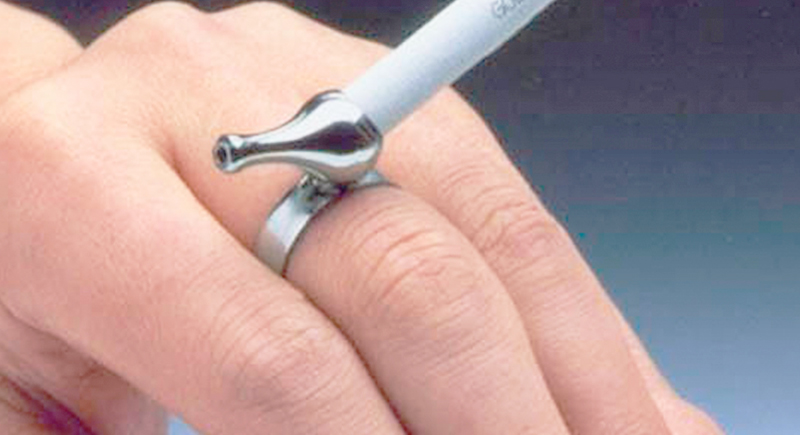
Image via Facebook/CASIO Vintage UK
Casio’s ease with odd or unexpected products did not come out of nowhere. Long before calculators defined the brand, the company’s first real success came from smoking accessories in postwar Japan, including a finger-mounted cigarette holder designed for hands-free use. That modest but popular item generated the capital Casio needed to invest in research, eventually paving the way for its early electronic calculators and setting the tone for a company unafraid to experiment.
By the late 1970s, Casio had already mastered miniaturization. Credit-card-sized calculators existed. Scientific functions had become affordable. Combining a lighter with a calculator was not a technical leap. It was a design decision.
A Snapshot of a Very Specific Moment in Tech History
At launch, the QL-10 fit into an era when smoking was common in offices, classrooms, and airplanes. A calculator and a lighter could sit on the same desk without raising eyebrows. Today, the object reads very differently, shaped by changing habits rather than changing technology, and it has turned the QL-10 into a collector’s item.
Examples in good condition now sell for $400 or more, especially when paired with original packaging. The Casio QL-10 exists at the intersection of shrinking electronics and everyday rituals that no longer dominate public life.
It shows how confident manufacturers had become with digital displays, batteries, and compact components. It also captures a period when combining unrelated functions felt acceptable, even clever.