You Use This 3-Letter Word Every Day, But It Has 645 Meanings in English
A single English verb carries more definitions than any other in the language. Lexicographers have confirmed that the word ‘Run’ holds 645 distinct meanings in the Oxford English Dictionary’s upcoming edition. It required nine months of research and fills roughly 75 columns of text. Its rise ended the long reign of ‘Set’ and later ‘Put,’ which previously held the record for most meanings.
This illustrates how English speakers use the same three letters to convey different meanings. Its expansion continued through industrial growth, technological change, and modern usage, creating a word so flexible that its meaning depends almost entirely on context.
The Rise Of A Three-Letter Powerhouse
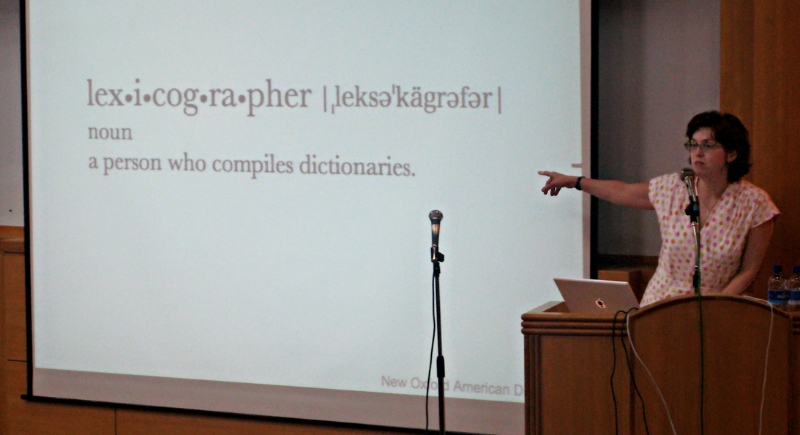
Image via Wikimedia Commons/Kat Walsh
When the first full OED appeared in 1928, ‘Set’ had the largest cluster of meanings. Later, ‘Put’ surged ahead. Editors expected the next edition to confirm the same pattern until they reached the letter R and realized they had underestimated a contender hiding in plain sight. One lexicographer spent nine months identifying every distinct sense of the verb and reached a count of 645 distinct meanings. That number fills about 75 columns of dictionary text and beats the totals for ‘Set’ and ‘Put’ by a wide margin.
Many of those definitions have their roots in centuries past. Others grew during the Industrial Revolution, when machines began to run, clocks continued to run, and engines needed to run well to stay reliable. Modern tech added more. Apps run, software runs, updates run, and systems run diagnostics when something feels off. Each usage created a new branch in the OED entry. The growth simply reflected how often English speakers reached for the same word to describe function or forward motion.
Why So Many Meanings
The language treated the word as a catchall long before editors counted its senses. As soon as speakers needed shorthand for effort or activity, they used it. People run ideas by coworkers. They run errands. Sports teams run plays. Managers run meetings. Kids run around the yard. A fever runs high. Milk runs thin. Colors run in the wash. A car runs well or runs rough. Even insults get folded in when someone claims another person ran them down. Each of these forms expresses action, yet none describes the same action.
Experts who study language believe its rise reflects how people communicate in an energetic era that favors direct, clipped phrasing. Other verbs feel stiff in comparison, so this one steps in again and again. That tendency helped it outpace the old leaders and shaped the modern hierarchy of complex English words.
What It Says About English

Image via Getty Images/aga7ta
English draws vocabulary from many languages, making it a flexible language. Speakers tend to stretch a familiar word instead of reaching for a new one, and this habit lets meanings multiply. The three-letter verb became the ultimate example. It stays short, quick to say, quick to type, and easy to adapt, so people plug it into conversations without worrying about precision. Context fills the gaps. A doctor talking about a heart device means something entirely different than a shopper talking about a washing machine, yet both use the same verb without confusion.
That adaptability explains why one entry in the OED ballooned into a record setter. The word doesn’t act fancy. It simply shows up everywhere, ready to describe motion, effort, ideas, machines, emotions, or problems. And every time English speakers stretch it to meet a new need, the list grows. The total reached 645 and may grow again, because as long as people keep inventing activities that require a simple expression of action, this tiny verb stays ready to run.