Ursula’s Iconic Look in The Little Mermaid Was Inspired by Drag Performer Divine
When Disney Animation developed The Little Mermaid, the studio explored several different looks for Ursula. Early versions were slimmer and leaned toward familiar, glamorous villain styles. That shifted when animator Rob Minkoff started sketching a bolder design with exaggerated curves, striking facial features, and a strong silhouette. The final version stood out among Disney villains and made it clear that Ursula would not follow the usual rules.
Her design moved away from the polished look common to Disney heroines. It favored exaggeration instead. The face showed strong expression, the makeup stayed bold, and her body language felt deliberate. Audiences read directness and control, traits rarely given to villains then.
Divine’s Influence Was Not Subtle
The inspiration behind that change traces directly to Divine, the Baltimore-born drag performer and actor whose screen presence redefined camp in underground cinema. Divine rose to cult fame through collaborations with filmmaker John Waters, most famously in Pink Flamingos. His signature look featured arched eyebrows painted high on the forehead, dramatic eye makeup, and a fearless embrace of exaggeration.
Animators familiar with Divine’s work recognized the visual potential immediately. Minkoff later described the idea as turning Ursula into a drag queen, a decision that transformed the character’s energy. The resemblance extended beyond appearance, as Divine’s performances radiated power through boldness, humor, and confrontation, qualities that became central to Ursula’s personality.
Drag Culture Shaped the Performance Too
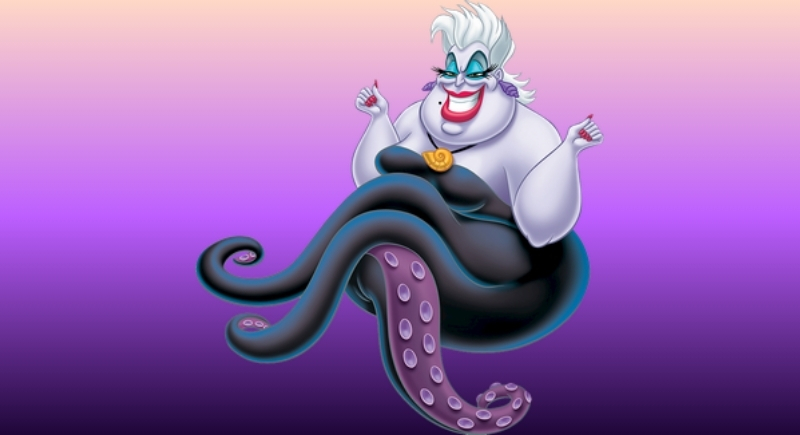
Image via Wikimedia Commons/Disney
Ursula’s drag roots went beyond her design. During development, the animation team filmed live-action reference footage to guide her movement. That footage featured male performers in flowing garments, exaggerating gestures and expressions to sell emotion at scale. Lyricist Howard Ashman also performed a demo of Poor Unfortunate Souls, leaning into theatrical timing and playful menace.
Voice actor Pat Carroll absorbed those choices, folding them into Ursula’s final performance. The result was a villain who felt musical, knowing, and amused by her own power. Her expressions landed with precision, her pauses were important, and she did not rush a moment. That cadence echoed drag performance traditions, where delivery matters as much as spectacle.
Why Ursula Resonated With Drag Artists
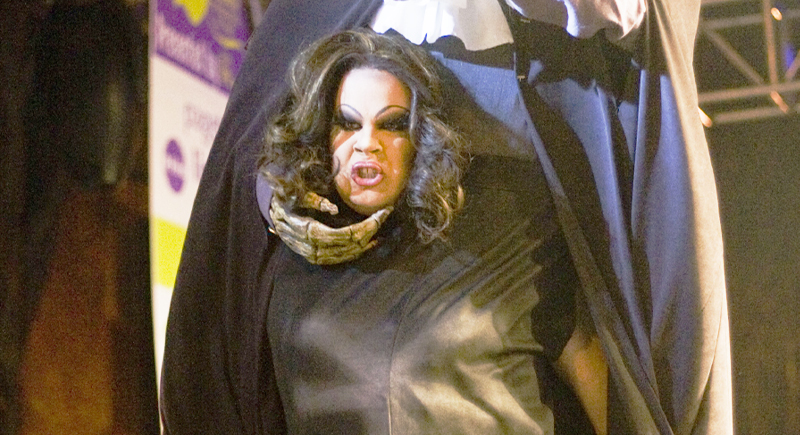
Image via Wikimedia Commons/Becker1999
Decades later, drag performers continue to cite Ursula as a formative figure. Ginger Minj has spoken about seeing the character as a child and recognizing herself in a figure defined by confidence rather than convention. The character’s size, makeup, and command of space challenged narrow beauty standards and offered a different model of self-possession.
Nina West has also pointed to Divine’s influence as obvious and meaningful. Divine was named Drag Queen of the Century in 1988, a year before The Little Mermaid premiered. Ursula arrived carrying a visual language already loaded with cultural meaning, even if mainstream audiences lacked the context to name it.
The Live-Action Version Kept the DNA
The 2023 remake reignited discussion around Ursula’s origins. Melissa McCarthy openly acknowledged Divine’s influence during promotion and drew on her own early experiences performing as a drag persona. Costume and makeup teams wanted to balance homage with restraint, choosing texture and scale inspired by real octopus forms while preserving Ursula’s commanding presence.
Some drag artists praised the performance while critiquing the makeup choices, arguing that a character rooted in drag deserved bolder execution. That debate reinforced how strongly Ursula remains tied to drag culture, as even reinterpretation invites scrutiny through that lens.