This Man Defied the Odds to Become a Yale Graduate From Behind Bars
Marcus Harvin spent six years incarcerated at MacDougall-Walker Correctional Institution after a drunk driving crash in 2016 that seriously injured his two young children. By the time he walked across a graduation stage in June 2023, he carried two forms of identification. One labeled him a parolee, while the other identified him as a fellow affiliated with Yale University.
He completed his coursework through the Yale Prison Education Initiative, which delivers Yale-level classes inside correctional facilities. The credits were applied through a formal partnership with the University of New Haven, the institution that confers the associate degrees. The setup places rigorous academic instruction inside prisons and broadens access to higher education beyond traditional campuses.
College Classes Reached A Maximum-Security Prison
The Yale Prison Education Initiative began in 2016 and expanded in 2021 with a three-year, $1.5 million grant. That funding supported a full academic schedule rather than a limited set of courses. During the 2022 to 2023 school year, more than 30 credit-bearing classes were taught at MacDougall-Walker Correctional Institution, with the same reading and writing standards used on campus.
Requirements remain unchanged, and admission remains competitive, with many applicants competing for a small number of seats. In 2023, the program produced its first graduating class. Seven men earned associate degrees in general studies, all with high honors, defined as a GPA of 3.5 or higher.
An Academic Turnaround

Image via Canva/Truecreatives
Harvin’s academic record once suggested college was behind him. After high school, he left Eastern Connecticut State University with a 1.7 GPA. Prison changed the structure of his time and attention: coursework demanded consistency, and deadlines were firm. He finished his associate degree with a 3.8 GPA.
The improvement did not stop at graduation. After his release in 2022, Harvin continued studying on the University of New Haven campus. He also joined Yale’s Access to Law School Program, which supports students navigating the law school application process. Today, he plans a legal career focused on defense work and pro bono representation.
The Importance of Programs Like This
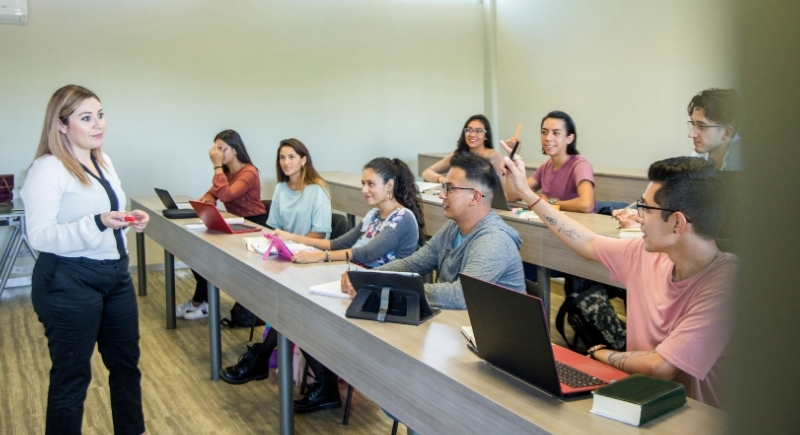
Image via Getty Images/DarioGaona
A report by the Vera Institute of Justice estimates that every $1 invested in prison education returns $4 to $5 in taxpayer savings through reduced incarceration costs. Separate research by the RAND Corporation shows participants in postsecondary prison education programs have 28 percent lower odds of returning to prison.
Education inside correctional facilities also improves daily conditions. Facilities offering academic programs report fewer disciplinary incidents and safer environments for staff and students. Those outcomes help explain why similar partnerships now operate at a federal women’s prison in Danbury and across a national consortium of colleges and prison systems.
What Made This Outcome Possible
Private grants and donations covered costs. Degrees list the University of New Haven, while transcripts reflect coursework at Yale. Students earned credits the same way any college student does, through exams, papers, and sustained performance.
Harvin often says the classes made prison feel less like confinement and more like a campus. It replaced idle time with purpose and accountability, and gave him a future that extended past release dates and parole check-ins. Most people leaving prison reenter society without degrees, networks, or academic momentum, but Harvin stepped out carrying all three.