The Most Dangerous Cereal Toy in History Was Literal Radioactive Material
Cereal prizes used to be a big deal. In the 1940s and 1950s, kids didn’t just eat breakfast; they studied the box, filled out mail-in forms, and waited weeks for something exciting to arrive. Companies leaned into whatever felt modern and impressive at the time, and nothing sounded more powerful or mysterious than atomic science. If it involved atoms, energy, or glowing effects, it felt like the future had landed at the breakfast table.
One cereal promotion took that excitement much further than anyone should have. It promised children a way to see atomic reactions with their own eyes, using language that made science feel playful and safe. The prize looked like a clever educational toy. Decades later, people realized it was something else entirely, and far more dangerous than anyone buying cereal could have imagined.
When Atomic Energy Became a Selling Point

Image via Canva/nundigital
The year was 1947, and the atomic bomb had already reshaped global politics, but public fear had not yet caught up with scientific reality. Nuclear power still carried a futuristic glow, and companies rushed to borrow that excitement, slapping atomic language onto toys, labs, and cereal promotions.
Kix cereal joined the trend with a mail-away prize called the Atomic Bomb Ring. For $0.15 and a box top, children received a metal ring topped with a red lens. The pitch promised a secret show once the lights went out. Take it into a dark space, let your eyes adjust, and watch tiny flashes burst inside. Unfortunately, that promise was not marketing fluff, because those flashes were real!
The Unexpected Part
What made the toy work was the material inside it. The ring contained polonium-210, a radioactive element that reacts when particles pass through it. Decades later, that same substance became widely known because it was used in the 2006 poisoning of Alexander Litvinenko, which makes the cereal connection feel unsettling in hindsight.
The dose in each ring was tiny, and scientists later confirmed it was not dangerous under normal use. Still, it is hard to ignore the reality of what happened. A breakfast promotion for children included real radioactive material and sent it through the mail, straight into kids’ bedrooms, all in the name of fun and science.
How the Ring Actually Worked
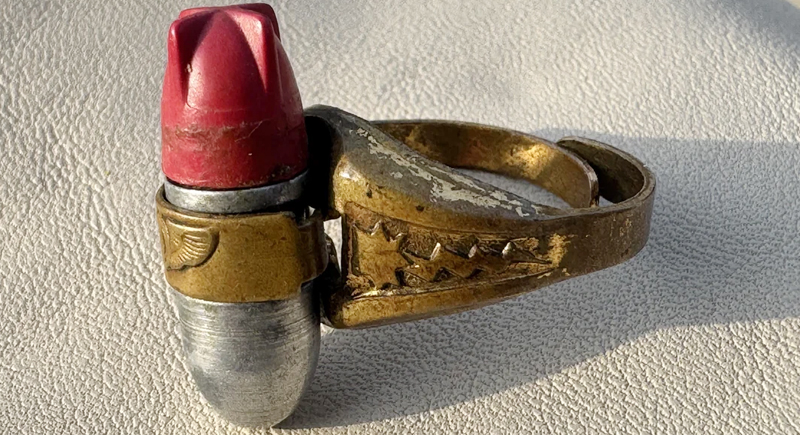
Image via Reddit/random_treasures
The Atomic Bomb Ring doubled as a simplified scientific device called a spinthariscope. Inside sat a speck of polonium aimed at a zinc sulfide screen. As the radioactive material decayed, it released alpha particles, and each impact produced a brief flash of light.
But the effect faded over time. Polonium-210 has a half-life of 138 days, which means the sparkle slowly disappeared within months. A vintage ring today sits inert, more novelty than hazard. Alpha radiation also lacks range, and even a sheet of paper blocks it. The danger emerges only when ingested or inhaled, not while sealed inside a metal toy.
The Kids Who Took It Seriously
Some children treated the ring as more than a gimmick. One future physicist later credited it as his first real exposure to nuclear science. It left an impression because it made an abstract idea physical and understandable. While many cereal toys from that era pushed safety limits, none matched the decision to mail radioactive material directly to kids.
The Atomic Bomb Ring stands out because it reflects how atomic energy was viewed at the time. It symbolized progress and innovation, not danger. That confidence shaped marketing decisions with little hesitation. Today, the ring appears in museums and collector listings, less as a toy and more as evidence of how easily risk once entered children’s lives.