The Horrifying True Meaning Behind the Pinky Promise Will Ruin Your Childhood
Most of us learned the pinky promise on a playground, usually between snack trades and whispered secrets. It felt simple and serious in the way only childhood rituals can be. What almost no one realized at the time is that this small gesture traces back to much older ideas about trust, loyalty, and the weight of a spoken promise. Once you see where it comes from, that familiar hook of the pinky carries a meaning far heavier than it ever seemed back then.
The Pinky Promise Started As A Serious Social Gesture
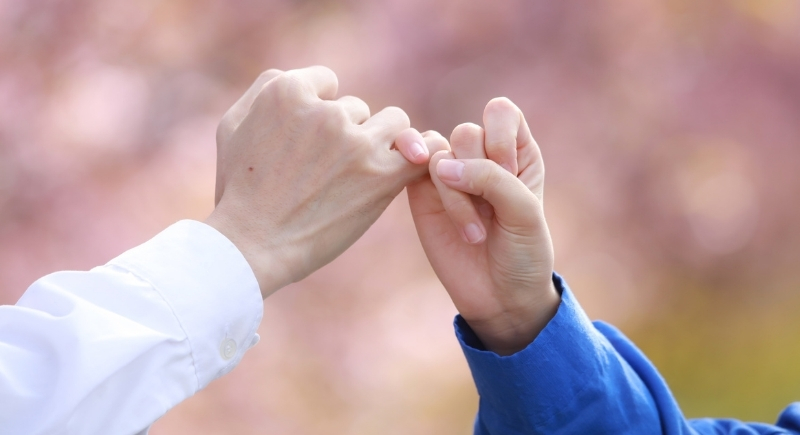
Image via Canva/Aflo Images
The gesture known today as a pinky promise, or pinky swear, involves two people locking their smallest fingers together to seal a promise. Today, it is most often associated with children and close friendships, but historical references suggest the idea of finger-based oath gestures stretches further back.
In North America, written references to pinky-related promise rhymes date back to at least the 1800s. An 1860 entry in Bartlett’s Dictionary of Americanisms recorded a rhyme warning that liars would face punishment, showing that even early Western versions carried a sense of consequence, even when expressed symbolically.
The gesture likely developed alongside older oath traditions where physical actions reinforced spoken promises. Across cultures, oath rituals often included symbolic gestures meant to demonstrate commitment, loyalty, or truthfulness.
The Japanese Connection: Yubikiri And The “Thousand Needles” Oath
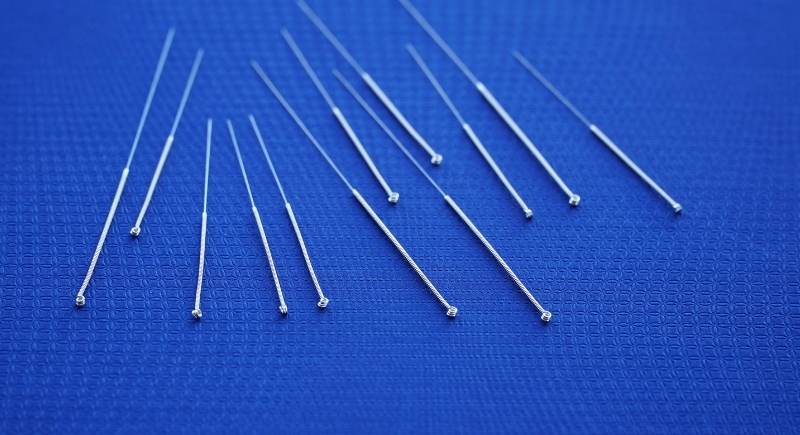
Image via Getty Images/ZoomSpectrum
One of the most frequently discussed historical parallels comes from Japan, where a similar ritual exists called yubikiri, which translates roughly to finger cut-off or finger cutting. The phrase appears in the traditional oath yubikiri genman, often paired with a rhyme stating that if someone lies, they must swallow a thousand needles.
Today, this is recited by children as part of a promise ritual and is widely understood symbolically rather than literally. The language reflects how seriously promises are framed culturally, even in children’s traditions.
Historical references place yubikiri within Japanese culture as far back as the early modern period, when oath language often used dramatic phrasing to reinforce loyalty and trust.
The Myth Vs Reality
Modern storytelling sometimes connects pinky promises directly to organized crime punishments or claims that people historically lost fingers for breaking promises. The historical picture is more complex.
There is a documented punishment practice in some organized crime contexts involving the removal of part of a finger as a form of atonement. However, this is generally treated as separate from children’s promise rituals like yubikiri. Stories connecting everyday promise rituals directly to real finger removal are typically presented as legend, exaggeration, or symbolic storytelling rather than documented widespread practice.
Language around finger loss appears to have functioned mainly as symbolic threat language tied to honor, loyalty, and seriousness rather than literal expectation in normal social promise-making.
How The Gesture Spread Around The World
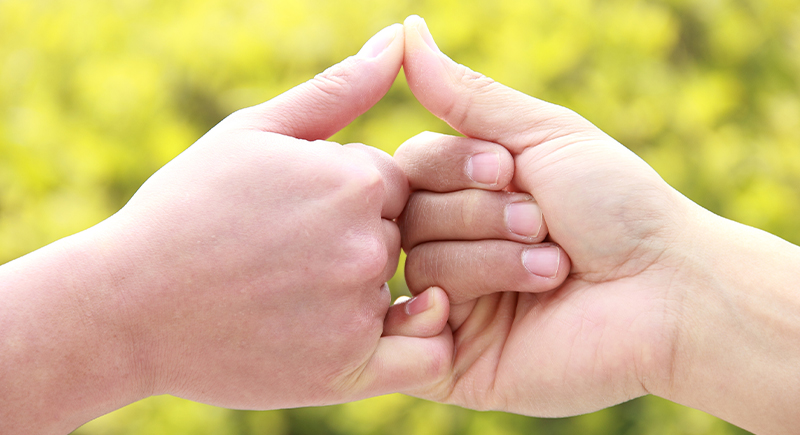
Image via iStockphoto/LUHUANFENG
By the late 19th and early 20th centuries, pinky promises were widely present in Western childhood culture. The gesture spread through playground rhymes, oral tradition, and later popular media.
Different regions developed variations. In South Korea, the pinky promise may be sealed by pressing the thumbs together. In Taiwan, stamping or sealing gestures are sometimes added after the finger lock. In parts of Europe, similar promise gestures exist with different rhymes and names.
Despite regional differences, the core meaning remains consistent: the promise represents trust between two people.
Some cultural interpretations suggest that linking pinkies represents connection, vulnerability, or agreement between individuals, though direct historical documentation explaining why this particular finger was chosen is limited.
The Modern Pinky Promise Is Completely Symbolic
Today, pinky promises exist almost entirely as social gestures. Children use them to seal secrets or agreements. Adults sometimes use them jokingly or affectionately. In digital communication, people even reference pinky promises through emojis or phrases without physical contact.