The Death of the American Mall and the Childhood We Left Inside It
The modern mall began with a bold concept in 1956, when architect Victor Gruen opened Southdale Center in Edina, Minnesota, the first enclosed suburban shopping mall in the United States. Gruen imagined a community hub where shopping, housing, offices, and public life could mix under one roof.
Developers copied the retail model while skipping the broader community vision. As suburbs expanded during the postwar boom, malls filled the gap left by distant downtown districts. Shoppers could handle errands, grab lunch, and socialize without leaving the building.
Construction accelerated rapidly, and by the 1980s, hundreds of malls were opening each year during the peak of development. The United States eventually ended up with about 26 square feet of retail space per person, far more than Europe’s 2.5 square feet per capita. Developers saw endless demand, so new malls kept rising beside older ones.
A Culture Built Around Escalators And Food Courts
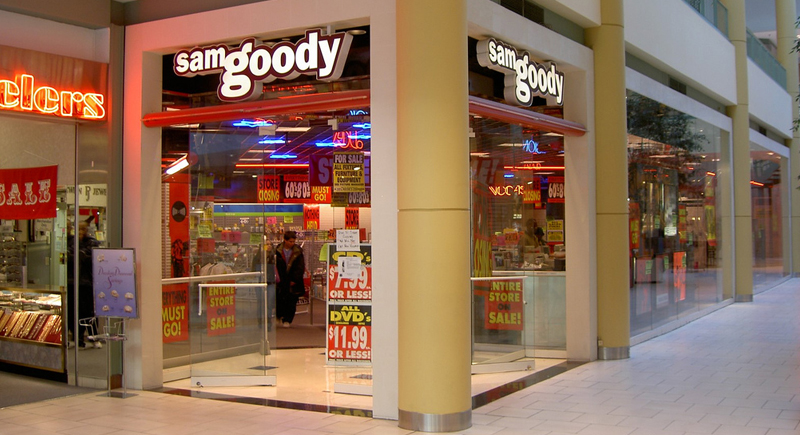
Image via Wikimedia Commons/Adam Lautenbach
Retail was important, but the mall worked as a social machine. Teenagers wandered the corridors after school, families scheduled weekend outings around it, and morning walking clubs filled the hallways before stores opened.
Pop culture captured the moment. Films like Fast Times at Ridgemont High and Bill and Ted’s Excellent Adventure placed teenage life squarely inside mall corridors, and music retailers became landmarks inside those buildings. One of the most familiar was Sam Goody, a chain founded by Sam “Goody” Gutowitz that expanded to nearly 1,000 stores nationwide during the height of mall culture.
Sam Goody shops offered records, cassette tapes, and audio equipment. New albums appeared in front of display bins, sometimes surprising shoppers who had no idea a release had arrived. Browsing those shelves introduced entire generations to artists such as Neil Young, Stevie Wonder, and The Kinks. Every mall seemed to follow the same formula. Bookstores, pretzel stands, record shops, and anchor department stores created a predictable layout identical across states.
Too Many Malls And Too Little Time
By the late 20th century, many cities supported several malls competing for the same shoppers. When a new mall opened nearby, foot traffic increased. Department stores held the entire system together. Chains like Sears, JCPenney, and Macy’s served as anchor tenants that attracted shoppers to nearby smaller retailers. Trouble arrived when those anchors began to struggle.
The retail sector underwent rapid change during the 1990s and early 2000s. Big box chains such as Walmart, Target, and TJ Maxx drew customers with lower prices and stand-alone stores. Financial restructuring also placed heavy debt on companies like Sears and Toys “R” Us, thus weakening businesses that once dominated malls.
Online shopping delivered the next blow. During the early wave of e-commerce, digital sales already cut into brick-and-mortar retail. Between 2010 and 2013, holiday mall visits dropped by 50 percent. Store closures followed, and in one recent year, analysts projected 8,600 retail stores would shut down across the United States.
During the 1980s, the country had roughly 2,500 malls. Today, the count is closer to 700, and analysts expect additional closures in the coming years. Still, a few locations have found ways to survive. Luxury centers such as the Bal Harbour Shops in Florida attract wealthy shoppers, and entertainment-focused complexes like American Dream Mall in New Jersey feature indoor amusement rides and water parks alongside retail.