The Death of Front Porch Culture and What America Lost When We Stopped Sitting Outside
For decades, the front porch worked as an open invitation. In Black neighborhoods across cities like Detroit and Atlanta, porches doubled as gathering spaces, storytelling hubs, and even places where major events were witnessed and processed. Families shared news, passed down stories, and built trust in plain sight. The porch was part of the infrastructure.
The Slow Move Indoors

Image via Canva/evablancophotos
The move away from porch life followed changes that seemed convenient at the time. Air conditioning made indoor spaces more comfortable, and television gave people a reason to stay inside. Cars and attached garages reduced the need to linger outside or interact with neighbors. By the mid-20th century, suburban design moved toward privacy. Backyard decks replaced front-facing spaces, fences got taller, and homes turned inward. This resulted in fewer opportunities to run into people casually.
Researchers studying neighborhoods noticed a clear difference. Areas without active porch spaces had far less interaction. People drove in, shut the garage, and disappeared into private routines. Over time, that pattern became normal.
What We Lost Without Noticing
The biggest loss wasn’t the porch itself but everything that came with it. Spontaneous interaction dropped off. Quick conversations, small favors, and casual check-ins became rare. A Pew study in 2019 found that while many Americans recognize their neighbors, socializing with them barely happens.
The change carries consequences. Since the 1980s, the share of Americans reporting loneliness has doubled from 20 percent to 40 percent. Research now links social isolation to serious health risks, including heart disease, stroke, disrupted sleep, and earlier death. Some studies even compare its impact to smoking 15 cigarettes a day.
The Quiet Return Of Porch Culture
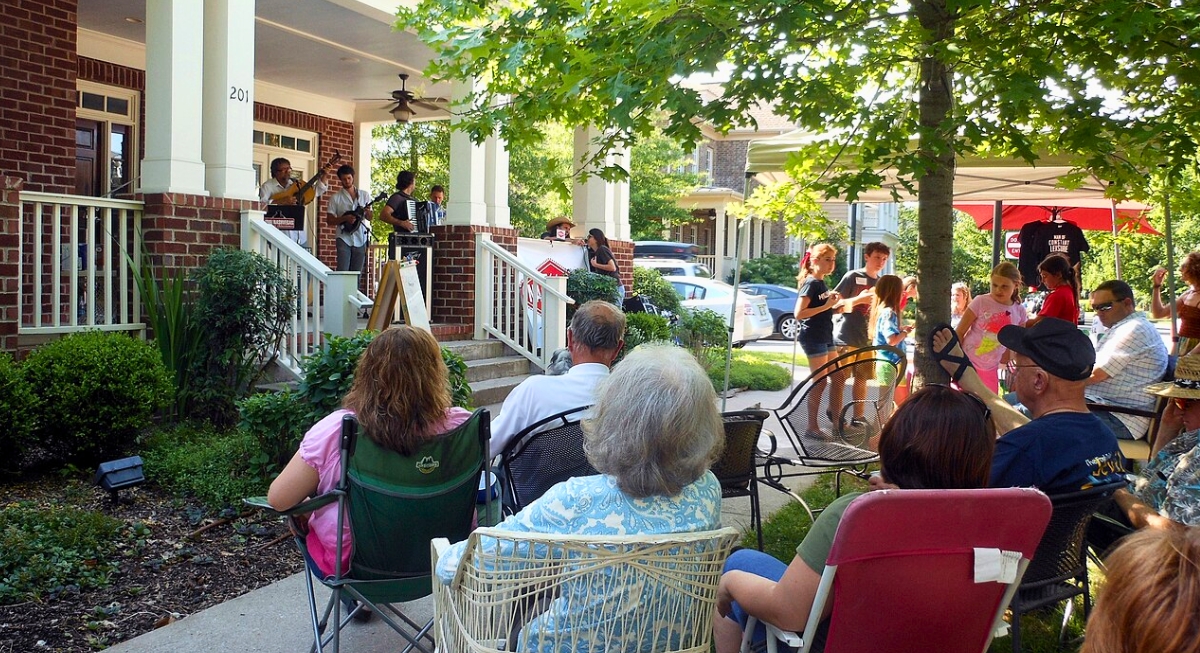
Image via Wikimedia Commons/Ray Porch
Despite all this, signs of a comeback are hard to ignore. During 2020, as people searched for safe ways to interact, porch and stoop gatherings started to pick up again. In Washington, D.C., events like PorchFest now bring together entire neighborhoods, with around 100 performers playing across porches and front yards in a single day.
In Indianapolis, a grassroots effort called PorchPartyIndy began in 2013 to encourage residents to spend time outside and connect. It grew from one neighborhood to 13, and eventually spread across 52 counties. The idea is to sit outside, be visible, and let interaction happen naturally.
The results are apparent. People report stronger connections, improved mood, and a clearer sense of belonging. Even city planners have started to take note by pushing for designs that bring porches back into residential spaces.