Swedish Man Survived Two Months in a Snow-Covered Car Due to the Igloo Effect
60 days passed after a man disappeared in northern Sweden during peak winter, with temperatures dropping to around −30°C. Authorities never located him, and no reports suggested he had access to food, heat, or outside assistance. When he was eventually found in February 2012, he was alive inside a snow-covered car, severely weakened and hypothermic.
Doctors later confirmed he had survived close to two months without eating, a duration that pushed known limits of human survival and raised a clear question: how could a human body endure that long in such extreme conditions?
A Disappearance That Didn’t Make Sense
Peter Skyllberg vanished on December 19, 2011, near Umeå, a region used to cold but rarely confronted with survival timelines like this one. His car sat off a lightly traveled forest road, gradually covered by snowfall until it blended into the landscape. Search efforts never gained traction because there was no sign of movement, no footprints, and no trail.
By mid-February 2012, two snowmobilers noticed what appeared to be an abandoned vehicle under approximately one meter of snow. They cleared part of a window and saw motion inside. Skyllberg lay in the back seat, wrapped in a sleeping bag. He was alive but severely weakened and barely able to speak.
60 Days Without Food
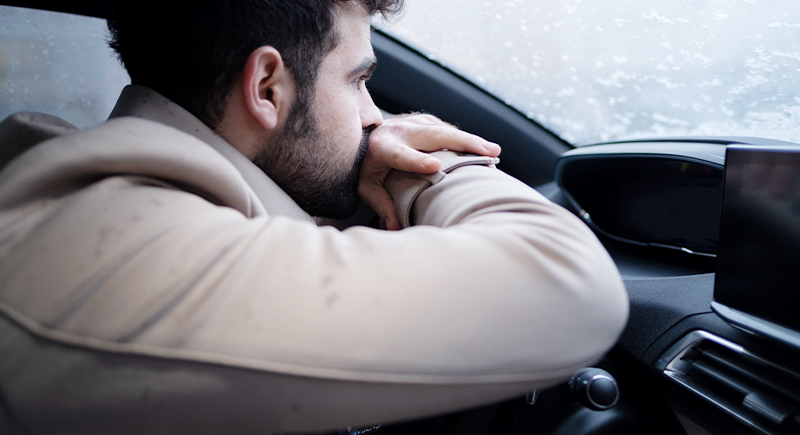
Image via iStockphoto/ridvan_celik
Medical staff later confirmed that Skyllberg had gone without solid food for close to two months. He survived by drinking small amounts of melted snow. Inside the car, responders found cigarettes, comic books, and a single bottle of soda. His weight had dropped sharply, and his condition alarmed doctors.
Surviving that long without food already pushes the limits of human endurance. Doing so in extreme cold narrows those limits even further. Doctors estimated that two months sat at the upper edge of what the body could tolerate without caloric intake, especially while exposed to freezing temperatures.
Why Didn’t the Cold Kill Him?
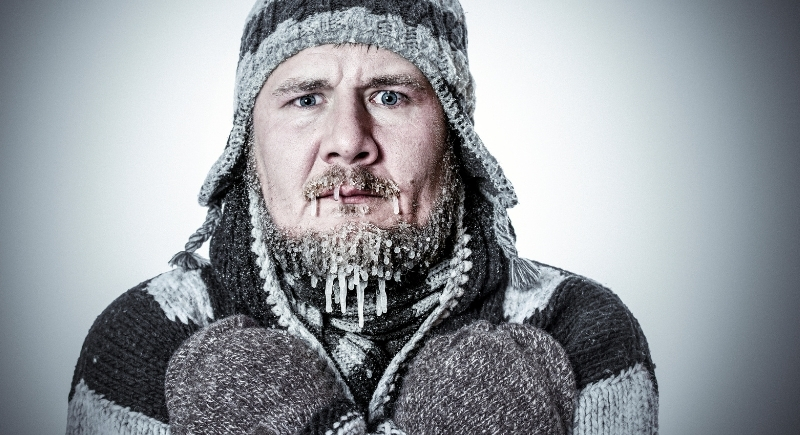
Image via Getty Images/CHBD
Skyllberg’s survival hinged on physics as much as physiology. Snow may look dangerous, but it insulates well. Once his car became fully buried, the packed snow slowed heat loss and blocked wind. Body heat is collected inside the vehicle instead of escaping into the open air.
Doctors compared the effect to an igloo. Even when outside temperatures fall far below freezing, enclosed snow structures can maintain interior temperatures just below 0°C. With proper clothing and a sleeping bag, that difference is vital. Inside the car, Skyllberg managed to preserve enough core warmth to stay alive.
The Body in Conservation Mode
When Skyllberg reached the hospital, doctors measured his body temperature at roughly 31°C, far below the healthy average of 37°C. That level signals serious hypothermia. Yet it also meant his metabolism had slowed, reducing the energy his body consumed.
Some medical experts suggested that the body entered a state of conservation similar to hibernation, although others urged caution with that label. Humans lack the biological mechanisms true hibernators possess. Still, under rare circumstances, extreme cold combined with limited movement can reduce energy demands enough to extend survival.
Cases involving snow caves and mountain survival exist, but this one was different. Skyllberg stayed inside a vehicle without active heating, food, or rescue signals. He did not dig out or relocate. The conditions aligned in a narrow window where insulation, clothing, and reduced metabolism worked together just long enough.
Doctors later noted that the case remained unusual, even by Scandinavian standards. Most similar scenarios end very differently. Skyllberg recovered in a standard hospital ward and avoided lasting neurological damage, an outcome few would have predicted at the time of his rescue.